
Editor in Chief
Youssef Sidhom
Watani
عربى English French
  • News
    • Accidents
    • Crime
    • Diplomatic briefcase
    • NewsLine
    • Outside Cairo
    • Special Occasions
  • Opinion
    • Editorial
    • International media
    • Reader`s Corner
    • Opinion
  • Politics
    • Elections
    • International Politics
    • Islamisation Politics
    • National Affairs
    • Parliament
    • Politics
    • Protests
    • Rights
    • Terrorism
  • Culture
    • Antiquity
    • Art
    • Books
    • Culture
    • Drama
    • Egyptology
    • Festivals
    • Films
    • Heritage
    • Islamisation Culture
    • Media
    • Museums
    • Music
    • TV
  • Coptic
    • Church Affairs
    • Coptic Affairs
    • Coptic Culture
    • Copts in the Media
    • Coptology
    • Copts Abroad
    • Religious
      • P. Shenouda: Bible Study
    • Sectarian
    • Inter-religious
    • Holy Family
  • Features
    • Counselling Corner
    • features
    • Economy
      • Business
    • Education
    • Social Issues
      • Behaviour
      • Mothers Day
    • Health
    • Environment
    • Humour
    • In memorial
    • Interviews
    • Nile
    • Profile
    • Special needs
    • Sports
    • Technology
    • Tourism
    • Wars
    • Women
    • Youth
  • Watani Special Features
    • Egypt – Arab Spring
      • 25 January Revolution
      • 25 Jan revolution, one year on
      • Egypt post-30 June
    • Watani Milestones
      • 20 years Watani International
      • 10 years Watani International
      • Watani Jubilee
    • Pope Shenouda
    • Pope Tawadros
    • Watani Forum
No Result
View All Result
  • News
    • Accidents
    • Crime
    • Diplomatic briefcase
    • NewsLine
    • Outside Cairo
    • Special Occasions
  • Opinion
    • Editorial
    • International media
    • Reader`s Corner
    • Opinion
  • Politics
    • Elections
    • International Politics
    • Islamisation Politics
    • National Affairs
    • Parliament
    • Politics
    • Protests
    • Rights
    • Terrorism
  • Culture
    • Antiquity
    • Art
    • Books
    • Culture
    • Drama
    • Egyptology
    • Festivals
    • Films
    • Heritage
    • Islamisation Culture
    • Media
    • Museums
    • Music
    • TV
  • Coptic
    • Church Affairs
    • Coptic Affairs
    • Coptic Culture
    • Copts in the Media
    • Coptology
    • Copts Abroad
    • Religious
      • P. Shenouda: Bible Study
    • Sectarian
    • Inter-religious
    • Holy Family
  • Features
    • Counselling Corner
    • features
    • Economy
      • Business
    • Education
    • Social Issues
      • Behaviour
      • Mothers Day
    • Health
    • Environment
    • Humour
    • In memorial
    • Interviews
    • Nile
    • Profile
    • Special needs
    • Sports
    • Technology
    • Tourism
    • Wars
    • Women
    • Youth
  • Watani Special Features
    • Egypt – Arab Spring
      • 25 January Revolution
      • 25 Jan revolution, one year on
      • Egypt post-30 June
    • Watani Milestones
      • 20 years Watani International
      • 10 years Watani International
      • Watani Jubilee
    • Pope Shenouda
    • Pope Tawadros
    • Watani Forum
No Result
View All Result
No Result
View All Result
Watani
ع Fr
ADVERTISEMENT

The life under Cairo

8 August, 2014 - (3:48 PM)
0 0

The life under Cairo
226
VIEWS
Share on FacebookShare on Twitter

No one ever imagined, back in 1987 when the underground metro first operated in Cairo, that it would be the transportation lifeline of the Egyptian capital. If we had known then that the day population of Greater Cairo would reach 15 million, and that two million commuters use the Metro every day, we would have understood that life in the capital would be at a standstill without it.
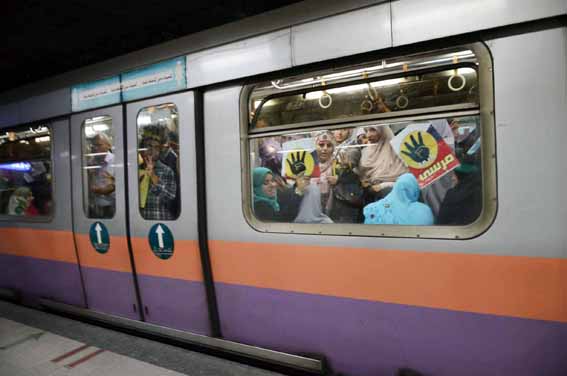
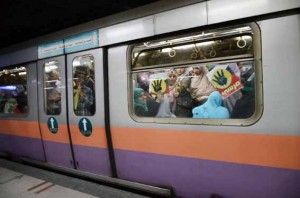
The Cairo Metro provides jobs for some 6000 workers, and was the first in Africa and the Middle East. Trains carry two million passengers every day, at the heavily subsidised price of one Egyptian Pound per trip. The middle two carriages in each train are reserved for women only until 9:00pm every day, so they can feel safe from harassment.
The life under Cairo (3)

The idea
The Cairo underground system was the brainchild of Sayed Abdel-Wahed, an engineer with the Egyptian Railway. He presented his idea of solving the traffic flow in Cairo to the government in the 1930s, but was ignored. In 1954, however, President Gamal Abdel-Nasser brought in experts from France to assess the project. The French experts had a vision regarding the future of public transport in Greater Cairo, and recommended establishing a network of two subway lines to serve the most densely populated districts. The first was between Bab al-Louq and the Ismailiya Canal, 12km in length, and the second was from Boulaq Abul-Ela to the Salah-Eddin Citadel, a length of 5km. Other national projects gained priority, however, and the Metro project was shelved.
By 1969 Cairo’s transport situation had reached crisis point, but Egypt’s economy was suffering greatly in the wake of the 1967 Six-Day War with Israel and the Metro project could not proceed. In September 1970, however, the Cabinet recommended that the project should be given priority; a tender was announced and won by the French company Sufreto.

Going under the Nile
Work on the first phase of the Metro began in 1982. The line stretches 29km from the south Cairo suburb of Helwan to Ramsis Square, site of the main Cairo Railway station. It opened in 1987. The second stage extends from Ramses to al-Marg in the east of Cairo, a distance of 14 km, and was opened in 1989. The Ramsis metro station links passengers to the main railway lines.
The project was designed to carry up to 60,000 passengers per hour on trains that ran at a speed of up to 100km/hr. It was very successful on economic, social and environmental fronts, and greatly alleviated the problems of traffic jams and crowded streets in the capital, quite apart from reducing pollution as a result of reducing the volume of surface vehicles.
The second metro line came into being in 1996. It extends from Shubra in the north of Cairo to Giza in the west, a distance of 19 km, with 20 stations serving, among others, Cairo University students. The line had to pass under the Nile, and deep drilling machines were used to connect the eastern and western banks of the river, passing through al-Gezira Island where a station was built at the Cairo Opera House. This line, which was completed in October 2000, is designed to carry 45,000 passengers per hour.
The third line will eventually run from the densely populated district of Imbaba in the west of Cairo to Cairo International Airport in the east. The first and second phases are already in operation.
Future projects include a metro service for Alexandria, the second largest city in Egypt.

The cost: more than 100 billion
According to former Minister of Transport Ibrahim al-Demeiri, the cost of establishing the first metro line was EGP2 billion; the second EGP9.7 billion; and the cost of the two completed phases of the third line was EGP12.2 billion. The section of the third line currently under construction will cost EGP18 billion. Another EGP18 billion will be needed for the fourth phase, while the fifth and sixth lines that will interlink other Cairo districts require investments of some EGP64 billion.
The life under Cairo (2)

After the Arab Spring
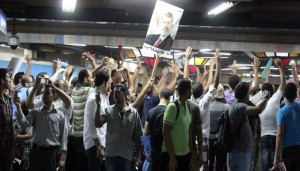
In the wake of the Arab Spring uprising in January 2011, demonstrators used the main Metro stations as protest venues. Clashes took place on the rails between police and demonstrators, and several stations were sabotaged while a few have been seriously destroyed, including Helwan, Maasara, Dar al-Salaam, Ezbet al-Nakhl and al-Marg. Those under renovation were thrown into chaos because of the lack of security, and these included the station at Hadayeq al-Maadi where a pedestrian bridge was ruined by protestors forcing passengers to cross from side to side over the rails and threatening their lives. Some stations were repeatedly restored and re-attacked, making the restoration process a nightmare.
Again in the wake of the security breakdown which followed the Arab Spring, street vendors have taken to occupying huge swathes of station areas, making it difficult for commuters to move about and navigate the stations. The vendors also extended their activity to the sidewalks and roads close to stations, causing huge problems for residents and commuters as they occupied space, screamed to advertise their wares, pushed pedestrians around, and had regular street fights. At the central Attaba station alone, more than 75 street vendors sold everything from appliances to clothing to shoes. They employed ‘spies’ to alert them to police raids. A vendor who asked to remain anonymous said he was not afraid of getting caught. “I have been caught five times, but I still come back here because it is the best place to sell,” he said.
As though the vendors are not enough, beggars plague the subway. They sit and beg, or ride the trains shouting out tragic stories in the hope of a generous response from passengers. The Metro company constantly broadcasts via its internal network the message: “Please don’t sympathise with the beggars in order to combat this phenomenon.”

The Metro is secure
Ahmed Abdel-Hadi , director of the Media and Information Department of the Egyptian Company for Metro Management and Operation, told Watani: “The Metro is very well-secured, and there is a security alert against any suspect person in subway stations, in addition to the plans in place for handling any malfunction or damage by protesters, and explosive detectors at main stations.”

From cultural forum to insulting graffiti
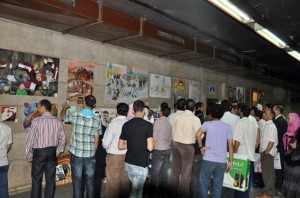
Before the January 2011 Revolution, some Metro stations regularly hosted art exhibitions and cultural performances. Right after the revolution, Sadat station witnessed an exhibition in which 130 Egyptian artists took part, showcasing fine arts and photographs reflecting life on the Egyptian street. More of the sort was planned, but the turmoil in the country rendered such plans unfeasible. A few stations had to be closed for fear of commuter safety, while others were turned into strongholds of people supporting one or the other of the conflicting political forces in Egypt, the pro-military or the pro-Muslim Brothers. Meanwhile the legendary cleanliness of the stations was marred by gross graffiti messages scribbled by the Muslim Brothers against the man who is now President Sisi.

A life of its own
“On the metro,” Marihan Saeed, a university student who trains at Watani says, “You get to be in the thick of activities of the Egyptian community. You encounter people from all walks of life: the aggressive, quarrelsome types; and the kind-hearted ones who are willing to help. You might see a thief get caught, with people leaving whatever they are doing and running after him until they catch him. You can hear heated discussions about anything and everything, but especially politics. In the Metro you can obviously feel the non-communication that modern technology and social networking has taken us to; so many people have their eyes glued to their smart phones or tablet screens. On Metro carriages you can also encounter those witty, funny, innovative vendors who make you smile and buy the product they are selling. They’re very different from street vendors, who are too pushy; they have never studied marketing or mass communications, but they frequently get under your skin. The Egyptian Metro, in short, is not just a means of transport; it is a whole life that springs up between the lines, stations and commuters.”

Milad Zaky

Watani International

6 August 2014
  

The life under Cairo (1)

Comments

comments

Tags: BeggarsCairoGraffitiIbrahim al-Demeiri ArtlinemetroPassengersstation?The life under CairoTicketsTrafficTrainsTransportundergroundVendors

Related Posts

China’s Long March launches USD190M tyre manufacturing project in Egypt
Economy

China’s Long March launches USD190M tyre manufacturing project in Egypt

June 17, 2026
Watani talks to Anba Bigol, Bishop and Abbot of al-Muharraq Monastery of the Holy Virgin Mary
Coptic Affairs

Watani talks to Anba Bigol, Bishop and Abbot of al-Muharraq Monastery of the Holy Virgin Mary

June 17, 2026
‘Train of Hope’ to carry home 1,200 Sudanese
E Choise

‘Train of Hope’ to carry home 1,200 Sudanese

June 16, 2026
Egypt launches ROX Motor partnership to manufacture new-energy vehicles
E Choise

Egypt launches ROX Motor partnership to manufacture new-energy vehicles

June 16, 2026
Developing skilled workforce for SCZone
Economy

Developing skilled workforce for SCZone

June 15, 2026
Jobs for persons with disabilities
NewsLine

Jobs for persons with disabilities

June 15, 2026

Editorial

China and Russia vis-à-vis Trump’s Iran War

More

MOST READ

Egypt attempts to contain Myna bird invasion
Environment

Egypt attempts to contain Myna bird invasion

June 15, 2026
0

The Nature Protection Sector of Egypt’s Ministry of Local Development and Environment has been monitoring and tracking the spread of...

Read more
Watani talks to Anba Bigol, Bishop and Abbot of al-Muharraq Monastery of the Holy Virgin Mary

Watani talks to Anba Bigol, Bishop and Abbot of al-Muharraq Monastery of the Holy Virgin Mary

June 17, 2026
Egypt’s Armenians

Egypt’s Armenians

April 22, 2015
‘Train of Hope’ to carry home 1,200 Sudanese

‘Train of Hope’ to carry home 1,200 Sudanese

June 16, 2026
Jobs for persons with disabilities

Jobs for persons with disabilities

June 15, 2026

Features

China’s Long March launches USD190M tyre manufacturing project in Egypt
Economy

China’s Long March launches USD190M tyre manufacturing project in Egypt

June 17, 2026
0

China’s Chaoyang Long March Tyre Co., Ltd. has launched a USD190 million tyre manufacturing project in Egypt’s Suez Canal Economic...

Read more
Watani started as an Egyptian weekly Sunday newspaper published in Cairo. The word Watani is Arabic for “My Homeland”. The paper was founded in 1958 by the prominent Copt Antoun Sidhom (1915 – 1995), who strove for the establishment of a civil, democratic society in Egypt, where all Egyptians would enjoy full citizenship rights regardless of their religious denomination. To this day when Watani is published as a weekly paper and an online news site, the objective remains the same. Those in charge of Watani view this role as a patriotic all-Egyptian vocation. Special attention is given to shedding light on Coptic culture and tradition as authentically Egyptian, this being a topic largely disregarded or little-understood by Egypt’s media. Watani is deeply dedicated to offer its readers high quality, extensive, objective, credible and well-researched media coverage, with special focus on Coptic issues, culture, heritage, and contribution to Egyptian society.
-----------------------------------------------------------

27 Abdel Khalek Tharwat st, Downtown, Abdeen,Cairo

00202-23927201

00202-23935946

 [email protected]


categories

  • News
  • Opinion
  • Politics
  • Culture
  • Egypt – Arab Spring
  • Coptic Affairs
  • Features
  • Watani Special Features

Recent Posts

  • China and Russia vis-à-vis Trump’s Iran War
  • China’s Long March launches USD190M tyre manufacturing project in Egypt
  • Watani talks to Anba Bigol, Bishop and Abbot of al-Muharraq Monastery of the Holy Virgin Mary
  • ‘Train of Hope’ to carry home 1,200 Sudanese
  • Egypt launches ROX Motor partnership to manufacture new-energy vehicles
  • News
  • Opinion
  • Politics
  • Culture
  • Egypt – Arab Spring
  • Coptic Affairs
  • Features
  • Watani Special Features

Powered BY 3A Digital.

No Result
View All Result
  • News
    • Accidents
    • Crime
    • Diplomatic briefcase
    • NewsLine
    • Outside Cairo
    • Special Occasions
  • Opinion
    • Editorial
    • International media
    • Reader`s Corner
    • Opinion
  • Politics
    • Elections
    • International Politics
    • Islamisation Politics
    • National Affairs
    • Parliament
    • Politics
    • Protests
    • Rights
    • Terrorism
  • Culture
    • Antiquity
    • Art
    • Books
    • Culture
    • Drama
    • Egyptology
    • Festivals
    • Films
    • Heritage
    • Islamisation Culture
    • Media
    • Museums
    • Music
    • TV
  • Coptic
    • Church Affairs
    • Coptic Affairs
    • Coptic Culture
    • Copts in the Media
    • Coptology
    • Copts Abroad
    • Religious
      • P. Shenouda: Bible Study
    • Sectarian
    • Inter-religious
    • Holy Family
  • Features
    • Counselling Corner
    • features
    • Economy
      • Business
    • Education
    • Social Issues
      • Behaviour
      • Mothers Day
    • Health
    • Environment
    • Humour
    • In memorial
    • Interviews
    • Nile
    • Profile
    • Special needs
    • Sports
    • Technology
    • Tourism
    • Wars
    • Women
    • Youth
  • Watani Special Features
    • Egypt – Arab Spring
      • 25 January Revolution
      • 25 Jan revolution, one year on
      • Egypt post-30 June
    • Watani Milestones
      • 20 years Watani International
      • 10 years Watani International
      • Watani Jubilee
    • Pope Shenouda
    • Pope Tawadros
    • Watani Forum

Powered BY 3A Digital.

Login to your account below

Forgotten Password?

Fill the forms bellow to register

All fields are required. Log In

Retrieve your password

Please enter your username or email address to reset your password.

Log In