
Editor in Chief
Youssef Sidhom
Watani
عربى English French
  • News
    • Accidents
    • Crime
    • Diplomatic briefcase
    • NewsLine
    • Outside Cairo
    • Special Occasions
  • Opinion
    • Editorial
    • International media
    • Reader`s Corner
    • Opinion
  • Politics
    • Elections
    • International Politics
    • Islamisation Politics
    • National Affairs
    • Parliament
    • Politics
    • Protests
    • Rights
    • Terrorism
  • Culture
    • Antiquity
    • Art
    • Books
    • Culture
    • Drama
    • Egyptology
    • Festivals
    • Films
    • Heritage
    • Islamisation Culture
    • Media
    • Museums
    • Music
    • TV
  • Coptic
    • Church Affairs
    • Coptic Affairs
    • Coptic Culture
    • Copts in the Media
    • Coptology
    • Copts Abroad
    • Religious
      • P. Shenouda: Bible Study
    • Sectarian
    • Inter-religious
    • Holy Family
  • Features
    • Counselling Corner
    • features
    • Economy
      • Business
    • Education
    • Social Issues
      • Behaviour
      • Mothers Day
    • Health
    • Environment
    • Humour
    • In memorial
    • Interviews
    • Nile
    • Profile
    • Special needs
    • Sports
    • Technology
    • Tourism
    • Wars
    • Women
    • Youth
  • Watani Special Features
    • Egypt – Arab Spring
      • 25 January Revolution
      • 25 Jan revolution, one year on
      • Egypt post-30 June
    • Watani Milestones
      • 20 years Watani International
      • 10 years Watani International
      • Watani Jubilee
    • Pope Shenouda
    • Pope Tawadros
    • Watani Forum
No Result
View All Result
  • News
    • Accidents
    • Crime
    • Diplomatic briefcase
    • NewsLine
    • Outside Cairo
    • Special Occasions
  • Opinion
    • Editorial
    • International media
    • Reader`s Corner
    • Opinion
  • Politics
    • Elections
    • International Politics
    • Islamisation Politics
    • National Affairs
    • Parliament
    • Politics
    • Protests
    • Rights
    • Terrorism
  • Culture
    • Antiquity
    • Art
    • Books
    • Culture
    • Drama
    • Egyptology
    • Festivals
    • Films
    • Heritage
    • Islamisation Culture
    • Media
    • Museums
    • Music
    • TV
  • Coptic
    • Church Affairs
    • Coptic Affairs
    • Coptic Culture
    • Copts in the Media
    • Coptology
    • Copts Abroad
    • Religious
      • P. Shenouda: Bible Study
    • Sectarian
    • Inter-religious
    • Holy Family
  • Features
    • Counselling Corner
    • features
    • Economy
      • Business
    • Education
    • Social Issues
      • Behaviour
      • Mothers Day
    • Health
    • Environment
    • Humour
    • In memorial
    • Interviews
    • Nile
    • Profile
    • Special needs
    • Sports
    • Technology
    • Tourism
    • Wars
    • Women
    • Youth
  • Watani Special Features
    • Egypt – Arab Spring
      • 25 January Revolution
      • 25 Jan revolution, one year on
      • Egypt post-30 June
    • Watani Milestones
      • 20 years Watani International
      • 10 years Watani International
      • Watani Jubilee
    • Pope Shenouda
    • Pope Tawadros
    • Watani Forum
No Result
View All Result
No Result
View All Result
Watani
ع Fr
ADVERTISEMENT

The dam that Ethiopia builds

3 September, 2014 - (1:05 PM)
0 0

Mervat Ayoub

The dam that Ethiopia builds
130
VIEWS
Share on FacebookShare on Twitter

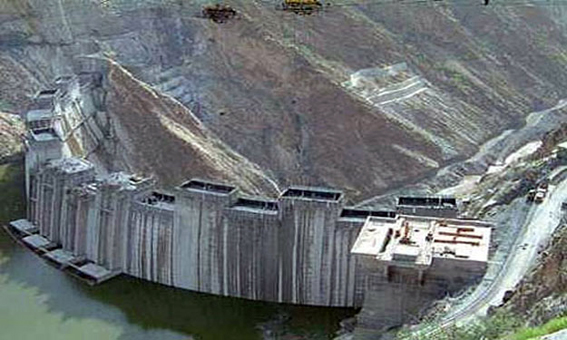
A recent meeting between the water ministers of Egypt, Sudan, and Ethiopia promises to herald in a new era of dialogue between the three States and to resolve the upwards of three-and-a-half years standoff between Egypt and Ethiopia over the latter’s Grand Renaissance Dam

That the Nile is Egypt’s lifeblood is a fact there can be no argument about. Contrary to other Nile Basin countries which all get abundant rainfall, Egypt is technically a desert; her sole reliable source of water is the Nile. It is understandable then that any threat to Egypt’s Nile waters supply spells a death sentence to land and people. This fact was the base for all the Nile water treaties signed from the end of the 19th century and until 1929 between Egypt and the upstream States to secure Egypt’s supply of Nile waters.
But the times changed and the populations of all the Nile Basin countries grew exponentially during the 20th century, placing more and more demands on the waters of the Nile. The upstream States insisted the treaties were signed during colonial times and no longer reflected the will of the people, and that they had every right to make more use of the Nile waters in their lands. The downstream countries, Egypt and its longtime water ally Sudan, insisted any projects upstream should in no way decrease the waters flowing downstream.

22

History of conflict
It’s not that Egypt was against the rational use of the Nile waters. After all is said, it should be remembered that Egypt financed and helped build the Owens Falls Dam for Uganda in 1925 and to this day shares in its operation. It also actively helped with development efforts in the riparian nations, built hospitals in Ethiopia, ‘cleaned’ the Nile course of the water hyacinth that clogged it in Uganda, helped with irrigation projects, offered African irrigation staff training in Cairo, and sent regular humanitarian aid to regions of drought or famine. In 1999, Cairo led the launching of the Nile Basin Initiative through which the ten riparian States would propose and decide on projects that would make use of the Nile waters and participate in their execution.
The tide went against Cairo, however, in 2010 with Nile upstream countries signing the Cooperative Framework Agreement which annulled the veto power held by Egypt on upstream projects that threatened its water supply. January 2011 saw the Arab Spring uprising in Egypt; the ensuing three-year-long political turmoil and rise of Muslim Brothers (MB) to power were not inductive to any efforts in the direction of resolving the conflict on the Nile waters.  Quite the contrary, Islamist influence undermined African relations. Coincidentally, Ethiopia started in 2011 building the Grand Renaissance Dam (GRD) on the Blue Nile, a main tributary of the Nile, purportedly to store water for irrigation and produce some 6000 megawatts of electricity a year. It declared it would change the design to drastically raise the dam height to 145m in order to increase its reservoir capacity from the original 11 billion cu.m. to 74 billion cu.m. Cairo saw red. It claimed the new design would deprive Egypt of a full 20 per cent of its water supply.

Roadmap
The political chaos in Egypt, however, allowed for no constructive talks and Ethiopia went ahead with building the USD4.2 billion dam. July 2013 saw the downfall of the MB regime in Egypt by massive popular will and the backing of the military. Egyptians vowed they would have no more Islamist rule; in January 2014 they established a secular Constitution and in June 2014 elected a secular president, Abdel-Fattah al-Sisi. Both Constitution and President were voted in by landslides; the political climate in Egypt thus strongly headed towards stability and rebuilding what had been lost to the Arab Spring.  
The recent meeting between the Water and Irrigation Ministers of the three Nile Basin States Egypt, Sudan, and Ethiopia has raised hopes that the upwards of three-year bitter standoff over the building of Ethiopia’s GRD and its potential impact on Egypt’s water supply is on its way to be resolved. The meeting, held in Khartoum on 25 and 26 August, was the first since Sisi became President.  
Participating were Hussam Eddin Mughazi, Egypt’s Minister of Irrigation and Water Resources; Muataz Musa, Sudan Minister of water Resources and Electricity; and Ethiopia’s Alemayehu Tignu, Minister of Irrigation and Water Resources. All three spoke, calmly and courteously, of the need for cooperation to make best use of the Nile waters and to resolve dispute through dialogue.  
The three countries agreed to a roadmap towards fulfilling the resolutions recommended in May 2013 by the international commission for the assessment of the GRD. The roadmap runs over a period of six months that began this September and runs till March 2015, during which time the first phase of the GRD would not have yet been completed.

33

International assessment
According to the roadmap, a 12-person commission of four members from each of the three States should meet to name a consultancy firm that would complete the technical studies and issue its resolution which ought to be binding to all. It should also name a number of international experts to be tasked with resolving any dispute.
The final joint statement hailed the talks as fruitful, held in a climate of trust and transparency. Dr Mughazi told the media that the first phase of the GRD would provide for a reservoir capacity of 14 billion cu.m. of water, which represents no threat to Egypt’s water supply. If the technical studies indicate any risk, it will doubtless be taken into account by Ethiopia during Phase 2 of the construction of the dam. He stressed that Ethiopia has pledged to abide by the recommendation of the technical commission. The points of contention between Egypt and Ethiopia, he said, had been over the capacity of the reservoir, the period for filling and emptying it, and the dam management and operation which Egypt demanded to be part of. Ethiopia, Dr Mughazi said, had refused to cooperate by making documents of the dam design accessible, but this has now changed.
Ethiopia extended an olive branch by inviting Dr Mughazi to visit the GRD site. The Egyptian Minister directly accepted, and said a delegation will be formed to visit the dam. President Sisi said Egypt wished that the GRD would be an instrument to enhance development and prosperity in Egypt, Sudan, and Ethiopia, and that the water rights of all three countries would be honoured. The upcoming visit by the Egyptian delegation to the dam, he said, was sure to foster trust between Egypt and Ethiopia.

Building trust
The Sudanese water expert Salman Muhammad Ahmed Salman applauded the trust building climate of the recent meeting in Khartoum, especially after the failure of earlier meetings and after Sudan announced in December 2013 its full support of the building of the GRD. Egypt was not happy; she saw the move by Sudan as forsaking the time-honoured alliance between the two countries regarding the Nile waters, and that it came in the wake of an Ethiopian ‘bribe’ to Sudan in the form of a 100MW installment of ultra-cheap electricity supply and a return of a disputed 40 feddan swath of land on the Ethiopian border.
Dr Salman, however, does not see matters this way. He says the electricity was a godsend to power-hungry Sudan, and a taste of the benefit the GRD stood to grant the country. The move, however, increased Egypt’s stubbornness while Ethiopia went ahead with its plans of rendering the GRD a fait accompli. The Italian contractor Salini Construttori which was granted the contract to build the GRD without bidding continued building; French, Swiss, and UK engineering firms competed to sell equipment to Ethiopia to build the dam; and China went on building the electric grid that would carry the power generated. As Dr Salman saw it, time was not on Egypt’s side.

New realities on the ground
The year 2014 brought about significant changes. In Egypt, Mr Sisi was elected President. He opened a new chapter of cordial relations with Ethiopia, and stressed that cooperation and dialogue should form the basis for relations between the two countries. Hence the decision to go back to the negotiation table, Dr Salman said.
One month earlier, in May 2014, the United Nations Watercourse Convention was ratified by 35 member States, and entered into force in August 2014. The agreement bases the exploitation of water resources on cooperation among those living alongside it. It sees watercourses as common resources that should be protected, used and managed fairly and rationally; and stipulates peaceful means for the resolution of conflicts. “I was among the group of international law experts tasked with explaining the agreement to the various States and answering their questions,” Dr Salman said.
None of the 11 Nile Basin States was among the signatories of the agreement but, according to Dr Salman, the agreement has sent a message that the world is embarking on a new era where water resources should be exploited equitably. As far as Egypt, Sudan, and Ethiopia are concerned, he said, the spirit of the UN agreement translated well in their recent meeting. Egypt has accepted the reality of the GRD, and Ethiopia has agreed to the principle of international participation in the studies on the dam, a principle Egypt had called for since Day One.
Dr Salman warned, however, that the roadmap drawn in Khartoum is not the end of the road. He expects the coming period to see a tug-of-war between Egypt and Ethiopia over the naming of the international experts and consultancy house. But he has high hopes that the spirit of trust between both States will work to iron out the differences.

Watani International
3 September 2014


Free Cheap LV Factory Outlet Sale Louis Vuitton Factory Store Buy Louis Vuitton Factory Store Discount Louis Vuitton Factory Store Wholesale Louis Vuitton Factory Store Authentic Louis Vuitton Factory Store Purchase Louis Vuitton Factory Store Luxury Louis Vuitton Factory Store Free Shipping Louis Vuitton Factory Store 79% OFF Louis Vuitton Factory Store Bags Louis Vuitton Factory Store Handbags Louis Vuitton Factory Store Purses Louis Vuitton Factory Store Shoes Louis Vuitton Factory Store Belts Louis Vuitton Factory Store Wallets Louis Vuitton Factory Store Review Louis Vuitton Factory Store Cheapest Louis Vuitton Factory Store Real Quality Louis Vuitton Factory Store Brand New Louis Vuitton Factory Store Lowest Price

Comments

comments

Tags: Alemayehu TignuCooperative Framework AgreementEgyptEthiopiaHussam Eddin MughaziMinister of Irrigation and Water ResourcesMuataz MusaNileNile BassinNile watersOwen Falls DamSudanSudan Minister of water Resources and Electricitythe Renaissance Dam

Related Posts

China’s Long March launches USD190M tyre manufacturing project in Egypt
Economy

China’s Long March launches USD190M tyre manufacturing project in Egypt

June 17, 2026
Watani talks to Anba Bigol, Bishop and Abbot of al-Muharraq Monastery of the Holy Virgin Mary
Coptic Affairs

Watani talks to Anba Bigol, Bishop and Abbot of al-Muharraq Monastery of the Holy Virgin Mary

June 17, 2026
‘Train of Hope’ to carry home 1,200 Sudanese
E Choise

‘Train of Hope’ to carry home 1,200 Sudanese

June 16, 2026
Egypt launches ROX Motor partnership to manufacture new-energy vehicles
E Choise

Egypt launches ROX Motor partnership to manufacture new-energy vehicles

June 16, 2026
Developing skilled workforce for SCZone
Economy

Developing skilled workforce for SCZone

June 15, 2026
Jobs for persons with disabilities
NewsLine

Jobs for persons with disabilities

June 15, 2026

Editorial

China and Russia vis-à-vis Trump’s Iran War

More

MOST READ

Egypt attempts to contain Myna bird invasion
Environment

Egypt attempts to contain Myna bird invasion

June 15, 2026
0

The Nature Protection Sector of Egypt’s Ministry of Local Development and Environment has been monitoring and tracking the spread of...

Read more
Watani talks to Anba Bigol, Bishop and Abbot of al-Muharraq Monastery of the Holy Virgin Mary

Watani talks to Anba Bigol, Bishop and Abbot of al-Muharraq Monastery of the Holy Virgin Mary

June 17, 2026
Egypt’s Armenians

Egypt’s Armenians

April 22, 2015
‘Train of Hope’ to carry home 1,200 Sudanese

‘Train of Hope’ to carry home 1,200 Sudanese

June 16, 2026
Jobs for persons with disabilities

Jobs for persons with disabilities

June 15, 2026

Features

China’s Long March launches USD190M tyre manufacturing project in Egypt
Economy

China’s Long March launches USD190M tyre manufacturing project in Egypt

June 17, 2026
0

China’s Chaoyang Long March Tyre Co., Ltd. has launched a USD190 million tyre manufacturing project in Egypt’s Suez Canal Economic...

Read more
Watani started as an Egyptian weekly Sunday newspaper published in Cairo. The word Watani is Arabic for “My Homeland”. The paper was founded in 1958 by the prominent Copt Antoun Sidhom (1915 – 1995), who strove for the establishment of a civil, democratic society in Egypt, where all Egyptians would enjoy full citizenship rights regardless of their religious denomination. To this day when Watani is published as a weekly paper and an online news site, the objective remains the same. Those in charge of Watani view this role as a patriotic all-Egyptian vocation. Special attention is given to shedding light on Coptic culture and tradition as authentically Egyptian, this being a topic largely disregarded or little-understood by Egypt’s media. Watani is deeply dedicated to offer its readers high quality, extensive, objective, credible and well-researched media coverage, with special focus on Coptic issues, culture, heritage, and contribution to Egyptian society.
-----------------------------------------------------------

27 Abdel Khalek Tharwat st, Downtown, Abdeen,Cairo

00202-23927201

00202-23935946

 [email protected]


categories

  • News
  • Opinion
  • Politics
  • Culture
  • Egypt – Arab Spring
  • Coptic Affairs
  • Features
  • Watani Special Features

Recent Posts

  • China and Russia vis-à-vis Trump’s Iran War
  • China’s Long March launches USD190M tyre manufacturing project in Egypt
  • Watani talks to Anba Bigol, Bishop and Abbot of al-Muharraq Monastery of the Holy Virgin Mary
  • ‘Train of Hope’ to carry home 1,200 Sudanese
  • Egypt launches ROX Motor partnership to manufacture new-energy vehicles
  • News
  • Opinion
  • Politics
  • Culture
  • Egypt – Arab Spring
  • Coptic Affairs
  • Features
  • Watani Special Features

Powered BY 3A Digital.

No Result
View All Result
  • News
    • Accidents
    • Crime
    • Diplomatic briefcase
    • NewsLine
    • Outside Cairo
    • Special Occasions
  • Opinion
    • Editorial
    • International media
    • Reader`s Corner
    • Opinion
  • Politics
    • Elections
    • International Politics
    • Islamisation Politics
    • National Affairs
    • Parliament
    • Politics
    • Protests
    • Rights
    • Terrorism
  • Culture
    • Antiquity
    • Art
    • Books
    • Culture
    • Drama
    • Egyptology
    • Festivals
    • Films
    • Heritage
    • Islamisation Culture
    • Media
    • Museums
    • Music
    • TV
  • Coptic
    • Church Affairs
    • Coptic Affairs
    • Coptic Culture
    • Copts in the Media
    • Coptology
    • Copts Abroad
    • Religious
      • P. Shenouda: Bible Study
    • Sectarian
    • Inter-religious
    • Holy Family
  • Features
    • Counselling Corner
    • features
    • Economy
      • Business
    • Education
    • Social Issues
      • Behaviour
      • Mothers Day
    • Health
    • Environment
    • Humour
    • In memorial
    • Interviews
    • Nile
    • Profile
    • Special needs
    • Sports
    • Technology
    • Tourism
    • Wars
    • Women
    • Youth
  • Watani Special Features
    • Egypt – Arab Spring
      • 25 January Revolution
      • 25 Jan revolution, one year on
      • Egypt post-30 June
    • Watani Milestones
      • 20 years Watani International
      • 10 years Watani International
      • Watani Jubilee
    • Pope Shenouda
    • Pope Tawadros
    • Watani Forum

Powered BY 3A Digital.

Login to your account below

Forgotten Password?

Fill the forms bellow to register

All fields are required. Log In

Retrieve your password

Please enter your username or email address to reset your password.

Log In