
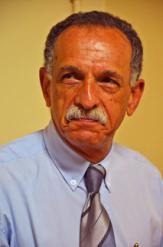
Editor in Chief
Youssef Sidhom
Watani
عربى English French
  • News
    • Accidents
    • Crime
    • Diplomatic briefcase
    • NewsLine
    • Outside Cairo
    • Special Occasions
  • Opinion
    • Editorial
    • International media
    • Reader`s Corner
    • Opinion
  • Politics
    • Elections
    • International Politics
    • Islamisation Politics
    • National Affairs
    • Parliament
    • Politics
    • Protests
    • Rights
    • Terrorism
  • Culture
    • Antiquity
    • Art
    • Books
    • Culture
    • Drama
    • Egyptology
    • Festivals
    • Films
    • Heritage
    • Islamisation Culture
    • Media
    • Museums
    • Music
    • TV
  • Coptic
    • Church Affairs
    • Coptic Affairs
    • Coptic Culture
    • Copts in the Media
    • Coptology
    • Copts Abroad
    • Religious
      • P. Shenouda: Bible Study
    • Sectarian
    • Inter-religious
    • Holy Family
  • Features
    • Counselling Corner
    • features
    • Economy
      • Business
    • Education
    • Social Issues
      • Behaviour
      • Mothers Day
    • Health
    • Environment
    • Humour
    • In memorial
    • Interviews
    • Nile
    • Profile
    • Special needs
    • Sports
    • Technology
    • Tourism
    • Wars
    • Women
    • Youth
  • Watani Special Features
    • Egypt – Arab Spring
      • 25 January Revolution
      • 25 Jan revolution, one year on
      • Egypt post-30 June
    • Watani Milestones
      • 20 years Watani International
      • 10 years Watani International
      • Watani Jubilee
    • Pope Shenouda
    • Pope Tawadros
    • Watani Forum
No Result
View All Result
  • News
    • Accidents
    • Crime
    • Diplomatic briefcase
    • NewsLine
    • Outside Cairo
    • Special Occasions
  • Opinion
    • Editorial
    • International media
    • Reader`s Corner
    • Opinion
  • Politics
    • Elections
    • International Politics
    • Islamisation Politics
    • National Affairs
    • Parliament
    • Politics
    • Protests
    • Rights
    • Terrorism
  • Culture
    • Antiquity
    • Art
    • Books
    • Culture
    • Drama
    • Egyptology
    • Festivals
    • Films
    • Heritage
    • Islamisation Culture
    • Media
    • Museums
    • Music
    • TV
  • Coptic
    • Church Affairs
    • Coptic Affairs
    • Coptic Culture
    • Copts in the Media
    • Coptology
    • Copts Abroad
    • Religious
      • P. Shenouda: Bible Study
    • Sectarian
    • Inter-religious
    • Holy Family
  • Features
    • Counselling Corner
    • features
    • Economy
      • Business
    • Education
    • Social Issues
      • Behaviour
      • Mothers Day
    • Health
    • Environment
    • Humour
    • In memorial
    • Interviews
    • Nile
    • Profile
    • Special needs
    • Sports
    • Technology
    • Tourism
    • Wars
    • Women
    • Youth
  • Watani Special Features
    • Egypt – Arab Spring
      • 25 January Revolution
      • 25 Jan revolution, one year on
      • Egypt post-30 June
    • Watani Milestones
      • 20 years Watani International
      • 10 years Watani International
      • Watani Jubilee
    • Pope Shenouda
    • Pope Tawadros
    • Watani Forum
No Result
View All Result
No Result
View All Result
Watani
ع Fr
ADVERTISEMENT

Blessing in disguise?

13 December, 2014 - (1:01 AM)
0 0

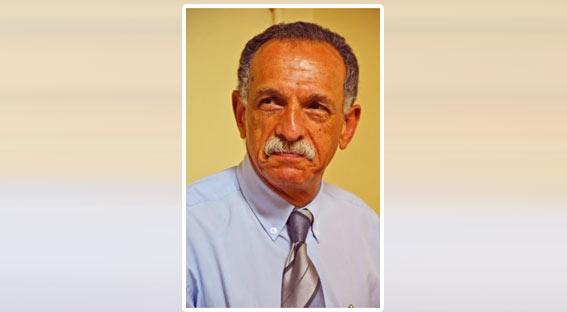
Youssef Sidhom

Youssef Sidhom
13
VIEWS
Share on FacebookShare on Twitter

Problems on hold

The delay in parliamentary elections

Had the political leadership abided by the time frame set by the Roadmap, the Supreme Parliamentary Elections Committee (SPEC) would have announced last October the start of the process of parliamentary elections. The Roadmap was jointly drawn in July 2013 by representatives of the various sectors of the Egyptian society to chart the course Egypt would follow to achieve democracy; it was set directly following the overthrow of President Muhammad Mursi’s post-Arab Spring Islamist regime. Back then, mass public revolt against the Islamists led the military to intervene; the Islamists were overthrown and the Roadmap drawn. So far, Egypt has instituted a new Constitution which confirms it as a civil State, and elected the moderate Abdel-Fattah al-Sisi as President. Now it remains for the country to elect a parliament.

Had the Roadmap gone as planned, Egypt would have today been in the thick of electoral campaigning for the first of three phases of parliamentary elections. But nothing of the sort is going on, and the political scene appears ambiguous and confused. The SPEC is still working on a meticulous revision of electoral constituencies, with the objective of ensuring fair representation basing on geographic, administrative and population density factors. It is striving to save the new parliament of claims of non-constitutionality as had plagued the Islamist post-Arab Spring parliament.
The upcoming parliament is of supreme importance. As the first parliament after the 2014 Constitution, it shoulders the momentous task of enacting legislation that would make the reform stipulated by the Constitution a fact on the ground. The absolute majority will be assigned with forming the Cabinet which, according to the Constitution, holds unprecedented wide powers; it takes Egypt from the presidential republic that had extended over some six decades (1952 – 2014) to a presidential parliamentary republic where authorities are divided between the President and the Premier.

For now, even as the SPEC struggles with the groundwork, attempts to create strong electoral coalitions capable of garnering the largest number of parliamentary seats are dominating the political arena. But this arena obviously lacks the political maturity to produce strong parliamentary candidates, and the upcoming parliament looks as yet featureless and undefined. The stumbling, delays, and postponements make for a scene rife with speculation and rumour. Instead of preparing for the elections and familiarising themselves with the various options on the political scene, Egyptians are puzzled at and apprehensive of the choices that will be open to them come election day. Many fear they will not be sufficiently informed to make a sound choice. A large portion would thus ‘play it safe’ and refrain from voting altogether. The blurred vision and the short period between the drawing of constituencies and the formation of strong political coalitions do not make for sound election choices. Then we would lament the low turnout.

It is very sad that most voters are unaware of the candidates contesting the elections in their constituencies—that is if they know to which constituency they belong in the first place. This means they will probably vote for the names whispered in their ears by those who actively endorse one or other of the candidates, and who always claim to be all-knowing; the entire situation turns into some ceremonial, farcical practice. The candidates who stand the most chance are those backed by significant clan loyalty in Egypt’s provincial areas, since they are well known within their constituencies and their voting blocs; political parties and coalitions stand next to no chance there. This explains the traditional hegemony over parliamentary seats by the large families and clans in the country’s provinces. The problem is that such lawmakers look after their special, narrow interests rather than those of the entire nation.

Given these on the ground facts, should we be enraged at the delay in parliamentary elections? I think not. I believe we’re better off taking our time; we cannot afford to rush into parliamentary elections while we are, to put it mildly, in this delicate position. Rumours circulate that the current authorities are deliberately procrastinating before opening the door for candidacy, for fear of the division, fragmentation and bargaining which still dominate the political scene, and which create a vacuum that only the so far missing strong coalitions can fill. The open secret is that no one can tolerate the risk of Egypt being once more hijacked by the Islamists. Despite being a political minority today, they are an organised minority that aims to sneak into parliament even as the other contenders fight over dividing the cake. The organised minority will then swallow the largest part of the cake, while all the others get tiny tidbits and wail, lamenting their luck. But it shouldn’t be their stars they lament but their utter failure.

Watani International
14 December 2014
Comments

comments

Tags: Arab SpringParliamentParliamentary electionsProblems on holdTags: EgyptYoussef Sidhom

Related Posts

Youssef Sidhom
Editorial

China and Russia vis-à-vis Trump’s Iran War

June 19, 2026
Youssef Sidhom
Editorial

Six months on approval of legality of 29th batch of churches: 30th batch approved

June 14, 2026
Youssef Sidhom
Editorial

US / Israel intransigence in Iran war: What do they gain?

June 5, 2026
Editorial

Iran war: Looming economic crisis

May 29, 2026
Youssef Sidhom
Editorial

Trump in Beijing: No cards to bargain

May 22, 2026
Youssef Sidhom
Editorial

Russia, Iran, China: Emerging triangle of power 

May 15, 2026

Editorial

China and Russia vis-à-vis Trump’s Iran War

More

MOST READ

Egypt attempts to contain Myna bird invasion
Environment

Egypt attempts to contain Myna bird invasion

June 15, 2026
0

The Nature Protection Sector of Egypt’s Ministry of Local Development and Environment has been monitoring and tracking the spread of...

Read more
Watani talks to Anba Bigol, Bishop and Abbot of al-Muharraq Monastery of the Holy Virgin Mary

Watani talks to Anba Bigol, Bishop and Abbot of al-Muharraq Monastery of the Holy Virgin Mary

June 17, 2026
Egypt’s Armenians

Egypt’s Armenians

April 22, 2015
‘Train of Hope’ to carry home 1,200 Sudanese

‘Train of Hope’ to carry home 1,200 Sudanese

June 16, 2026
Jobs for persons with disabilities

Jobs for persons with disabilities

June 15, 2026

Features

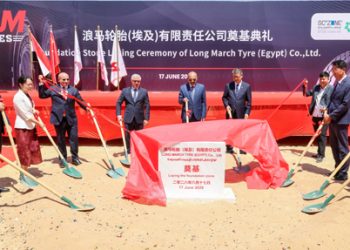
China’s Long March launches USD190M tyre manufacturing project in Egypt
Economy

China’s Long March launches USD190M tyre manufacturing project in Egypt

June 17, 2026
0

China’s Chaoyang Long March Tyre Co., Ltd. has launched a USD190 million tyre manufacturing project in Egypt’s Suez Canal Economic...

Read more
Watani started as an Egyptian weekly Sunday newspaper published in Cairo. The word Watani is Arabic for “My Homeland”. The paper was founded in 1958 by the prominent Copt Antoun Sidhom (1915 – 1995), who strove for the establishment of a civil, democratic society in Egypt, where all Egyptians would enjoy full citizenship rights regardless of their religious denomination. To this day when Watani is published as a weekly paper and an online news site, the objective remains the same. Those in charge of Watani view this role as a patriotic all-Egyptian vocation. Special attention is given to shedding light on Coptic culture and tradition as authentically Egyptian, this being a topic largely disregarded or little-understood by Egypt’s media. Watani is deeply dedicated to offer its readers high quality, extensive, objective, credible and well-researched media coverage, with special focus on Coptic issues, culture, heritage, and contribution to Egyptian society.
-----------------------------------------------------------

27 Abdel Khalek Tharwat st, Downtown, Abdeen,Cairo

00202-23927201

00202-23935946

 [email protected]


categories

  • News
  • Opinion
  • Politics
  • Culture
  • Egypt – Arab Spring
  • Coptic Affairs
  • Features
  • Watani Special Features

Recent Posts

  • China and Russia vis-à-vis Trump’s Iran War
  • China’s Long March launches USD190M tyre manufacturing project in Egypt
  • Watani talks to Anba Bigol, Bishop and Abbot of al-Muharraq Monastery of the Holy Virgin Mary
  • ‘Train of Hope’ to carry home 1,200 Sudanese
  • Egypt launches ROX Motor partnership to manufacture new-energy vehicles
  • News
  • Opinion
  • Politics
  • Culture
  • Egypt – Arab Spring
  • Coptic Affairs
  • Features
  • Watani Special Features

Powered BY 3A Digital.

No Result
View All Result
  • News
    • Accidents
    • Crime
    • Diplomatic briefcase
    • NewsLine
    • Outside Cairo
    • Special Occasions
  • Opinion
    • Editorial
    • International media
    • Reader`s Corner
    • Opinion
  • Politics
    • Elections
    • International Politics
    • Islamisation Politics
    • National Affairs
    • Parliament
    • Politics
    • Protests
    • Rights
    • Terrorism
  • Culture
    • Antiquity
    • Art
    • Books
    • Culture
    • Drama
    • Egyptology
    • Festivals
    • Films
    • Heritage
    • Islamisation Culture
    • Media
    • Museums
    • Music
    • TV
  • Coptic
    • Church Affairs
    • Coptic Affairs
    • Coptic Culture
    • Copts in the Media
    • Coptology
    • Copts Abroad
    • Religious
      • P. Shenouda: Bible Study
    • Sectarian
    • Inter-religious
    • Holy Family
  • Features
    • Counselling Corner
    • features
    • Economy
      • Business
    • Education
    • Social Issues
      • Behaviour
      • Mothers Day
    • Health
    • Environment
    • Humour
    • In memorial
    • Interviews
    • Nile
    • Profile
    • Special needs
    • Sports
    • Technology
    • Tourism
    • Wars
    • Women
    • Youth
  • Watani Special Features
    • Egypt – Arab Spring
      • 25 January Revolution
      • 25 Jan revolution, one year on
      • Egypt post-30 June
    • Watani Milestones
      • 20 years Watani International
      • 10 years Watani International
      • Watani Jubilee
    • Pope Shenouda
    • Pope Tawadros
    • Watani Forum

Powered BY 3A Digital.

Login to your account below

Forgotten Password?

Fill the forms bellow to register

All fields are required. Log In

Retrieve your password

Please enter your username or email address to reset your password.

Log In