
Editor in Chief
Youssef Sidhom
Watani
عربى English French
  • News
    • Accidents
    • Crime
    • Diplomatic briefcase
    • NewsLine
    • Outside Cairo
    • Special Occasions
  • Opinion
    • Editorial
    • International media
    • Reader`s Corner
    • Opinion
  • Politics
    • Elections
    • International Politics
    • Islamisation Politics
    • National Affairs
    • Parliament
    • Politics
    • Protests
    • Rights
    • Terrorism
  • Culture
    • Antiquity
    • Art
    • Books
    • Culture
    • Drama
    • Egyptology
    • Festivals
    • Films
    • Heritage
    • Islamisation Culture
    • Media
    • Museums
    • Music
    • TV
  • Coptic
    • Church Affairs
    • Coptic Affairs
    • Coptic Culture
    • Copts in the Media
    • Coptology
    • Copts Abroad
    • Religious
      • P. Shenouda: Bible Study
    • Sectarian
    • Inter-religious
    • Holy Family
  • Features
    • Counselling Corner
    • features
    • Economy
      • Business
    • Education
    • Social Issues
      • Behaviour
      • Mothers Day
    • Health
    • Environment
    • Humour
    • In memorial
    • Interviews
    • Nile
    • Profile
    • Special needs
    • Sports
    • Technology
    • Tourism
    • Wars
    • Women
    • Youth
  • Watani Special Features
    • Egypt – Arab Spring
      • 25 January Revolution
      • 25 Jan revolution, one year on
      • Egypt post-30 June
    • Watani Milestones
      • 20 years Watani International
      • 10 years Watani International
      • Watani Jubilee
    • Pope Shenouda
    • Pope Tawadros
    • Watani Forum
No Result
View All Result
  • News
    • Accidents
    • Crime
    • Diplomatic briefcase
    • NewsLine
    • Outside Cairo
    • Special Occasions
  • Opinion
    • Editorial
    • International media
    • Reader`s Corner
    • Opinion
  • Politics
    • Elections
    • International Politics
    • Islamisation Politics
    • National Affairs
    • Parliament
    • Politics
    • Protests
    • Rights
    • Terrorism
  • Culture
    • Antiquity
    • Art
    • Books
    • Culture
    • Drama
    • Egyptology
    • Festivals
    • Films
    • Heritage
    • Islamisation Culture
    • Media
    • Museums
    • Music
    • TV
  • Coptic
    • Church Affairs
    • Coptic Affairs
    • Coptic Culture
    • Copts in the Media
    • Coptology
    • Copts Abroad
    • Religious
      • P. Shenouda: Bible Study
    • Sectarian
    • Inter-religious
    • Holy Family
  • Features
    • Counselling Corner
    • features
    • Economy
      • Business
    • Education
    • Social Issues
      • Behaviour
      • Mothers Day
    • Health
    • Environment
    • Humour
    • In memorial
    • Interviews
    • Nile
    • Profile
    • Special needs
    • Sports
    • Technology
    • Tourism
    • Wars
    • Women
    • Youth
  • Watani Special Features
    • Egypt – Arab Spring
      • 25 January Revolution
      • 25 Jan revolution, one year on
      • Egypt post-30 June
    • Watani Milestones
      • 20 years Watani International
      • 10 years Watani International
      • Watani Jubilee
    • Pope Shenouda
    • Pope Tawadros
    • Watani Forum
No Result
View All Result
No Result
View All Result
Watani
ع Fr
ADVERTISEMENT

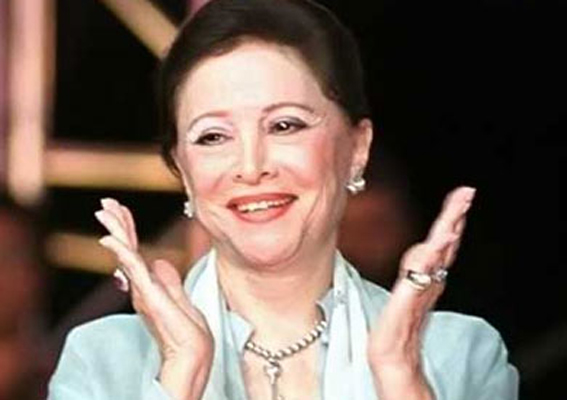
Faten Hamama (1931 – 2015): Lady of the Screen fades into eternity

21 January, 2015 - (1:41 PM)
0 0

Madeleine Nader

Faten Hamama (1931 – 2015): Lady of the Screen fades into eternity
912
VIEWS
Share on FacebookShare on Twitter


She was the dream woman of every Egyptian man and the inspiration of every Egyptian woman. She was the soft, tender beauty who exuded kindness, gentleness and good humour; but who also displayed the integrity and strength of character that could pull through difficult times. Labelled the ‘Lady of the Arab Screen’, Faten Hamama was a lady in the full sense of the word.
Hamama died last week after a brief spell of ill health. She was 83 and her appearances on the screen had been sporadic and too far apart during her late years, yet Egyptians in their entirety mourned her loss.

2


“Angel of mercy”
Faten Hamama was born in 1931 to a family that lived in the Delta town of Mansoura. Her father worked with the Egyptian Ministry of Education and her mother was a homemaker. The second of six siblings, her interest in acting started at the early age of six when, for the first time in her life, she was taken by her father to a cinema theatre to see a film.
When she was eight, she won a child beauty pageant in Cairo. Her father, seeing her fascination with acting, sent her picture to film director Muhammad Karim who was incidentally looking for a young girl to play a role in a film he was then directing. So it was that Hamama was initiated into the world of the silver screen; her first role was against the iconic film star and music composer Muhammad Abdel-Wahab in Youm Saeed (Happy Day).
Four years later, she was chosen by Karim for another role with Abdel-Wahab in the film Russassa Fil-Qalb (Bullet in the Heart). Her third film, Dunia (A World) (1946), secured her reputation as a film actress to be reckoned with. The family moved to Cairo in 1946 and she enrolled in the High Institute of Acting.
That same year, Youssef Wahbi, the leading star of the 1930s and 1940s and one of the most prominent Arab theatre and film actors, recognised the young actress’s talent and offered her the role of his daughter in the film Malaak al-Rahma (Angel of Mercy). She starred in three other films with Wahbi, all of which were huge successes.


3


Honour killing
The 1950s saw Hamama bloom into a young woman in her own right. She outgrew the roles of the sweet, gentle girl and stepped into roles of women of substance. In the 1952 production Ustaza Fatma (Lawyer Fatma) she played the young female lawyer who, despite her show of strength, falls desperately in love with her rival male lawyer and marries him. The film depicted the then raging social conflict of whether women should have successful careers or stick to their eternal role as homemakers.
But the widely held view is that Hamama reached full artistic maturity with her epic role in the 1959 production Duaa’ al-Karawan (The Nightingale’s Prayer). Based on a novel by the writer and figurehead of the modern Egyptian Renaissance enlightenment movement Taha Hussein, the film broached the thorny issue of honour killings. Hamama played the village girl Amna from Upper Egypt, and her quest to avenge her only sister who had lost her life to an honour killing. The interplay of grief, hate, bitterness and pain, persistence to see justice served, and the unannounced and unexpected emergence of love in Amna’s life make for a complex tragedy which unfolds with Hamama’s masterful, passionate acting.
After this film, Hamama is said to have picked her roles very carefully. In 1960, she starred in Nahr al-Hob (River of Love) which was based on Leo Tolstoy’s Anna Karenina. And in 1961, she played the lead role in the film La Tutfi’ al-Shams (Don’t Turn Off the Sun), based on a novel by Ihsan Abdel-Quddous, another prominent Egyptian novelist and writer.


4


Oppressed women
Hamama grew to play more memorable roles in Egyptian cinema, many of them reflecting controversial social issues. In Imbraturiyat Meem (The ‘M’ Empire) she plays the widowed, doting mother of six teenage and pre-teenage sons and daughters, all of whose names begin with the letter M, and her struggle to come to an understanding with each of them.
Hamama’s 1975 Uridu Hallan (I Demand a Solution) had a bombshell effect on the Egyptian community. To a novel by the feminist Husn Shah, Hamama played a woman who sustained a miserable marriage till her children were grown, and then demands a divorce. But her husband refuses. In Islamic sharia, divorce can only be through the husband’s unilateral decision; the woman has to comply to his wish even if by force. The film depicts the woman literally fleeing the police who were called upon to implement the law and lead her to her husband’s home. So powerfully did she play the leading role that years later the law was made to include the Islamic principle of khula, the right of a wife to have a divorce provided she gives up all her legal and financial rights.
In 1988, Hamama played another widow, this time alone struggling uncomplainingly with heavy burdens and controversial issues yet never losing hope that good days lie ahead. The name of the film: Youm Hilw…Youm Murr (Sweet Day…Bitter Day), directed by Khairy Bishara.

5


Uncompromising integrity
It took till 1992 for Hamama to act in TV drama, when her role as the principled headmistress Abla Hikmat in the mini series Dhameer Abla Hikmat (Miss Hikmat’s Conscience) earned her wide public acclaim. These were times when Egypt made the full circle from a socialist to a free economy and many of the firmly established Egyptian social norms were shaken. Consumerism rose to alarming levels, and social climbers rose to new heights. Abla Hikmat was the woman who, because of her uncompromising effort to guard her school against unethical practices and compassionately guide her students through a path of honour and integrity, is cruelly targeted by those who wish the school to use another compromising path.
Another TV mini series, Wagh al-Qamar (Face of the Moon), saw Hamama’s last screen appearance in 2000. The mini series criticised many social ills in Egypt and the Middle East, and won the Best TV Series Award in the Egyptian Radio and TV Festival that year. Hamama was awarded the Best TV Actor of the Year.


6


Honours well earned
During her long career on the screen, Hamama won numerous prizes and awards. She was awarded an Honorary Doctorate by the American University in Cairo in 1999, and in 2001 was decorated with the al-Arz Medal (Lebanon Cedar) in Lebanon. That same year she was also awarded the Decoration of Competence and Creativity in Morocco.
Hamama was chosen the Star of the Century in the 2001 Alexandria International Film Festival, honouring her lifetime achievement in Egyptian cinema.
The cinema committee of the Supreme Council for Culture chose 18 of Hamama’s 106 films to be among the best 150 films in the history of Egyptian Cinema.
Last May, during a gathering which President Abdel-Fattah al-Sisi held with Egypt’s cultural and artistic figureheads, the President left the podium and headed to the table where Hamama sat to greet her. It was one of Hamama’s last public appearances, and the President’s gesture reflected the respect and honour that all Egyptians held for the beloved star.
The last interview Hamama gave to the media was printed in Al-Ahram al-Massa’i the day she died, 17 January 2015. She expressed optimism for the future of Egypt, saying that she cannot conceal the fact that the last few years had given rise to a lot of worry on her part and on the part of most Egyptians on that score. “But now,” Hamama said, “I feel happy about what Egypt has achieved and look forward to a good future. Such great projects as the one taking place in the Suez Canal are very promising.” She said she wished she could visit the site but laughed gently as she added: “It is so cold and my health is not so good”.


7

Three marriages
Hamama married three times. Her first marriage in 1947 was to director Ezzedin Zulfiqar with whom she had her daughter Nadia. The marriage lasted seven years and ended in divorce.
In 1955, Hamama married Omar al-Sharif with whom she had made several films. He was then a local star, but he later rose to international stardom. They had a son, Tarek. The couple divorced in 1974, but Sharif described her as the only love in his life.
Hamama later married the Egyptian physician Muhammad Abdel-Wahab Mahmoud who survives her together with Nadia Zulfiqar and Tarek Sharif.
Egyptian Culture Minister mourned Hamama, describing her as “an artist who wrote in light an important part of the history of Egyptian cinema”. He declared a two-day halt in all artistic activity and shows in mourning for the Lady of the Arab Screen. She will be forever remembered by the Egyptians whose typical lives she so truthfully depicted.

Watani International
21 January 2015


8

9

10


Comments

comments

Tags: EgyptFaten HamamaLady of the Arab Screen

Related Posts

“Art Street” in Alexandria and Beni-Sweif
Culture

“Art Street” in Alexandria and Beni-Sweif

June 9, 2026
Pope opens Papal Centre for Manuscripts
Coptic Affairs

Pope opens Papal Centre for Manuscripts

May 28, 2026
Egypt expands cultural diplomacy with Art d’Égypte partnership
Art

Egypt expands cultural diplomacy with Art d’Égypte partnership

May 26, 2026
Anba Pachomius (1936 – 2025): Chosen servant of God
Coptic Affairs

Anba Pachomius (1936 – 2025): Chosen servant of God

April 8, 2026
New Book: Tahtib Champions in Upper Egypt (1900-2025)
Books

New Book: Tahtib Champions in Upper Egypt (1900-2025)

February 23, 2026
Basma Moussa (1958 - 2026): To fight with an unfading smile 
In memorial

Basma Moussa (1958 – 2026): To fight with an unfading smile 

February 4, 2026

Editorial

China and Russia vis-à-vis Trump’s Iran War

More

MOST READ

Egypt attempts to contain Myna bird invasion
Environment

Egypt attempts to contain Myna bird invasion

June 15, 2026
0

The Nature Protection Sector of Egypt’s Ministry of Local Development and Environment has been monitoring and tracking the spread of...

Read more
Watani talks to Anba Bigol, Bishop and Abbot of al-Muharraq Monastery of the Holy Virgin Mary

Watani talks to Anba Bigol, Bishop and Abbot of al-Muharraq Monastery of the Holy Virgin Mary

June 17, 2026
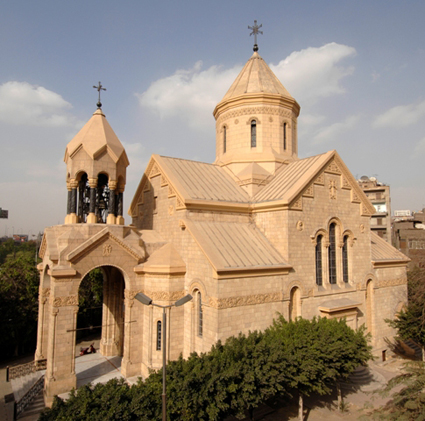
Egypt’s Armenians

Egypt’s Armenians

April 22, 2015
‘Train of Hope’ to carry home 1,200 Sudanese

‘Train of Hope’ to carry home 1,200 Sudanese

June 16, 2026
Jobs for persons with disabilities

Jobs for persons with disabilities

June 15, 2026

Features

China’s Long March launches USD190M tyre manufacturing project in Egypt
Economy

China’s Long March launches USD190M tyre manufacturing project in Egypt

June 17, 2026
0

China’s Chaoyang Long March Tyre Co., Ltd. has launched a USD190 million tyre manufacturing project in Egypt’s Suez Canal Economic...

Read more
Watani started as an Egyptian weekly Sunday newspaper published in Cairo. The word Watani is Arabic for “My Homeland”. The paper was founded in 1958 by the prominent Copt Antoun Sidhom (1915 – 1995), who strove for the establishment of a civil, democratic society in Egypt, where all Egyptians would enjoy full citizenship rights regardless of their religious denomination. To this day when Watani is published as a weekly paper and an online news site, the objective remains the same. Those in charge of Watani view this role as a patriotic all-Egyptian vocation. Special attention is given to shedding light on Coptic culture and tradition as authentically Egyptian, this being a topic largely disregarded or little-understood by Egypt’s media. Watani is deeply dedicated to offer its readers high quality, extensive, objective, credible and well-researched media coverage, with special focus on Coptic issues, culture, heritage, and contribution to Egyptian society.
-----------------------------------------------------------

27 Abdel Khalek Tharwat st, Downtown, Abdeen,Cairo

00202-23927201

00202-23935946

 [email protected]


categories

  • News
  • Opinion
  • Politics
  • Culture
  • Egypt – Arab Spring
  • Coptic Affairs
  • Features
  • Watani Special Features

Recent Posts

  • China and Russia vis-à-vis Trump’s Iran War
  • China’s Long March launches USD190M tyre manufacturing project in Egypt
  • Watani talks to Anba Bigol, Bishop and Abbot of al-Muharraq Monastery of the Holy Virgin Mary
  • ‘Train of Hope’ to carry home 1,200 Sudanese
  • Egypt launches ROX Motor partnership to manufacture new-energy vehicles
  • News
  • Opinion
  • Politics
  • Culture
  • Egypt – Arab Spring
  • Coptic Affairs
  • Features
  • Watani Special Features

Powered BY 3A Digital.

No Result
View All Result
  • News
    • Accidents
    • Crime
    • Diplomatic briefcase
    • NewsLine
    • Outside Cairo
    • Special Occasions
  • Opinion
    • Editorial
    • International media
    • Reader`s Corner
    • Opinion
  • Politics
    • Elections
    • International Politics
    • Islamisation Politics
    • National Affairs
    • Parliament
    • Politics
    • Protests
    • Rights
    • Terrorism
  • Culture
    • Antiquity
    • Art
    • Books
    • Culture
    • Drama
    • Egyptology
    • Festivals
    • Films
    • Heritage
    • Islamisation Culture
    • Media
    • Museums
    • Music
    • TV
  • Coptic
    • Church Affairs
    • Coptic Affairs
    • Coptic Culture
    • Copts in the Media
    • Coptology
    • Copts Abroad
    • Religious
      • P. Shenouda: Bible Study
    • Sectarian
    • Inter-religious
    • Holy Family
  • Features
    • Counselling Corner
    • features
    • Economy
      • Business
    • Education
    • Social Issues
      • Behaviour
      • Mothers Day
    • Health
    • Environment
    • Humour
    • In memorial
    • Interviews
    • Nile
    • Profile
    • Special needs
    • Sports
    • Technology
    • Tourism
    • Wars
    • Women
    • Youth
  • Watani Special Features
    • Egypt – Arab Spring
      • 25 January Revolution
      • 25 Jan revolution, one year on
      • Egypt post-30 June
    • Watani Milestones
      • 20 years Watani International
      • 10 years Watani International
      • Watani Jubilee
    • Pope Shenouda
    • Pope Tawadros
    • Watani Forum

Powered BY 3A Digital.

Login to your account below

Forgotten Password?

Fill the forms bellow to register

All fields are required. Log In

Retrieve your password

Please enter your username or email address to reset your password.

Log In