
Editor in Chief
Youssef Sidhom
Watani
عربى English French
  • News
    • Accidents
    • Crime
    • Diplomatic briefcase
    • NewsLine
    • Outside Cairo
    • Special Occasions
  • Opinion
    • Editorial
    • International media
    • Reader`s Corner
    • Opinion
  • Politics
    • Elections
    • International Politics
    • Islamisation Politics
    • National Affairs
    • Parliament
    • Politics
    • Protests
    • Rights
    • Terrorism
  • Culture
    • Antiquity
    • Art
    • Books
    • Culture
    • Drama
    • Egyptology
    • Festivals
    • Films
    • Heritage
    • Islamisation Culture
    • Media
    • Museums
    • Music
    • TV
  • Coptic
    • Church Affairs
    • Coptic Affairs
    • Coptic Culture
    • Copts in the Media
    • Coptology
    • Copts Abroad
    • Religious
      • P. Shenouda: Bible Study
    • Sectarian
    • Inter-religious
    • Holy Family
  • Features
    • Counselling Corner
    • features
    • Economy
      • Business
    • Education
    • Social Issues
      • Behaviour
      • Mothers Day
    • Health
    • Environment
    • Humour
    • In memorial
    • Interviews
    • Nile
    • Profile
    • Special needs
    • Sports
    • Technology
    • Tourism
    • Wars
    • Women
    • Youth
  • Watani Special Features
    • Egypt – Arab Spring
      • 25 January Revolution
      • 25 Jan revolution, one year on
      • Egypt post-30 June
    • Watani Milestones
      • 20 years Watani International
      • 10 years Watani International
      • Watani Jubilee
    • Pope Shenouda
    • Pope Tawadros
    • Watani Forum
No Result
View All Result
  • News
    • Accidents
    • Crime
    • Diplomatic briefcase
    • NewsLine
    • Outside Cairo
    • Special Occasions
  • Opinion
    • Editorial
    • International media
    • Reader`s Corner
    • Opinion
  • Politics
    • Elections
    • International Politics
    • Islamisation Politics
    • National Affairs
    • Parliament
    • Politics
    • Protests
    • Rights
    • Terrorism
  • Culture
    • Antiquity
    • Art
    • Books
    • Culture
    • Drama
    • Egyptology
    • Festivals
    • Films
    • Heritage
    • Islamisation Culture
    • Media
    • Museums
    • Music
    • TV
  • Coptic
    • Church Affairs
    • Coptic Affairs
    • Coptic Culture
    • Copts in the Media
    • Coptology
    • Copts Abroad
    • Religious
      • P. Shenouda: Bible Study
    • Sectarian
    • Inter-religious
    • Holy Family
  • Features
    • Counselling Corner
    • features
    • Economy
      • Business
    • Education
    • Social Issues
      • Behaviour
      • Mothers Day
    • Health
    • Environment
    • Humour
    • In memorial
    • Interviews
    • Nile
    • Profile
    • Special needs
    • Sports
    • Technology
    • Tourism
    • Wars
    • Women
    • Youth
  • Watani Special Features
    • Egypt – Arab Spring
      • 25 January Revolution
      • 25 Jan revolution, one year on
      • Egypt post-30 June
    • Watani Milestones
      • 20 years Watani International
      • 10 years Watani International
      • Watani Jubilee
    • Pope Shenouda
    • Pope Tawadros
    • Watani Forum
No Result
View All Result
No Result
View All Result
Watani
ع Fr
ADVERTISEMENT

The view from the other side

18 September, 2013 - (5:40 PM)
0 0

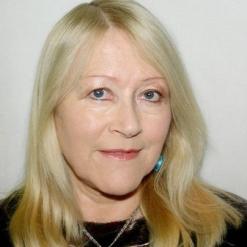
Jenny Jobbins

The view from the other side
24
VIEWS
Share on FacebookShare on Twitter

Egyptians have been consistently accusing the West of wilfully misunderstanding them and their revolution. But how do Western perceptions on matters in Egypt, or for that matter in the Middle East generally measure up?
If you ask people here in the West what they think of recent events in Egypt and Syria, most either give an opinion shaped by their own cultural experiences or admit that they haven’t a clue what’s going on.
News from the Middle East has featured prominently in Western newspapers and news bulletins, with the overthrow of Muhammad Mursi, and not long afterwards the chemical attack in Syria and its aftermath, making headlines for days in a row.
The attention the Western media is giving to the Middle East is far from exclusive, however. Westerners have their own issues to deal with, and even when the Middle East is in the headlines the angle is just as much what various governments are going to do about events as the events themselves. This has led to allegations that the angle presented by broadcast and printed media has been biased one way or another. Coupled with correspondents’ reports from the region presenting often conflicting versions of events, it means that what is going on in Egypt and Syria is a puzzle to most people, even seasoned observers.

Utter confusion
While the Egyptian 2011 Revolution kept many people glued to their screens, recent events have brought on a strong feeling of déjà vu. Confusing information has left many people not only baffled but past caring. It’s not that they have no empathy with the suffering of people around the world—quite the contrary, just look at the huge sums the western public give to international charities. It’s rather that with so many catastrophes from floods to famine to forest fires they feel their compassion being tugged in several ways, and therefore spent in regard to a region where events lurch regularly from one crisis to another.
Recent events have left the average person totally confused. Should they back Mursi because he was an elected president, or should they back the people who wanted to depose him? Should they back the army because they want to keep the peace, or should they oppose them because they planned a coup to install military rule—which they didn’t? Should they support the Muslim Brotherhood because it is wrong to ‘be against’ Muslims, or should they be against them because they are allied to terrorists? Should Mursi be supported at all costs because he was elected, and how can an elected president flout the Constitution anyway? There must be a mistake somewhere.
The plight of Copts in Egypt has certainly not gone unnoticed. “Neither traditional Islamic tolerance nor a shared desire with fellow moderate Muslim citizens for reform have protected Egypt’s Christian community from murderous attacks by hardline Islamists who blame them for the military coup that toppled the Muslim Brotherhood from power,” wrote Trevor Mostyn in the UK Catholic newspaper, The Tablet.

Moral obligation?
As for Syria, if they support military action will the West be helping genuine pro-democracy Syrians or will they be backing al-Qaeda? Will they be ‘teaching Assad a lesson’ or becoming involved in a situation from which it will be impossible to extricate themselves? Is Obama’s real aim to attack al-Qaeda in Syria, and not the Assad regime at all? The US and others have grown tired of sending their sons off to ‘keep the peace’ and welcoming them home in body bags.
The British parliament has rejected a government proposal to take action against the Assad regime in response to its alleged use of chemical weapons. This came as a disappointment to many who see such action as an obligation for the just and the good. Writer William Scott told Watani: “The decision [by David Cameron] to debate intervention in Syria to prevent further atrocities was Periclean. The right thing to do, just as intervention—and full scale is what is necessary: smothering the place with troops, doctors, nurses, aid in every form, from every nation with the courage and compassion to help: so that democracy will triumph—is the only moral response.
“But our democracy has failed,” Mr Scott added. “Our people and Parliament have failed the suffering millions of Syria. And now we, unaccustomedly, are sidelined, out of the battle for goodness. We have shown the white flag, washed our hands of it like Pilate, and are no longer the moral force of yore. Frightened off like children by the cost to our own pockets.”

So much contradiction
Mr Scott says he takes a Christian view, but other committed Christians see it differently. Fiona Bickerton, granddaughter of John Gordon Lorimer, who struggled to maintain peace between the Arabs and Ottomans before his tragic death in Baghdad in 1914, says she is definitely “not for going in with all guns firing”.
She adds: “Did we never learn from Iraq and Afghanistan? I cannot imagine my very highly qualified grandfather would have done anything other than diplomacy, especially as you are dealing with so many different sects.”
Thus some people say intervention works: just look at Kosovo and Sierra Leone, it worked there. No it doesn’t, say others: look at Iraq and Afghanistan. If we intervene in Syria, how can we know what will the ultimate outcome be? This seems to be the most prevalent reason for non-intervention. Either way most people view it as a moral issue, one coloured—or soured—by their own colonial past.
Speaking of colonialism, we are used to being labelled as ‘colonial’ and recognise that this influences the view of us, while being aware that it is easy to fall back on blaming others for one’s own shortcomings.

…And scepticism
Western reaction is bound to be influenced by the mixed messages received through social media from Egyptians and Syrians, much of it almost wilfully contradictory. Many of those who berate Western powers for contemplating military action against Syria are the very ones who two years ago were screaming for the West to intervene to help the rebels.
Egyptians particularly have a fondness for conspiracy theories, and when these are fuelled by an underlying xenophobia, they can spread like wildfire.  One thing observers have learnt is that whatever bad happens in Egypt, something worse happens next—and if any link in any new event, however tenuous, can be made to the US, then it goes without saying that it is the US’s fault.
Many Westerners no longer trust immediate news sources and are aware that disinformation is being spread through the media. Distrusting the political process, especially in relation to government and multinational corporations, they would like to see any assistance to Syria being channelled into the humanitarian effort, including medical aid and assistance to refugees. Westerners also see the current rhetoric as a sign that their own governments are imploding, and their scepticism is profound. One of many similar posts on Facebook goes: ‘Fix Syria? They can’t even fix Detriot’. Not much consensus there, then.

WATANI International
18 September 2013
Comments

comments

Tags: fromothersideview

Related Posts

Youssef Sidhom
Editorial

China and Russia vis-à-vis Trump’s Iran War

June 19, 2026
Youssef Sidhom
Editorial

Six months on approval of legality of 29th batch of churches: 30th batch approved

June 14, 2026
Youssef Sidhom
Editorial

US / Israel intransigence in Iran war: What do they gain?

June 5, 2026
Editorial

Iran war: Looming economic crisis

May 29, 2026
Youssef Sidhom
Editorial

Trump in Beijing: No cards to bargain

May 22, 2026
Youssef Sidhom
Editorial

Russia, Iran, China: Emerging triangle of power 

May 15, 2026

Editorial

China and Russia vis-à-vis Trump’s Iran War

More

MOST READ

Egypt attempts to contain Myna bird invasion
Environment

Egypt attempts to contain Myna bird invasion

June 15, 2026
0

The Nature Protection Sector of Egypt’s Ministry of Local Development and Environment has been monitoring and tracking the spread of...

Read more
Watani talks to Anba Bigol, Bishop and Abbot of al-Muharraq Monastery of the Holy Virgin Mary

Watani talks to Anba Bigol, Bishop and Abbot of al-Muharraq Monastery of the Holy Virgin Mary

June 17, 2026
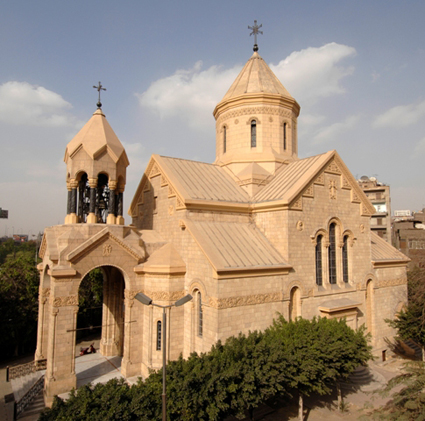
Egypt’s Armenians

Egypt’s Armenians

April 22, 2015
‘Train of Hope’ to carry home 1,200 Sudanese

‘Train of Hope’ to carry home 1,200 Sudanese

June 16, 2026
Jobs for persons with disabilities

Jobs for persons with disabilities

June 15, 2026

Features

China’s Long March launches USD190M tyre manufacturing project in Egypt
Economy

China’s Long March launches USD190M tyre manufacturing project in Egypt

June 17, 2026
0

China’s Chaoyang Long March Tyre Co., Ltd. has launched a USD190 million tyre manufacturing project in Egypt’s Suez Canal Economic...

Read more
Watani started as an Egyptian weekly Sunday newspaper published in Cairo. The word Watani is Arabic for “My Homeland”. The paper was founded in 1958 by the prominent Copt Antoun Sidhom (1915 – 1995), who strove for the establishment of a civil, democratic society in Egypt, where all Egyptians would enjoy full citizenship rights regardless of their religious denomination. To this day when Watani is published as a weekly paper and an online news site, the objective remains the same. Those in charge of Watani view this role as a patriotic all-Egyptian vocation. Special attention is given to shedding light on Coptic culture and tradition as authentically Egyptian, this being a topic largely disregarded or little-understood by Egypt’s media. Watani is deeply dedicated to offer its readers high quality, extensive, objective, credible and well-researched media coverage, with special focus on Coptic issues, culture, heritage, and contribution to Egyptian society.
-----------------------------------------------------------

27 Abdel Khalek Tharwat st, Downtown, Abdeen,Cairo

00202-23927201

00202-23935946

 [email protected]


categories

  • News
  • Opinion
  • Politics
  • Culture
  • Egypt – Arab Spring
  • Coptic Affairs
  • Features
  • Watani Special Features

Recent Posts

  • China and Russia vis-à-vis Trump’s Iran War
  • China’s Long March launches USD190M tyre manufacturing project in Egypt
  • Watani talks to Anba Bigol, Bishop and Abbot of al-Muharraq Monastery of the Holy Virgin Mary
  • ‘Train of Hope’ to carry home 1,200 Sudanese
  • Egypt launches ROX Motor partnership to manufacture new-energy vehicles
  • News
  • Opinion
  • Politics
  • Culture
  • Egypt – Arab Spring
  • Coptic Affairs
  • Features
  • Watani Special Features

Powered BY 3A Digital.

No Result
View All Result
  • News
    • Accidents
    • Crime
    • Diplomatic briefcase
    • NewsLine
    • Outside Cairo
    • Special Occasions
  • Opinion
    • Editorial
    • International media
    • Reader`s Corner
    • Opinion
  • Politics
    • Elections
    • International Politics
    • Islamisation Politics
    • National Affairs
    • Parliament
    • Politics
    • Protests
    • Rights
    • Terrorism
  • Culture
    • Antiquity
    • Art
    • Books
    • Culture
    • Drama
    • Egyptology
    • Festivals
    • Films
    • Heritage
    • Islamisation Culture
    • Media
    • Museums
    • Music
    • TV
  • Coptic
    • Church Affairs
    • Coptic Affairs
    • Coptic Culture
    • Copts in the Media
    • Coptology
    • Copts Abroad
    • Religious
      • P. Shenouda: Bible Study
    • Sectarian
    • Inter-religious
    • Holy Family
  • Features
    • Counselling Corner
    • features
    • Economy
      • Business
    • Education
    • Social Issues
      • Behaviour
      • Mothers Day
    • Health
    • Environment
    • Humour
    • In memorial
    • Interviews
    • Nile
    • Profile
    • Special needs
    • Sports
    • Technology
    • Tourism
    • Wars
    • Women
    • Youth
  • Watani Special Features
    • Egypt – Arab Spring
      • 25 January Revolution
      • 25 Jan revolution, one year on
      • Egypt post-30 June
    • Watani Milestones
      • 20 years Watani International
      • 10 years Watani International
      • Watani Jubilee
    • Pope Shenouda
    • Pope Tawadros
    • Watani Forum

Powered BY 3A Digital.

Login to your account below

Forgotten Password?

Fill the forms bellow to register

All fields are required. Log In

Retrieve your password

Please enter your username or email address to reset your password.

Log In