

Watani talks to Osama al-Qousi, a prominent Salafi sheikh and scholar who draws the line at terrorism
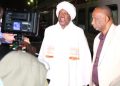
Osama al-Qousi, born in 1954, spent 39 years as a member of various Islamic organisations in Egypt, beginning with the Muslim Brotherhood in the 1970s and ending with the more extreme, if less violent, Salafis. He still claims to be not just a Muslim but a Salafi—a sincere follower of ‘pure’ Islam as dictated by the Prophet Muhammad. Here he talks to Watani about his views on the terrorist threat currently facing Egypt and corrupting pious Muslim youth.
Islamist terrorism is an ongoing problem. How can we fight the thought that backs it?
We must first draw the line between extremism and terrorism. I embraced some extremist ideals during my early days in medical school, yet I was never a terrorist through any phase of my life. There is a huge difference between extremism and terrorism when it comes to thought and behaviour. An extremist embraces a lop-sided or racist view of the ‘other’, be that an ‘other’ in gender, religion, or otherwise. Terrorism, however, is aggression against the other.
An extremist does not tolerate the other; he sees those who belong to different religions as enemies.
Islamist terrorism sharply escalated in Egypt in the wake of the Arab Spring uprising in January 2011. Copts especially suffered; they were victims of horrendous attacks against them and their churches, not least being the attacks in Sole in March 2011, Imbaba in May 2011, Merinab in October 2011, and many more. In June 2012, Islamist power peaked when the MB Muhammad Mursi became president, winning with a thin margin in shady elections. The subsequent Islamisation of the nation led to increasing discontent among mainstream Egyptians and, on 30 June 2013, Egyptians waged their massive revolution now known as the 30 June Revolution. This led to the overthrow of Mr Mursi and his MB regime on 3 July 2013. Egyptians knew they would pay the price in surging Islamist terrorism, which they did.
How did terrorist thought translate into action?
Terrorism can best spread through manipulating people’s minds. It is easy to control people’s minds under the name of ‘religion’ when cultural awareness is low or critical thinking poor. Terrorist thought thus gains ground with poorly educated people in populous neighbourhoods, since the framework of their thought readily lends itself to the dictates of allegedly ‘good’ Muslims.
During the year they spent in power the MB led Egypt to the verge of collapse. The worst aspect of their rule was their religious-based politics. Every week following Friday prayers we saw acts of terrorism, looting, bombing and killings against Copts and liberal Muslims. It was all done under the name of Islam.
Yet this was nothing to compare with what the Islamists did in the wake of the 30 June Revolution. The sit-ins they held in the Cairo Rabaa Square and the Giza Nahda Square were acts of vintage terrorism: they went beyond verbal threats and promptings on revenge and aggression to actual terrorist acts. The thought thus translated into acts; it did not stop at mere rhetoric.
Recently, though, we have been seeing a downturn in terrorist activity which is now more focused on Islamist military insurgencies in Sinai and on the Libyan border. If such operations are mainly funded by Qatar and Turkey, terrorism can be throttled if the funding dries up. But the State must also tighten its grip on media outlets that propagate terrorist ideas, such as the Rabaa and Mekamilleen satellite channels.
Are the ideas of Daesh [Islamic State (IS)] gaining ground?
Daesh is the illegal offspring of all these gangs. It was born a serial killer. Daeshis are the ugly face of Islam; through their acts, they disfigure Islam. I see them as Zionist agents.
Years ago, the US administration nurtured the Taliban in Afghanistan and used it against the Soviet Union. Nowadays the US administration is raising Daesh, aiming to use it to divide the Middle East.
What about the role of religious institutions in raising awareness?
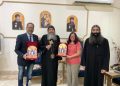
Religious figures must cooperate in all fields, since we all are in one quagmire. I was repeatedly invited to attend different celebrations by several Churches among Christian clergy such as Father Botrous, Anba Moussa and Rev. Ezzat. As religious figures we cooperate in offering awareness and in testifying to love and service for all. We all believe in one God who is the Creator. We just describe Him in different ways. We each have a faith that must be respected by all. In fact, most of us were born into, not chose, a specific religion, and when we came of age we just could not relinquish the choice made for us by our families.
Religious figures, however different, share a sublime mission and are expected to propagate sublime ethics among their congregations, and enhance the value of humanity. One comes to respect the other’s religion through the manner of his or her everyday life, dealings, behaviour and ethics. Religion should work to reinforce the national fabric.
Which brings me to an important issue: I am totally against the use of the common term ‘the two elements of the nation’ to denote Egypt’s Muslims and Christians. I rather believe in the ‘fabric’ of the Egyptian community that has been woven throughout the ages of intertwined strings. We must thus work on reinforcing this fabric.
What is the role of al-Azhar [the venerable 10th century Islamic institution based in Cairo and considered the worldwide authority on Sunni Islam] in reforming the Islamic message?
Sadly, action on this role is long overdue. Omar Abdel-Rahman and many other al-Azhar graduates have themselves become extremist instead of healing extremist behaviour. This does not imply that all Azharis are Omar Abdel-Rahman or Youssef al-Qaradawy, even if these two come from al-Azhar. Al-Azhar must work to purge itself of extremism and strive to instate a curriculum and men who uphold moderate ideals, because teachers convey their thought to their students. Being the topmost world authority on Sunni Islam, Azhar must assume its role of propagating an enlightened message. We have reached a time where mosques have become strongholds of terrorism. We want al-Azhar to go back to the days of the 19th century scholar Rifaa al-Tahtawi who spearheaded Islamic enlightenment back then.
Is it easy to draw young people to moderate religious views in a world open to so many divergent trends of thought?
Our young people are in peril of losing faith altogether. If we do not promote tolerant Islam we risk a wave of atheism. Radical religious views are repulsive to many young men and women. Preaching killings in the name of Allah alienates them from Islam. They find refuge in scientific, irreligious thought that satisfies their intellects and replaces any belief in religion. But this is not a simple process; it involves excruciating internal conflict that may in turn lead to another form of extremist conviction. Extremism is any loss of balance and moderation.
The young are victims of the collapse of modern Egypt with all what this entails: the deterioration of general health, education, culture, ethics and many other aspects. We must help our young people through modern thought. Religious figures as well as the ministries of culture, media and higher education greatly influence young minds, which are our most precious possession.
How can we obliterate extremist thought in Egypt?
Through the media and religious figures in churches and mosques. Basically, it is through spreading better awareness and promoting constructive thought and ideas especially over the televised and written media.
How about Islamic-based political parties? How do you think this issue should be handled?
We must not accept any Islamic-based political party. This applies to al-Nour, al-Binaa’ wal-Tanmiya, al-Hurriya wal-Adala, to cite but a few. They all trade in Islam. We do not tolerate political parties based on Christian or Jewish reference; likewise we should not tolerate parties with Islamic framework.
The Nour Party was formed on a religious [Salafi] basis, yet it is contesting the upcoming parliamentary race.
The Nour Party is even more cunning than the MB’s Freedom and Justice Party, especially in that it plays on all chords. Ever since the Arab Spring, it has stood in favour of Islamic laws. The Salafis were behind many, if not the majority of the attacks against Copts. They supported the Rabaa sit-in, even though they had endorsed the 30 June Revolution that overthrew Mr Mursi. Members of the Nour Party show no sense of belonging to Egypt; they do not stand in respect for the national anthem or the Egyptian flag.
Al-Nour is a racist party which accepts neither a Christian nor a woman as its head, yet accepts the membership of Christians and women since this allows the party to deny its Islamist character. What better example is there of deceit and fraud?
The Egyptian Constitution bans parties with religious affiliation.
Will Egypt be able to obliterate terrorism?
Egypt is on her way to achieve this. Internally, terrorist attacks are receding, even though terrorism still strikes. Sinai is a more intricate story owing to the tunnels and its proximity to the Gaza Strip. However, the army is working to purge it utterly of terrorists, and to secure Egypt’s Libyan border, and it is getting there.
Other than security, however, legislation was needed to fight terrorism. We are going through critical times and need unconventional laws to address unconventional conditions. The terrorism law passed last August was long overdue. It makes for prompt, conclusive justice. If, however, a group of extremists manages to sneak into parliament they might annul the laws addressing terrorism. Thus, Egyptians must be very careful who they vote into parliament.
Do you think the MB group can make a comeback if its leaders pledge to abandon violence?
Calls by some media figures and intellectuals for conciliation with this gang have recently found voice. I reject these calls because I do not believe in conciliation with a terrorist entity. We must draw the line between two cases of conciliation. One is conciliating with a body of terrorists who deny they are terrorists in the first place; this cannot be accepted, that body must be eradicated. The other is conciliating with individuals who were terrorists but are now repentant and remorseful, in which case they should be accepted and reinstated only after they have attested their having been part of a corrupt terrorist body that must be eradicated, and that they regret the views they had once embraced. All this is providing of course they have not been convicted of outlaw acts such as bombings or killings.
There can be no conciliation with an outlaw body. The MB group which, along with its sister groups, was since the Mubarak times dubbed ‘the banned group’ resembles a cancerous tumour. Does the body ever reconcile with a cancerous tumour? Don’t we remove the tumour first and then purge the body of any of its remnants through radiotherapy and chemotherapy?
How do you see Egypt now and in the future?
I am optimistic and can see the welfare of Egypt through her new projects. The New Suez Canal, the cultivation of the 1.5 million feddans of desert land, and the roads and bridges system all represent the clear civilisational leap that President Sisi has promised us. We are eagerly awaiting other steps and other national projects that will unite Egyptians and bring swift benefits.
In the long run, I wish that education, health, the media, al-Azhar and the Church progress; they all need internal reform.
We were freed on 30 June 2013 when the MB terrorist gang was overthrown. We have embarked on reform and rebuilding.
I dream of the day when Egyptian ID papers will include no ‘religion’ box. I am sure this day will come. I also dream of seeing an Egyptian Constitution where Islamic sharia is not the main source of legislation; how can we enforce on non-Muslims laws based on what they do not believe in in the first place?

Watani International
6 October 2015