

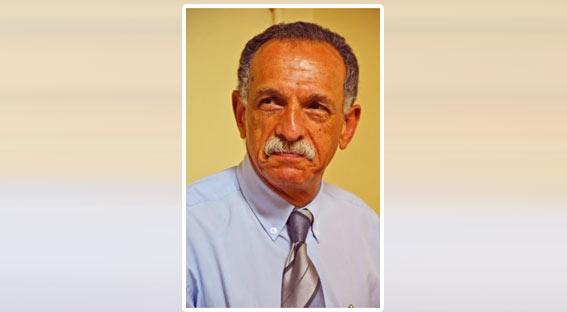
Editor in Chief
Youssef Sidhom
Watani
عربى English French
  • News
    • Accidents
    • Crime
    • Diplomatic briefcase
    • NewsLine
    • Outside Cairo
    • Special Occasions
  • Opinion
    • Editorial
    • International media
    • Reader`s Corner
    • Opinion
  • Politics
    • Elections
    • International Politics
    • Islamisation Politics
    • National Affairs
    • Parliament
    • Politics
    • Protests
    • Rights
    • Terrorism
  • Culture
    • Antiquity
    • Art
    • Books
    • Culture
    • Drama
    • Egyptology
    • Festivals
    • Films
    • Heritage
    • Islamisation Culture
    • Media
    • Museums
    • Music
    • TV
  • Coptic
    • Church Affairs
    • Coptic Affairs
    • Coptic Culture
    • Copts in the Media
    • Coptology
    • Copts Abroad
    • Religious
      • P. Shenouda: Bible Study
    • Sectarian
    • Inter-religious
    • Holy Family
  • Features
    • Counselling Corner
    • features
    • Economy
      • Business
    • Education
    • Social Issues
      • Behaviour
      • Mothers Day
    • Health
    • Environment
    • Humour
    • In memorial
    • Interviews
    • Nile
    • Profile
    • Special needs
    • Sports
    • Technology
    • Tourism
    • Wars
    • Women
    • Youth
  • Watani Special Features
    • Egypt – Arab Spring
      • 25 January Revolution
      • 25 Jan revolution, one year on
      • Egypt post-30 June
    • Watani Milestones
      • 20 years Watani International
      • 10 years Watani International
      • Watani Jubilee
    • Pope Shenouda
    • Pope Tawadros
    • Watani Forum
No Result
View All Result
  • News
    • Accidents
    • Crime
    • Diplomatic briefcase
    • NewsLine
    • Outside Cairo
    • Special Occasions
  • Opinion
    • Editorial
    • International media
    • Reader`s Corner
    • Opinion
  • Politics
    • Elections
    • International Politics
    • Islamisation Politics
    • National Affairs
    • Parliament
    • Politics
    • Protests
    • Rights
    • Terrorism
  • Culture
    • Antiquity
    • Art
    • Books
    • Culture
    • Drama
    • Egyptology
    • Festivals
    • Films
    • Heritage
    • Islamisation Culture
    • Media
    • Museums
    • Music
    • TV
  • Coptic
    • Church Affairs
    • Coptic Affairs
    • Coptic Culture
    • Copts in the Media
    • Coptology
    • Copts Abroad
    • Religious
      • P. Shenouda: Bible Study
    • Sectarian
    • Inter-religious
    • Holy Family
  • Features
    • Counselling Corner
    • features
    • Economy
      • Business
    • Education
    • Social Issues
      • Behaviour
      • Mothers Day
    • Health
    • Environment
    • Humour
    • In memorial
    • Interviews
    • Nile
    • Profile
    • Special needs
    • Sports
    • Technology
    • Tourism
    • Wars
    • Women
    • Youth
  • Watani Special Features
    • Egypt – Arab Spring
      • 25 January Revolution
      • 25 Jan revolution, one year on
      • Egypt post-30 June
    • Watani Milestones
      • 20 years Watani International
      • 10 years Watani International
      • Watani Jubilee
    • Pope Shenouda
    • Pope Tawadros
    • Watani Forum
No Result
View All Result
No Result
View All Result
Watani
ع Fr
ADVERTISEMENT

Problems on hold

28 June, 2012 - (2:30 PM)
0 0

Snowball of rebellion- Youssef Sidhom

Problems on hold
18
VIEWS
Share on FacebookShare on Twitter

With Mohamed Mursi as Egypt’s new president, the race for the presidency is over. This is the time to do as we preached: we accept the outcome of the ballot box even if it contradicts our partiality towards a civil State in Egypt

With Mohamed Mursi as Egypt’s new president, the race for the presidency is over. This is the time to do as we preached: we accept the outcome of the ballot box even if it contradicts our partiality towards a civil State in Egypt as opposed to one that emerges out of the mantle of a religious reference point. Lieutenant General Ahmed Shafik, who was supported by those who called for a civil State, lost to Mohamed Mursi who is backed by the Muslim Brotherhood (MB), the proponents of political Islam, and the supporters of an Islamist State. Today we congratulate Dr Mursi and take him for his word, pledged so strongly during the week prior to the elections, that he would act as president of all Egyptians; and work indiscriminately to serve their interests within a context of democracy and citizenship rights.
The Mursi win may have, in a way, carried some divine kindness for Egypt; the menacing attitude adopted by the Islamist political forces prior to the announcement of the election results, their grim threats with “dire consequences” for the country should Mursi lose, were no joke. His supporters had already set up camp in Cairo’s Tahrir Square, vociferously demonstrating and lying in wait to pounce should the election results not be to their liking.
Today that the election results have brought in Mursi as president, his supporters have adopted a benign attitude, thanking the “honourable” judiciary. Can this make us forget, however, that the judiciary were targets of Islamist threats should they dare announce Shafik as winner? The situation in its entirety gives rise to huge concern, since it roots the false notion that the rowdy crowds in Tahrir did the right thing and that, owing to the intimidation they wielded, Mursi won. I cannot gloss over this issue or bypass it, because it has the potential to impact many critical situations we are bound to face in the future.  
There thrives in Egypt today a culture of rebellion against the legitimacy of the State and judicial institutions. This rebellion is asserted with flourish in Tahrir Square, as in recent cases of rebellion against the Supreme Constitutional Court (SCC) ruling which dissolved the People’s Assembly, the supplementary constitutional declaration, and the decision that the new president should take the oath before the SCC. These and other forms of rebellion may extend, grow, and aggravate owing to the erroneous notion that the pressure and intimidation wielded in Tahrir achieve results. 
The violations committed in the second round of the elections were the outcome of the gross mutiny and non-discipline which have come to rule over the Egyptian street, and which contradicted the democratic celebration in the first round. The violations started with the confiscation and falsification of voter will; the matter reached scandalous proportions when it was claimed—an investigation is currently ongoing—that voting tickets had been rigged in favour of Mursi by the official printing house even before they were handed over to the balloting stations. 
Once the balloting was through on the evening of Sunday 17 June, Egyptians kept vigil in hopes of hearing any official news of preliminary vote counts. During the early hours of Monday, at 4:00am dawn, the election campaign of Mohamed Mursi held a press conference and announced, unilaterally and definitively, that Mursi had won the presidency. This despite no declaration whatsoever on the part of the Supreme Presidential Elections Committee (SPEC).
The scene spoke of glaring intent to hijack the election results by mobilising mass support for a prematurely proclaimed victory. Never mind that this was a flagrant violation of democratic norms, a challenge to law and order, and a bypass of the SPEC. Following the Mursi campaign press conference, his supporters on both the political and popular levels took to the streets to celebrate his victory. They provoked the masses to rebel against the SCC ruling to dissolve the [Islamist-majority] People’s Assembly, and the supplementary constitutional declaration issued by the Military Council in the wake of the stalemate reached by the various political forces on the writing of a new constitution. But all this was nothing to compare with the direct threats to the stability of the nation, the “dire consequences” to be anticipated should the SPEC announce Shafik as winner.
The miserable scene of Monday 18 June was ripe with a foreboding of political mutiny that rallies people against legitimate and judicial authority, in the name of the Revolution. I imagined that the situation should have been swiftly brought under control before the wrathful outpouring gains uncontrollable proportions, and that the ruling Military Council should have summoned both presidential candidates and demanded that they persuade their supporters to exercise self discipline and commitment to the democratic process. They should have been reminded that the announcement of the election results was the prerogative of the SPEC alone. But the Military Council did no such thing.
Matters were left to snowball all through Monday, Tuesday, and Wednesday; Tahrir became the hub from which the Islamist Mursi supporters, the MB and its political arm the Freedom and Justice Party, spearheaded their mutiny against all and every State authority. It was glaring political terrorism against the SPEC, and a horrifying foreboding of future violent, bloody confrontations on the political arena.
Thursday came with the same, if not more grave, mutinous behaviour. A new peak, however, was reached when the Tahrir demonstrators demanded that Mursi—who had not yet been officially declared the new president—should take the presidential oath in Tahrir. The authority of the State and its institutions was obviously being usurped; Egyptians felt threatened, and were gripped with anxiety for the peaceful hand-over of power, should that power need to be handed over to other than Mursi.
Finally, on Friday 22 June, the Miltary Council issued a statement urging respect of the procedure of rounding up the result of the presidential race, and warning of the risks of throwing legitimacy to the wind, dishonouring the judiciary, or disrespecting the sovereignty of the State. Any violations, the statement said, would be sternly confronted with the utmost firmness. 
The Military Council’s statement brought on a sigh of relief, but it was beyond me why it took so much time for it to be issued. What could have been handled with relative ease when it started as a handful of snow was left to snowball into an ominous mass that had the potential to crush anyone and anything in its path.
The presidential race is over, but the snowball remains. Will the new president, Mohamed Mursi, through respect for legitimacy, the judiciary, and the law, be able to stop it in its track? 
WATANI International
1 July 2012
Comments

comments

Tags: holdProblems

Related Posts

Youssef Sidhom
Editorial

China and Russia vis-à-vis Trump’s Iran War

June 19, 2026
Youssef Sidhom
Editorial

Six months on approval of legality of 29th batch of churches: 30th batch approved

June 14, 2026
Youssef Sidhom
Editorial

US / Israel intransigence in Iran war: What do they gain?

June 5, 2026
Editorial

Iran war: Looming economic crisis

May 29, 2026
Youssef Sidhom
Editorial

Trump in Beijing: No cards to bargain

May 22, 2026
Youssef Sidhom
Editorial

Russia, Iran, China: Emerging triangle of power 

May 15, 2026

Editorial

China and Russia vis-à-vis Trump’s Iran War

More

MOST READ

Egypt attempts to contain Myna bird invasion
Environment

Egypt attempts to contain Myna bird invasion

June 15, 2026
0

The Nature Protection Sector of Egypt’s Ministry of Local Development and Environment has been monitoring and tracking the spread of...

Read more
Watani talks to Anba Bigol, Bishop and Abbot of al-Muharraq Monastery of the Holy Virgin Mary

Watani talks to Anba Bigol, Bishop and Abbot of al-Muharraq Monastery of the Holy Virgin Mary

June 17, 2026
Egypt’s Armenians

Egypt’s Armenians

April 22, 2015
‘Train of Hope’ to carry home 1,200 Sudanese

‘Train of Hope’ to carry home 1,200 Sudanese

June 16, 2026
Jobs for persons with disabilities

Jobs for persons with disabilities

June 15, 2026

Features

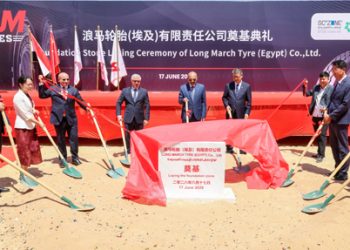
China’s Long March launches USD190M tyre manufacturing project in Egypt
Economy

China’s Long March launches USD190M tyre manufacturing project in Egypt

June 17, 2026
0

China’s Chaoyang Long March Tyre Co., Ltd. has launched a USD190 million tyre manufacturing project in Egypt’s Suez Canal Economic...

Read more
Watani started as an Egyptian weekly Sunday newspaper published in Cairo. The word Watani is Arabic for “My Homeland”. The paper was founded in 1958 by the prominent Copt Antoun Sidhom (1915 – 1995), who strove for the establishment of a civil, democratic society in Egypt, where all Egyptians would enjoy full citizenship rights regardless of their religious denomination. To this day when Watani is published as a weekly paper and an online news site, the objective remains the same. Those in charge of Watani view this role as a patriotic all-Egyptian vocation. Special attention is given to shedding light on Coptic culture and tradition as authentically Egyptian, this being a topic largely disregarded or little-understood by Egypt’s media. Watani is deeply dedicated to offer its readers high quality, extensive, objective, credible and well-researched media coverage, with special focus on Coptic issues, culture, heritage, and contribution to Egyptian society.
-----------------------------------------------------------

27 Abdel Khalek Tharwat st, Downtown, Abdeen,Cairo

00202-23927201

00202-23935946

 [email protected]


categories

  • News
  • Opinion
  • Politics
  • Culture
  • Egypt – Arab Spring
  • Coptic Affairs
  • Features
  • Watani Special Features

Recent Posts

  • China and Russia vis-à-vis Trump’s Iran War
  • China’s Long March launches USD190M tyre manufacturing project in Egypt
  • Watani talks to Anba Bigol, Bishop and Abbot of al-Muharraq Monastery of the Holy Virgin Mary
  • ‘Train of Hope’ to carry home 1,200 Sudanese
  • Egypt launches ROX Motor partnership to manufacture new-energy vehicles
  • News
  • Opinion
  • Politics
  • Culture
  • Egypt – Arab Spring
  • Coptic Affairs
  • Features
  • Watani Special Features

Powered BY 3A Digital.

No Result
View All Result
  • News
    • Accidents
    • Crime
    • Diplomatic briefcase
    • NewsLine
    • Outside Cairo
    • Special Occasions
  • Opinion
    • Editorial
    • International media
    • Reader`s Corner
    • Opinion
  • Politics
    • Elections
    • International Politics
    • Islamisation Politics
    • National Affairs
    • Parliament
    • Politics
    • Protests
    • Rights
    • Terrorism
  • Culture
    • Antiquity
    • Art
    • Books
    • Culture
    • Drama
    • Egyptology
    • Festivals
    • Films
    • Heritage
    • Islamisation Culture
    • Media
    • Museums
    • Music
    • TV
  • Coptic
    • Church Affairs
    • Coptic Affairs
    • Coptic Culture
    • Copts in the Media
    • Coptology
    • Copts Abroad
    • Religious
      • P. Shenouda: Bible Study
    • Sectarian
    • Inter-religious
    • Holy Family
  • Features
    • Counselling Corner
    • features
    • Economy
      • Business
    • Education
    • Social Issues
      • Behaviour
      • Mothers Day
    • Health
    • Environment
    • Humour
    • In memorial
    • Interviews
    • Nile
    • Profile
    • Special needs
    • Sports
    • Technology
    • Tourism
    • Wars
    • Women
    • Youth
  • Watani Special Features
    • Egypt – Arab Spring
      • 25 January Revolution
      • 25 Jan revolution, one year on
      • Egypt post-30 June
    • Watani Milestones
      • 20 years Watani International
      • 10 years Watani International
      • Watani Jubilee
    • Pope Shenouda
    • Pope Tawadros
    • Watani Forum

Powered BY 3A Digital.

Login to your account below

Forgotten Password?

Fill the forms bellow to register

All fields are required. Log In

Retrieve your password

Please enter your username or email address to reset your password.

Log In