
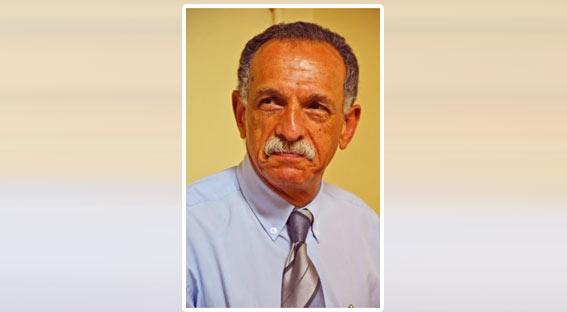
Today I resume my attempt to find credible answers to what is really happening in Syria. I do that through exploring analyses by independent political and strategic analysts tackling various political systems. I here review a dialogue conducted on 19 December 2024 by Judge Andrew Napolitano on his “Judging Freedom” podcast with John Mearsheimer, 77, American political scientist and international relations scholar, the R. Wendell Harrison Distinguished Service Professor at the University of Chicago. Even though the dialogue tackled a number of global issues such as the Russia Ukraine War and the military balance between the US and NATO, I will here focus on the topic of the events in Syria.
Judge Napolitano: Was the departure of President Assad from Syria a strategic defeat for Russia?
Professor Mearsheimer: “I think it was clearly a defeat, but not a major one. The Russians were not deeply invested in Syria, and they’re going to move a lot of assets, maybe all the assets—we don’t know for sure—out of Syria and into Libya; that’s what it looks like now. But at the same time, President Putin in that lengthy news conference he gave said it has not been determined exactly what is going to happen to the two Russian military bases in Syria, so it is possible that the Russians will end up keeping those bases but also transferring some of the forces to Libya just to protect themselves and end up therefore with two sets of bases in the Middle East. In the final analysis, all of this just doesn’t matter that much because from the Russian point of view all that really matters at this point in time is what’s happening in Ukraine, because Ukraine is an existential threat to them so they want to keep their eye on that ball more than anything else, and Putin has done an excellent job of doing just that.”
Can you explain the interplay of the Russians, the Turks, the Kurds, the Israelis, and the US in the demise of the Assad government?
“I think the Americans clearly played the key role. The Turks played a secondary role and the Israelis played a tertiary role. I can say a word or two about the Russians as well but, just to start with the Americans, it was American sanctions and the fact that the United States was stealing all that Syrian oil and Syrian wheat production that really
throttled the Syrian economy and played a central role in hollowing out the Syrian Army. Of course the Turks were enormously important because they were arming and training, with help from the United States, the Syrian rebels who overran the country in 12 days. The Israelis were players as well, but they were not providing a lot of financial support and they were not training the rebels the way the Turks were. So I think it was the Americans first and the Turks second who played the key role here. With regard to the
Russians and the arguments often made that the Russians didn’t do enough to help the Syrians, I believe that’s not true. I believe the Russians were well aware that the Syrian army was in terrible shape, and that Erdogan was training and arming a rebel force that was going to give the Syrian Army fits, and the Russians did what they could to get Syria to act smartly in the face of this threat. The Russians wanted Assad to negotiate with the Turks; he refused. The Russians wanted him to reform his army in all sorts of ways and he refused. When the fight came, the fight that started on November 26, there was not much the Russians could do to rescue the situation which deteriorated almost immediately. You have to remember that the Syrian army
collapsed in a mere 12 days; this tells
you it had been hollowed out and was not capable of putting up a fight. In those circumstances, what could the Russians do? What could the Iranians do? The answer is virtually nothing.
President Putin was asked [by a western reporter] at his press conference today if Russia had failed in Syria.
“He said that Russia did not fail in Syria but here’s what he said: ‘You and those who
pay your salary would like to present everything that’s happening in Syria as
a shortcoming or a defeat of Russia. I’d
like to assure you that is not so, and I’ll tell you why. We went to Syria ten years ago so in order to prevent the creation of a terroristic enclave the likes of which we have seen in other countries, for example in Afghanistan. In general, we achieved our goal. Those groups that used to fight the Assad regime and the governmental forces evolved. It is for a reason that today many European countries and the United States would like to establish relations with them. If they are a terrorist organisation how come you’re trying to do that? That means that they have changed; it means that to a certain extent our goal has been achieved.’ Interesting observation that he made. Of course he’s talking about HTS which the United States and the British governments have characterised as a terrorist organisation, which the State Department has put a USD10 million bounty on Mr al-Julani, the head of that organisation who now purports to be the head of what remains of the government of Syria.
I guess it’s not shocking to you that the same government which declared these people terrorists, which offered a USD10 million bounty to arrest one of them, paid them and trained their fighters.
“No, it’s not shocking at all, we’ve done this in the past and we’ll do it again in the future. You have to remember that the United States is complicit in a genocide in Gaza. That tells you all you need to know about America’s respect for basic human life.”
Should Israel be rejoicing in its newfound property in Syria, or might this come back to bite them?
“You know, it’s very interesting but, because there’s a ceasefire in Lebanon between Hezbollah on one side and the Israelis on the
other and because Assad has fallen, there’s this sense in the West that Israel is in the driver’s seat now; it’s one great victory. I don’t
accept this argument at all. First of all, just to turn to Syria, Syria was not a significant threat to Israel. Syria mattered because it provided a conduit for arms that went from Iran into Lebanon to Hezbollah. That conduit has now been cut off, and I think this is a major victory for Israel.
“But I don’t think it is a permanent victory, I think it’s a temporary victory. Now you have to remember that Israel has not defeated Hamas. Israel is now stuck in Gaza and is responsible for administering Gaza. Moving forward, Israel has not defeated Hezbollah and in fact many people in Israel were very unhappy about the ceasefire with Hezbollah
because they thought that Hezbollah had
not been finished off, and that meant the
mortal threat to Israel was left intact. So Hezbollah and Hamas are alive and
in fighting shape. Furthermore, the Houthis just fired a ballistic missile at Israel and they hit a school in a Tel Aviv suburb, and they promise more missiles down the road. Israel
has been accused of genocide most recently by Human Rights Watch and before that by Amnesty International, the international
Criminal Court has issued arrest warrants for former Defence Minister Yoav Gallant and for Prime Minister Netanyahu.
“This is a country that is in real trouble, and you know it’s going to be in real trouble for the foreseeable future especially if things go south in Syria, and it’s very hard to predict what Israel’s situation in Syria will look
like in five years. But one can tell a plausible story where there will not be a happy ending to this toppling of Assad.”
Hasn’t Israel captured significant amounts of land in Syria, equivalent to several times the size of the Gaza Strip, and does it not dominate and occupy those lands? Do
you expect them ever to return?
“Well there’s no question they’ve conquered a
large slice of territory not only on the Golan Heights but in other places in southern Syria. But they’re going to have to occupy these, and there’s going to be resistance from the Syrian
side over time. The question you have to ask yourself is whether or not this is to Israel’s advantage. Many people in the West are arguing that it is in their advantage, but I’m not sure it is. I think that the Israelis don’t need to conquer more territory at this point in
time and try to administer it, but that’s not the conventional wisdom in the west at this point in time.”
Watani International
12 January 2025