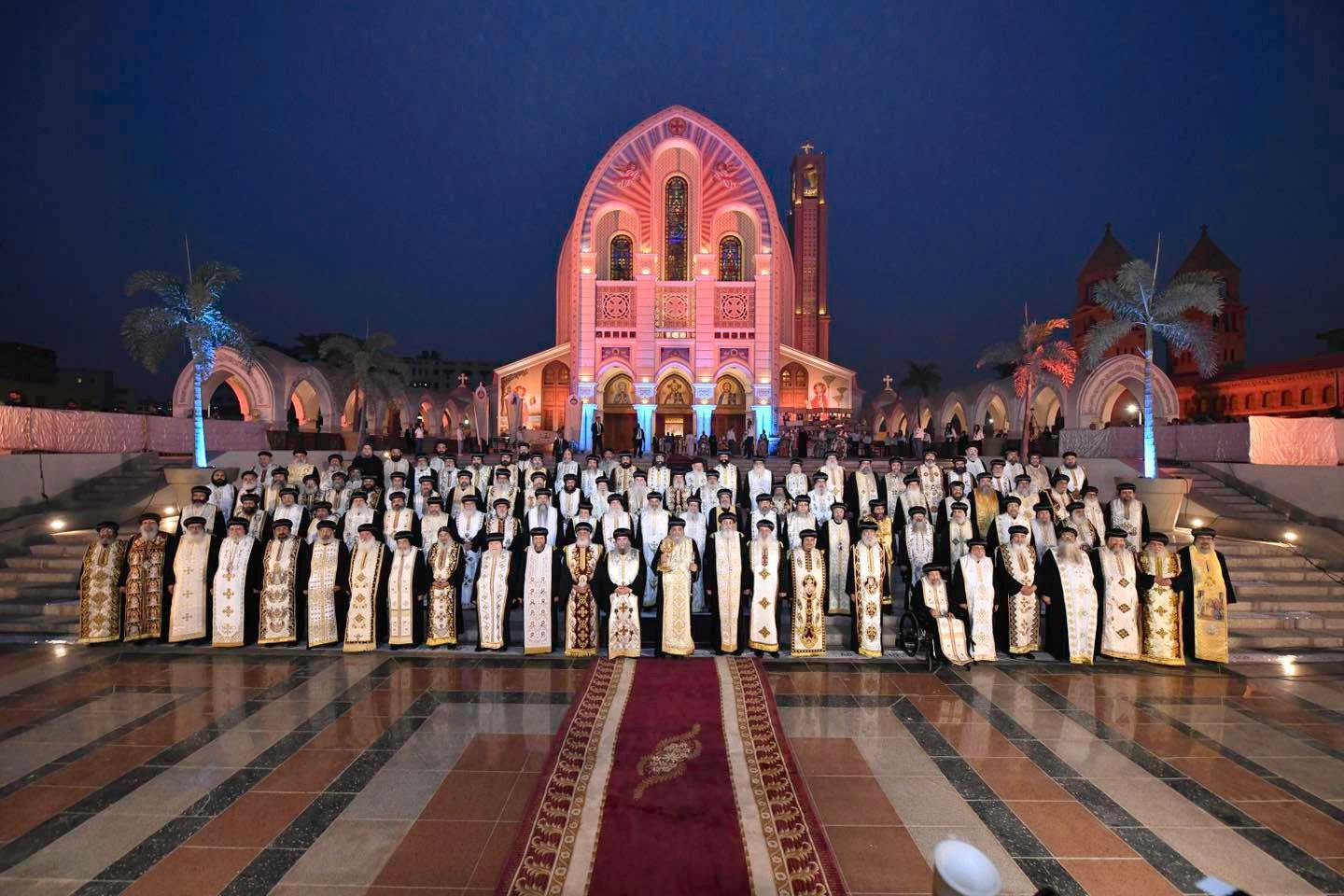
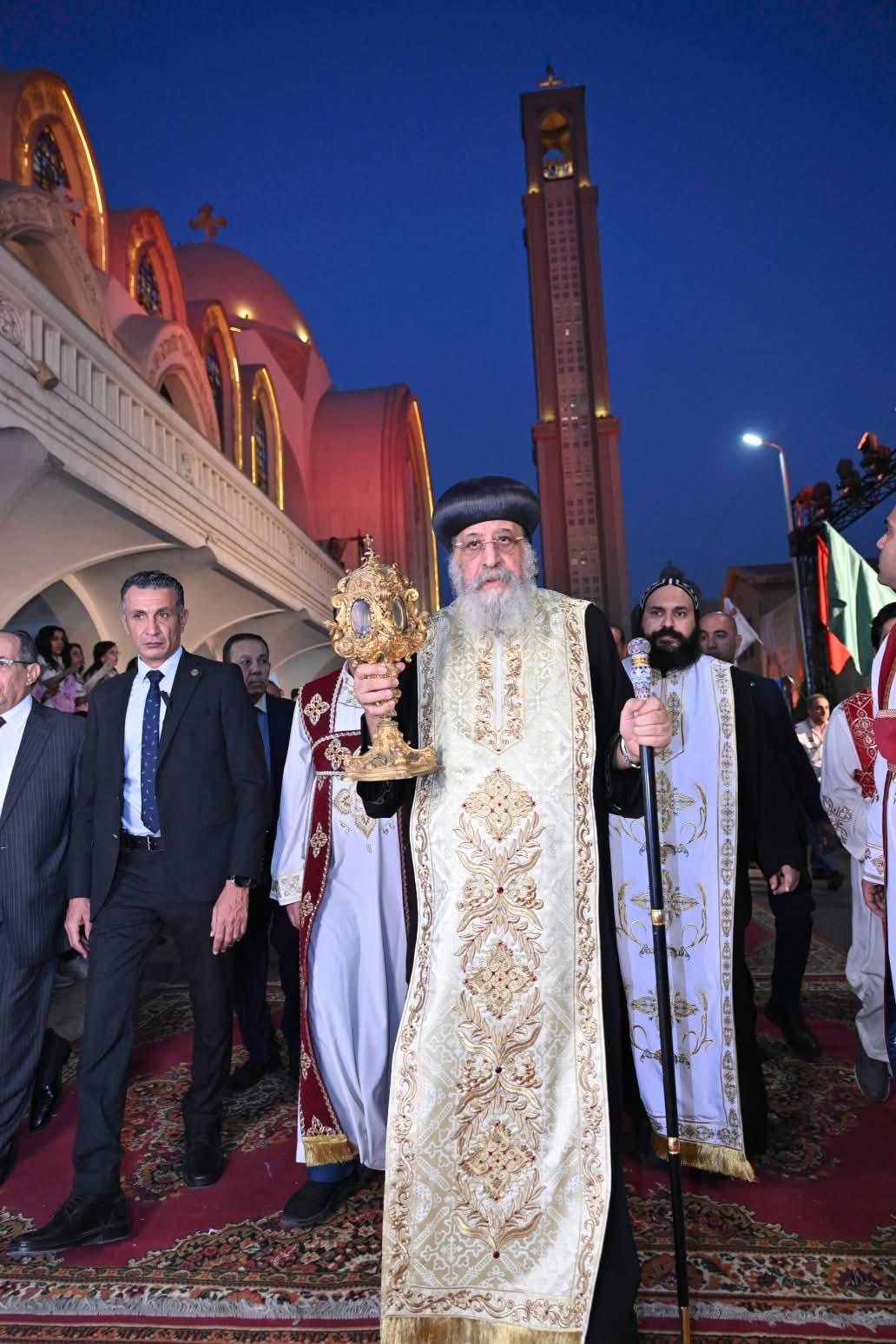
St Mark’s Cathedral in Abassiya, Cairo, its dome and tower, were all bathed in red light, as was the papal headquarters facing it. The lighting endowed the cathedral grounds with a breathtakingly festive mood fit for celebration of an event that took place a full 17 centuries ago, with an outcome that has lived on in the Christian World till today. That was the first ecumenical council, the Council of Nicaea that convened in 325 and which established the Creed of Christian Faith, championed by a young Egyptian deacon who later became Pope of Alexandria: St Athanasius the Apostolic.
Nicaea… Living faith
Celebration started on 18 November 2025, 9 Hator 1742 on the Coptic calendar of the Martyrs, a date that auspiciously commemorated two events: 17 centuries on the Council of Nicaea as marked by the Coptic Orthodox Church, and 13 years on the enthronement of Pope Tawadros II as Pope of Alexandria and Patriarch of the See of St Mark.
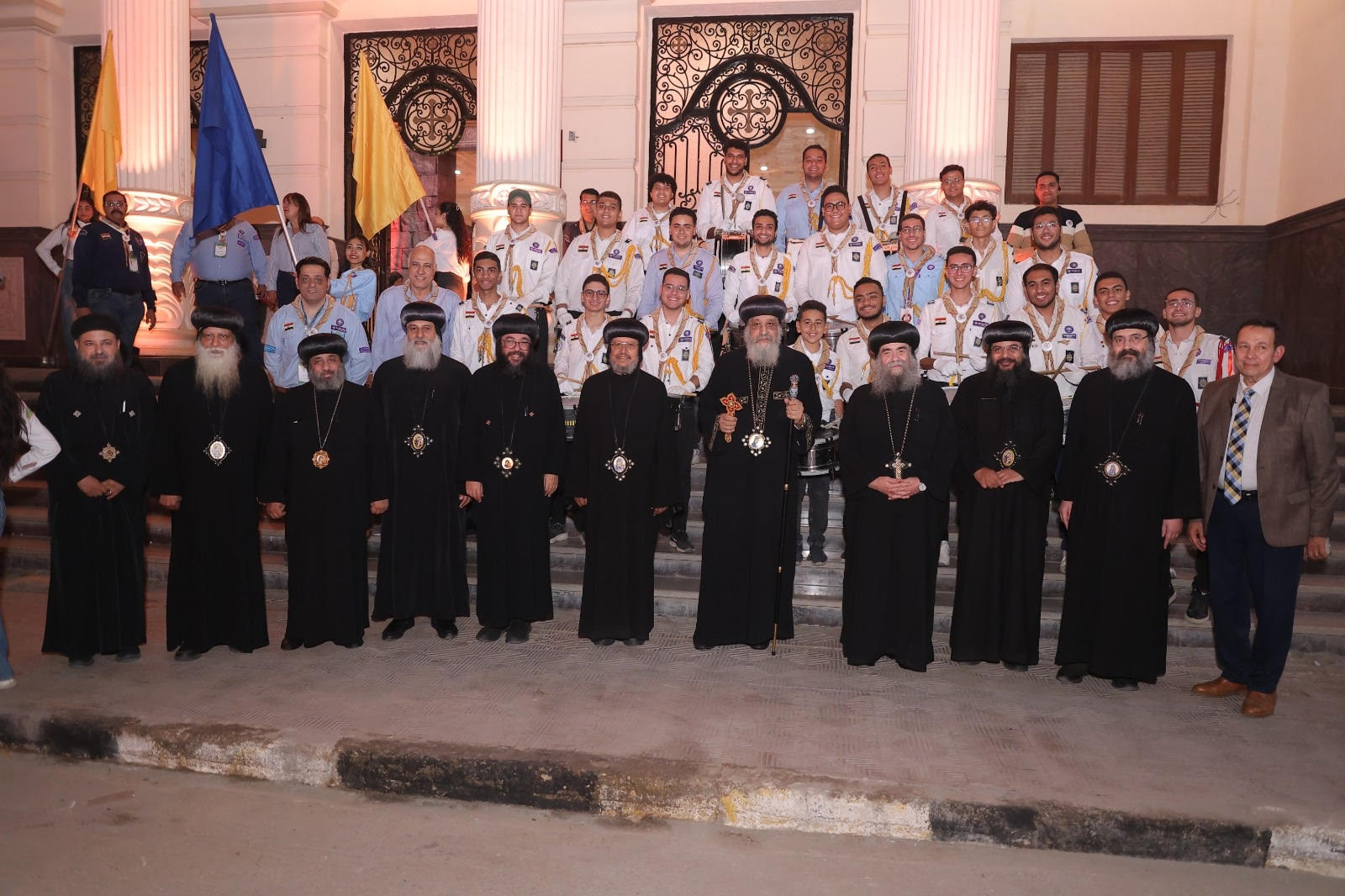
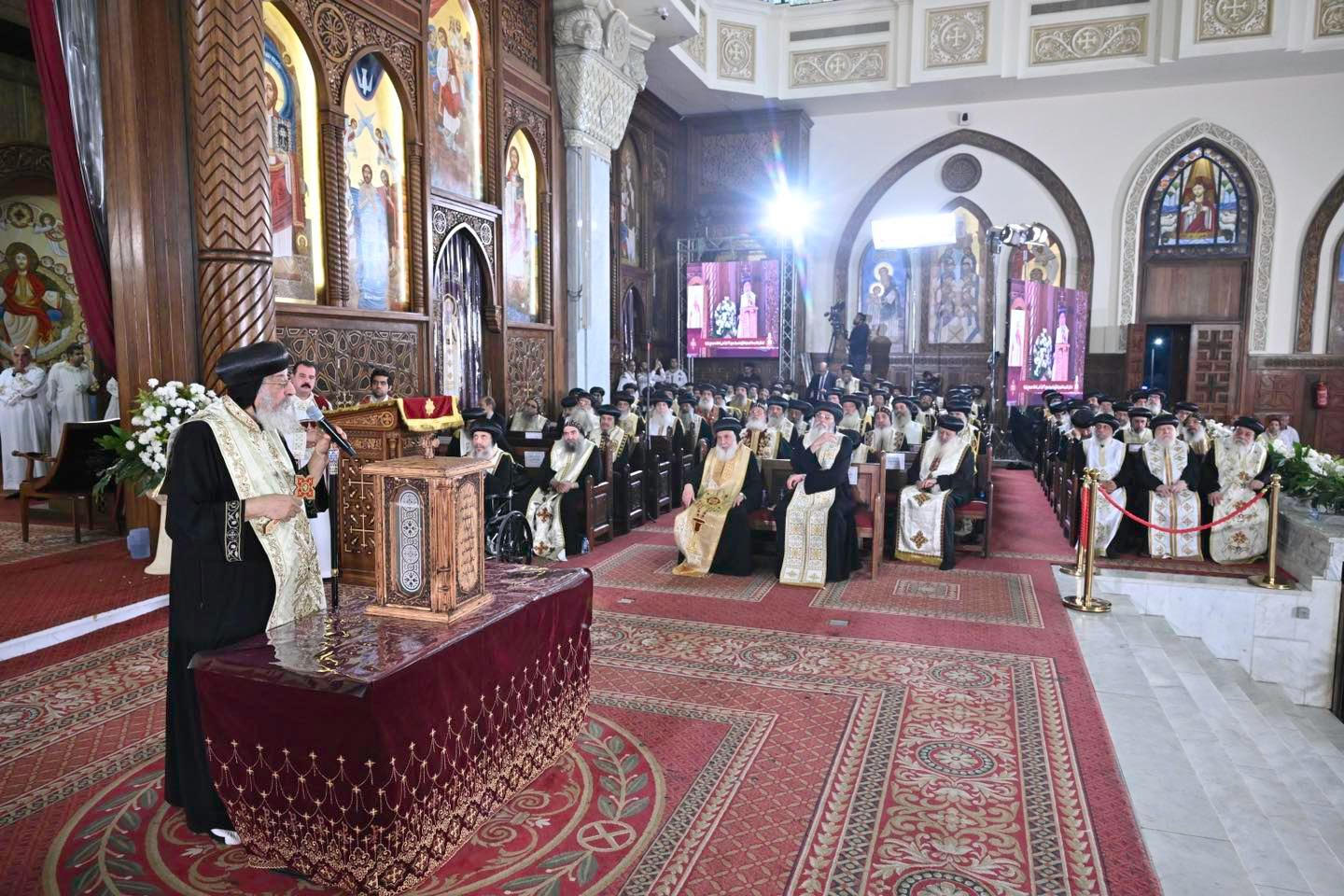
Pope Tawadros celebrated the two occasions with Mass at a new church in Logos Centre in the Western Desert monastery of Anba Bishoy, some 120km northwest Cairo. Together with the Pope were 115 of the 135 members of the Coptic Orthodox Holy Synod.
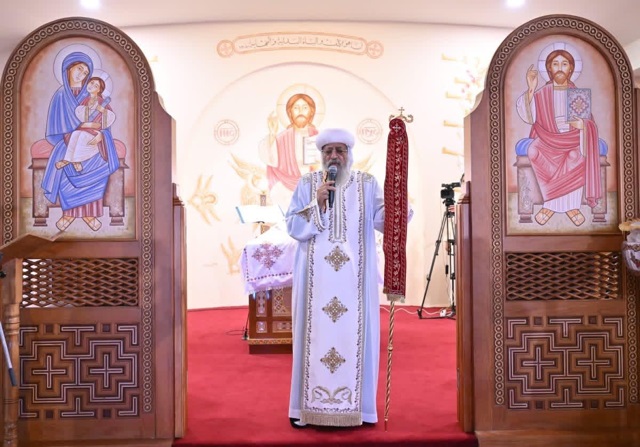
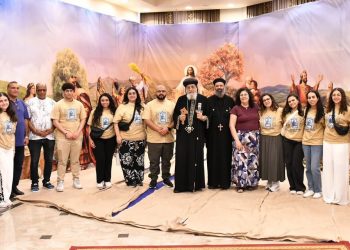
The new church is located in the new St Mark’s Coptic Academy in Logos Centre, and has been named the church of The Creed. Its inauguration marked the start of the grand Nicaea celebration that extended through 18 – 22 November 2025, under the theme “Nicaea… A Living Faith”.
“Faithful, loyal, joyful”
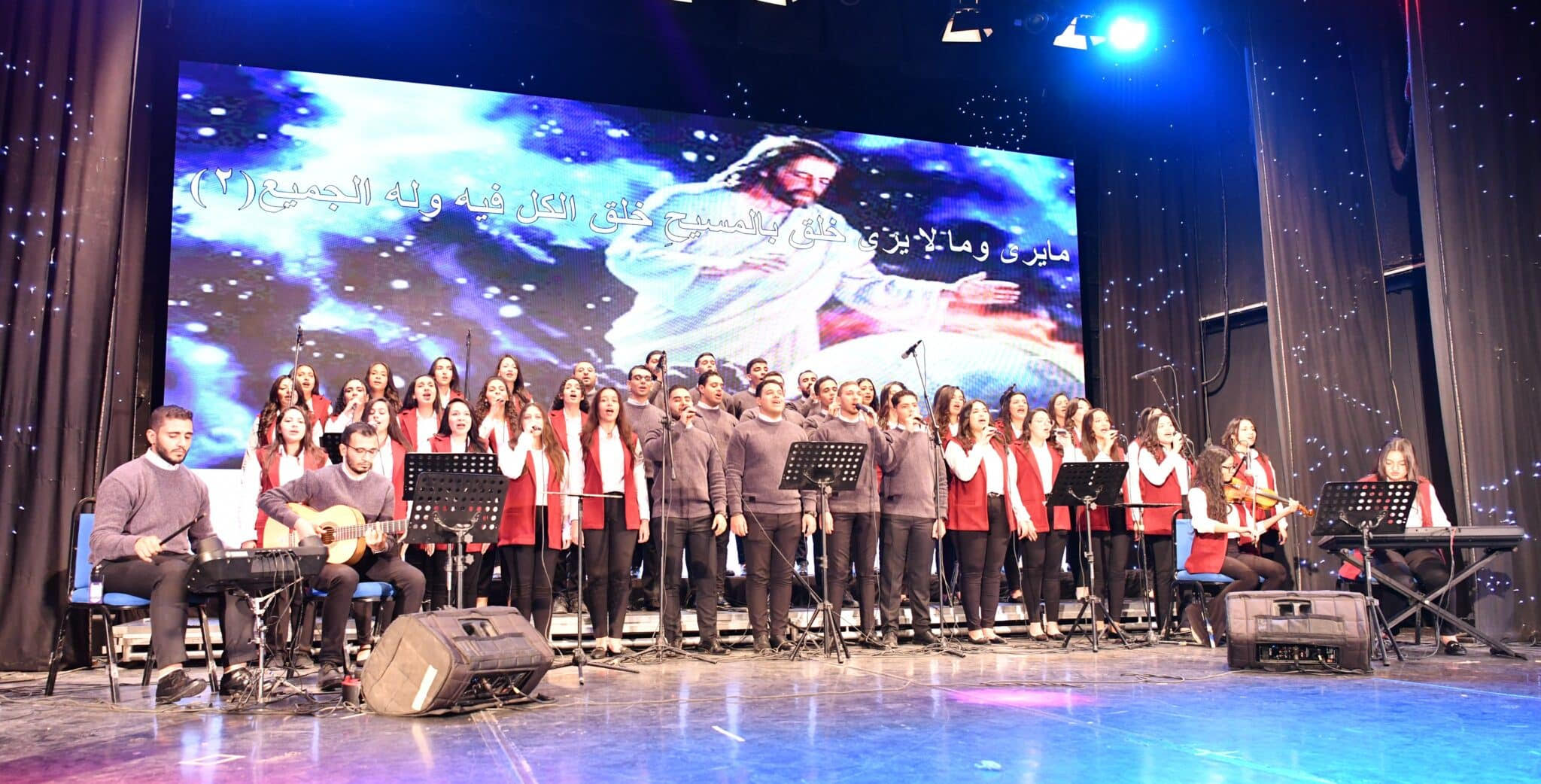
The Coptic Church’s Nicaea Council commemoration involved prayer and praise; choir and theatre performances; poetry recitation; documentary screening; awards for winning research on Nicaea Council; and culminated in a grand celebration of St Athanasius, the champion of Nicaea Council.
A glowing Pope Tawadros graced all the events, clearly expressing that the Coptic Church is “faithful, loyal, and joyful at the [Nicaea] faith guarded and entrusted to us by the Church Fathers… A faith we have preserved over the centuries”.
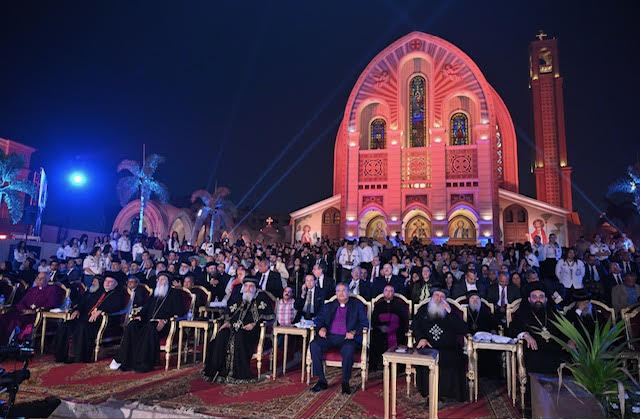
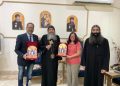
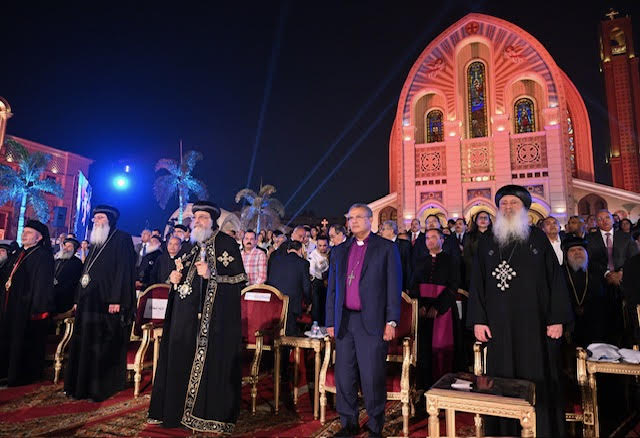
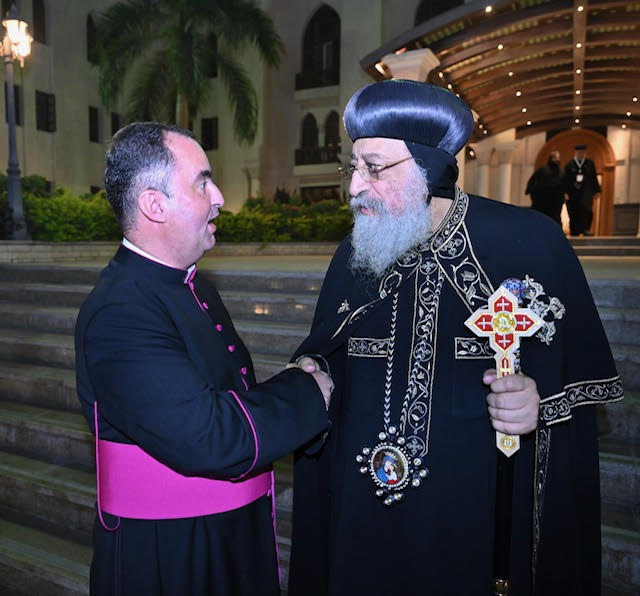
Also attending some of the performances were heads or representatives of other Churches in Egypt: The Armenian Orthodox and Catholic, Coptic Catholic, Maronite, Chaldaean, Evangelical, Greek Orthodox, Syriac Catholic and Latin Churches, also the Deputy to the Vatican Ambassador in Cairo.
The events took place on the stage of Anba Rweiss Theatre in Saint Mark Cathedral grounds, and in the vast open courtyard of the Cathedral. The performances were given by groups from dioceses across Egypt, among them Alexandria; Old Cairo, Downtown Cairo, and Maadi in Cairo; and the southern dioceses of Mallawi, Assiut, and Sohag.
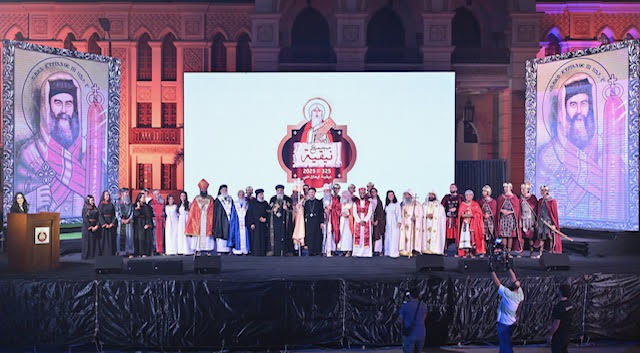
The Pope honoured 35 metropolitans and bishops whose dioceses, throughout the year 2025, had presented numerous educational, academic, and artistic activities celebrating the Council of Nicaea and its champions.
“The ecumenical Council of Nicaea,” the Pope said, “was a remarkable event in Christian history. It was marked with steadfast faith, profound understanding, and unfailing love. Our Church has always followed in its footsteps from generation to generation.
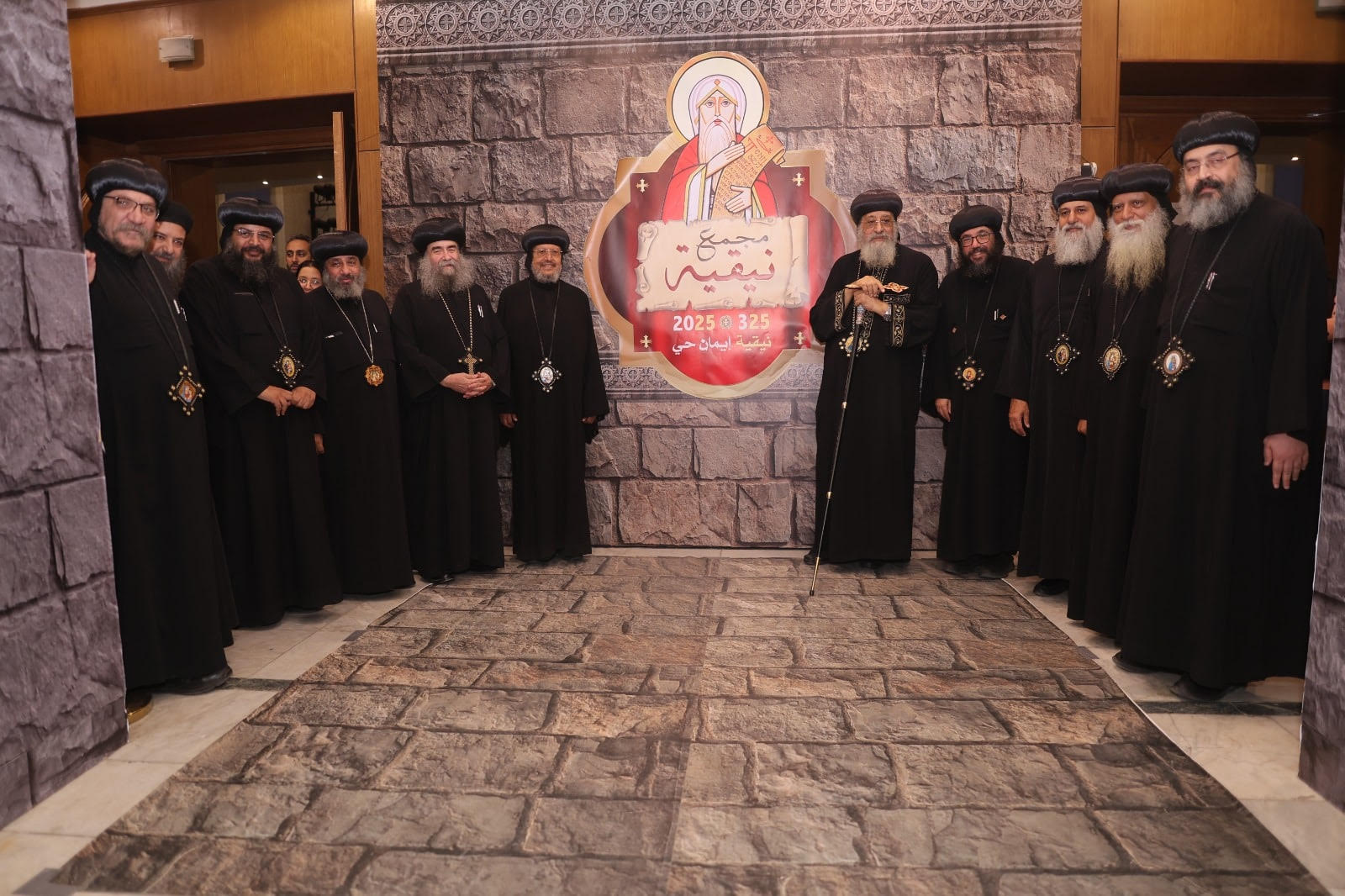
“It taught us faithful discipleship as Athanasius was to Pope Alexandros who he accompanied to Nicaea and faithfully served; later rising to be Pope Athanasius, the 20th Patriarch of the See of St Mark.
“It also taught us that dialogue and discussion are best able to resolve problems to reach an outcome favourable to all. Discussions at Nicaea extended over a full month, and culminated in The Nicene Creed.”
Research
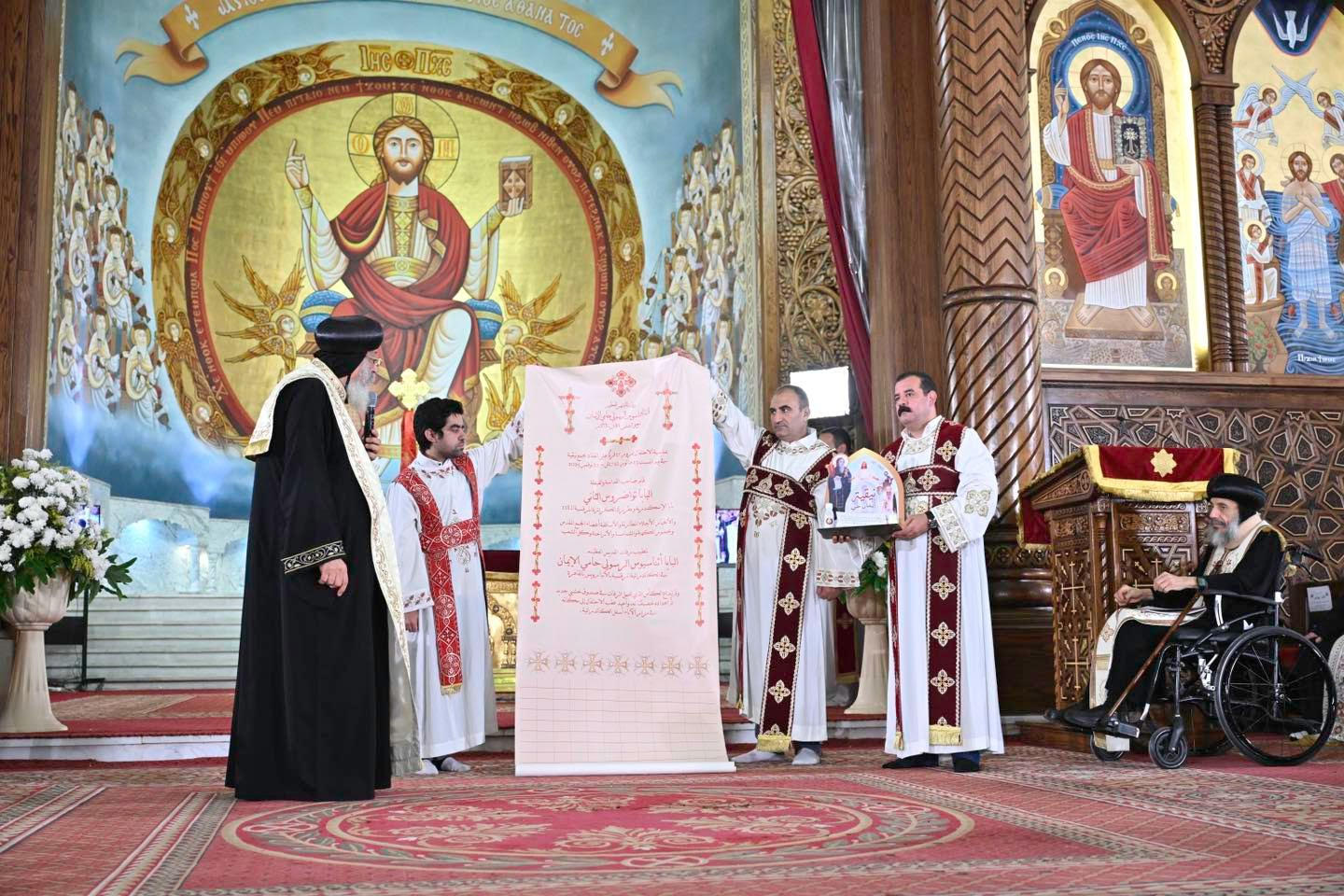
A competition had been offered to young researchers in Coptology on the topic of Nicaea Council. The research centred on four axes: the theological, patristics, and philosophical; the historical and geographical; the liturgical, and the Biblical and linguistic.
On 21 November, Pope Tawadros attended a conference for the presentation and discussion of the eight winning papers. He awarded the winners certificates and commemorative gifts. He pointed to the significant need for research into contemporary issues, pointing out the briefest profession of Christian faith is “In the name of the Father, the Son, and the Holy Spirit”, whereas the most extensive is the Bible in its entirety. As for The Nicene Creed, he said, it is the precise formulation of the Christian faith and creed.
Anointing St Athanasius
The high point in the celebrations came on the last evening of the grand event, the evening of Saturday 22 November.
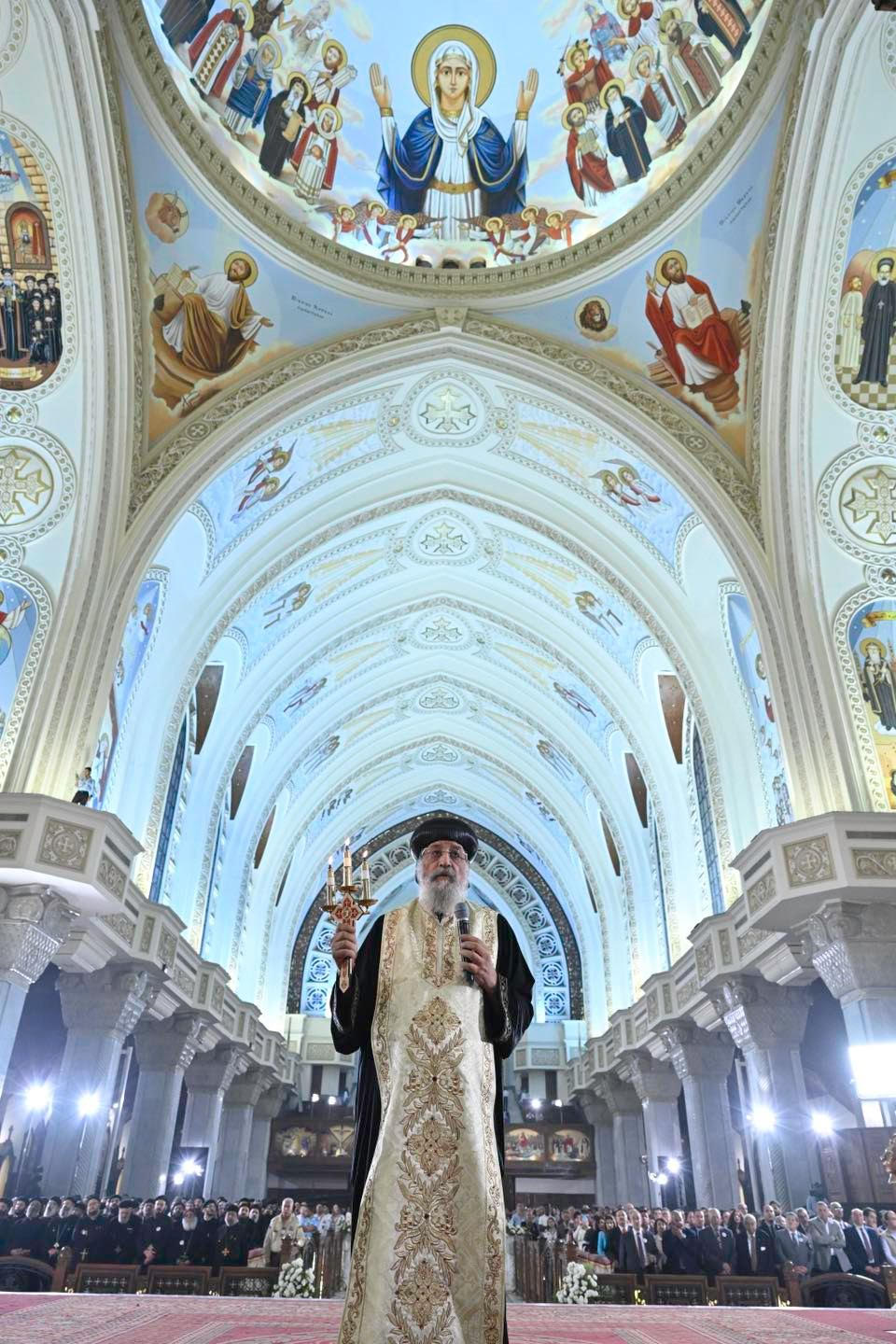
Pope Tawadros carried the relics of St Athanasius from the shrine in the crypt under St Mark’s, and led a ceremonial procession of bishops, priests, and deacons that marched around the outer periphery of the Cathedral then entered it to chants of The Creed written especially for the occasion. The congregation lined the path, joyfully joining in the chants.
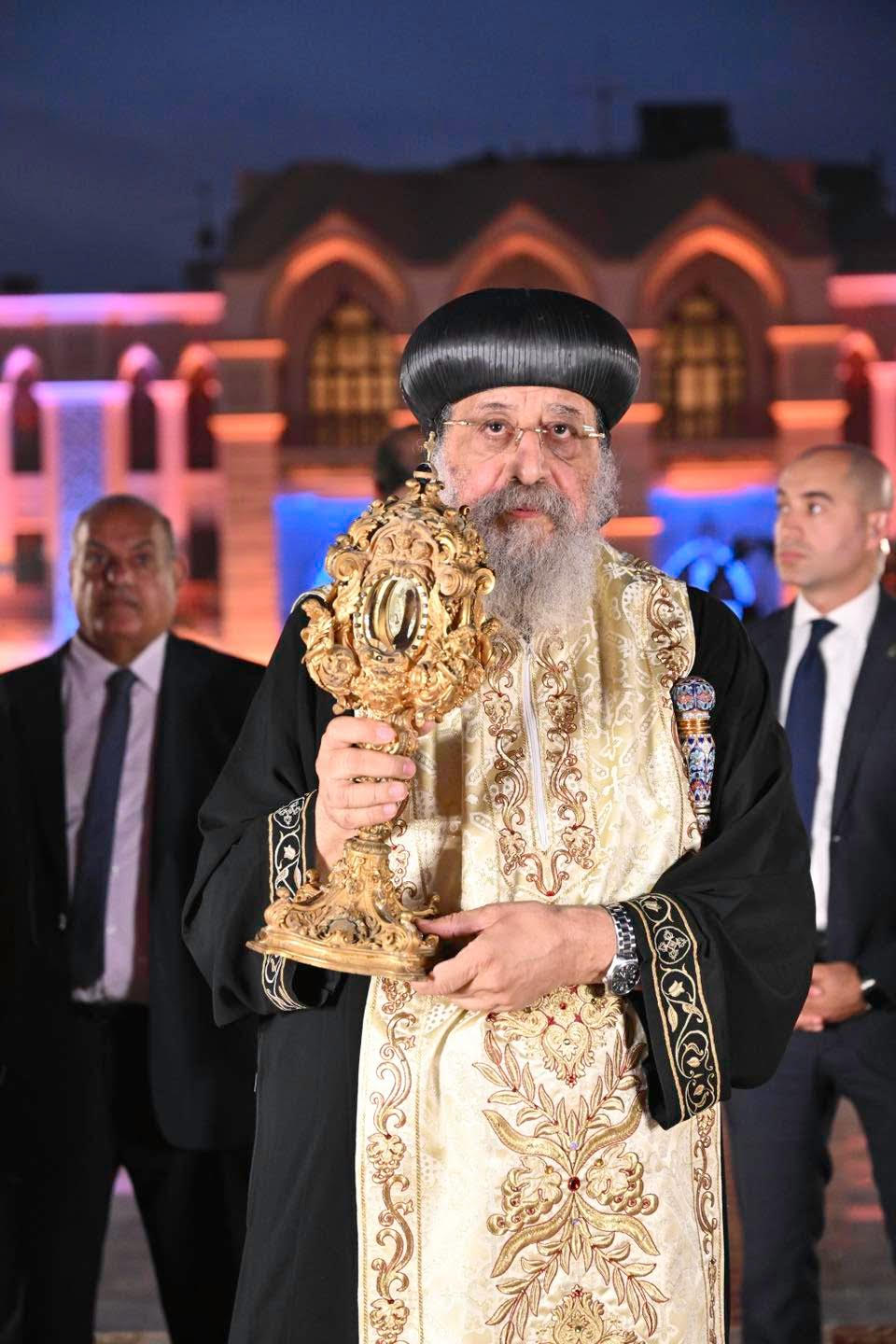
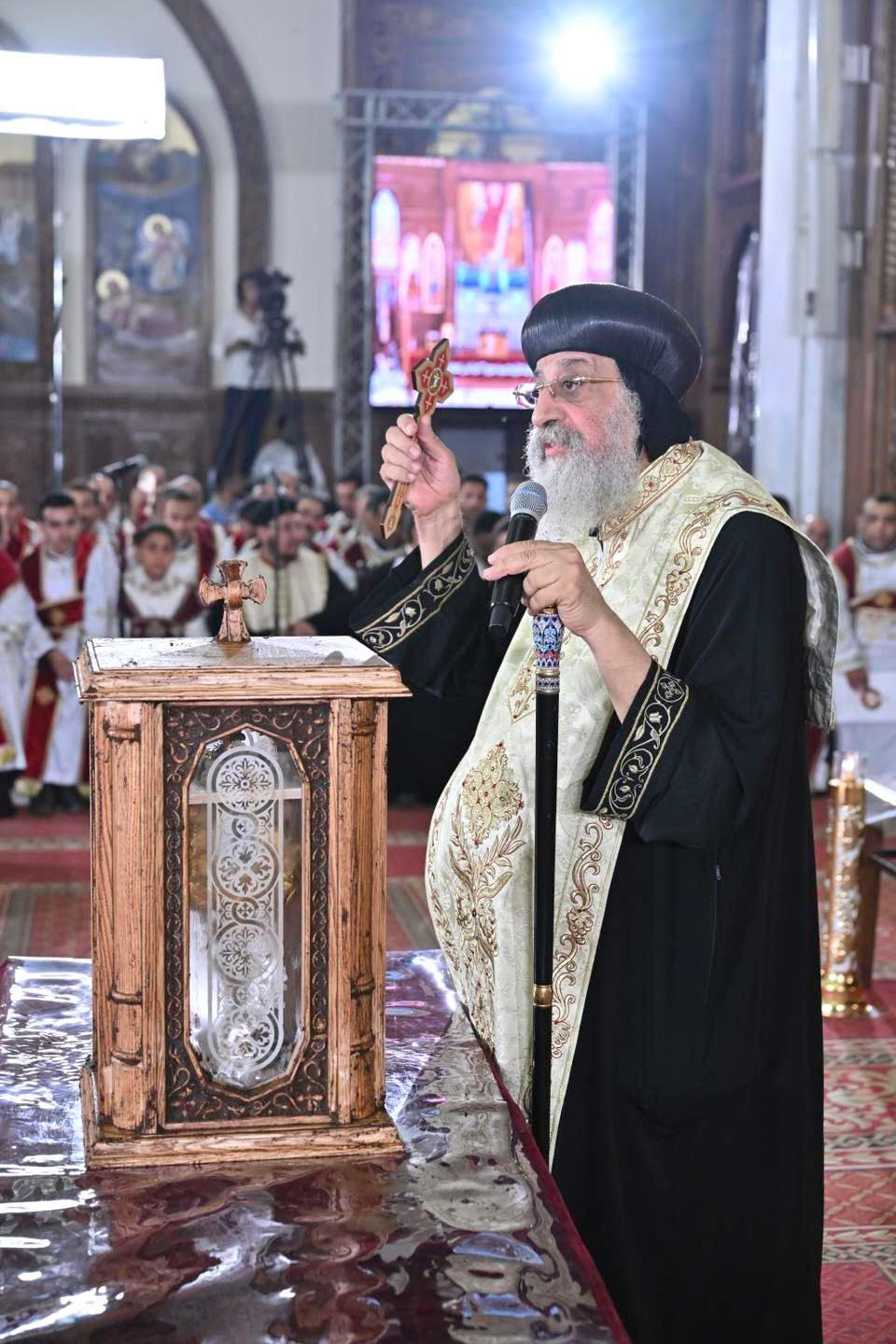
Inside the Cathedral, Vespers incense service began. During the service, the Pope anointed the relics of the saint with sweet spices, as is customary in the Coptic Church on celebrating the feasts of saints.
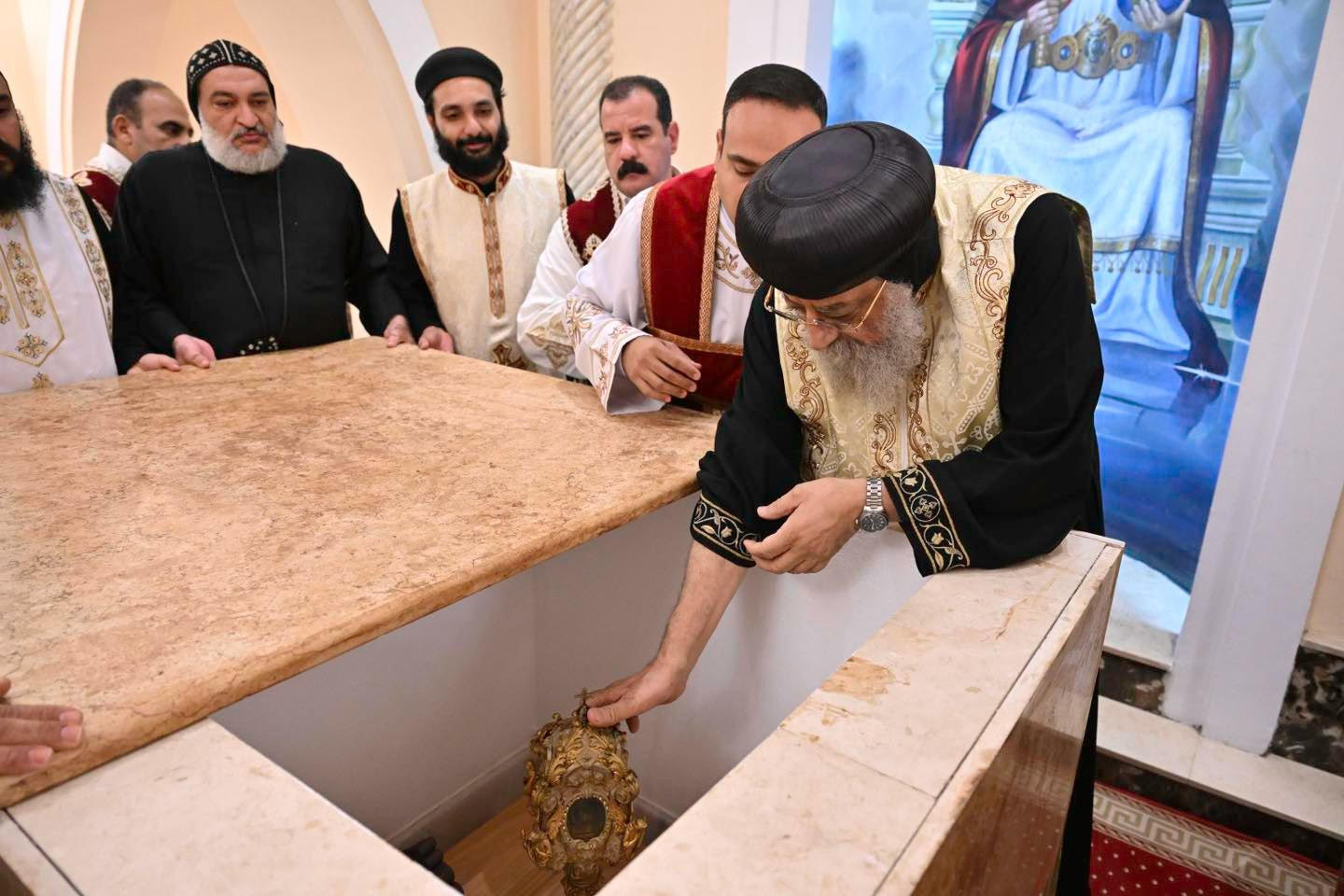
He explained that part of the relics of St Athanasius had been handed by Pope Paul VI to Pope Shenouda III when the latter visited Rome in May 1973. Even though St Athanasius had originally been buried in Alexandria, his remains were later transferred to the Chiesa di San Zaccaria in Venice, Italy.
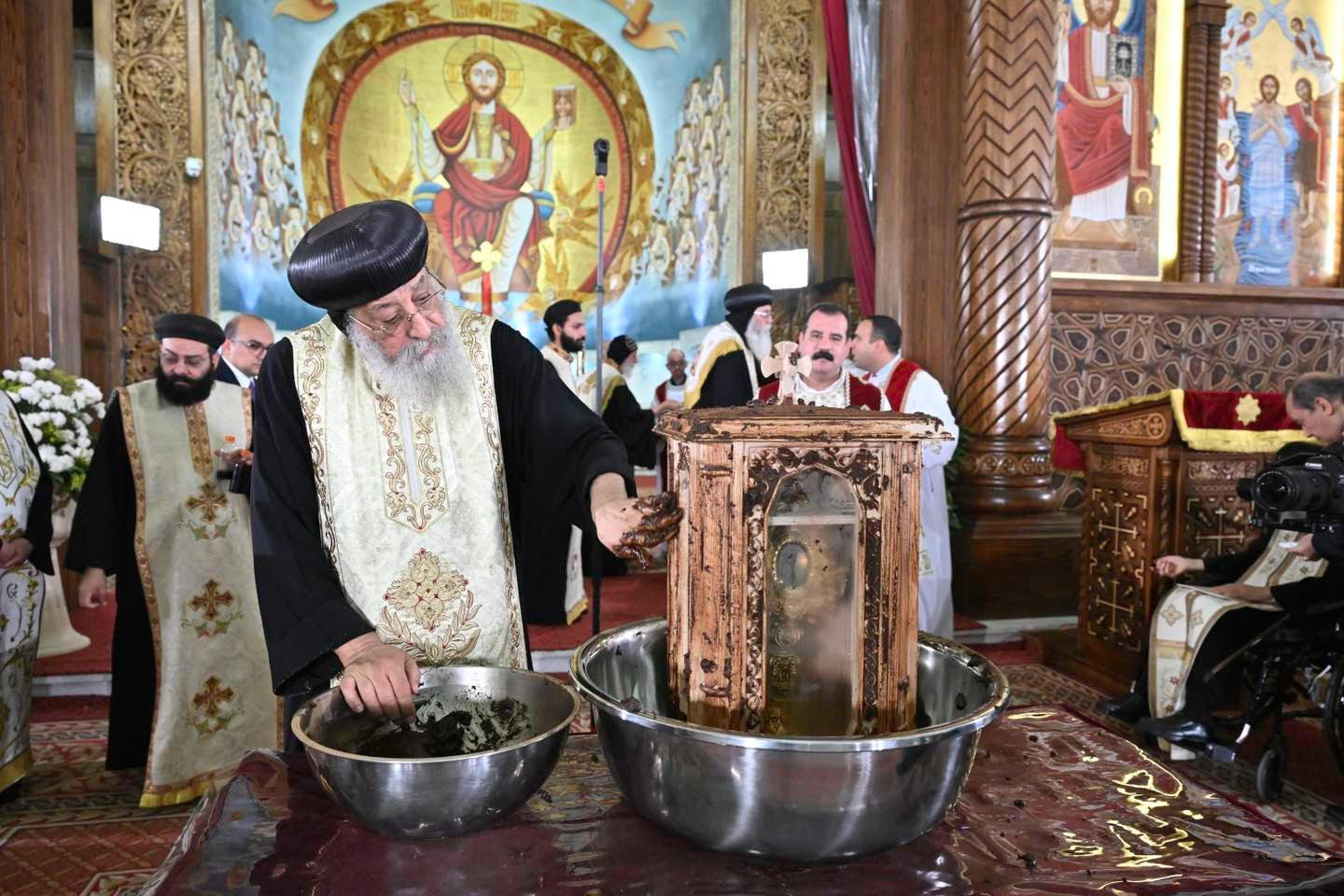
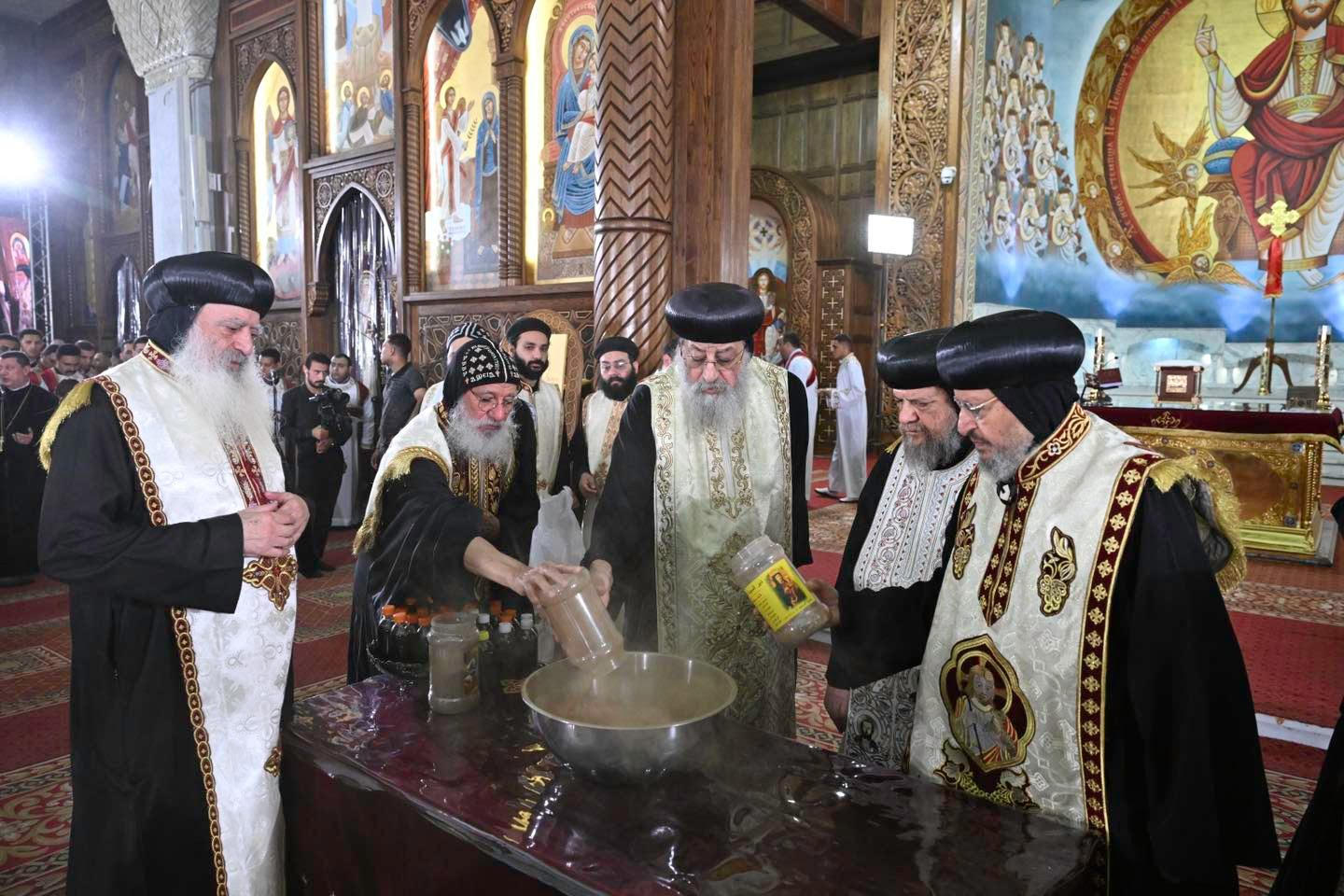
The relics now in Egypt remain in the reliquary handed to Pope Shenouda in 1973, but the reliquary is contained in a wood and glass upright box as Coptic tradition stipulates that relics must be placed in wooden containers. It is this wooden box that was anointed by Pope Tawadros.
Different languages
Words on the Council of Nicaea were delivered by Coptic bishops in different languages. Anba Yu’annis, Metropolitan of Assiut, spoke in Arabic; Bishop Abakir of Scandinavia in Swedish; Bishop Luka of Switzerland and South of France in French; Metropolitan Barnaba of Turin and Rome in Italian; Bishop Youssef of Bolivia in Spanish; Metropolitan Serapion of LA in English; Metropolitan Demian of Northern Germany in German; and Metropolitan Demetrius of Mallawi in Minya in Coptic.
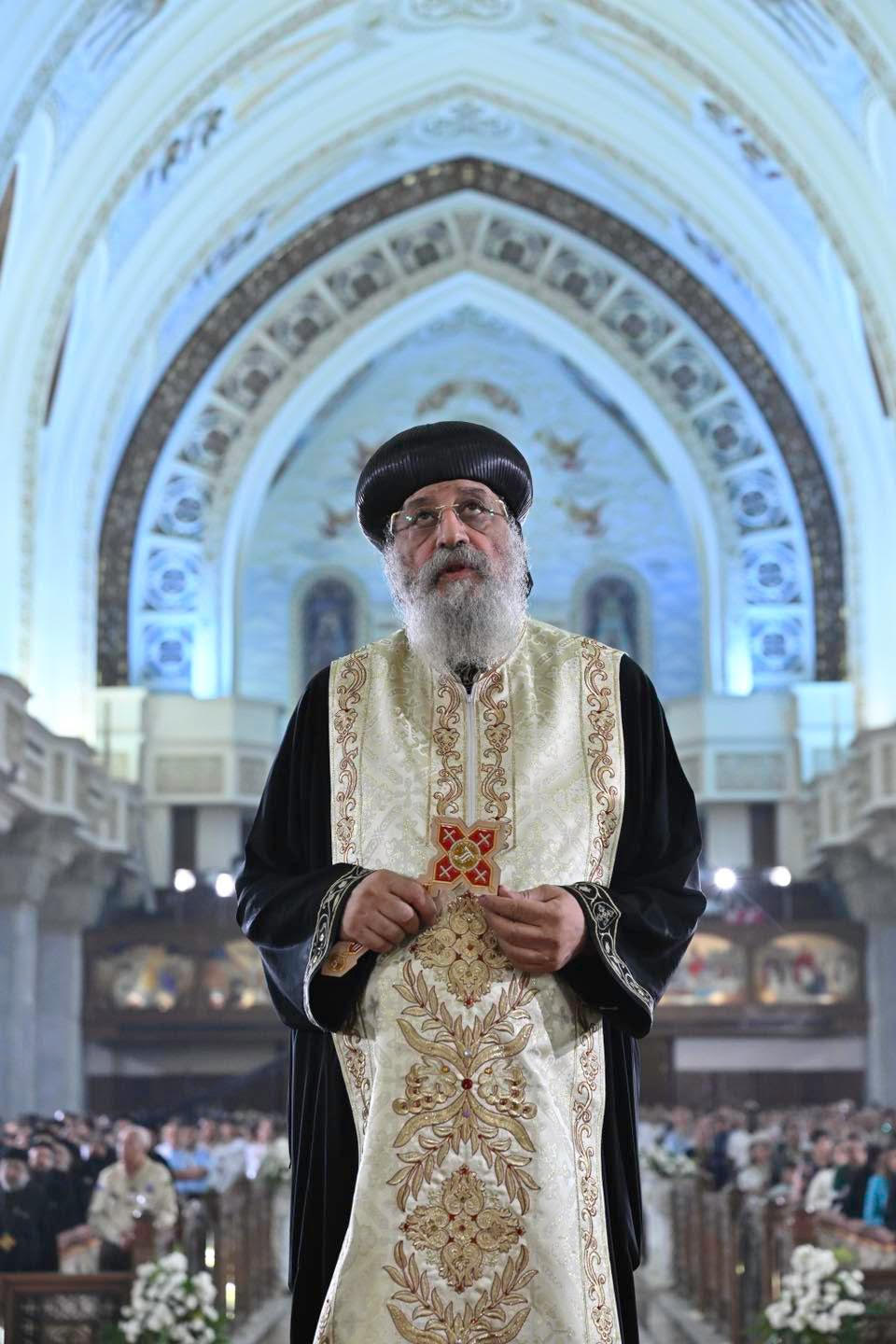
Pope Tawadros said that words delivered in different languages pointed at the spread of the thought of St Athanasius throughout the world. He spoke of five places that worked to shape the character of the saint: his home where he was brought up in the light of the Lord, his church where he grew and belonged, the desert wilderness that taught him asceticism and purity, Nicaea, the platform of steadfast faith and Church unity, and the places of his exile—St Athanasius was banished from his seat five times—where his faith was tested and his hope never failed. “He was the voice of unity not division, truth not controversy, the guardian of the faith we treasure today.”
New metropolitans
The following day, Sunday 23 November, saw Pope Tawadros elevate five bishops to metropolitans: Anba Yu’annis became Metropolitan of Assiut; Anba Sarapamoun, Metropolitan of Atbara and Umdorman in Sudan; Anba Barnaba, Metropolitan of Turin and Rome; Anba Dimian, Metropolitan of North Germany; and Anba Anthony, Metropolitan of Northeast England.
Book
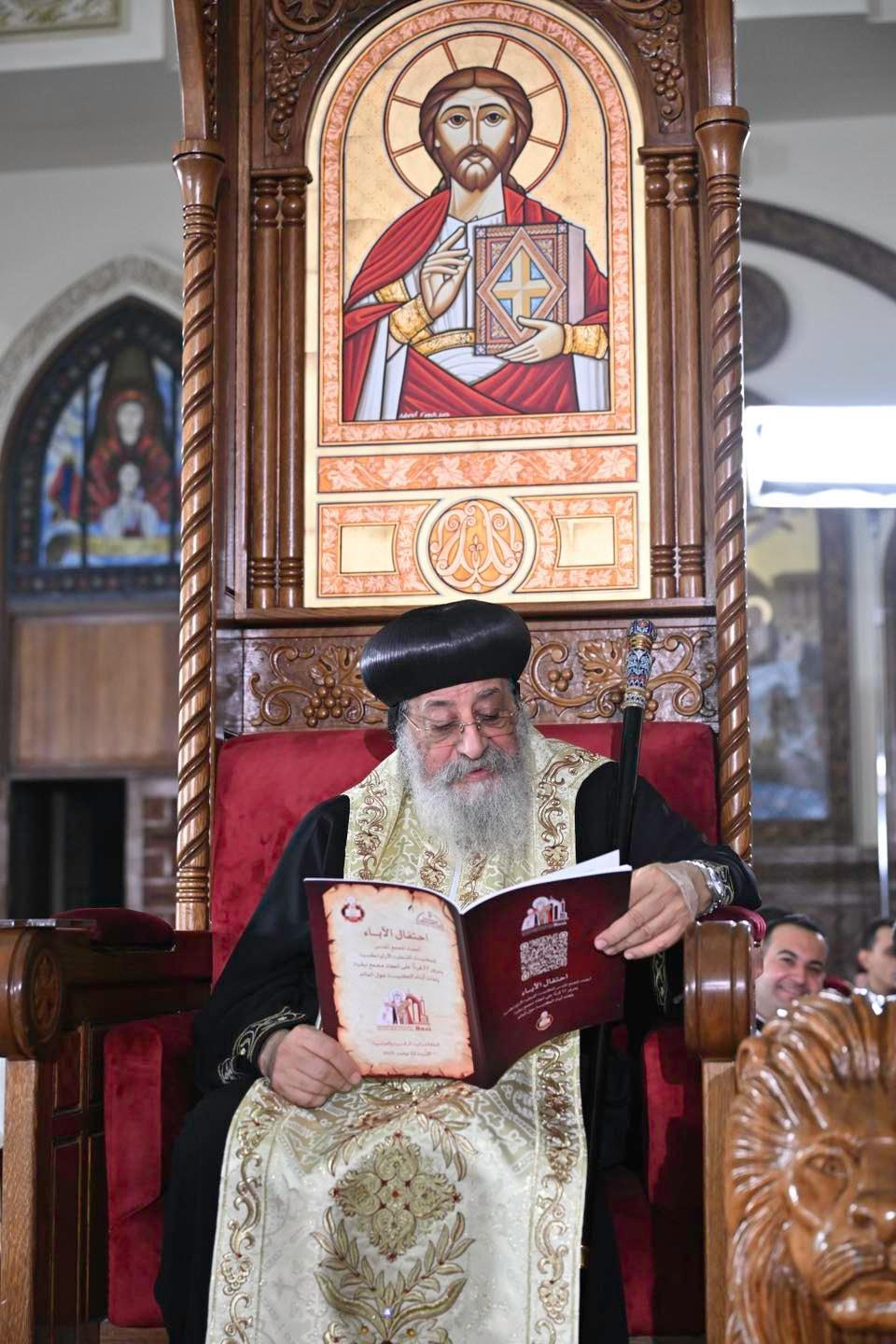
“The Ecumenical Council of Nicaea 325 AD – A Historical Study from a Social and Documentary Perspective” is the title of a new book published by the library of the Theological Seminary of Anba Rweiss, St Mark’s Cathedral, Cairo.
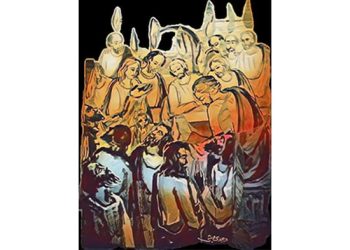
Pope Tawadros II wrote the preface to the new book which is a scholarly work prepared by a group of translators. The Greek and Latin texts in the book were revised by Sameh Farouk, Head of the Department of Greek and Latin Studies at the Faculty of Arts, Cairo University. The book’s cover-icon was designed by Abraam Ayoub.
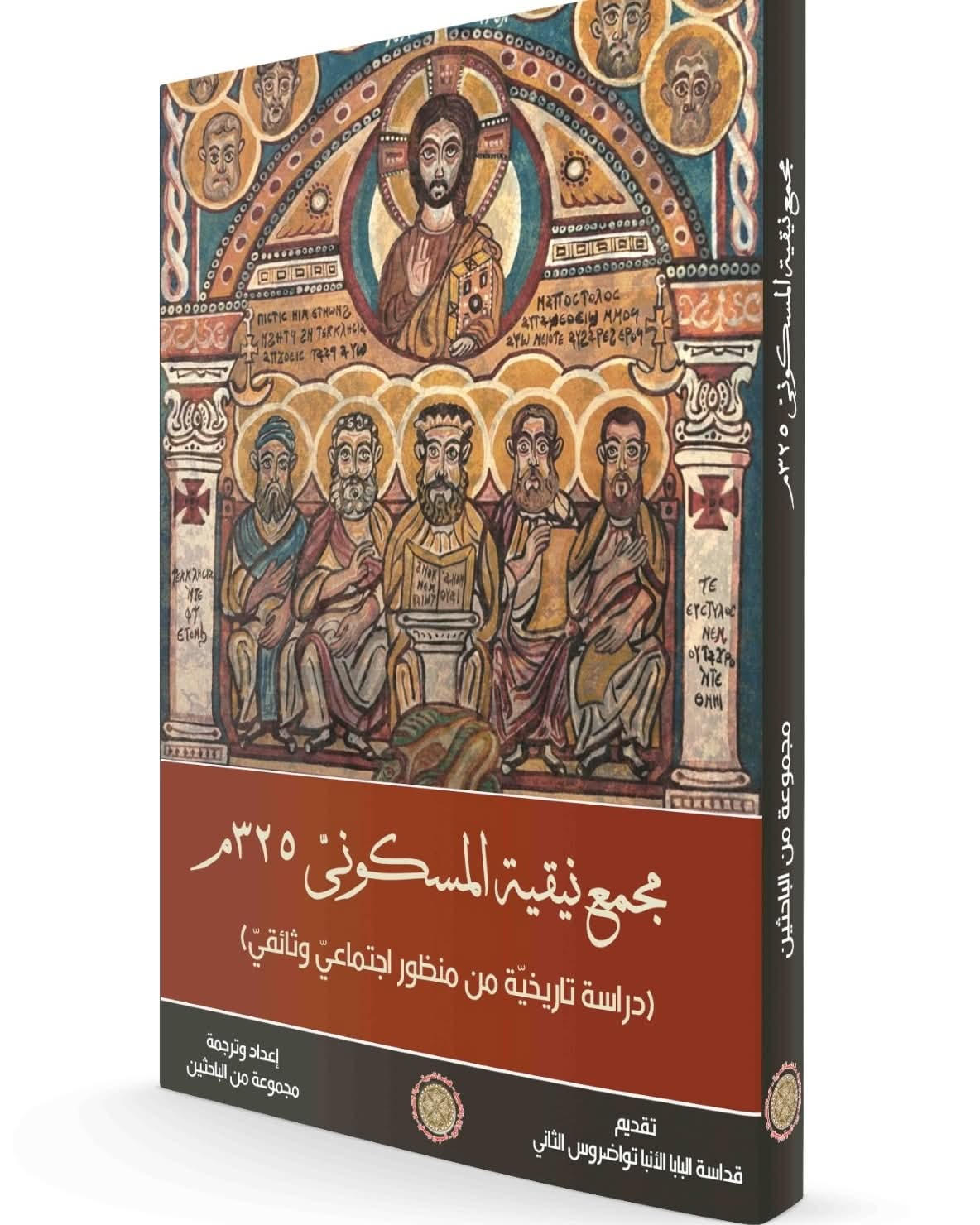
The book aims to provide a solid scientific reference that offers academic accuracy in accessible style. It relies on analytical readings of specialised references introduced in language that targets the non-scholarly reader.
The book is divided into two main sections; the first comprises six chapters that address the historical, geographical, and societal context of the Council of Nicaea, as well as its most prominent figures and theological themes, focusing on the roots and causes of the controversy. This section concludes with an analytical introduction to documents related to the Council.
The second section includes a complete translation of 80 original documents related to the proceedings of the Council and its aftermath. The Arabic texts were provided along with the Greek, Latin, and Syriac originals, attached page by page, so that the book offers a comprehensive reference for researchers, scholars, and all interested in Church history and the Council of Nicaea.
The book is currently available in the library of the Clerical College at St Mark’s Cathedral in Cairo, and will soon be available in all Christian libraries.
…And sculpture
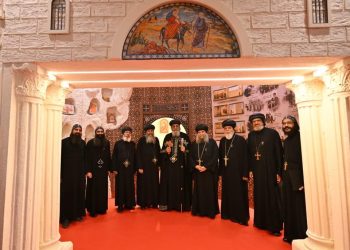
Girgis al-Gawli, Professor of Sculpture and Head of the Sculpture Department at the Faculty of Fine Arts, Minya University, has created a distinctive sculpture, “The Ten Statues Group”, for the Museum of Nicaea in Logos Centre, at Anba Bishoy Monastery in Wadi al-Natroun.
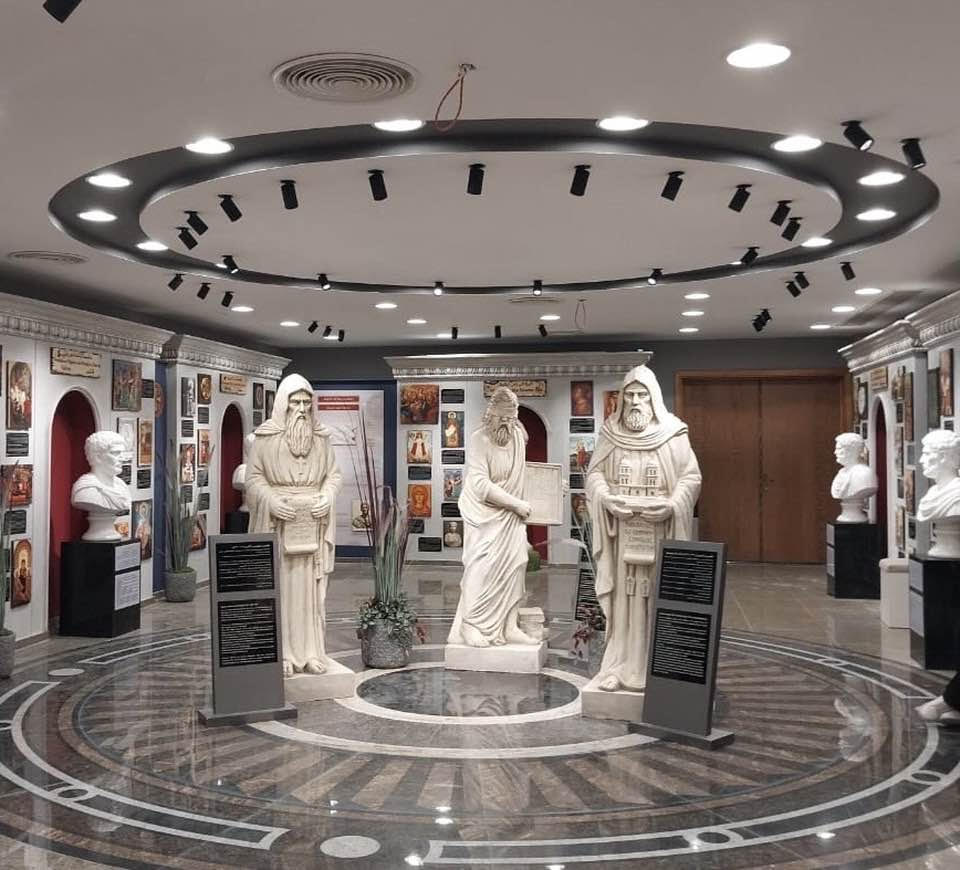
The museum houses a rich collection of fine artworks and rare icons, alongside statues of prominent figures in Coptic Church history. Among them, Dr Gawli’s G.R.P (Glass Reinforced Plastic) “Statues of Nicaea Council” stand out.
Dr Gawli explains that his sculpture depicts prominent ecclesiastical figures, including St Athanasius the Apostolic, and St Anthony the Great who left the monastery he had established and went down to Alexandria to support Athanasius’s doctrine. There is also Anba Pachomius, who established communal monastic life, and was a contemporary of the Council of Nicaea; and Origen, the famous thinker and controversial figure in Christian history; as well as St Didymus the Blind, who led the Theological School of Alexandria according to an assignment by Pope Athanasius the Apostolic.
Watani International
26 November 2025