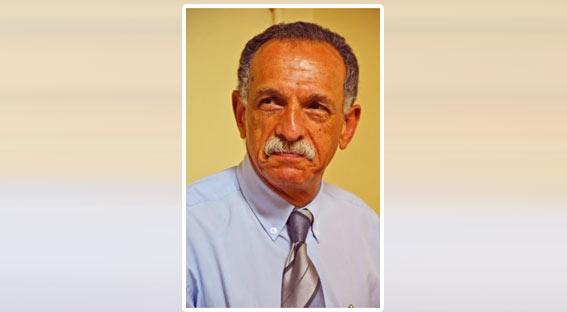
Editor in Chief
Youssef Sidhom
Watani
عربى English French
  • News
    • Accidents
    • Crime
    • Diplomatic briefcase
    • NewsLine
    • Outside Cairo
    • Special Occasions
  • Opinion
    • Editorial
    • International media
    • Reader`s Corner
    • Opinion
  • Politics
    • Elections
    • International Politics
    • Islamisation Politics
    • National Affairs
    • Parliament
    • Politics
    • Protests
    • Rights
    • Terrorism
  • Culture
    • Antiquity
    • Art
    • Books
    • Culture
    • Drama
    • Egyptology
    • Festivals
    • Films
    • Heritage
    • Islamisation Culture
    • Media
    • Museums
    • Music
    • TV
  • Coptic
    • Church Affairs
    • Coptic Affairs
    • Coptic Culture
    • Copts in the Media
    • Coptology
    • Copts Abroad
    • Religious
      • P. Shenouda: Bible Study
    • Sectarian
    • Inter-religious
    • Holy Family
  • Features
    • Counselling Corner
    • features
    • Economy
      • Business
    • Education
    • Social Issues
      • Behaviour
      • Mothers Day
    • Health
    • Environment
    • Humour
    • In memorial
    • Interviews
    • Nile
    • Profile
    • Special needs
    • Sports
    • Technology
    • Tourism
    • Wars
    • Women
    • Youth
  • Watani Special Features
    • Egypt – Arab Spring
      • 25 January Revolution
      • 25 Jan revolution, one year on
      • Egypt post-30 June
    • Watani Milestones
      • 20 years Watani International
      • 10 years Watani International
      • Watani Jubilee
    • Pope Shenouda
    • Pope Tawadros
    • Watani Forum
No Result
View All Result
  • News
    • Accidents
    • Crime
    • Diplomatic briefcase
    • NewsLine
    • Outside Cairo
    • Special Occasions
  • Opinion
    • Editorial
    • International media
    • Reader`s Corner
    • Opinion
  • Politics
    • Elections
    • International Politics
    • Islamisation Politics
    • National Affairs
    • Parliament
    • Politics
    • Protests
    • Rights
    • Terrorism
  • Culture
    • Antiquity
    • Art
    • Books
    • Culture
    • Drama
    • Egyptology
    • Festivals
    • Films
    • Heritage
    • Islamisation Culture
    • Media
    • Museums
    • Music
    • TV
  • Coptic
    • Church Affairs
    • Coptic Affairs
    • Coptic Culture
    • Copts in the Media
    • Coptology
    • Copts Abroad
    • Religious
      • P. Shenouda: Bible Study
    • Sectarian
    • Inter-religious
    • Holy Family
  • Features
    • Counselling Corner
    • features
    • Economy
      • Business
    • Education
    • Social Issues
      • Behaviour
      • Mothers Day
    • Health
    • Environment
    • Humour
    • In memorial
    • Interviews
    • Nile
    • Profile
    • Special needs
    • Sports
    • Technology
    • Tourism
    • Wars
    • Women
    • Youth
  • Watani Special Features
    • Egypt – Arab Spring
      • 25 January Revolution
      • 25 Jan revolution, one year on
      • Egypt post-30 June
    • Watani Milestones
      • 20 years Watani International
      • 10 years Watani International
      • Watani Jubilee
    • Pope Shenouda
    • Pope Tawadros
    • Watani Forum
No Result
View All Result
No Result
View All Result
Watani
ع Fr
ADVERTISEMENT

Venezuela: means not end 

Problems on hold

5 December, 2025 - (10:30 AM)
0 0

Youssef Sidhom 

Youssef Sidhom
21
VIEWS
Share on FacebookShare on Twitter

The world is watching with grave concern the escalating confrontation between Washington and Moscow in the Caribbean. This is an arena where US-Russian conflict is unprecedented, given that for two centuries the area has remained under US dominance. The rules are changing, however, and the balance of power is now shifting, heralding a new era in which no single power holds global supremacy. New players are emerging, in possession of political, economic, and military tools which they use to impose shared leadership, if not to completely displace the US from its position of absolute leadership as it persists in belligerence.

American political scientist and international relations scholar Professor John Mearsheimer spoke about this intricate issue. Professor Mearsheimer, 78, is the R. Wendell Harrison Distinguished Service Professor at University of Chicago. He said: “I’ve spent my entire career studying how empires rise and fall. But what I witnessed in the Caribbean last month changed everything I thought I knew about American power. Russian warships didn’t just appear in Venezuelan waters; they shattered a doctrine that has defined Western hemisphere politics for two centuries. The Monroe Doctrine, America’s sacred claim that this hemisphere belongs to Washington, died in those waters… What unfolded wasn’t just naval positioning, it was the moment when the unipolar world order I’ve analysed for decades finally cracked open. The question isn’t whether America saw this coming, the question is why we forced it to happen. Let me tell you how a superpower accidentally destroyed its own empire.

“[Venezuela] A nation under siege from American sanctions sitting atop the world’s largest oil reserves, desperate for allies. It was perfect. The partnership deepened gradually. Russian energy firms invested billions in Venezuela’s State oil company. Technical advisors arrived followed by military specialists. Moscow supplied fighter jets, air defence systems, armoured vehicles. Then came the naval deployments. Since 2008 Russian warships have periodically visited Venezuelan ports. At first these were gestures of solidarity. Now they’re unmistakably political declarations. Each arrival sends the same message: If you can deploy forces on our borders, we can do the same on yours… For every missile system placed in Eastern Europe, here was a Russian frigate off the coast of South America. For every alliance built in Russia’s neighbourhood, here was a counter alliance in America’s backyard.

“The Soviet Union collapsed in 1991. America stood alone as the world superpower. We had won the cold war. History, Francis Fukuyama told us, has ended. Liberal democracy has triumphed forever. But instead of building a new security architecture that included Russia, we chose dominance. Instead of crafting institutions that reflected post-Cold War realities, we expanded the very alliance designed to contain the Soviet Union.

“I remember the debates in the 1990s. George Kennan, the architect of containment strategy warned that NATO expansion would be the most fateful error of American policy in the entire post-Cold War era. He understood what Washington refused to accept: Russia regardless of who led it would view NATO troops on its borders as an existential threat. But we pressed forward anyway, Poland, Hungary, Czech Republic, then Baltic States: Bulgaria and Romania. Each expansion wave was sold as spreading democracy. To Moscow, it looked like encirclement. The pivotal moment came in 2008 at the NATO Summit in Bucharest. There, the alliance announced that Ukraine and Georgia would eventually become members. For Russia that was the red line crossed. Ukraine isn’t just another neighbouring State. The idea of NATO missile systems just hundreds of miles from Moscow was intolerable to any Russian government. But Washington believed Moscow was too weak to respond, too dependent on Western institutions, too constrained by internal chaos.

“We were wrong, and Venezuela wouldn’t pay the price for our miscalculation. While we were expanding NATO eastward, we applied the same dominance logic in our own hemisphere. Venezuela became a testing ground, a laboratory for how far economic warfare could go before a nation collapses. When Hugo Sanchez came to power in 1999, he committed the ultimate sin in Washington’s eyes. He decided that Venezuela’s oil wealth should serve Venezuelans not American corporations. He redirected petroleum revenues into social programmes, healthcare, education. He built alliances with Cuba and promoted Latin American independence. From that moment he became a target. The pattern was predictable. First came diplomatic pressure and moral lectures, then economic sanctions and financial restrictions. When that wasn’t enough, we backed a coup in 2002. It failed, but it marked a turning point. From then on, the relationship between Washington and Caracas descended into open warfare. By the time Maduro succeeded Chavez in 2013, our pressure achieved something we never intended; it drove Venezuela straight into Russia’s arms.

“This is where Putin demonstrated the difference between tactics and strategy. While Washington focused on crushing individual opponents Moscow was building a global network of resistance… When those Russian warships arrived in Venezuelan waters last month, they weren’t just conducting naval exercises, they were performing a funeral rite for the Monroe Doctrine, the American hemispheric claim… The world has changed in ways Washington refuses to acknowledge. We live in a multipolar system now where influence must be earned rather than assumed, where alliances are voluntary rather than imposed. Russia’s message was simple but devastating: the Western Hemisphere is no longer America’s exclusive domain; other powers can project influence here too. The age of unilateral control is over… We maintain nearly 800 military bases in over 70 countries. Our naval fleets patrol every ocean. We spend more on defence than the next 10 nations combined. We justify this as global leadership, as maintaining a rules-based international order.

“This selective morality hasn’t gone unnoticed. To much of the world, America’s rules-based order looks like a hierarchy where rules apply to everyone but us… The double standard is staggering. We condemn election interference while funding opposition movements. We denounce authoritarianism while arming dictators that serve our interests. We demand other nations to respect international law while ignoring it whenever it constrains with our actions. People remember the coups we backed in Guatemala, Chile, Argentina, they remember the death squads we trained, they remember how we supported dictators as long as they were anti-communist and undermined democracies that challenged our control.

“The world has learned that America’s concern for democracy is conditional; used when it aligns with our interests, discarded when it doesn’t… We’ve spent decades lecturing others about freedom while denying it to those who choose paths we don’t approve.

“The tragedy is that none of this was inevitable. After the Cold War we had a historic opportunity to build a cooperative international system based on shared prosperity and mutual respect. Instead, we choose dominance. We could have integrated Russia into European security architecture. We could have worked with China on global challenges. We could have partnered with Latin America rather than trying to control it. Instead, we expanded military alliances, imposed punitive sanctions and pursued regime change operations. We mistook our temporary advantage for permanent supremacy.”

Watani International

5 December 2025
Comments

comments

Tags: Problems on holdUS and RussiaUS and VenezuelaWataniYoussef Sidhom

Related Posts

Youssef Sidhom
Editorial

China and Russia vis-à-vis Trump’s Iran War

June 19, 2026
Youssef Sidhom
Editorial

Six months on approval of legality of 29th batch of churches: 30th batch approved

June 14, 2026
Youssef Sidhom
Editorial

US / Israel intransigence in Iran war: What do they gain?

June 5, 2026
Editorial

Iran war: Looming economic crisis

May 29, 2026
Youssef Sidhom
Editorial

Trump in Beijing: No cards to bargain

May 22, 2026
Youssef Sidhom
Editorial

Russia, Iran, China: Emerging triangle of power 

May 15, 2026
Please login to join discussion

Editorial

China and Russia vis-à-vis Trump’s Iran War

More

MOST READ

Egypt attempts to contain Myna bird invasion
Environment

Egypt attempts to contain Myna bird invasion

June 15, 2026
0

The Nature Protection Sector of Egypt’s Ministry of Local Development and Environment has been monitoring and tracking the spread of...

Read more
Watani talks to Anba Bigol, Bishop and Abbot of al-Muharraq Monastery of the Holy Virgin Mary

Watani talks to Anba Bigol, Bishop and Abbot of al-Muharraq Monastery of the Holy Virgin Mary

June 17, 2026
Egypt’s Armenians

Egypt’s Armenians

April 22, 2015
‘Train of Hope’ to carry home 1,200 Sudanese

‘Train of Hope’ to carry home 1,200 Sudanese

June 16, 2026
Jobs for persons with disabilities

Jobs for persons with disabilities

June 15, 2026

Features

China’s Long March launches USD190M tyre manufacturing project in Egypt
Economy

China’s Long March launches USD190M tyre manufacturing project in Egypt

June 17, 2026
0

China’s Chaoyang Long March Tyre Co., Ltd. has launched a USD190 million tyre manufacturing project in Egypt’s Suez Canal Economic...

Read more
Watani started as an Egyptian weekly Sunday newspaper published in Cairo. The word Watani is Arabic for “My Homeland”. The paper was founded in 1958 by the prominent Copt Antoun Sidhom (1915 – 1995), who strove for the establishment of a civil, democratic society in Egypt, where all Egyptians would enjoy full citizenship rights regardless of their religious denomination. To this day when Watani is published as a weekly paper and an online news site, the objective remains the same. Those in charge of Watani view this role as a patriotic all-Egyptian vocation. Special attention is given to shedding light on Coptic culture and tradition as authentically Egyptian, this being a topic largely disregarded or little-understood by Egypt’s media. Watani is deeply dedicated to offer its readers high quality, extensive, objective, credible and well-researched media coverage, with special focus on Coptic issues, culture, heritage, and contribution to Egyptian society.
-----------------------------------------------------------

27 Abdel Khalek Tharwat st, Downtown, Abdeen,Cairo

00202-23927201

00202-23935946

 [email protected]


categories

  • News
  • Opinion
  • Politics
  • Culture
  • Egypt – Arab Spring
  • Coptic Affairs
  • Features
  • Watani Special Features

Recent Posts

  • China and Russia vis-à-vis Trump’s Iran War
  • China’s Long March launches USD190M tyre manufacturing project in Egypt
  • Watani talks to Anba Bigol, Bishop and Abbot of al-Muharraq Monastery of the Holy Virgin Mary
  • ‘Train of Hope’ to carry home 1,200 Sudanese
  • Egypt launches ROX Motor partnership to manufacture new-energy vehicles
  • News
  • Opinion
  • Politics
  • Culture
  • Egypt – Arab Spring
  • Coptic Affairs
  • Features
  • Watani Special Features

Powered BY 3A Digital.

No Result
View All Result
  • News
    • Accidents
    • Crime
    • Diplomatic briefcase
    • NewsLine
    • Outside Cairo
    • Special Occasions
  • Opinion
    • Editorial
    • International media
    • Reader`s Corner
    • Opinion
  • Politics
    • Elections
    • International Politics
    • Islamisation Politics
    • National Affairs
    • Parliament
    • Politics
    • Protests
    • Rights
    • Terrorism
  • Culture
    • Antiquity
    • Art
    • Books
    • Culture
    • Drama
    • Egyptology
    • Festivals
    • Films
    • Heritage
    • Islamisation Culture
    • Media
    • Museums
    • Music
    • TV
  • Coptic
    • Church Affairs
    • Coptic Affairs
    • Coptic Culture
    • Copts in the Media
    • Coptology
    • Copts Abroad
    • Religious
      • P. Shenouda: Bible Study
    • Sectarian
    • Inter-religious
    • Holy Family
  • Features
    • Counselling Corner
    • features
    • Economy
      • Business
    • Education
    • Social Issues
      • Behaviour
      • Mothers Day
    • Health
    • Environment
    • Humour
    • In memorial
    • Interviews
    • Nile
    • Profile
    • Special needs
    • Sports
    • Technology
    • Tourism
    • Wars
    • Women
    • Youth
  • Watani Special Features
    • Egypt – Arab Spring
      • 25 January Revolution
      • 25 Jan revolution, one year on
      • Egypt post-30 June
    • Watani Milestones
      • 20 years Watani International
      • 10 years Watani International
      • Watani Jubilee
    • Pope Shenouda
    • Pope Tawadros
    • Watani Forum

Powered BY 3A Digital.

Login to your account below

Forgotten Password?

Fill the forms bellow to register

All fields are required. Log In

Retrieve your password

Please enter your username or email address to reset your password.

Log In