
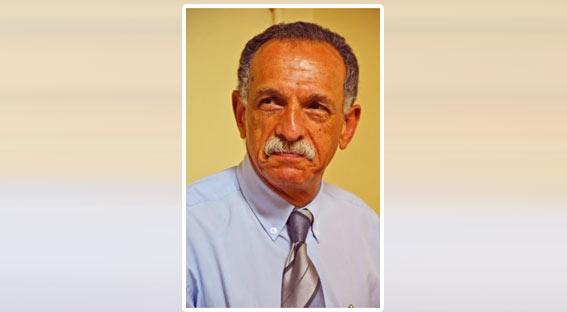
Editor in Chief
Youssef Sidhom
Watani
عربى English French
  • News
    • Accidents
    • Crime
    • Diplomatic briefcase
    • NewsLine
    • Outside Cairo
    • Special Occasions
  • Opinion
    • Editorial
    • International media
    • Reader`s Corner
    • Opinion
  • Politics
    • Elections
    • International Politics
    • Islamisation Politics
    • National Affairs
    • Parliament
    • Politics
    • Protests
    • Rights
    • Terrorism
  • Culture
    • Antiquity
    • Art
    • Books
    • Culture
    • Drama
    • Egyptology
    • Festivals
    • Films
    • Heritage
    • Islamisation Culture
    • Media
    • Museums
    • Music
    • TV
  • Coptic
    • Church Affairs
    • Coptic Affairs
    • Coptic Culture
    • Copts in the Media
    • Coptology
    • Copts Abroad
    • Religious
      • P. Shenouda: Bible Study
    • Sectarian
    • Inter-religious
    • Holy Family
  • Features
    • Counselling Corner
    • features
    • Economy
      • Business
    • Education
    • Social Issues
      • Behaviour
      • Mothers Day
    • Health
    • Environment
    • Humour
    • In memorial
    • Interviews
    • Nile
    • Profile
    • Special needs
    • Sports
    • Technology
    • Tourism
    • Wars
    • Women
    • Youth
  • Watani Special Features
    • Egypt – Arab Spring
      • 25 January Revolution
      • 25 Jan revolution, one year on
      • Egypt post-30 June
    • Watani Milestones
      • 20 years Watani International
      • 10 years Watani International
      • Watani Jubilee
    • Pope Shenouda
    • Pope Tawadros
    • Watani Forum
No Result
View All Result
  • News
    • Accidents
    • Crime
    • Diplomatic briefcase
    • NewsLine
    • Outside Cairo
    • Special Occasions
  • Opinion
    • Editorial
    • International media
    • Reader`s Corner
    • Opinion
  • Politics
    • Elections
    • International Politics
    • Islamisation Politics
    • National Affairs
    • Parliament
    • Politics
    • Protests
    • Rights
    • Terrorism
  • Culture
    • Antiquity
    • Art
    • Books
    • Culture
    • Drama
    • Egyptology
    • Festivals
    • Films
    • Heritage
    • Islamisation Culture
    • Media
    • Museums
    • Music
    • TV
  • Coptic
    • Church Affairs
    • Coptic Affairs
    • Coptic Culture
    • Copts in the Media
    • Coptology
    • Copts Abroad
    • Religious
      • P. Shenouda: Bible Study
    • Sectarian
    • Inter-religious
    • Holy Family
  • Features
    • Counselling Corner
    • features
    • Economy
      • Business
    • Education
    • Social Issues
      • Behaviour
      • Mothers Day
    • Health
    • Environment
    • Humour
    • In memorial
    • Interviews
    • Nile
    • Profile
    • Special needs
    • Sports
    • Technology
    • Tourism
    • Wars
    • Women
    • Youth
  • Watani Special Features
    • Egypt – Arab Spring
      • 25 January Revolution
      • 25 Jan revolution, one year on
      • Egypt post-30 June
    • Watani Milestones
      • 20 years Watani International
      • 10 years Watani International
      • Watani Jubilee
    • Pope Shenouda
    • Pope Tawadros
    • Watani Forum
No Result
View All Result
No Result
View All Result
Watani
ع Fr
ADVERTISEMENT

Third legislative term begins: Now what?

Problems on hold

23 January, 2026 - (10:30 AM)
0 0

Youssef Sidhom

Youssef Sidhom
9
VIEWS
Share on FacebookShare on Twitter

I chose to wait until the parliamentary elections concluded and the final results were announced before raising an issue that I have repeatedly discussed in my editorials, that being party representation. We need to look at where we stand on this issue today, what the criteria for political participation are, and who bears the responsibility of working the desired change on this front.

The House of Representatives now begins its first session of its legislative term, following an election period marked by unexpected developments. The President intervened, issuing directives for strict monitoring of the elections to ensure a thorough process that precisely reflects voters’ will. Results in some constituencies were annulled and reruns took place. Now that the electoral process has concluded, the final results reveal a composition of the House that objectively reflects the nature and strength of the various political parties as well as, of course, those of the voters. Voter participation amounted to some 22.7 million out of a total electorate of 69.9 million, that is a turnout of 32.4 per cent.

The results revealed that 15 parties out of more than 110 legally registered parties won seats in parliament. This raises serious questions about the effectiveness of political parties, especially considering the constitutional prerogative of freedom of party formation. Regardless of the number of seats won by each of the 15 parties, defining the majority and the opposition, I am left with a number of fundamental, unspoken concerns that I have consistently raised before.

When it comes to party representation in parliamentary practice, if we take pride in the fact that our Egyptian Constitution allows for the free establishment of parties upon notification, resulting in a party landscape encompassing over 110 parties, what is our stance in the face of the shocking reality that only 15 of these parties managed to reach parliament? What shortcomings does this reflect; ones that must be confronted with courage? Either the majority of parties lack genuine presence on the ground among the masses, or they are content with a decorative presence on the party map without any real participation in political action. In both cases, a formal mechanism is necessary to evaluate the performance of licensed parties in terms of party membership and presence among the public, which would determine their eligibility to represent Egyptians.

Here I find myself returning to an issue that I addressed at length in previous editorials: the scope of the responsibility shouldered by the Party Affairs Committee in fulfilling the Constitution when it comes to the freedom of establishing political parties. Is this responsibility limited to approving the founding documents of any party to conform with the specified regulations, or does it extend to monitoring that party’s performance on the ground in terms of growth of its membership base, dissemination of its political programme, and participation in the electoral process? What we see is that the Committee merely fulfils the Constitution by allowing the establishment of parties without any subsequent follow up or evaluation. Unfortunately, this has resulted in a considerable number of parties that have not progressed beyond their founding documents and remain dormant, disconnected from the public sphere and absent from political engagement.

As I repeatedly wrote, perhaps out of despair over the long-awaited change, I look forward to an initiative that would require the Party Affairs Committee to hold political parties accountable for the extent of their activity on the ground and among the public. In this regard, I also recall what President Sisi said during his meeting with the editors-in-chief of Egypt’s national newspapers in May 2017. The President said: “I have more than once called upon parties with similar agendas and political views to merge, in order to create [a few] strong parties [instead of numerous, conflicting feeble ones]. Only then will the parties produce calibres that qualify for power rotation. I wish to see parties with the same ideologies strive towards collaboration and mergers.” In this context I wrote that I look forward for the Party Affairs Committee to align the parties according to political outlook, and group them under five blocs: right, centre-right, centre, centre-left, and left. Accordingly, all parties that have been approved under the Constitution would be merged under political coalitions that join those sharing the same outlook. Hence, they will present a coherent presence among the public in any electoral process. Let me add that this approach would set the grounds for strong party presence in the Egyptian street, one that could produce robust calibres qualified to contend for peaceful power rotation.

Back to my assessment of the recent election results and their implications for parliament, I find myself, setting aside the dynamics of electoral competition and its outcomes, unable to clearly comprehend the electoral programmes of any of the parties or blocs that secured seats in the House of Representatives. Following meticulous examination of their political, economic, social, and cultural orientations, as well as their plans for education, health, housing, sports, arts, and other vital aspects, I found no clear, publicly declared difference that distinguishes them from one another. Consequently, I am unable to align with any outcome produced, whether labelled as majority or opposition. I wonder: What exactly does the majority decide when it supports the executive authority? And what exactly does the opposition decide when it rejects the executive authority? Have we reached a point where parliament has become subservient to the executive authority? If this is the case, it reflects a regrettable reality: the consolidation of a political system in which the parliamentary majority absolutely supports the executive authority and protects it from any potential objections.

Is this the reality that reassures Egyptians that a parliament and a legislative system exist, dedicated to protecting their interests and upholding the Constitution? Does this political orientation allow the majority to become the opposition and the opposition to become the majority whenever national interest requires it? Have we reached a level of representation that sends a clear and firm message to the executive authority that the legislative authority serves the interests of the Egyptian citizen not the Egyptian government?

Watani International

23 January 2026

Comments

comments

Tags: Egypt House of RepresentativesEgypt parliamentProblems on holdWataniYoussef Sidhom

Related Posts

Youssef Sidhom
Editorial

China and Russia vis-à-vis Trump’s Iran War

June 19, 2026
Youssef Sidhom
Editorial

Six months on approval of legality of 29th batch of churches: 30th batch approved

June 14, 2026
Youssef Sidhom
Editorial

US / Israel intransigence in Iran war: What do they gain?

June 5, 2026
Editorial

Iran war: Looming economic crisis

May 29, 2026
Youssef Sidhom
Editorial

Trump in Beijing: No cards to bargain

May 22, 2026
Youssef Sidhom
Editorial

Russia, Iran, China: Emerging triangle of power 

May 15, 2026
Please login to join discussion

Editorial

China and Russia vis-à-vis Trump’s Iran War

More

MOST READ

Egypt attempts to contain Myna bird invasion
Environment

Egypt attempts to contain Myna bird invasion

June 15, 2026
0

The Nature Protection Sector of Egypt’s Ministry of Local Development and Environment has been monitoring and tracking the spread of...

Read more
Watani talks to Anba Bigol, Bishop and Abbot of al-Muharraq Monastery of the Holy Virgin Mary

Watani talks to Anba Bigol, Bishop and Abbot of al-Muharraq Monastery of the Holy Virgin Mary

June 17, 2026
Egypt’s Armenians

Egypt’s Armenians

April 22, 2015
‘Train of Hope’ to carry home 1,200 Sudanese

‘Train of Hope’ to carry home 1,200 Sudanese

June 16, 2026
Jobs for persons with disabilities

Jobs for persons with disabilities

June 15, 2026

Features

China’s Long March launches USD190M tyre manufacturing project in Egypt
Economy

China’s Long March launches USD190M tyre manufacturing project in Egypt

June 17, 2026
0

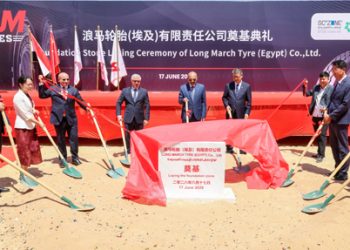
China’s Chaoyang Long March Tyre Co., Ltd. has launched a USD190 million tyre manufacturing project in Egypt’s Suez Canal Economic...

Read more
Watani started as an Egyptian weekly Sunday newspaper published in Cairo. The word Watani is Arabic for “My Homeland”. The paper was founded in 1958 by the prominent Copt Antoun Sidhom (1915 – 1995), who strove for the establishment of a civil, democratic society in Egypt, where all Egyptians would enjoy full citizenship rights regardless of their religious denomination. To this day when Watani is published as a weekly paper and an online news site, the objective remains the same. Those in charge of Watani view this role as a patriotic all-Egyptian vocation. Special attention is given to shedding light on Coptic culture and tradition as authentically Egyptian, this being a topic largely disregarded or little-understood by Egypt’s media. Watani is deeply dedicated to offer its readers high quality, extensive, objective, credible and well-researched media coverage, with special focus on Coptic issues, culture, heritage, and contribution to Egyptian society.
-----------------------------------------------------------

27 Abdel Khalek Tharwat st, Downtown, Abdeen,Cairo

00202-23927201

00202-23935946

 [email protected]


categories

  • News
  • Opinion
  • Politics
  • Culture
  • Egypt – Arab Spring
  • Coptic Affairs
  • Features
  • Watani Special Features

Recent Posts

  • China and Russia vis-à-vis Trump’s Iran War
  • China’s Long March launches USD190M tyre manufacturing project in Egypt
  • Watani talks to Anba Bigol, Bishop and Abbot of al-Muharraq Monastery of the Holy Virgin Mary
  • ‘Train of Hope’ to carry home 1,200 Sudanese
  • Egypt launches ROX Motor partnership to manufacture new-energy vehicles
  • News
  • Opinion
  • Politics
  • Culture
  • Egypt – Arab Spring
  • Coptic Affairs
  • Features
  • Watani Special Features

Powered BY 3A Digital.

No Result
View All Result
  • News
    • Accidents
    • Crime
    • Diplomatic briefcase
    • NewsLine
    • Outside Cairo
    • Special Occasions
  • Opinion
    • Editorial
    • International media
    • Reader`s Corner
    • Opinion
  • Politics
    • Elections
    • International Politics
    • Islamisation Politics
    • National Affairs
    • Parliament
    • Politics
    • Protests
    • Rights
    • Terrorism
  • Culture
    • Antiquity
    • Art
    • Books
    • Culture
    • Drama
    • Egyptology
    • Festivals
    • Films
    • Heritage
    • Islamisation Culture
    • Media
    • Museums
    • Music
    • TV
  • Coptic
    • Church Affairs
    • Coptic Affairs
    • Coptic Culture
    • Copts in the Media
    • Coptology
    • Copts Abroad
    • Religious
      • P. Shenouda: Bible Study
    • Sectarian
    • Inter-religious
    • Holy Family
  • Features
    • Counselling Corner
    • features
    • Economy
      • Business
    • Education
    • Social Issues
      • Behaviour
      • Mothers Day
    • Health
    • Environment
    • Humour
    • In memorial
    • Interviews
    • Nile
    • Profile
    • Special needs
    • Sports
    • Technology
    • Tourism
    • Wars
    • Women
    • Youth
  • Watani Special Features
    • Egypt – Arab Spring
      • 25 January Revolution
      • 25 Jan revolution, one year on
      • Egypt post-30 June
    • Watani Milestones
      • 20 years Watani International
      • 10 years Watani International
      • Watani Jubilee
    • Pope Shenouda
    • Pope Tawadros
    • Watani Forum

Powered BY 3A Digital.

Login to your account below

Forgotten Password?

Fill the forms bellow to register

All fields are required. Log In

Retrieve your password

Please enter your username or email address to reset your password.

Log In