
Editor in Chief
Youssef Sidhom
Watani
عربى English French
  • News
    • Accidents
    • Crime
    • Diplomatic briefcase
    • NewsLine
    • Outside Cairo
    • Special Occasions
  • Opinion
    • Editorial
    • International media
    • Reader`s Corner
    • Opinion
  • Politics
    • Elections
    • International Politics
    • Islamisation Politics
    • National Affairs
    • Parliament
    • Politics
    • Protests
    • Rights
    • Terrorism
  • Culture
    • Antiquity
    • Art
    • Books
    • Culture
    • Drama
    • Egyptology
    • Festivals
    • Films
    • Heritage
    • Islamisation Culture
    • Media
    • Museums
    • Music
    • TV
  • Coptic
    • Church Affairs
    • Coptic Affairs
    • Coptic Culture
    • Copts in the Media
    • Coptology
    • Copts Abroad
    • Religious
      • P. Shenouda: Bible Study
    • Sectarian
    • Inter-religious
    • Holy Family
  • Features
    • Counselling Corner
    • features
    • Economy
      • Business
    • Education
    • Social Issues
      • Behaviour
      • Mothers Day
    • Health
    • Environment
    • Humour
    • In memorial
    • Interviews
    • Nile
    • Profile
    • Special needs
    • Sports
    • Technology
    • Tourism
    • Wars
    • Women
    • Youth
  • Watani Special Features
    • Egypt – Arab Spring
      • 25 January Revolution
      • 25 Jan revolution, one year on
      • Egypt post-30 June
    • Watani Milestones
      • 20 years Watani International
      • 10 years Watani International
      • Watani Jubilee
    • Pope Shenouda
    • Pope Tawadros
    • Watani Forum
No Result
View All Result
  • News
    • Accidents
    • Crime
    • Diplomatic briefcase
    • NewsLine
    • Outside Cairo
    • Special Occasions
  • Opinion
    • Editorial
    • International media
    • Reader`s Corner
    • Opinion
  • Politics
    • Elections
    • International Politics
    • Islamisation Politics
    • National Affairs
    • Parliament
    • Politics
    • Protests
    • Rights
    • Terrorism
  • Culture
    • Antiquity
    • Art
    • Books
    • Culture
    • Drama
    • Egyptology
    • Festivals
    • Films
    • Heritage
    • Islamisation Culture
    • Media
    • Museums
    • Music
    • TV
  • Coptic
    • Church Affairs
    • Coptic Affairs
    • Coptic Culture
    • Copts in the Media
    • Coptology
    • Copts Abroad
    • Religious
      • P. Shenouda: Bible Study
    • Sectarian
    • Inter-religious
    • Holy Family
  • Features
    • Counselling Corner
    • features
    • Economy
      • Business
    • Education
    • Social Issues
      • Behaviour
      • Mothers Day
    • Health
    • Environment
    • Humour
    • In memorial
    • Interviews
    • Nile
    • Profile
    • Special needs
    • Sports
    • Technology
    • Tourism
    • Wars
    • Women
    • Youth
  • Watani Special Features
    • Egypt – Arab Spring
      • 25 January Revolution
      • 25 Jan revolution, one year on
      • Egypt post-30 June
    • Watani Milestones
      • 20 years Watani International
      • 10 years Watani International
      • Watani Jubilee
    • Pope Shenouda
    • Pope Tawadros
    • Watani Forum
No Result
View All Result
No Result
View All Result
Watani
ع Fr
ADVERTISEMENT

Does Freedom Matter?

15 December, 2011 - (9:05 AM)
0 0

David Warren

21
VIEWS
Share on FacebookShare on Twitter

WATANI International
21 March 2010

The short answer to that question, when I have asked various acquaintances of what I would call a “mildly liberal,” or middle-of-the-road disposition, is: “Yes, but …”
This “but” may correspond to any of many suggested qualifications, and that is the first instructive thing. At best it is freedom versus order, or freedom versus equality, or freedom versus social security. Seldom has the position been thought through. Nor is the need for thought acknowledged.
Under cross-examination, most appear to be seeking some kind of balance between freedom and the tyranny of the state. On the moral level, a balance between good and evil; on the esthetic, between beauty and ugliness; on the philosophical, between truth and the socially and legally enforced big lies of political correctness.
“Yes, freedom is important, but it has its place,” said one of the more thoughtful victims of my inquisition, which has been going on for some years now. (For I like to play at Socrates sometimes, the greatest of all Inquisitors, and try to establish what people really believe.)
Or to put it the other way round: “Yes, we should be herded like sheep, but within the limits of common sense.” Granted, this quote is a parody, and inversion; no one would ever say that. Yet it is the corollary of what is often said.
When the victims of my inquisition are in my clutches, I find that they hedge. Under cross-examination, there is hedging within hedging. They are soon on to my game: that I am trying to trap them in a Yes or a No, when they would feel more comfortable with Maybe.
Notice that the original question was not, “Is freedom an absolute value to which all other values must be subordinated?” It was instead more modestly: “Does freedom matter?”
I can think of two possible answers to that question, and neither of them is, “Yes, but …”
Consider for a moment the phrase, “oriental despotism.” It was one that seems to have come easily to the lips of our ancestors, who, whether or not they had traveled, were under the impression that, beyond the frontiers of their civilization, freedom indeed did not matter. More deeply, perhaps, some grasped that the idea of an “individual moral agent” — of the incomparable value of the unique human soul — was tied into our civilizational identity. Lose that, and we are no longer “Western,” or “Judeo-Christian,” or whatever.
The remarkable achievements of our civilization likewise depended on what we were. They were the products of human enterprise. This is true through all centuries: the Catholic idea of saints and martyrs has nothing to do with public policy. Each is, in his or her own nature, the exact opposite of the Pyramids of Egypt — perhaps the greatest accomplishment of the statist mind.
Each man and woman among the saints is held up as an individual example, different in kind from each of the others. Each has, from a unique point of departure — the peculiar, given circumstances of a life — consciously, and in freedom, bought into the wild notion of personal sanctity. Their faith, and not their compulsion, moved our mountains.
But likewise, in all other areas of human enterprise: in the great achievements of business, of literature and music and art, of sciences and education, there was some understanding that we had nothing without manifestations of the individual human will.
The cathedrals were not built by ants; but by individual architects and masons. Nor could any have been built, had individual patrons not stepped forward. They were local, voluntary acts, writ large. St. Patrick##s Basilica here in Ottawa was built by Irish navvies, employed on works like the Rideau Canal, volunteering their time.
All the great eleemosynary and charitable institutions of this town began as individual efforts, and were staffed from the beginning by volunteers. In every case, some decision was made to rise above the condition of wage slavery.
Freedom can most certainly be abused, but it is the necessary condition for the humane.
“Humanism” — in the word##s original meaning, and not in its appropriated meaning as a euphemism for an atheist cult — is squarely founded on this notion of the humane, involving free acts of will. It further involves moral restraints, chosen not imposed, and therefore often far more exacting than what could be imposed. The ideals of humanism are the very opposite of that kind of compulsion our ancestors attributed to “oriental despotism.”
Which is not to say that parallel freedoms have not existed in other cultures and civilizations, or have not been transmitted to them by western example. There was never anywhere an “absolute freedom,” for even at the extremes of anarchy, nature restrains our possibilities.
Yet what goes on “there” has never really mattered “here,” except insofar as our freedom is threatened.
It is for others to free themselves, if they are not free. For us the challenge, once again, is to free ourselves from the tyranny of, “Yes, but …”
____________________
The Ottawa Citizen

Comments

comments

Tags: doesfreedommatter

Related Posts

Searching for a crocodile near Aswan
International media

Searching for a crocodile near Aswan

February 14, 2017
In Libya: An Islamist show of force
International media

In Libya: An Islamist show of force

January 14, 2015
International media

Happy Birthday

December 15, 2011
International media

Children of Older Men More Likely to Have Health Problems

December 15, 2011
International media

Plastic Nerves May Give New Limbs Feelings

December 15, 2011
International media

Extremism Spreads Across Indonesian Penal Code

December 15, 2011

Editorial

China and Russia vis-à-vis Trump’s Iran War

More

MOST READ

Egypt attempts to contain Myna bird invasion
Environment

Egypt attempts to contain Myna bird invasion

June 15, 2026
0

The Nature Protection Sector of Egypt’s Ministry of Local Development and Environment has been monitoring and tracking the spread of...

Read more
Watani talks to Anba Bigol, Bishop and Abbot of al-Muharraq Monastery of the Holy Virgin Mary

Watani talks to Anba Bigol, Bishop and Abbot of al-Muharraq Monastery of the Holy Virgin Mary

June 17, 2026
Egypt’s Armenians

Egypt’s Armenians

April 22, 2015
‘Train of Hope’ to carry home 1,200 Sudanese

‘Train of Hope’ to carry home 1,200 Sudanese

June 16, 2026
Jobs for persons with disabilities

Jobs for persons with disabilities

June 15, 2026

Features

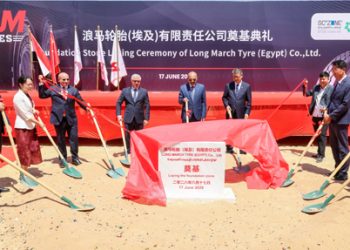
China’s Long March launches USD190M tyre manufacturing project in Egypt
Economy

China’s Long March launches USD190M tyre manufacturing project in Egypt

June 17, 2026
0

China’s Chaoyang Long March Tyre Co., Ltd. has launched a USD190 million tyre manufacturing project in Egypt’s Suez Canal Economic...

Read more
Watani started as an Egyptian weekly Sunday newspaper published in Cairo. The word Watani is Arabic for “My Homeland”. The paper was founded in 1958 by the prominent Copt Antoun Sidhom (1915 – 1995), who strove for the establishment of a civil, democratic society in Egypt, where all Egyptians would enjoy full citizenship rights regardless of their religious denomination. To this day when Watani is published as a weekly paper and an online news site, the objective remains the same. Those in charge of Watani view this role as a patriotic all-Egyptian vocation. Special attention is given to shedding light on Coptic culture and tradition as authentically Egyptian, this being a topic largely disregarded or little-understood by Egypt’s media. Watani is deeply dedicated to offer its readers high quality, extensive, objective, credible and well-researched media coverage, with special focus on Coptic issues, culture, heritage, and contribution to Egyptian society.
-----------------------------------------------------------

27 Abdel Khalek Tharwat st, Downtown, Abdeen,Cairo

00202-23927201

00202-23935946

 [email protected]


categories

  • News
  • Opinion
  • Politics
  • Culture
  • Egypt – Arab Spring
  • Coptic Affairs
  • Features
  • Watani Special Features

Recent Posts

  • China and Russia vis-à-vis Trump’s Iran War
  • China’s Long March launches USD190M tyre manufacturing project in Egypt
  • Watani talks to Anba Bigol, Bishop and Abbot of al-Muharraq Monastery of the Holy Virgin Mary
  • ‘Train of Hope’ to carry home 1,200 Sudanese
  • Egypt launches ROX Motor partnership to manufacture new-energy vehicles
  • News
  • Opinion
  • Politics
  • Culture
  • Egypt – Arab Spring
  • Coptic Affairs
  • Features
  • Watani Special Features

Powered BY 3A Digital.

No Result
View All Result
  • News
    • Accidents
    • Crime
    • Diplomatic briefcase
    • NewsLine
    • Outside Cairo
    • Special Occasions
  • Opinion
    • Editorial
    • International media
    • Reader`s Corner
    • Opinion
  • Politics
    • Elections
    • International Politics
    • Islamisation Politics
    • National Affairs
    • Parliament
    • Politics
    • Protests
    • Rights
    • Terrorism
  • Culture
    • Antiquity
    • Art
    • Books
    • Culture
    • Drama
    • Egyptology
    • Festivals
    • Films
    • Heritage
    • Islamisation Culture
    • Media
    • Museums
    • Music
    • TV
  • Coptic
    • Church Affairs
    • Coptic Affairs
    • Coptic Culture
    • Copts in the Media
    • Coptology
    • Copts Abroad
    • Religious
      • P. Shenouda: Bible Study
    • Sectarian
    • Inter-religious
    • Holy Family
  • Features
    • Counselling Corner
    • features
    • Economy
      • Business
    • Education
    • Social Issues
      • Behaviour
      • Mothers Day
    • Health
    • Environment
    • Humour
    • In memorial
    • Interviews
    • Nile
    • Profile
    • Special needs
    • Sports
    • Technology
    • Tourism
    • Wars
    • Women
    • Youth
  • Watani Special Features
    • Egypt – Arab Spring
      • 25 January Revolution
      • 25 Jan revolution, one year on
      • Egypt post-30 June
    • Watani Milestones
      • 20 years Watani International
      • 10 years Watani International
      • Watani Jubilee
    • Pope Shenouda
    • Pope Tawadros
    • Watani Forum

Powered BY 3A Digital.

Login to your account below

Forgotten Password?

Fill the forms bellow to register

All fields are required. Log In

Retrieve your password

Please enter your username or email address to reset your password.

Log In