
Women are second-class citizens in Iran, barred from singing or dancing in public, unable to travel without a permit. Car racing is another no-no for Iranian females, but that hasn”t stopped two women from finding emancipation behind the wheel.
Zohreh Vatankhah steps into the elevator on the fifth floor, takes it down to the ground floor, turns right and walks through a heavy steel door into the garage where her 2006 Toyota Corolla is parked. But this isn”t your ordinary Toyota. It”s a dented affair in pink, complete with a roll bar and bucket seats. She snaps on the seat belt, turns the ignition key and the engine roars to life, causing the hood to tremble like the membrane on a bass speaker. Not exactly the kind of car that would pass inspection for driving on the roads in most Western countries.
Then she puts the pedal to the metal and her pink car shoots out of the garage, tires screeching. The janitor sweeping the courtyard stares after her, his mouth agape. Vatankhah inserts Christina Aguilera”s latest album into the cassette player and drums her fingers to the beat on the steering wheel. She drives toward the bazaar in downtown Tehran, crosses a bridge and passes graffiti instructing passersby to “Destroy Israel” and a poster of a burning American flag.
Five minutes later Vatankhah is stuck in a traffic jam – nothing short of torture for a person who loves driving as much as she does. Speed is her profession. Vatankhah is a professional racecar driver. In Iran, of all places – where the profession is not only dominated by men, but also practically owned by them.
Mirdamad Boulevard is normally a three-lane street, but by two in the afternoon it becomes a parking lot with cars jammed in six abreast. Nothing is moving in Tehran today, including the elevated roads, tunnels, downtown highways and beltways. It”s total gridlock, and Vatankhah is desperate to get out of the city so she can train in the mountains. She”s 29 and wears Gucci sunglasses and Max Mara perfume. Her hair is coffee-brown with blonde streaks and she wears a bold lipstick. She expects no less from life than to be able to navigate her way through it at a breakneck pace.
It”s dusk by the time she”s driving her Toyota through a puddle on a track in the Elbur Mountains. Today she is practicing negotiating tight curves at high speeds. Her co-pilot is standing on a hill, her hands buried in the pockets of her red-and-white overalls. She squints, observing her friend”s maneuvers with a critical eye. The Corolla pulls to the left, Vatankhah yanks the car to the right, hurling gravel into the air, and then she slams on the brakes and rolls down the window.
Iran is a country in which women have been considered second-class citizens since the establishment of the Islamic Republic in 1979. In a court of law, a woman”s testimony is worth only half as much as that of a man, and sons inherit twice as much as daughters. Women are not permitted to sing or dance in public, or even ride a bicycle. They cannot travel without a man”s permission. A man can forbid his wife from working, and if he catches her with another man, he can kill her without fear of punishment. Wearing a headscarf is mandatory, while the chador, or full-body veil, is preferred.
Vatankhah is the embodiment of sin for Iran”s religious fundamentalists and radical mullahs, but for the country”s urban youth she is a vision. She reflects the kind of country the children of Iran”s upper and middle classes want to be living in: modern and self-confident, embracing life and cosmopolitan.
In Iran, a country where women and men sit in separate sections on buses, trains and subways, how has a woman like Vatankhah managed to pull off this feat – competing against men in rallies? “Ask Laleh,” she says.
Securing an appointment with Laleh Seddigh is no easy feat. She doesn”t respond to e-mails, sometimes doesn”t answer her phone for days and doesn”t return calls.
Nevertheless, she does appear promptly, as agreed, at 11 a.m. at the Hotel Esteklal, which she has suggested as a place to meet. Seddigh, 30, is an icon of feminism and without a doubt the country”s most controversial female athlete. When she walks into the lobby, conversations stop for a moment. She is surprisingly short. Her skin looks artificially stretched, her nose almost too perfectly straight and her cheekbones unusually high. Other than the hands, the face is the only part of the body that women are not required to keep covered, and having cosmetic surgery is a form of silent protest. She wears a leopard skin-patterned silk scarf draped loosely over the back of her head, a blue turtleneck sweater under a brown coat and a Rolex watch. She extends her hand in greeting, a taboo in a country where women are only permitted to shake hands with men who are members of their family. But Seddigh isn”t interested in taboos. She has a strong handshake.
She is a pioneer in Iran, the first female athlete to have competed against a man in the 25 years since Ayatollah Ruhollah Khomeini established the theocracy. It was in 2004, during a long-distance race in Tehran.
A wrong sentence can mean prison or a whipping in Iran, and yet Seddigh is not afraid to speak her mind. She is clearly fond of pushing the envelope.
She is the oldest of four children. Her father, who studied in Switzerland, owns four companies that produce furnaces and engine parts. Seddigh drives a black Mercedes S 350 with leather seats and lives in Tehran”s Niawaran district, where the air is better and the price of real estate astronomical.
She learned to drive at 13, secretly took her father”s Buick for a spin at 14 and totaled her first car at 17, when she drove into a tree and broke her left leg in four places. Her father calls her “Laleh Agha,” or “Mr. Laleh.”
Four years ago she applied for a racing license with Mafiri, the Iranian racing association. Mohammed Khatami, a moderate intellectual, was Iran”s president at the time. Internet cafés sprang up in the cities, the reformers in the government tolerated Western pop music and women were still wearing brightly colored headscarves.
Seddigh says: “I explained to the board of Mafiri that separating the sexes was not in keeping with the president”s ideas, and that it was high time for a change. I told them that they would go down in history if they allowed me to race with the men. Officials are vain people.”
Three months later, Zohreh Vatankhah applied for a license to race in rallies.
Seddigh and Vatankhah have a lot in common. They even look like sisters. Both are from affluent families and they made the pilgrimage to Mecca together. Both are still single in a country where girls can be married off at 13. They are strong women, but without being hard-edged. Vatankhah studied electrical engineering, while Sadigh holds a doctorate in industrial engineering and teaches at the university two days a week. More than 60 percent of the students at Iranian universities are women, but the unemployment rate among women is even higher.
______________
Der Spiegel
ADVERTISEMENT
In Iran Racing Against the Mullahs
Maik Grossekathöfer


MOST READ

Egypt attempts to contain Myna bird invasion
The Nature Protection Sector of Egypt’s Ministry of Local Development and Environment has been monitoring and tracking the spread of...
Read more


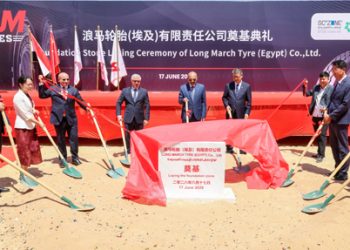
China’s Long March launches USD190M tyre manufacturing project in Egypt
China’s Chaoyang Long March Tyre Co., Ltd. has launched a USD190 million tyre manufacturing project in Egypt’s Suez Canal Economic...
Read more
Watani started as an Egyptian weekly Sunday newspaper published in Cairo. The word Watani is Arabic for “My Homeland”. The paper was founded in 1958 by the prominent Copt Antoun Sidhom (1915 – 1995), who strove for the establishment of a civil, democratic society in Egypt, where all Egyptians would enjoy full citizenship rights regardless of their religious denomination. To this day when Watani is published as a weekly paper and an online news site, the objective remains the same. Those in charge of Watani view this role as a patriotic all-Egyptian vocation. Special attention is given to shedding light on Coptic culture and tradition as authentically Egyptian, this being a topic largely disregarded or little-understood by Egypt’s media. Watani is deeply dedicated to offer its readers high quality, extensive, objective, credible and well-researched media coverage, with special focus on Coptic issues, culture, heritage, and contribution to Egyptian society.
-----------------------------------------------------------
27 Abdel Khalek Tharwat st, Downtown, Abdeen,Cairo
00202-23927201
00202-23935946