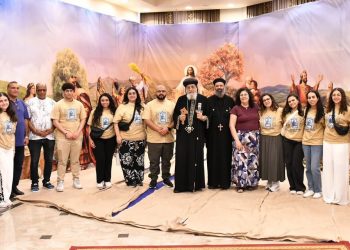
It was the 70th anniversary of the Institute of Coptic Studies (ICS) in Cairo. As we entered the hall hosting the celebration we were handed pins that carried the ICS initials embraced by two numbers: 70 and 12. The thought that intrigued everyone was: the “70” we understand, but what’s the “12” all about?
We’d have to wait some time, however, for a reply.
The two-day celebration was held on 27 and 28 November 2024 at the administrative building attached to the Papal headquarters in the grounds of St Mark’s Cathedral in Abassiya, Cairo.
Under the patronage of Pope Tawadros II who is also the Supreme Head of the ICS, the celebration came under the slogan “A Human Beacon”, in the sense that the men and women who founded, worked and studied at the ICS themselves form a shining beacon of light of knowledge, a beacon has shone throughout 70 years of dedicated work, education effort, and collaboration with Egyptian and international universities.


The need
A documentary titled ++A Human Beacon++ was screened at the outset of the celebration, focusing on the Coptic Church’s preoccupation with knowledge since its early history of Church Fathers and through generations that focused on knowledge and piety. The Church always cared to found educational entities to foster and preserve invaluable theological knowledge and pastoral experience. In that same context, the ICS was founded in 1954 to be the first academic institute of Coptic Studies in Egypt in modern times.
Back then, Egyptian Coptic scholars had sensed the need for an Egyptian educational entity that would focus on Coptic Studies. At the turn of the 20th century, when Coptic monasticism was being studied by European seminaries in Paris and Brussels, Coptic literature in the Vatican, and Coptic papyrus and history in Michigan, there was no institute in Egypt to offer or conduct such studies. The mid-20th century was the peak time of the Egyptian enlightenment and modernisation movements, a time when the education progress of the three earlier decades in Egypt was bearing fruit. A host of young, well-educated Copts began to take keen interest in the history, culture, and affairs of their Church; it pained them to see that while Cairo was home to the Institute of Egyptian Archaeology and the Institute of Islamic Studies it included no institute specialised in Coptic Studies.
Well received
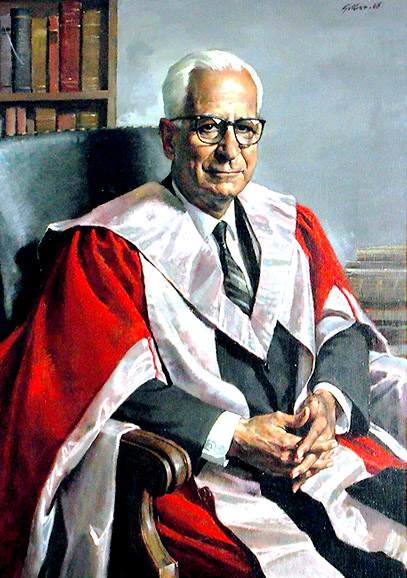
In 1953 Aziz Suryal Attiya (1898 – 1988), professor of history at Alexandria University and a prominent Copt, wrote a petition to the then secretary-general of the Coptic Orthodox Melli (Lay) Council Kamel Youssef, drawing attention to the need to establish an institute for Coptic Studies, citing its purpose and goals. Professor Suryal was joined with a group of founding members, all of whom were scholars and poles of Coptic studies in all its branches, their names had scientific weight in the field of Coptology. They were musicologist Ragheb Muftah (1898 – 2001), Egyptologist Samy Gabra (1882 – 1979), professor of Semitic and Coptic studies Murad Kamel (1907 – 1975), Egyptologist and Coptologist Pahor Labib (1905 – 1994), professor of African Studies Zaher Riad (1908 – 1980), Egyptian language professor Gorgi Sobhy (1884 – 1964), professor of art and architecture Ramsis Wissa Wassef (1911 – 1974), and artist Habib Gorgi (1892 – 1965).
On 7 June 1954, Pope Yosab II (patriarch from 1946 to 1956) issued a papal notification explaining the mission of the soon-to-be Institute of Coptic Studies as an extension of the glorious Alexandrian theological school of the early Christian centuries. The Melli Council established the ICS that opened in January 1954 with 117 students enrolled.
A decree issued by Egypt’s Ministry of Education on 10 July 1955 approving the institute and confirming that it served to enrich knowledge about Egyptian national history during the Christian age, an era which lacked adequate studies in Egypt.
The establishment of the institute was hailed by academic and press circles as a commendable move. The international scientific community received the new institute with great interest, and were keen to collaborate with it on joint research.


All knowledge Coptic
Since its establishment, the institute has been the Egyptian Church’s main research centre. Through its 13 departments, the ICS specialises in the study of all aspects of Coptic civilisation and heritage, tangible and non-tangible. This includes thought and theology, language and literature, history and societal studies, art and music, antiquities, architecture and others. It has conducted archaeological excavations and activities in search for Coptic antiquities. It registers and indexes antique and old material—architectural elements, manuscripts, icons, woodwork, and suchlike—that are found in old churches and monasteries. It records age-old Coptic melodies and hymns which had hitherto been handed orally from generation to generation. It spearheads the study of Coptic art and encourages its use to adorn modern churches, instead of international art. It also nurtures studies of clerical Law and Christian legal texts translated from the original Coptic and Greek, as well as Ethiopian studies and theological studies.
The institute is distinguished as a first-class educational centre that grants higher degrees in topics which include theological studies, Coptic music, Coptic art, Coptic iconography and Coptic history.
A large library affiliated to the institute was established with the help of a number of prominent Coptologists who donated rare books to the institute, or whose families bequeathed their private libraries to the institute upon their death.
Four Coptic Popes have successively overseen the ICS: Pope Yosab II, Pope Kyrillos VI (patriarch from 1959 to 1971), Pope Shenouda III (1971 – 2012) and Pope Tawadros II (current patriarch from 2012). Apart from its prominent founders, a series of distinguished professors and scientists taught there, handing over the banner from generation to generation.
Commemorative silver coin
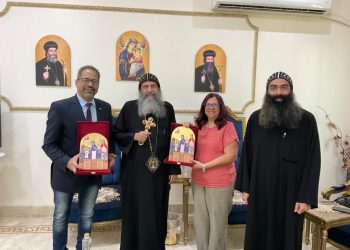
In recognition of the invaluable worth of the ICS, the Egyptian Mint has issued a commemorative coin to mark the Institute’s 70th anniversary. The coin is a silver EGP 1. It carries on one side the name and logo of the ICS, the year of its establishment, and the words “seventy years”. The flip side carries its denomination of “1 Egyptian Pound”.
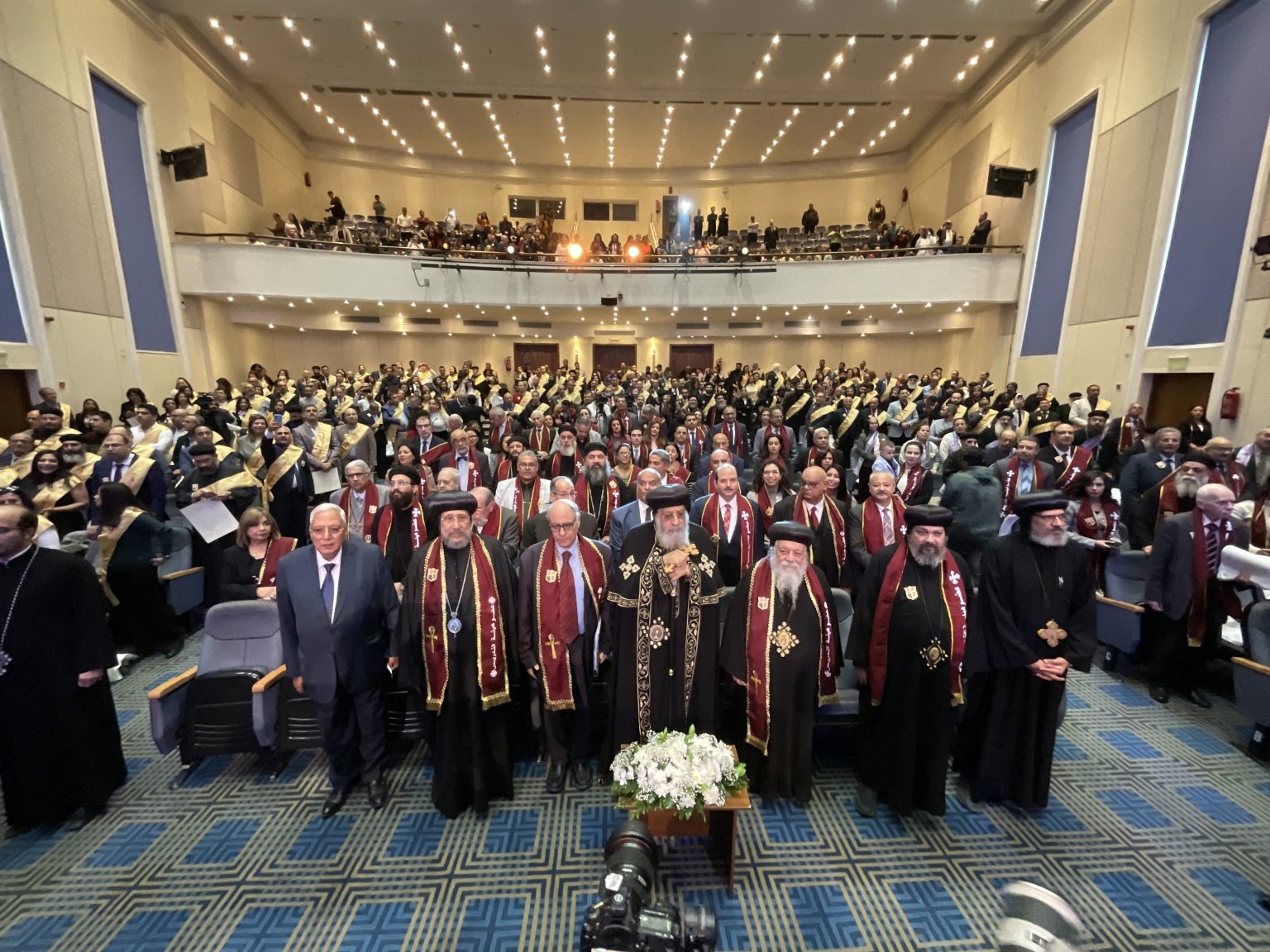
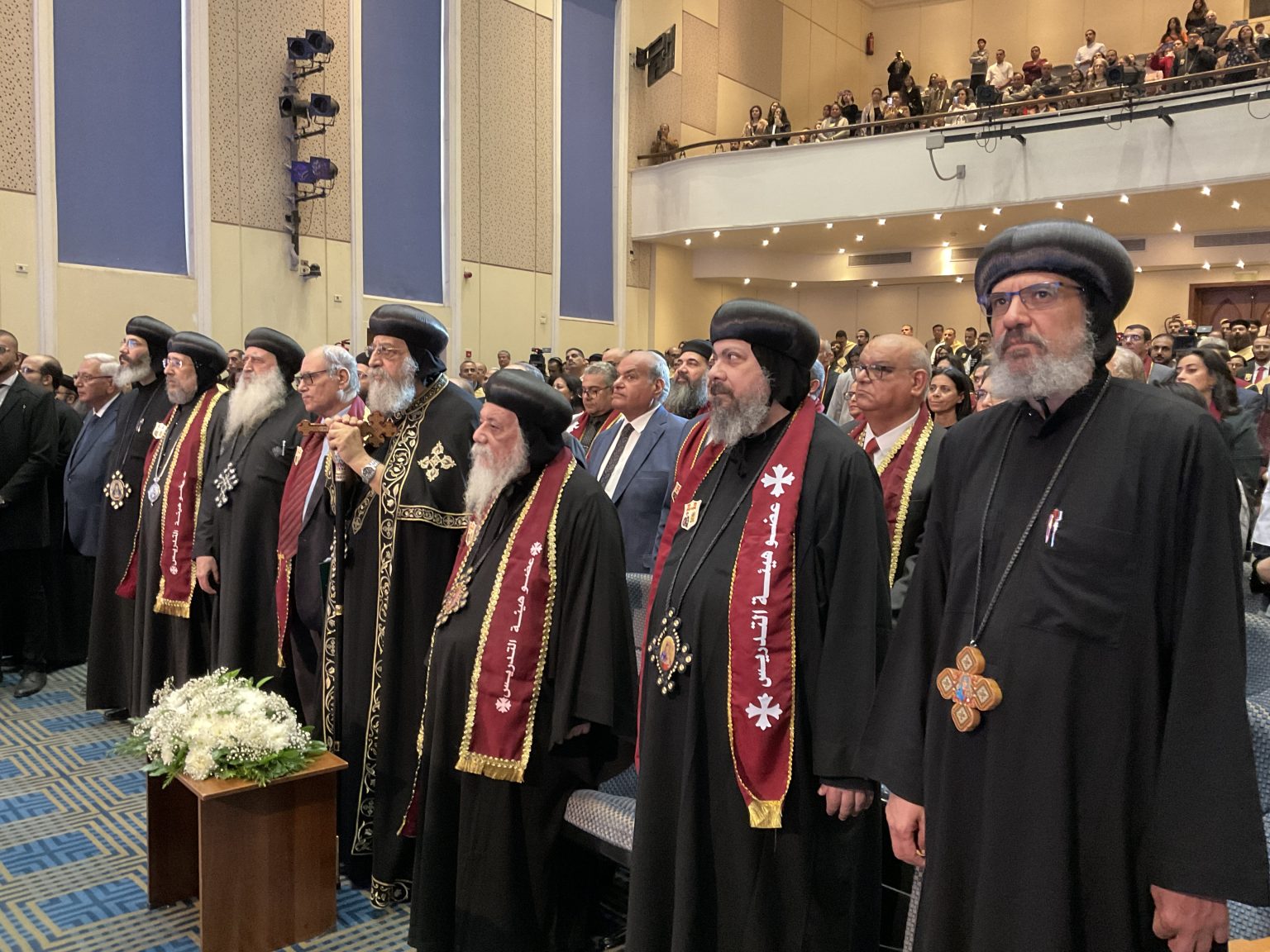
On the first day of the ICS’s 70th anniversary celebration, a graduation ceremony was held for 350 graduates of the Institute and 25 post graduate students who had earned Masters and doctoral degrees.
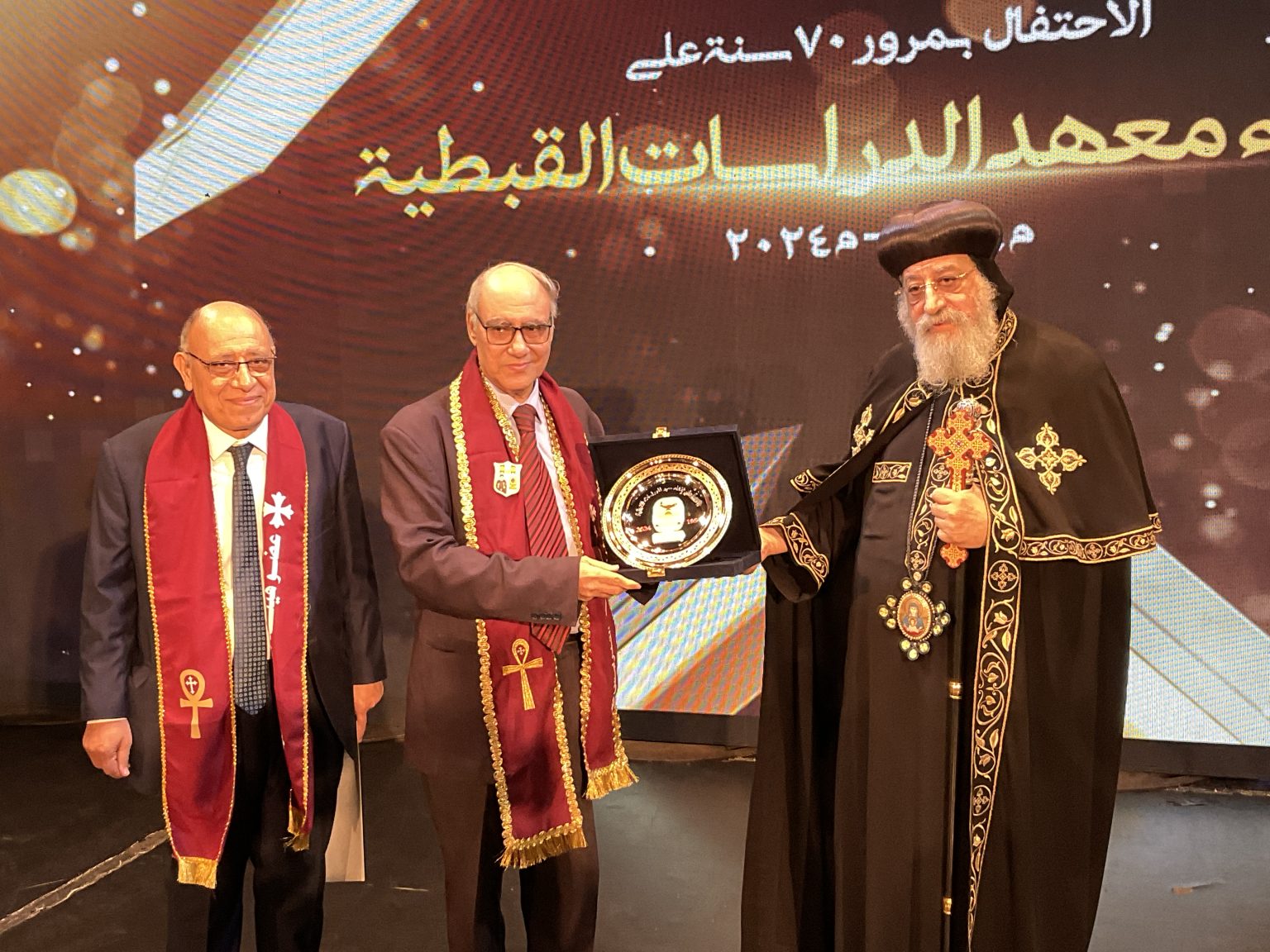
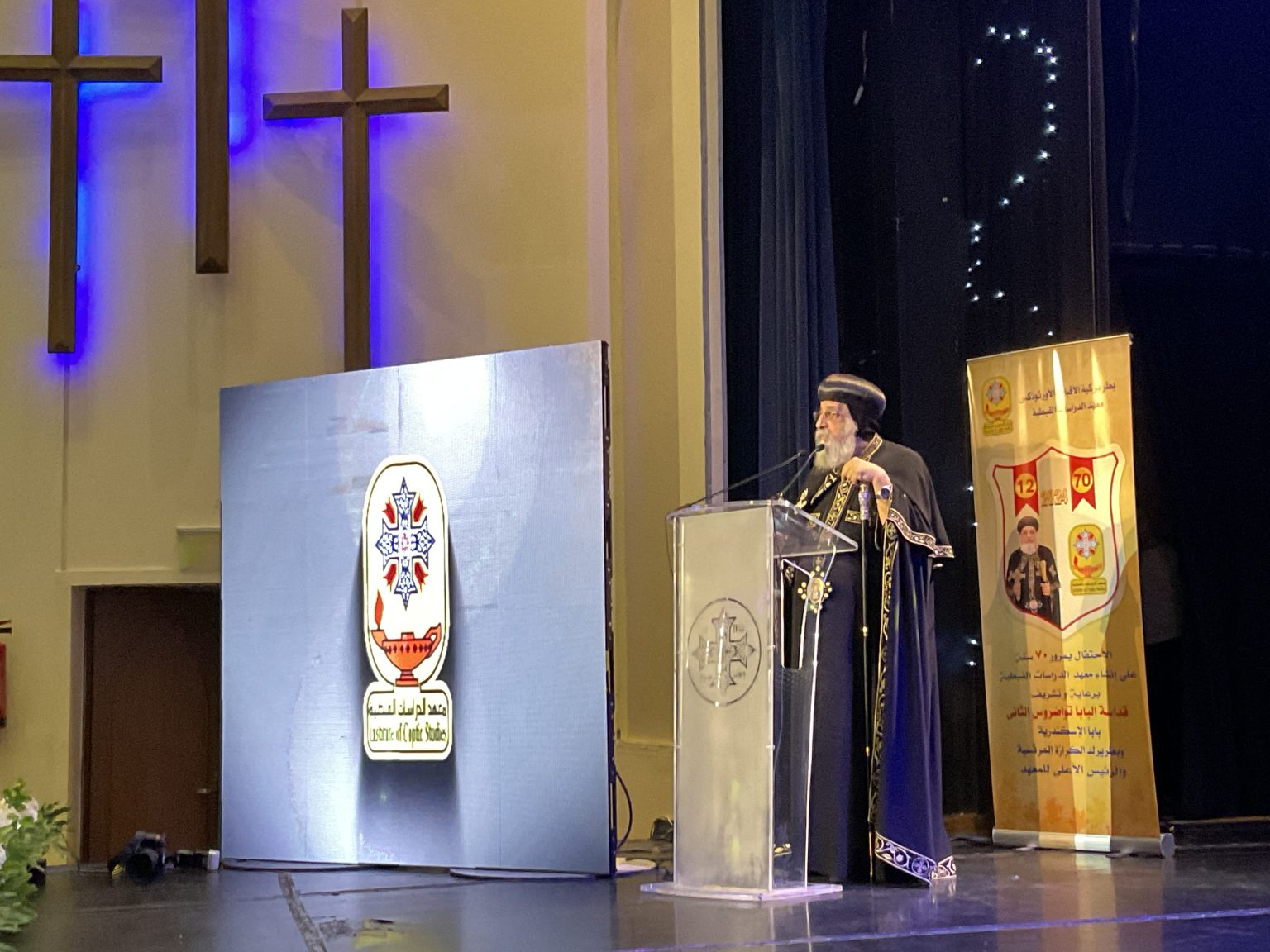
The ceremony was held at Anba Rweiss Theatre in the grounds of St Mark’s Cathedral in Abassiya, Cairo. It began with Pope Tawadros honouring the ICS’s teaching staff and handing them commemorative gifts. Following a souvenir photograph, a chanting deacon procession led the Pope into the hall, together with attending clergy, faculty, and graduates.


70 and 12
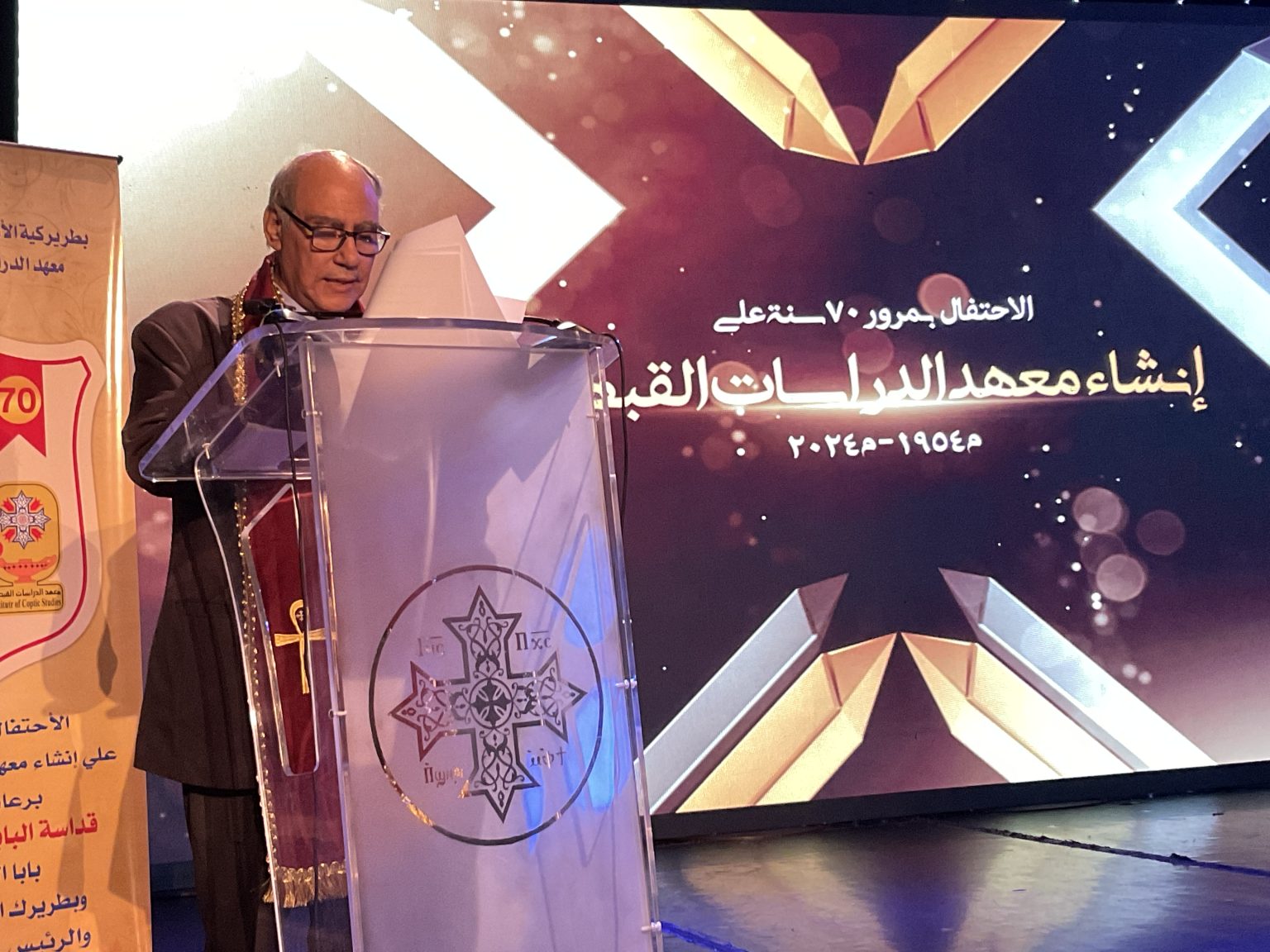
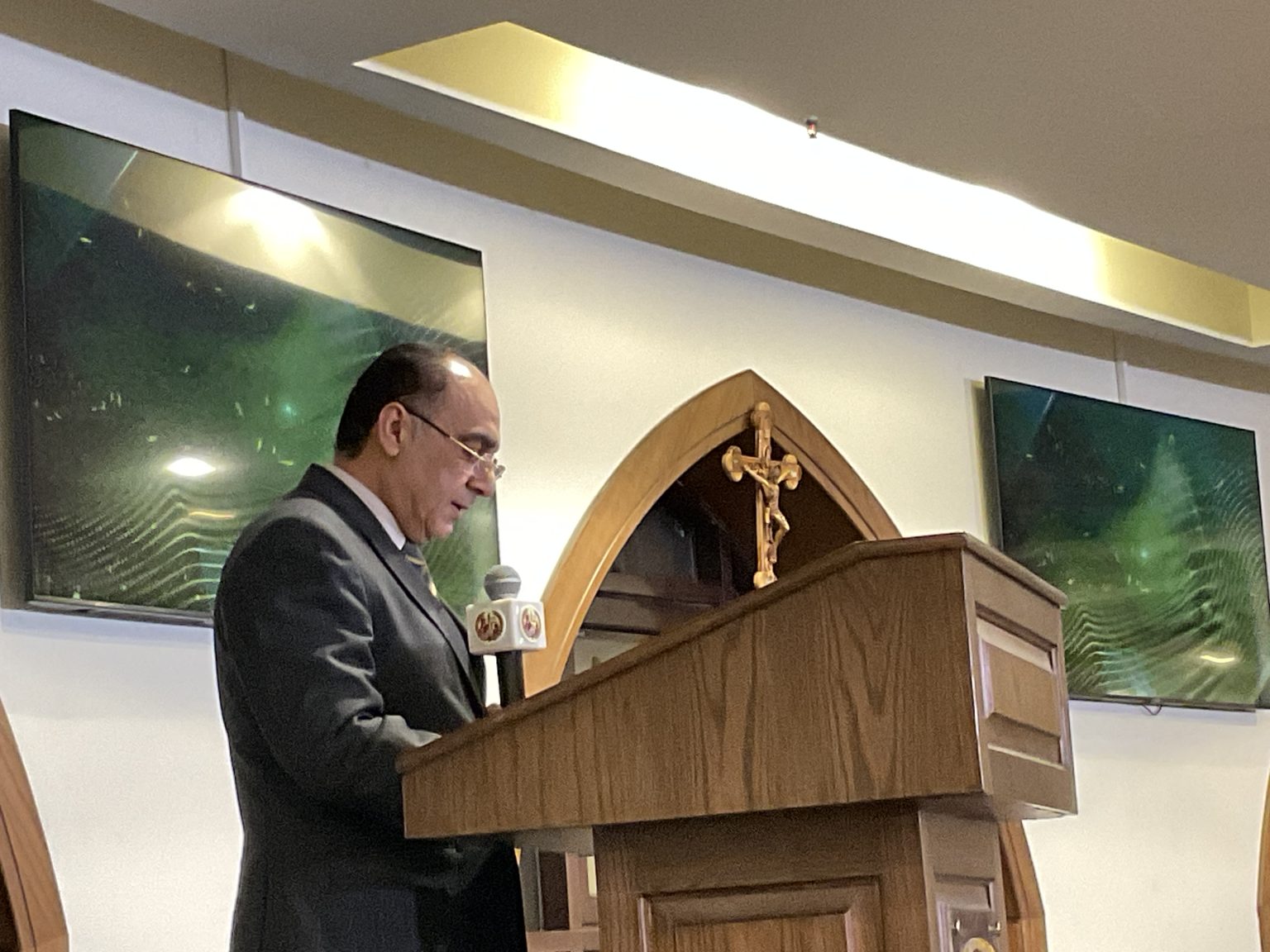
Ishaq Agban, Dean of the ICS, gave the first speech. Following all due thanks, he went on to explain a point that clearly answered the question on everyone’s mind. “Today,” he said, “we’re all wearing badges that feature the numbers 12 and 70… The Bible says Jesus Christ chose 12 disciples and 70 messengers… In our celebration this blessed evening we mark 70 years on the foundation of this Institute, in addition to 12 years of love, care and service, of giving, endurance and vigilance by our beloved patron Pope Tawadros.”
Dr Agban said that the ICS published a commemorative book and a documentary that record its 70-year history and accomplishments. “The lesson we learned from our harvest of these years,” he said, “is that ‘neither the one who plants nor the one who waters is anything, but only God, who makes things grow.’ (1 Cor 3:7)
“The torch cannot remain in one hand, but is relayed from one generation to another.“ Agban added
Essam Hosny, who graduated with a doctoral degree, was valedictorian. He began with St Paul’s words to Timothy: “Keep a close watch on yourself and on the teaching (1 Tim 4:16). This was how, he said, students at the ICU focused on their studies. Among them were young Church servants; priests and monks; also the elderly, like him, who wished to catch up with valuable knowledge they had missed as youngsters.
Anba Demetrius, Bishop of Mallawi and Head of the Coptic Language Department at the ICS, gave a word on behalf of the faculty members. He delivered it in Coptic, but there was Arabic translation. Throughout 70 years, he said, “our eyes have seen this Institute grow and flourish, and now we await the ICS renewal as promised by Pope Tawadros.”
Pope’s gift
It was then time for a word from Pope Tawadros who began with congratulating the ICS and celebrating “all what it offers to Egypt and the Coptic Church. We celebrate all those who thought, started, implemented, created and cultivated the idea of the ICS that serves to preserve and propagate Coptic heritage and culture. Coptic heritage is an extension of Egyptian pharaonic heritage.
He applauded those who teach at the institute, applauding their dedicated voluntary effort. Also those who learn, commending their devotion.
The Pope compared the fruitful work of the ICS to “a tree planted by streams of water, which yields its fruit in season and whose leaf does not wither.” (Psalm 1:3) That tree, he said, has yielded such abundant fruit, that it has been emulated in institutions that sprout outside Egypt, such as The European Academy for Coptic Heritage (TEACH) which opened in England four years ago, and has received official recognition from the British government.
“On the first of November 2024,” the Pope said, “we celebrated Mass for the first time in the church of St Mark and Pope Kyrillos VI in the Triangle of Hope in the Sixth Settlement of New Cairo. This day marked the launch of a new project, the new headquarters of the Egyptian Church in the Triangle of Hope, Among the buildings planned there is one that will house the Institute of Coptic Studies at the new Church headquarters.
Pope celebrates first Liturgy at new Coptic Church headquarters
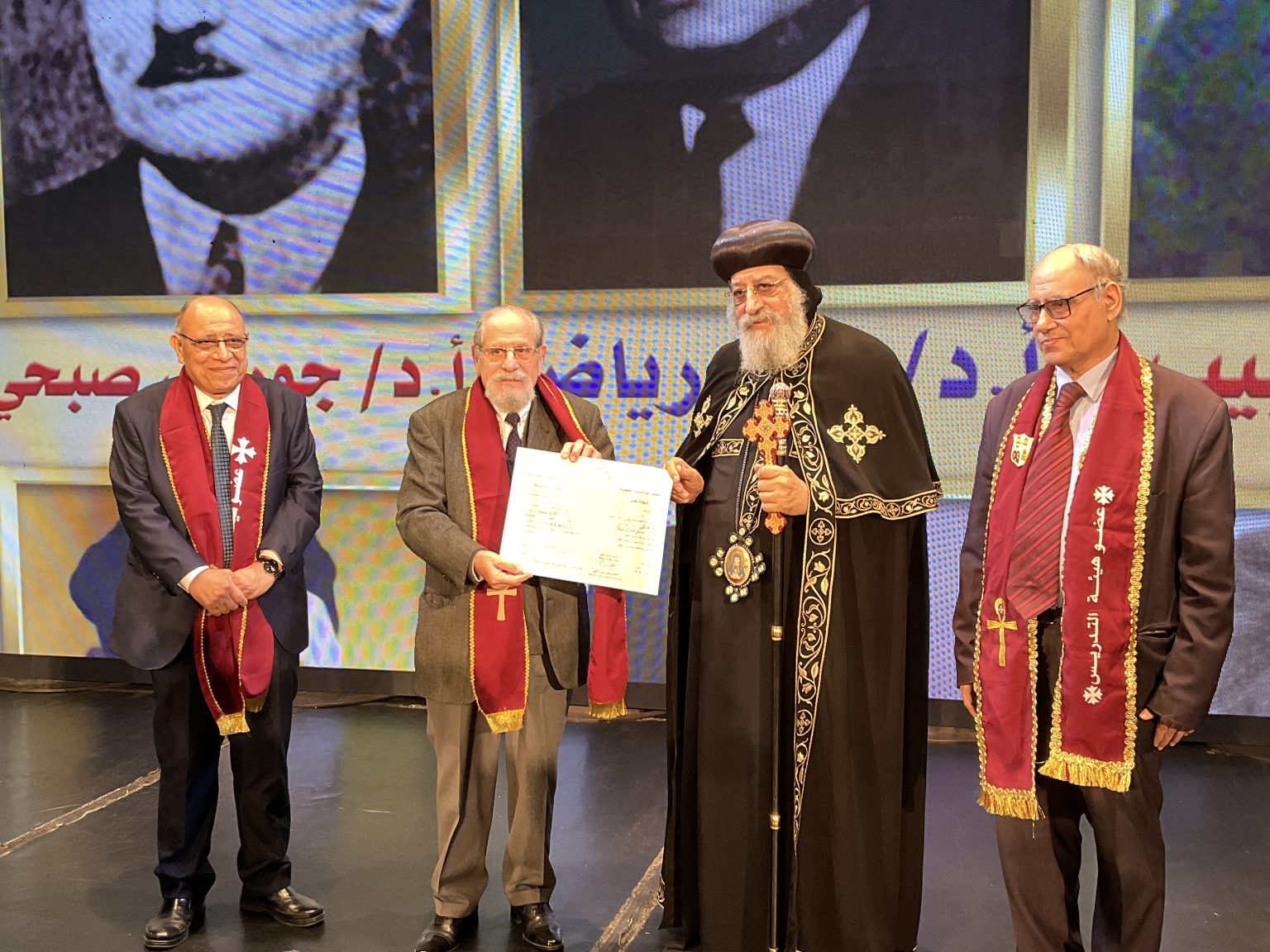
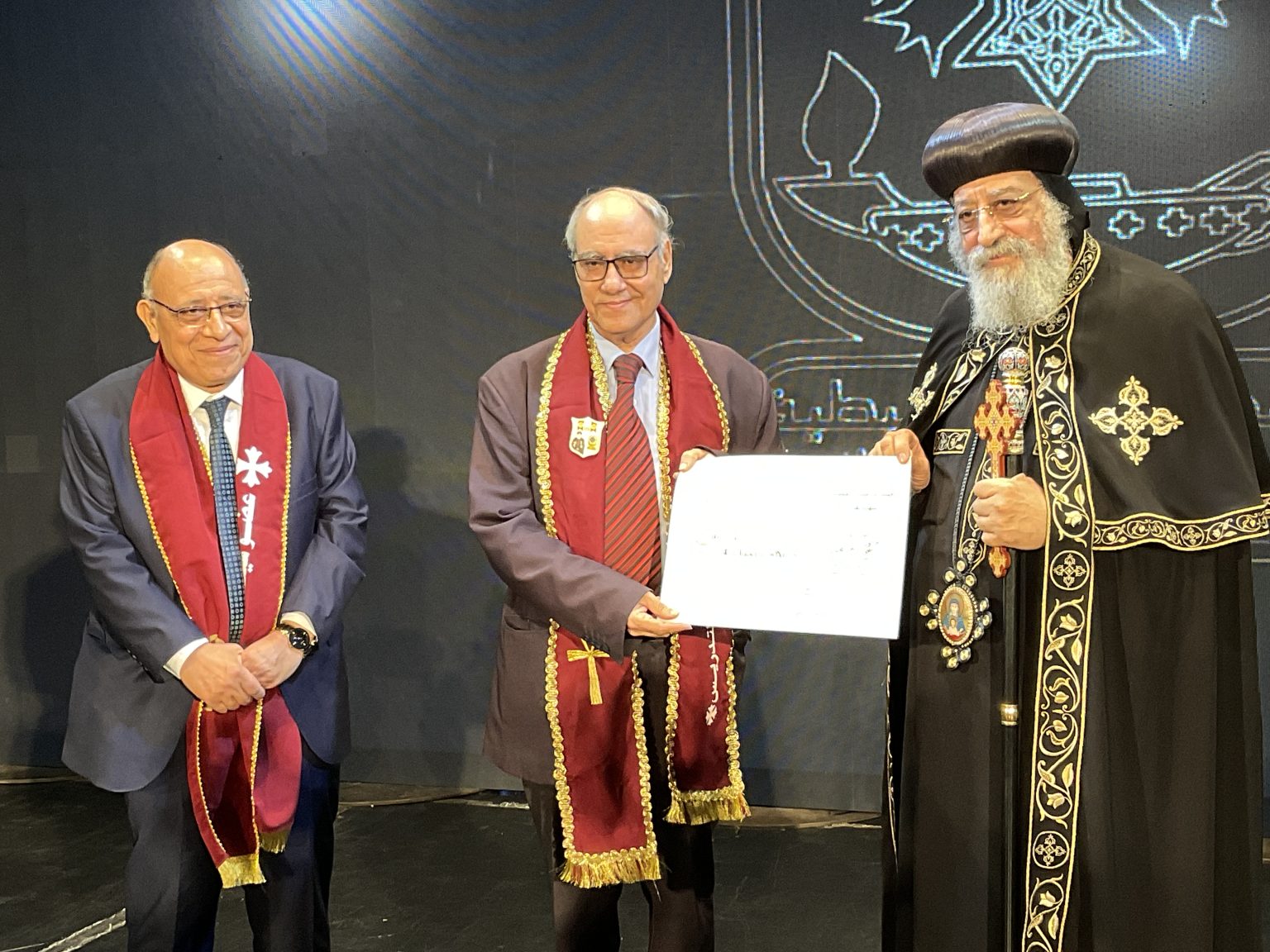
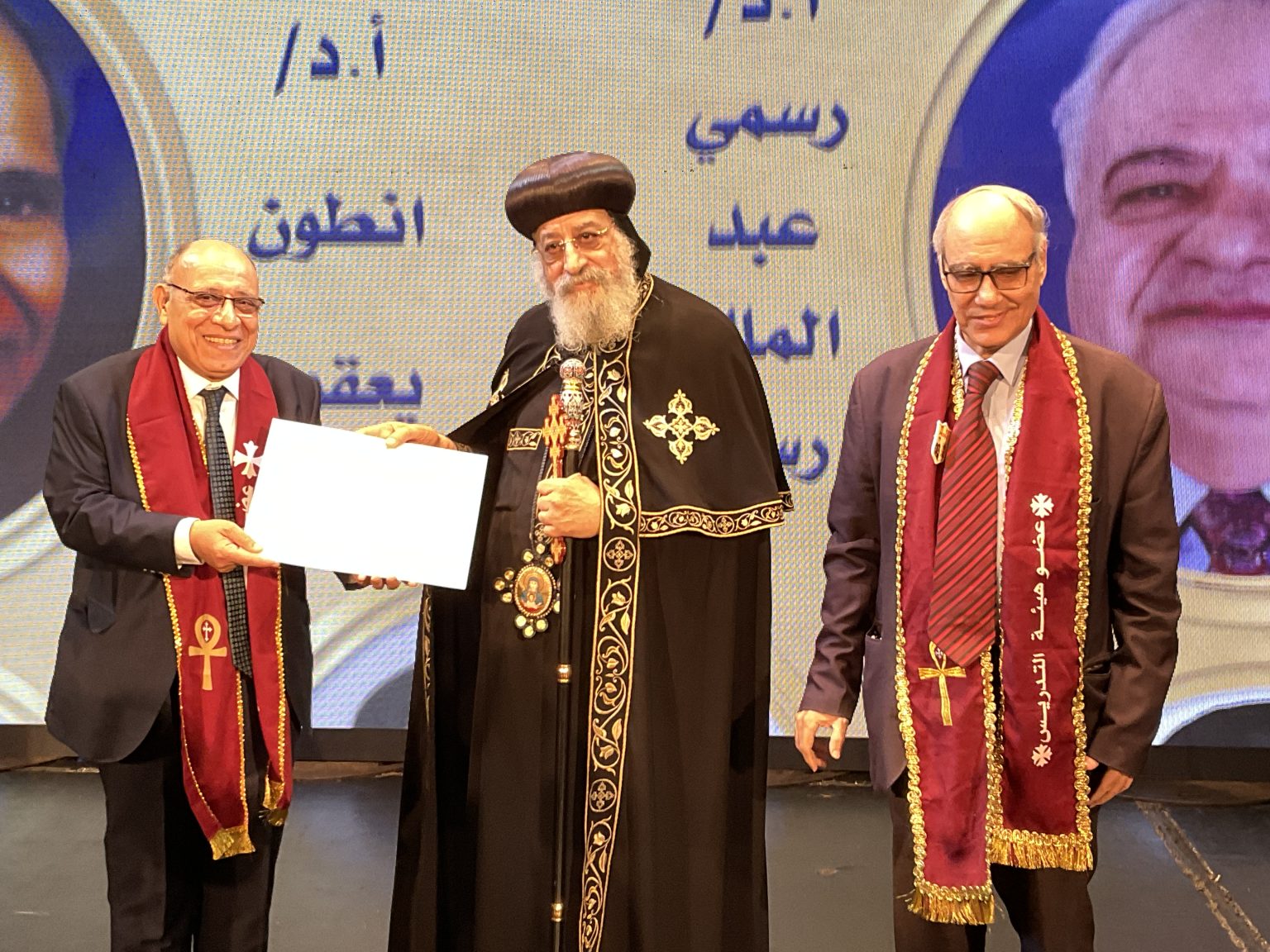
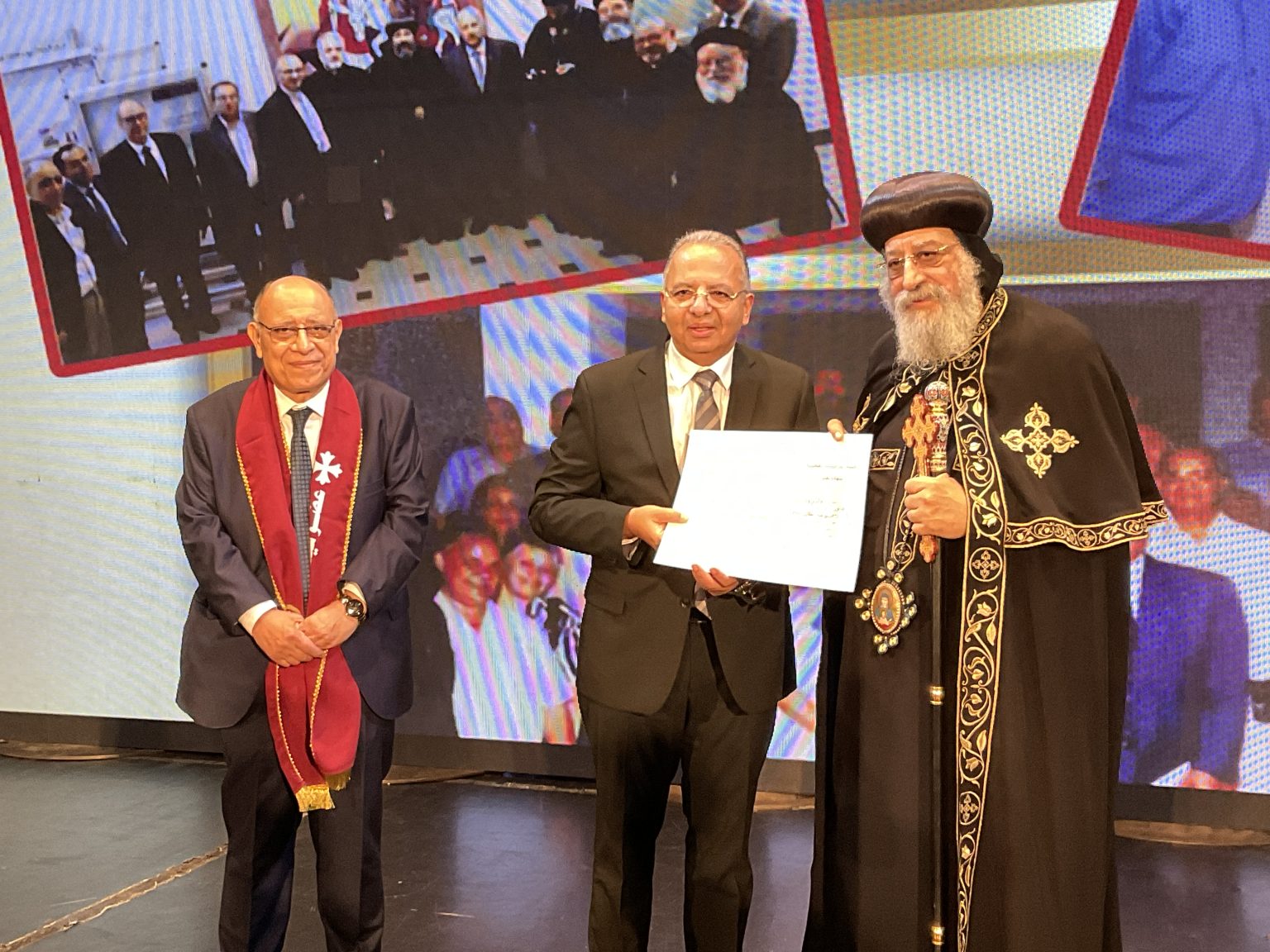
Pope Tawadros then awarded certificates of honour and souvenir gifts. He granted appreciation certificates to the names of the three popes who had supervised the ICS before him, and to those of its founders, also one to the name of the greatest educator in the Coptic Orthodox Church in modern times, Archdeacon St Habib Girgis (1876 – 1951).

Official event
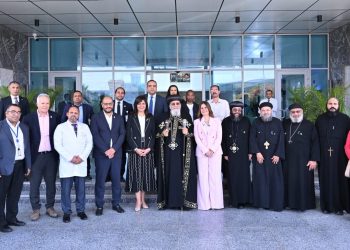
The official celebration held on the following day involved State and public entities. Participating were Sherif Fathy, Minister of Tourism and Antiquities; Ahmed Hanno, Minister of Culture; Sayed Kandil, President of Helwan University; senior State officials; metropolitans; bishops; priests; and many interested in Coptic studies.
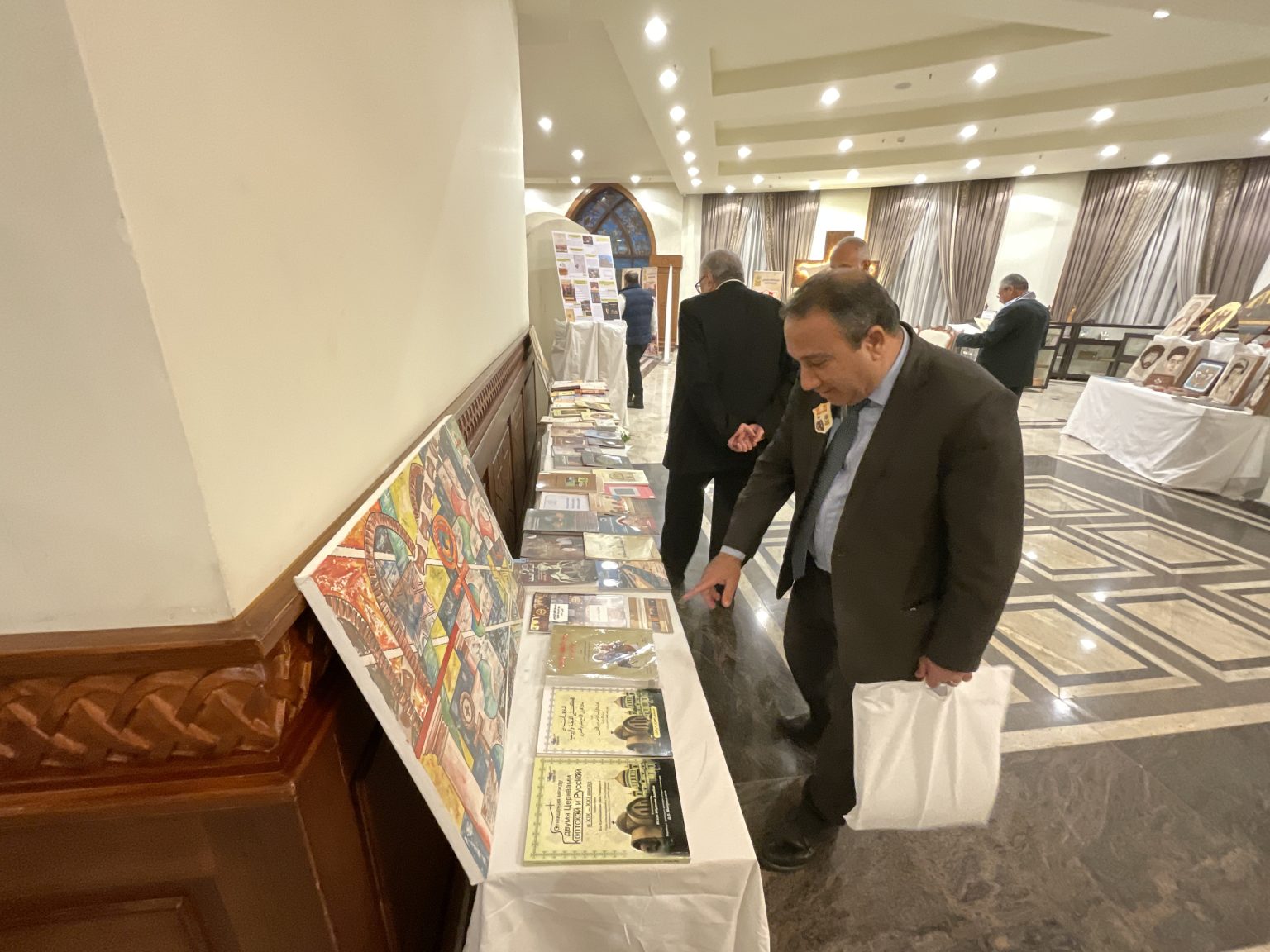
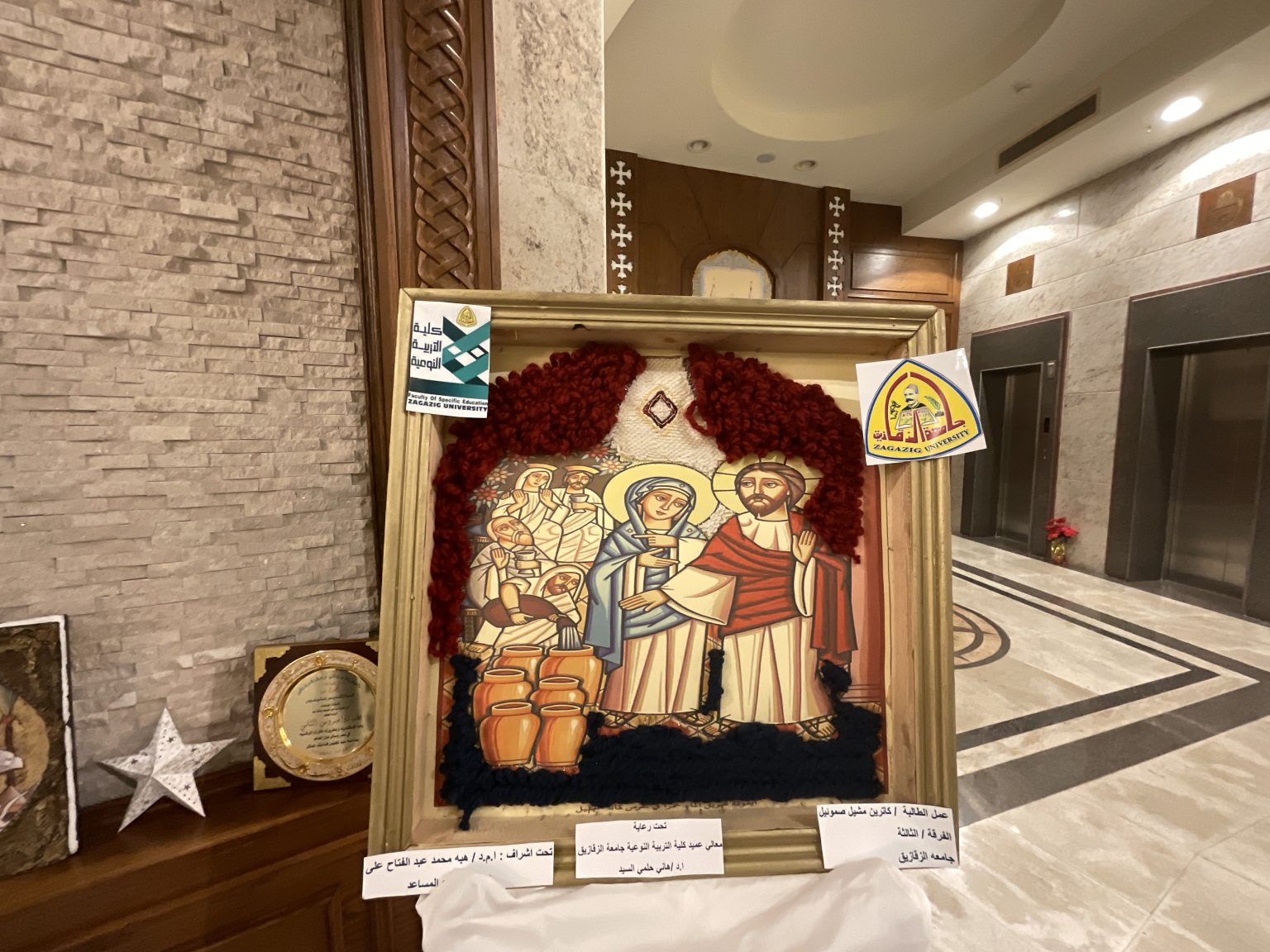
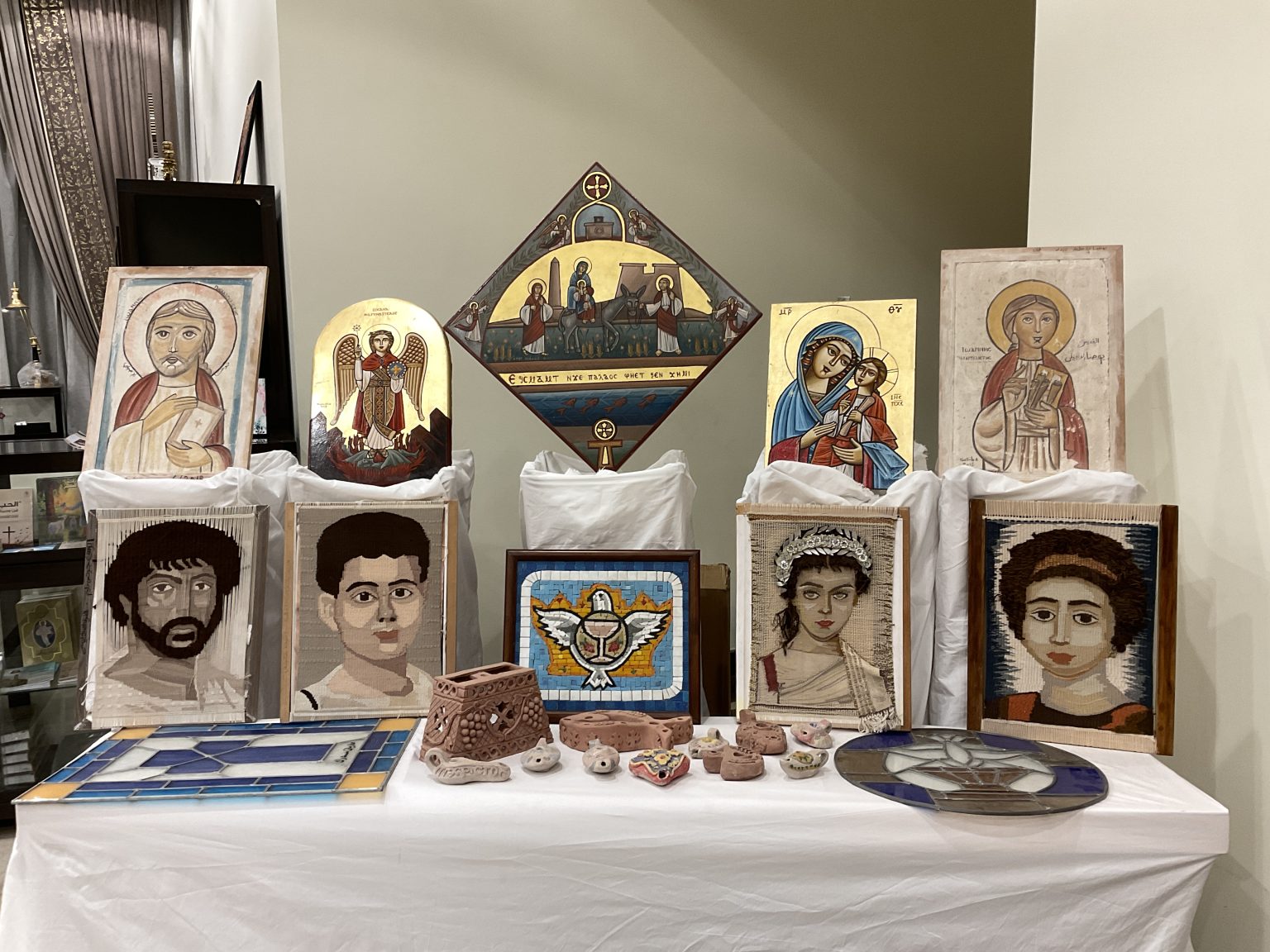
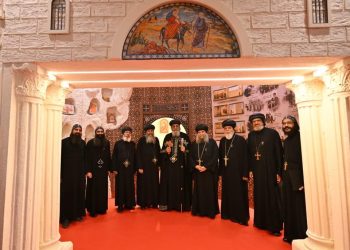
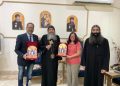
Before starting the celebration ceremony, the Pope accompanied his guests to open an exhibition showcasing achievements of the ICS and Coptic artefacts produced by ICS students.
Speeches were given by the guests.
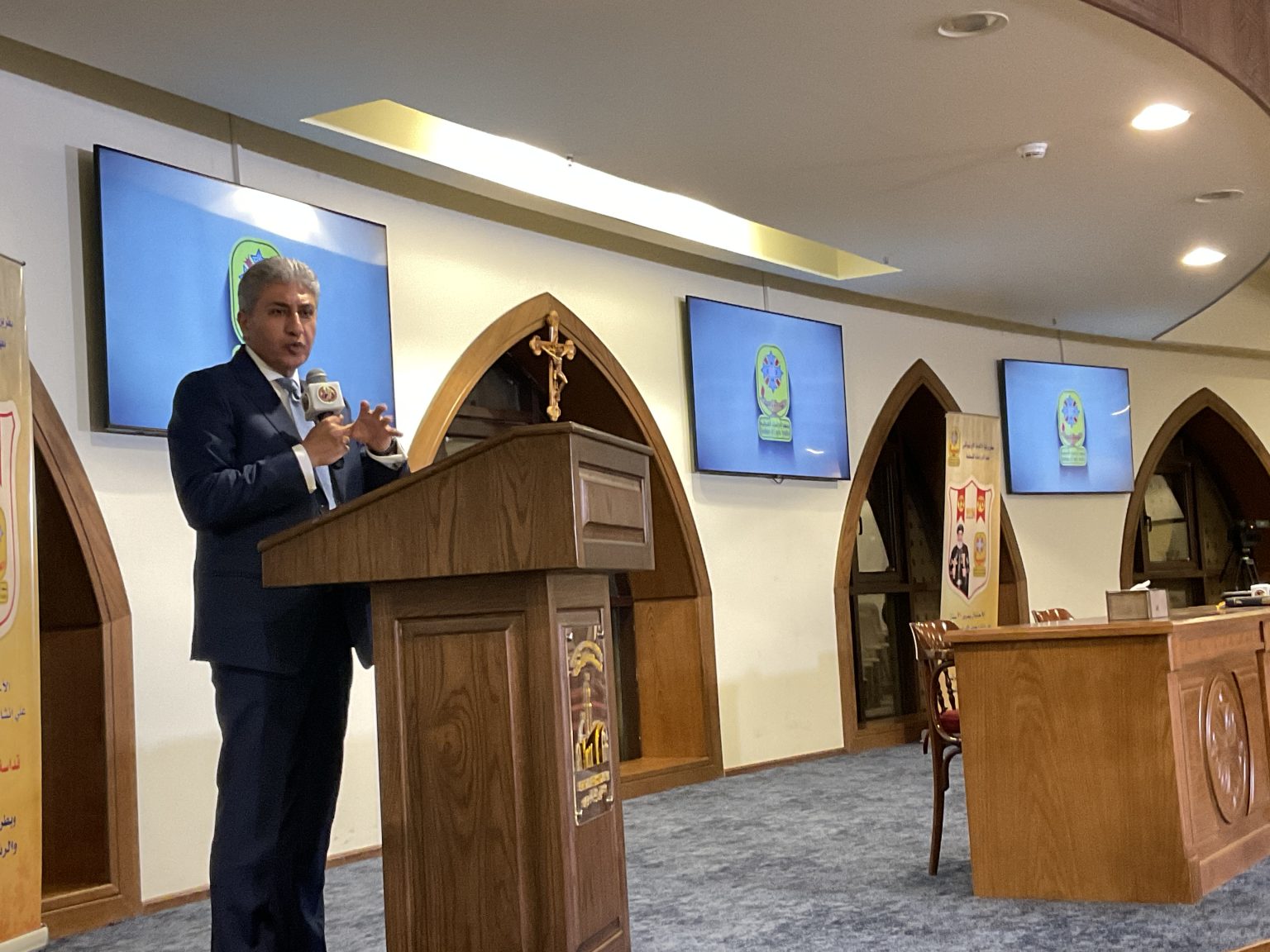
Sherif Hazem, Advisor to the Minister of Finance, said the Ministry was proud to share in celebrating the 70th anniversary of the ICS through minting the commemorative coin. It is not the first time the Egyptian Mint has been part of Coptic Church celebrations, he said. The Egyptian Mint had in 2017 issued a commemorative coin collection depicting “The Life of Jesus Christ”; in 2018 “The Journey of the Holy Family into Egypt”; and in 2021 “Coptic Patriarchs”. He thanked the ICS and Dr Agban for collaborating with the Mint on that work.


Ihab Al-Bablawi, Vice President of Zagazig University, talked of the cooperation protocol signed between the university and the ICS two years ago, most notably in studies on the Holy Family’s journey into Egypt in its biblical flight, and in the joint supervision of doctoral theses and art exhibitions.
Raouf Tawfiq spoke on behalf of St Pantaenus Family, a society of university professors named after the 3rd century theologian and Director of the Catechetical School of Alexandria. Dr Tawfik commended the cooperation protocol between St Pantaenus’s and the ICS that has materialised into joint seminars, conferences, workshops and training courses; also in work on libraries and electronic resources.

Onto digital and AI
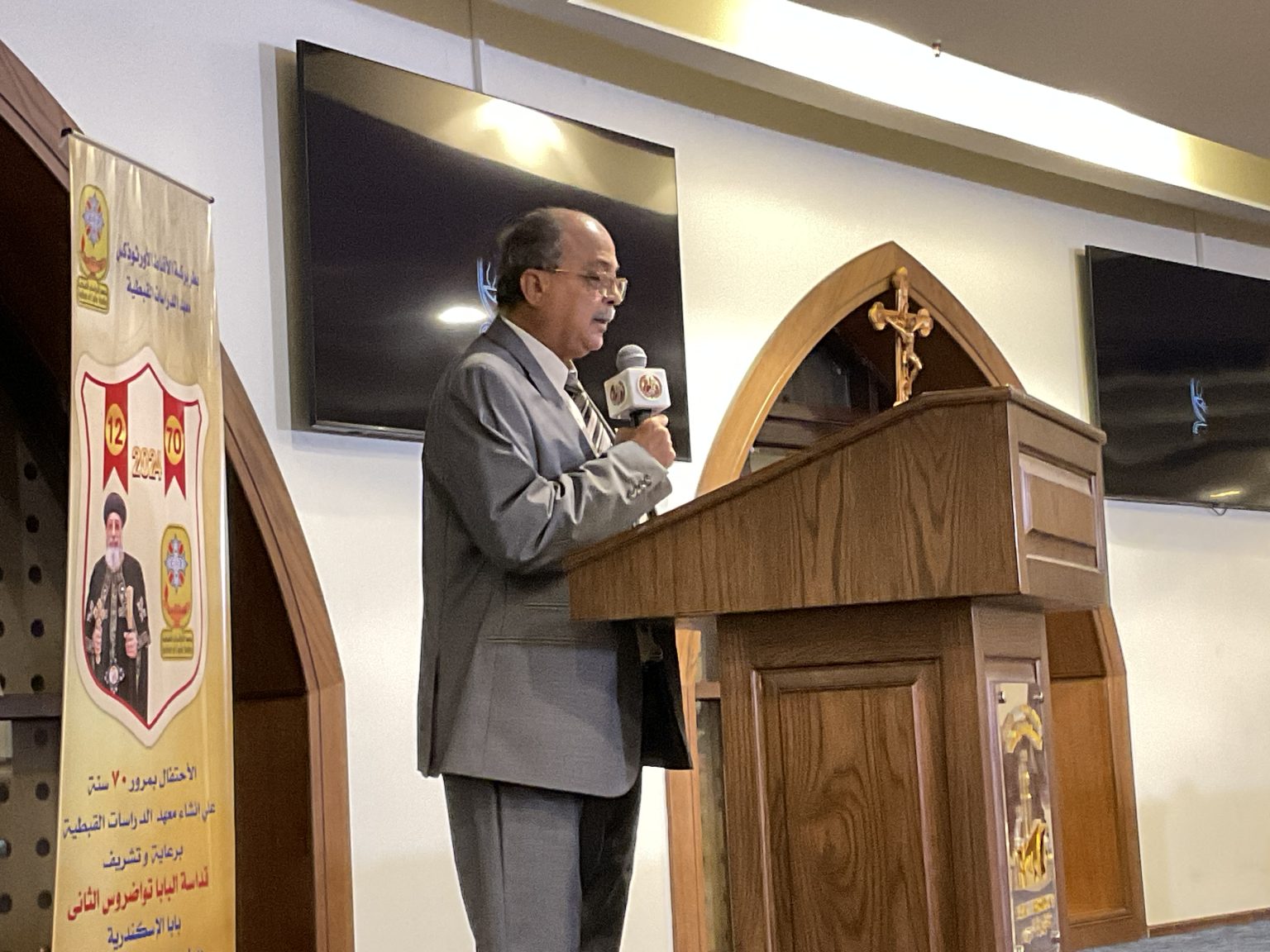
Dr Agban’s word focused on the expansion of the ICS during the 12 years of Pope Tawadros’s supervision. He cited the renovation of the building and the Coptic melodies studio, the Academy of Theological Sciences and Coptic Studies, online teaching and learning, the library and its digital transformation, and the Pope’s plan to establish a new building for the ICS at the Triangle of Hope project. Four new departments were established at the ICS: the Department of Media Studies, Department of Eastern Christian Heritage, Department of Ecclesiastical and Ecumenical Relations, and Department of Canon Law.
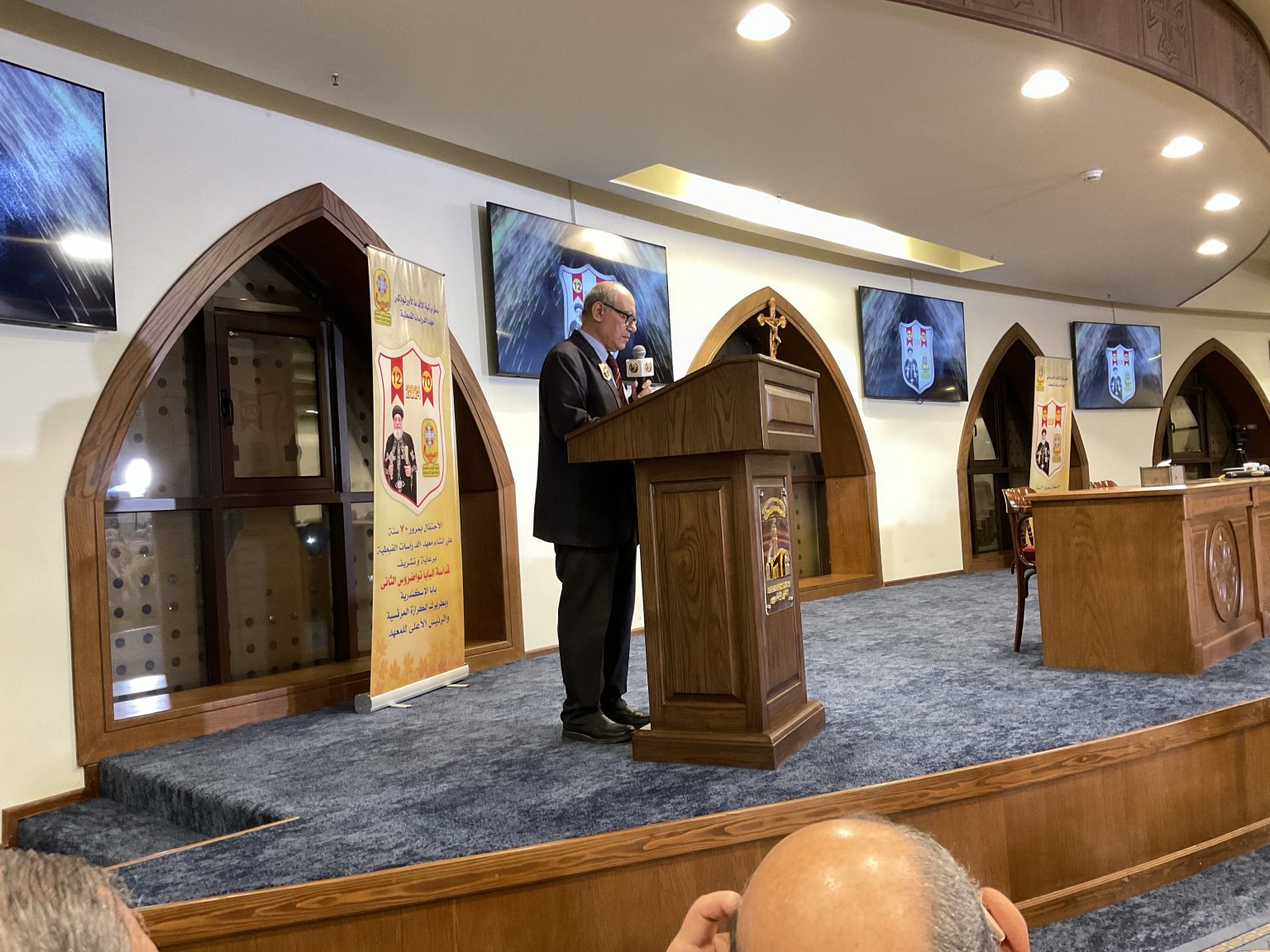
The ICS signed cooperation protocols with al-Ahram Foundation, the Peoples’ Friendship University, the Russian University, Zagazig University, Helwan University, the Clerical College of Los Angeles, the Coptic Archaeologists Society, Sapienza University in Rome, in addition to cooperation frameworks with UNESCO, St Pantaenus Family, and the Coptic Institute for Ecclesiastical Management and Development. He also spoke of exchange programmes with institutions in Greece, Russia, Germany, and exchange students who came from Syria, Armenia, Ethiopia, Russia, India, Sudan, South Korea and others.
The topic of the use of artificial intelligence AI came up, but was elaborated on in a later seminar managed by Ramy Said Ageeb who tackled the use of AI in the analysis of theological and linguistic texts; customising educational and interactive tools to the needs of users, the development of departments to need modern day needs, and a plethora of other applications.
Pope: Layers of civilisation
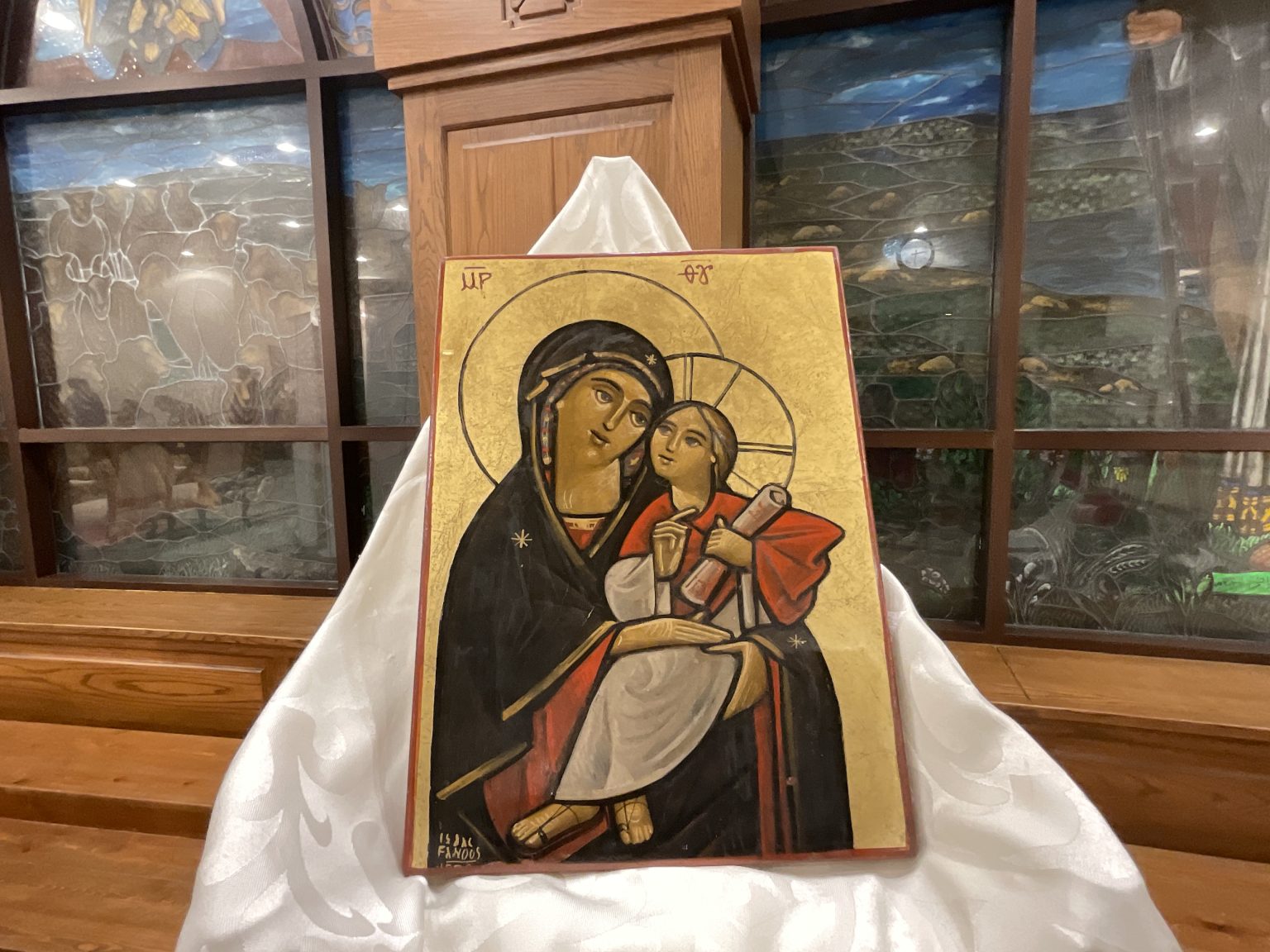
In his speech, Pope Tawadros thanked all present and spoke of that special celebration. He stressed that the occasion did not concern the Coptic Church alone; it was about the homeland of Egypt, and the layers of civilisations that culminate in the Egyptian identity. The longest lasting civilisation of ancient Egypt, the Coptic, Islamic, African, Mediterranean, Greco Roman, and Arab civilisations all live under the skins of Egyptians. “Today we celebrate the Coptic chapter,” he said, “a source of pride for every one of us.”
Watani International
17 December 2024