
Editor in Chief
Youssef Sidhom
Watani
عربى English French
  • News
    • Accidents
    • Crime
    • Diplomatic briefcase
    • NewsLine
    • Outside Cairo
    • Special Occasions
  • Opinion
    • Editorial
    • International media
    • Reader`s Corner
    • Opinion
  • Politics
    • Elections
    • International Politics
    • Islamisation Politics
    • National Affairs
    • Parliament
    • Politics
    • Protests
    • Rights
    • Terrorism
  • Culture
    • Antiquity
    • Art
    • Books
    • Culture
    • Drama
    • Egyptology
    • Festivals
    • Films
    • Heritage
    • Islamisation Culture
    • Media
    • Museums
    • Music
    • TV
  • Coptic
    • Church Affairs
    • Coptic Affairs
    • Coptic Culture
    • Copts in the Media
    • Coptology
    • Copts Abroad
    • Religious
      • P. Shenouda: Bible Study
    • Sectarian
    • Inter-religious
    • Holy Family
  • Features
    • Counselling Corner
    • features
    • Economy
      • Business
    • Education
    • Social Issues
      • Behaviour
      • Mothers Day
    • Health
    • Environment
    • Humour
    • In memorial
    • Interviews
    • Nile
    • Profile
    • Special needs
    • Sports
    • Technology
    • Tourism
    • Wars
    • Women
    • Youth
  • Watani Special Features
    • Egypt – Arab Spring
      • 25 January Revolution
      • 25 Jan revolution, one year on
      • Egypt post-30 June
    • Watani Milestones
      • 20 years Watani International
      • 10 years Watani International
      • Watani Jubilee
    • Pope Shenouda
    • Pope Tawadros
    • Watani Forum
No Result
View All Result
  • News
    • Accidents
    • Crime
    • Diplomatic briefcase
    • NewsLine
    • Outside Cairo
    • Special Occasions
  • Opinion
    • Editorial
    • International media
    • Reader`s Corner
    • Opinion
  • Politics
    • Elections
    • International Politics
    • Islamisation Politics
    • National Affairs
    • Parliament
    • Politics
    • Protests
    • Rights
    • Terrorism
  • Culture
    • Antiquity
    • Art
    • Books
    • Culture
    • Drama
    • Egyptology
    • Festivals
    • Films
    • Heritage
    • Islamisation Culture
    • Media
    • Museums
    • Music
    • TV
  • Coptic
    • Church Affairs
    • Coptic Affairs
    • Coptic Culture
    • Copts in the Media
    • Coptology
    • Copts Abroad
    • Religious
      • P. Shenouda: Bible Study
    • Sectarian
    • Inter-religious
    • Holy Family
  • Features
    • Counselling Corner
    • features
    • Economy
      • Business
    • Education
    • Social Issues
      • Behaviour
      • Mothers Day
    • Health
    • Environment
    • Humour
    • In memorial
    • Interviews
    • Nile
    • Profile
    • Special needs
    • Sports
    • Technology
    • Tourism
    • Wars
    • Women
    • Youth
  • Watani Special Features
    • Egypt – Arab Spring
      • 25 January Revolution
      • 25 Jan revolution, one year on
      • Egypt post-30 June
    • Watani Milestones
      • 20 years Watani International
      • 10 years Watani International
      • Watani Jubilee
    • Pope Shenouda
    • Pope Tawadros
    • Watani Forum
No Result
View All Result
No Result
View All Result
Watani
ع Fr
ADVERTISEMENT

Bulletproof thought

15 December, 2011 - (10:12 AM)
0 0

Robeir al-Faris

Bulletproof thought
18
VIEWS
Share on FacebookShare on Twitter

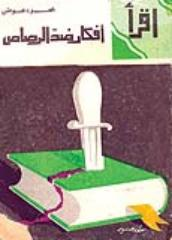
Afkar Dhidd al-Russaas; Mahmoud Awad; Dar al-Shorouq; Dar al-Maaref; Cairo; 2009

“I can give you my heart…and become a lover; my food…and go hungry; my wealth…and be poor; my life…and be a memory. But I cannot give you my freedom. My freedom is my lifeblood…my intellect…my bread of life. If I give it to you I become one of a herd…someone with a past but no future.”
The words, used in the preface to his book Afkar Dhidd al-Russaas (Bulletproof Thoughts), were written by Mahmoud Awad (1942 – 2009), who departed from our world on 30 August after a life full of struggles.
Despite being the gifted writer that he was, Awad frequently found himself the target of skirmishes with colleagues or superiors who were threatened by his sharp audacious beliefs. Awad was dubbed “the songbird of the press” for his poetic-like expressions and passionate language.

Rejected
Bulletproof Thoughts unveils the deep and liberal mind of Awad, who sought to discover why Egyptian thinkers were frequently rejected by the community. Awad believed that Qassem Amin’s crime was to call for women’s emancipation in defiance of the utter dominance of men, while al-Kawakbi’s crime was to call for the people’s freedom in defiance of the hegemony of the State. Aly Abdel-Raziq called for freedom of religion, defying the king; whereas Taha Hussein’s sin was to ask for the freedom of expression, defying political regimes. The predicament is always the same and the punishment does not change in every case. Amin was ostracised; Kawakbi was murdered; Abdel-Raziq was deposed; and Hussein was expelled from his job. In all, society claimed its verdict: all were guilty; all were traitors and atheists. This was no surprise to intellectuals. Authority in Arab society has always had its exclusive measures, which often conceals and sometimes reveals.

Double standards
Authorities often think of fear as patience; frigidity as sanity; development as insanity; modernity as ungodliness; thinking as crime. In double standard milieu; all norms are disrupted: weakness is a blessing; cowardice is valuable; courage is offence; silence is wisdom; ignorance is virtue; rebellion immorality and difference treason. In that weird world it is not strange to see woman regarded as an animal; the ruler becomes god; people work as slaves and terrorism serves as a law. That was the style of Mahmoud Awad; a few sharp words directed at a specific target. The words flow as soft music but leave a deep effect and more thoughts to ponder about.
In his forward to Qassem Amin’s book Woman’s Emancipation, Amin gives a descriptive outlook about the relation of man to woman in the 19th century. Awad reveals that a woman was just a follower—a man whose voice was suppressed. Society has dressed woman in piles of clothes and put a veil on her face and imprisoned her in frames. It was believed then that this was the only means to guarantee a woman’s virtue. But it proved wrong all along. People choose what they are, and no force can drive them to be virtuous if they do not want to. It was Qassem Amin who called for dismantling the wall that stood as a barrier between woman and society. And for this Amin was regarded as a rebel—if not a criminal. Only many years after he died did people begin to consider his writings in depth.

Silenced in death
In 1900, Abdel-Rahman al-Kawakbi compiled his articles in a book entitled The Natures of Totalitarianism and the Conflicts of Slavery, but it was Amin who revived his book when he shed light on Kawakbi’s life and his flight from the Ottoman sultan Abdel-Hamid. After Kawakbi’s revelation of autocratic rule, he took his due punishment and was silenced by poison.
Bulletproof Thoughts is the title of the third chapter of Islam and Ruling Principles by Sheikh Ali Abdel-Raziq, who claimed that the religious state had nothing to do with the caliph’s succession. The book was published at a critical time when revolution in Turkey dethroned Caliph Abdel-Hamid and King Fouad was looking forward to replacing him. When the book was published, many religious Muslims turned against Abdel-Raziq and several books were published that used the issue of religion for the promotion of politics. Abdel-Raziq was consequently prosecuted and was dismissed from al-Azhar.
Mahmoud Awad concludes his journey of bulletproof thoughts with On Jahili (pre-Islamic) Poetry by Taha Hussein, published in 1926. Hussein wrote that most of the Jahili poetry was actually written after the spread of Islam and therefore these poems represent the life of Muslims more than the life of people before Islam. Hussein believes that what is left of Jahili poetry is only a small part of it, and does not hold any significance in delineating the features of the pre-Islamic era.

Upsetting the status quo
After the publication of the book, the al-Azhar sheikhs were disturbed, as was the king and the parliament, because Hussein questioned the accepted norms of the past. Al-Azhar considered the book an attempt to stir up a rebellion against religion, while the king thought freedom of thought would mean a later freedom of politics.
After analysing these writings, Awad came to realise that doubt is a painful feeling and that this is why society does not accept the person who begins to question long-accepted norms. When doubts arise, people no longer trust either in themselves or in their history, or in their own strength.
The book discusses the issue of freedom of expression. There is one issue the book disregards, however: the issue of the writer, Mahmoud Awad, who was prohibited from writing in the daily newspaper Akhbar al-Youm by pressures from the senior editors Moussa Sabri and Ibrahim Saeda, who felt threatened by his talent. Awad filed a case in court, protesting against his suspension from work. The case was procrastinated for many years and Awad never received his due rights. May God bless all talented people who fight for what is right to their last breath.
Comments

comments

Tags: Bulletproofthought

Related Posts

Historian Maged Kamel launches second part of his encyclopaedic "One hundred Coptic figures on the land of Egypt"
Books

Historian Maged Kamel launches second part of his encyclopaedic “One hundred Coptic figures on the land of Egypt”

April 1, 2026
New Book: Tahtib Champions in Upper Egypt (1900-2025)
Books

New Book: Tahtib Champions in Upper Egypt (1900-2025)

February 23, 2026
13 years talking to the Pope
Books

13 years talking to the Pope

December 10, 2025
New book: 100 Coptic figures
Books

New book: 100 Coptic figures

August 6, 2024
New book introduced by Pope Tawadros: “100 Coptic Figures…”
Books

New book introduced by Pope Tawadros: “100 Coptic Figures…”

May 27, 2024
150 years of Coptic press: How it all began 
Books

150 years of Coptic press: How it all began 

December 7, 2022

Editorial

China and Russia vis-à-vis Trump’s Iran War

More

MOST READ

Egypt attempts to contain Myna bird invasion
Environment

Egypt attempts to contain Myna bird invasion

June 15, 2026
0

The Nature Protection Sector of Egypt’s Ministry of Local Development and Environment has been monitoring and tracking the spread of...

Read more
Watani talks to Anba Bigol, Bishop and Abbot of al-Muharraq Monastery of the Holy Virgin Mary

Watani talks to Anba Bigol, Bishop and Abbot of al-Muharraq Monastery of the Holy Virgin Mary

June 17, 2026
Egypt’s Armenians

Egypt’s Armenians

April 22, 2015
‘Train of Hope’ to carry home 1,200 Sudanese

‘Train of Hope’ to carry home 1,200 Sudanese

June 16, 2026
Jobs for persons with disabilities

Jobs for persons with disabilities

June 15, 2026

Features

China’s Long March launches USD190M tyre manufacturing project in Egypt
Economy

China’s Long March launches USD190M tyre manufacturing project in Egypt

June 17, 2026
0

China’s Chaoyang Long March Tyre Co., Ltd. has launched a USD190 million tyre manufacturing project in Egypt’s Suez Canal Economic...

Read more
Watani started as an Egyptian weekly Sunday newspaper published in Cairo. The word Watani is Arabic for “My Homeland”. The paper was founded in 1958 by the prominent Copt Antoun Sidhom (1915 – 1995), who strove for the establishment of a civil, democratic society in Egypt, where all Egyptians would enjoy full citizenship rights regardless of their religious denomination. To this day when Watani is published as a weekly paper and an online news site, the objective remains the same. Those in charge of Watani view this role as a patriotic all-Egyptian vocation. Special attention is given to shedding light on Coptic culture and tradition as authentically Egyptian, this being a topic largely disregarded or little-understood by Egypt’s media. Watani is deeply dedicated to offer its readers high quality, extensive, objective, credible and well-researched media coverage, with special focus on Coptic issues, culture, heritage, and contribution to Egyptian society.
-----------------------------------------------------------

27 Abdel Khalek Tharwat st, Downtown, Abdeen,Cairo

00202-23927201

00202-23935946

 [email protected]


categories

  • News
  • Opinion
  • Politics
  • Culture
  • Egypt – Arab Spring
  • Coptic Affairs
  • Features
  • Watani Special Features

Recent Posts

  • China and Russia vis-à-vis Trump’s Iran War
  • China’s Long March launches USD190M tyre manufacturing project in Egypt
  • Watani talks to Anba Bigol, Bishop and Abbot of al-Muharraq Monastery of the Holy Virgin Mary
  • ‘Train of Hope’ to carry home 1,200 Sudanese
  • Egypt launches ROX Motor partnership to manufacture new-energy vehicles
  • News
  • Opinion
  • Politics
  • Culture
  • Egypt – Arab Spring
  • Coptic Affairs
  • Features
  • Watani Special Features

Powered BY 3A Digital.

No Result
View All Result
  • News
    • Accidents
    • Crime
    • Diplomatic briefcase
    • NewsLine
    • Outside Cairo
    • Special Occasions
  • Opinion
    • Editorial
    • International media
    • Reader`s Corner
    • Opinion
  • Politics
    • Elections
    • International Politics
    • Islamisation Politics
    • National Affairs
    • Parliament
    • Politics
    • Protests
    • Rights
    • Terrorism
  • Culture
    • Antiquity
    • Art
    • Books
    • Culture
    • Drama
    • Egyptology
    • Festivals
    • Films
    • Heritage
    • Islamisation Culture
    • Media
    • Museums
    • Music
    • TV
  • Coptic
    • Church Affairs
    • Coptic Affairs
    • Coptic Culture
    • Copts in the Media
    • Coptology
    • Copts Abroad
    • Religious
      • P. Shenouda: Bible Study
    • Sectarian
    • Inter-religious
    • Holy Family
  • Features
    • Counselling Corner
    • features
    • Economy
      • Business
    • Education
    • Social Issues
      • Behaviour
      • Mothers Day
    • Health
    • Environment
    • Humour
    • In memorial
    • Interviews
    • Nile
    • Profile
    • Special needs
    • Sports
    • Technology
    • Tourism
    • Wars
    • Women
    • Youth
  • Watani Special Features
    • Egypt – Arab Spring
      • 25 January Revolution
      • 25 Jan revolution, one year on
      • Egypt post-30 June
    • Watani Milestones
      • 20 years Watani International
      • 10 years Watani International
      • Watani Jubilee
    • Pope Shenouda
    • Pope Tawadros
    • Watani Forum

Powered BY 3A Digital.

Login to your account below

Forgotten Password?

Fill the forms bellow to register

All fields are required. Log In

Retrieve your password

Please enter your username or email address to reset your password.

Log In