
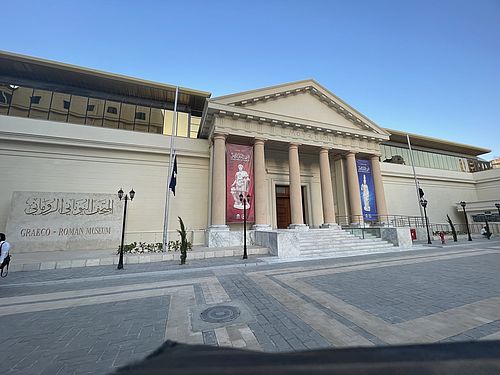
On 26 July, Egypt’s Mediterranean city of Alexandria marks its national day. Alexandria comes second only to the capital Cairo, in size and importance on the economic and cultural level. It has behind it centuries of rich culture that was always coloured by its Mediterranean site and Greek origin: the city was built by Alexander the Great who invaded Egypt in 330BC, heralding in what is historically denoted as Egypt’s Graeco Roman era that lasted until AD640 when the Arabs conquered Egypt. In tribute to Alexandria, Watani explores its Graeco Roman Museum which reopened in 2023 following a two-decade-long restoration, displaying the city’s…
Alexandria’s 131-year-old Graeco Roman Museum opened to the public in October 2023, following a near two-decade-long closure for restoration. The museum was closed in 2005 for direly needed renovation, but works were halted in the wake of the 2011 Arab-Spring uprising for lack of funds. Work was only resumed in 2018, and involved restoration, development, and enhancement with modern museological displays that cost some EGP569 million.
Egypt’s Greek and Roman history
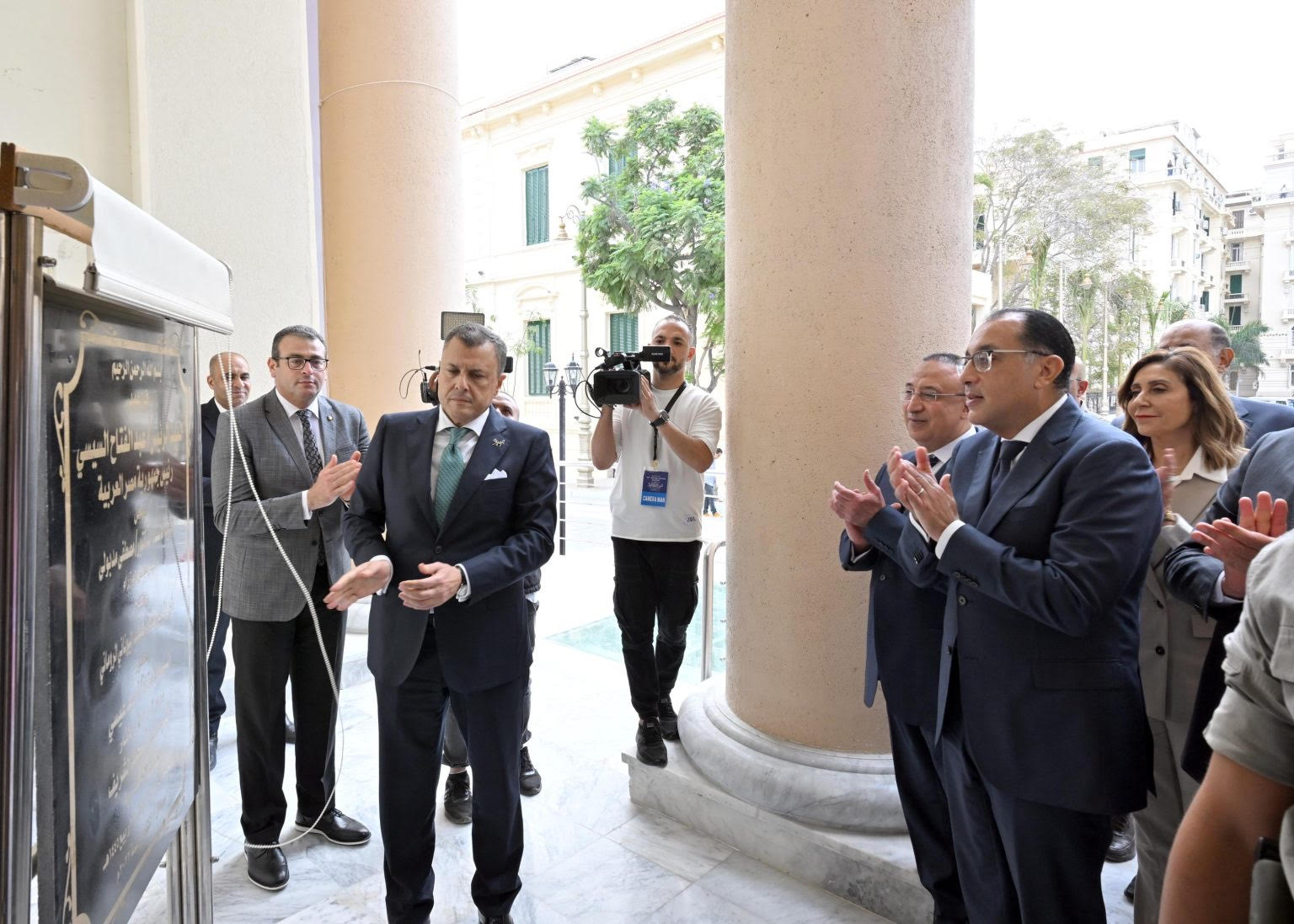
On 11 October 2023, Alexandria’s Graeco-Roman Museum stood proud as Prime Minister Mostafa Madbouly opened it with the restoration and development works complete.
Attending the opening was then Alexandria Governor Mohamed Elsherief; together with a host of Cabinet ministers and senior government and antiquities officials; and Greek Ambassador to Cairo Νikolaos Papageorgiou; Cypriot Ambassador to Cairo Polly Ioannou; Bibliotheca Alexandrina Director Ahmed Zayed, Consul-Generals of various countries in Cairo and Alexandria, and representatives of museums in Greece and Italy.
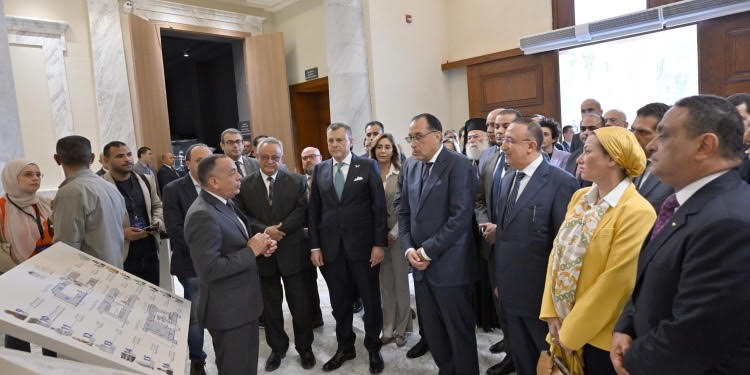
“The event was more than a museum opening; it was a gesture signalling Egypt’s commitment to promoting its rich, diverse history and culture domestically and internationally,” Greek City Times reported.
The event was indeed an apt acknowledgement of Egypt’s Greek-era history that spanned 330BC – 32BC, and Roman-era history from 32BC till 640AD when the Arabs seized Egypt from the Romans. Both the Greek and Roman invaders heavily adopted the Egyptian time-honoured culture which then evolved into a culture of intertwined Egyptian, Greek, and Roman elements. Testifying to this are the countless Graeco-Roman temples built across Egypt to honour Egyptian gods, also the various Egyptian traditions embraced by the new rulers. Alexander the Great built the city of Alexandria on the Mediterranean in 332BC; it lived to be Egypt’s capital and the throbbing cultural heart of the ancient world over many later centuries.
History of the museum
Apart from the yet-to-officially-open Grand Egyptian Museum (GEM) in Giza, the Graeco-Roman Museum in Alexandria is the second largest museum in Egypt, the largest being the Egyptian Museum in Tahrir Square, Cairo. The museum in Alexandria is housed in the oldest building designed with the specific purpose of preserving and displaying antiquities.
The museum was built in 1894 by the Egyptian Antiquities Authority in cooperation with Alexandria’s Municipal Council which allocated for that purpose some 5,200sq.m of land adjacent to its headquarters in central Alexandria, in a street that today bears the Museum’s name.
According to archaeological expert Abdel-Rehim Rihan, the idea of establishing the museum was originally put forward by the large non-Egyptian community that lived in Alexandria. Giuseppe Botti, who came to Alexandria in 1884 as director of its Italian school, played a key role in its foundation. He was supported by members of Alexandria’s elite among them the famous names of Zizinia, Pugioli, Harris and Demetriou.
The museum started in a modest rented property in Downtown Alexandria close to the site of today’s museum, and consisted of four or five rooms. Mr Rihan says that the foundation of the museum sparked an interest in excavation for the city’s archaeological heritage. With larger discoveries, a pressing need for a new spacious building emerged.
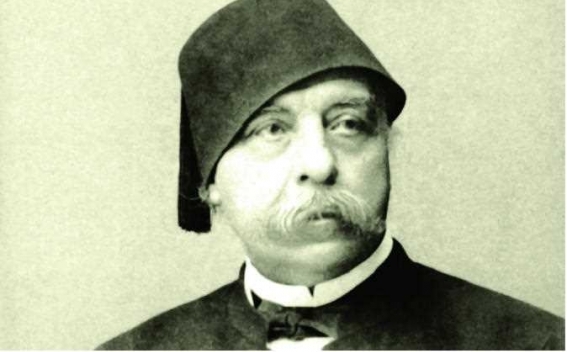
Egypt’s Prime Minister Nubar Pasha laid the cornerstone for the new museum in 1894. The building was designed by the German and Dutch architects M.M. Dietrich and Leon Sténon in neoclassical style. Construction took one year, and the museum was inaugurated by Khedive Abbas Helmy II in 1895. Giuseppe Botti was the museum’s first director, and the management of the museum remained Italian until 1953 when, in the aftermath of the 1952 national revolution, management of the museum moved into Egyptian hands.
Renovations
In 1983, the Graeco-Roman Museum was listed among Egypt’s heritage. It had undergone development in 1982, which saw a new wing added to connect the museum’s western and eastern wings. The museum boasted 27 halls and a wide garden, the Patio. It included some 45,000 artefacts, some on display and some in storage, which spanned the Greek era that began in the 4th century BC, and parts of the Roman and Coptic eras until the 4th century AD [the Roman era ran in Egypt till the 7th century AD; the Coptic till the 8th century AD]. Some of the museum’s antiquities were discovered in Alexandria and its surroundings, others came from other parts in Egypt.
When the museum closed for the most recent renovation in 2005, part of its antiquities collection went into storage and other pieces were lent to the Alexandria National Museum and to the Bibliotheca Alexandrina.
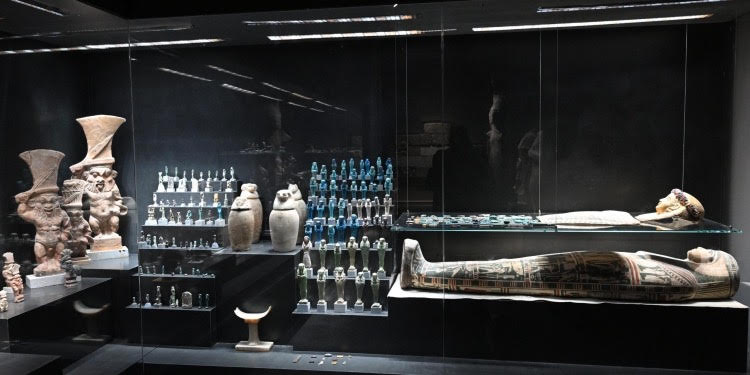
According to Mustafa Waziri, previous Secretary-General of the Supreme Council of Antiquities, the museum’s development project involved doubling the display space; restoring the museum’s classic façade; painting the museum’s exterior and interiors; fortifying the old walls of the museum with a steel structure; and also developing the lighting and surveillance systems.
The development work included modernising the display concept, and equipping the museum to cater to the needs of persons with disabilities. A conference hall was added, as was one for children’s workshops and activities. Halls for study and others for the production of gypsum replicas were added.
The area surrounding the museum was also upgraded, and a large car park was built to accommodate cars and tourist buses.
Connecting civilisational eras
The first thing to meet the eye upon approaching the museum is its grand neo classical Roman-style façade of six columns and pediment bearing the large Greek inscription ‘MOYΣEION’ (“MOUSEION”). The ancient Mouseion of Alexandria was founded by the Ptolomeys in the third century BC as a place of learning, and included the famous Library of Alexandria (Bibliotheca Alexandrina).
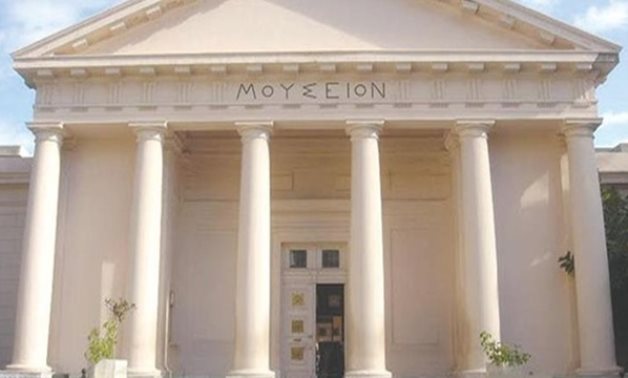
The entrance boasts a marble plaque that marks the opening of the museum following the most recent restoration; it was unveiled by the Prime Minister during the 2023 opening.
During the opening ceremony, Mr Waziri explained the logic behind the museum’s development project. The general vision, he said, was based on bringing into focus the diversity of display topics that cover the history of ancient Egypt in general and Alexandria in specific, connecting the ancient Egyptian, Graeco-Roman, Coptic and Byzantine civilisations, he said. The museum collections show Alexandria as a beacon of knowledge; Byzantine and Coptic arts; and the commercial and trade history of Egyptian crafts.
New sections were introduced to serve modern museological display in a way that would attract visitors from inside and outside Egypt.
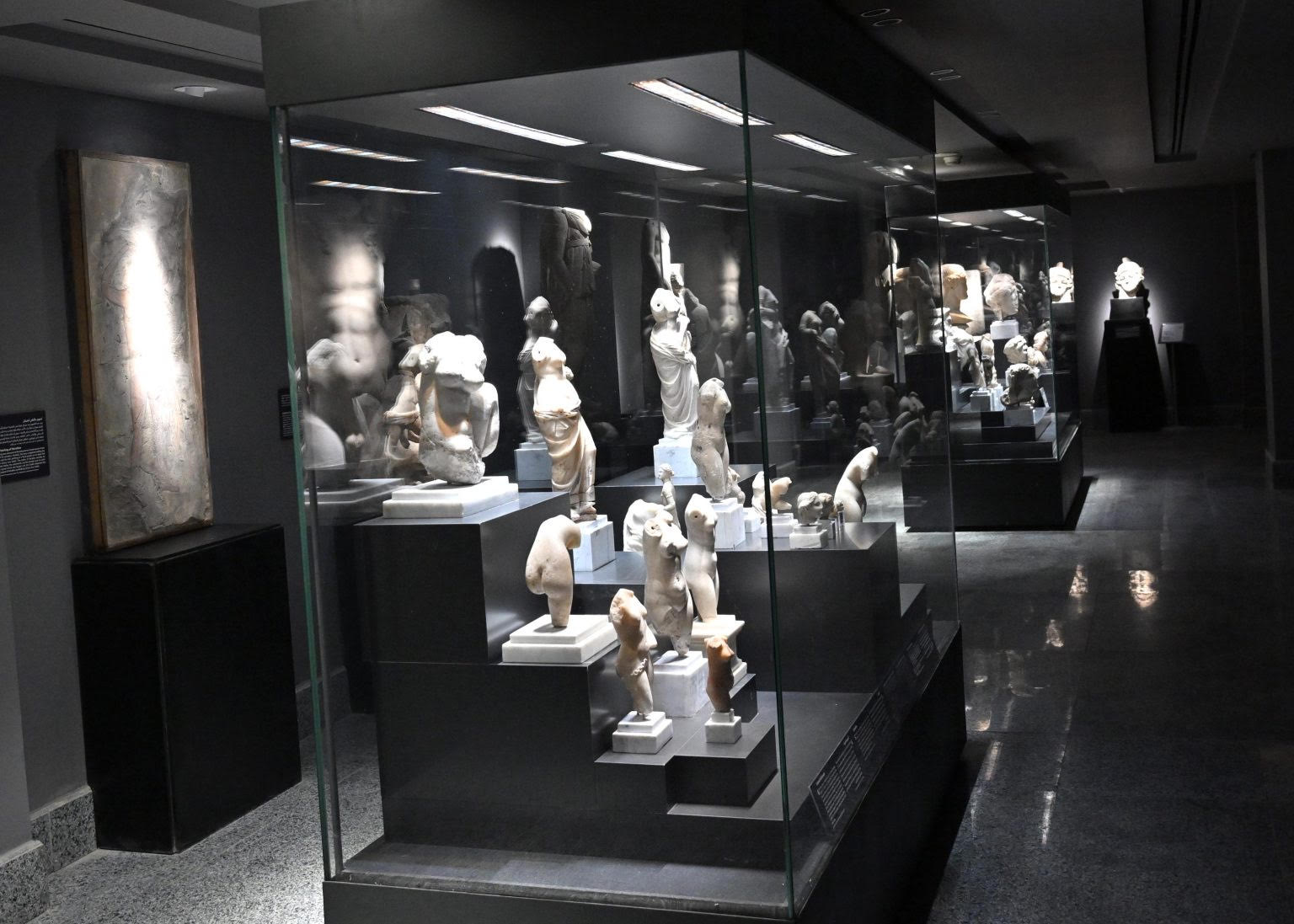
The museum’s galleries include the Hall of Alexander the Great; the Hall of Cleopatra and Mark Antony; the Hall of the Philosophers; and the Hall of the Italian Founders of the Museum. The displays showcase Alexandrian statues, marble sarcophagi, coin collections, and others.
Featuring old manuscripts on Egyptian civilisation, and a large collection of rare books, the museum library is among the most important in Alexandria.
The Graeco-Roman Museum today showcases 10,000 artefacts, Mr Waziri said, out of a full collection of 41,000 pieces; those that could not be displayed went into storage.
First-time display, cache unearthed
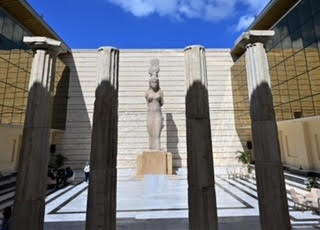
The museum’s 2426 sq.m-ground floor houses 27 galleries displaying artefacts in historical order, also antiquities storerooms and restoration labs. The ‘Patio’ stands over 724sq.m.
The mezzanine houses four galleries: the Museum Education Hall; the Archives Hall; the Gypsotica Hall; and the Study Hall. The first floor includes other halls, in addition to the rare books library, the conference hall, antiquities storerooms, a cafeteria and a restaurant.
Walaa Mostafa, General Director of the Graeco Roman Museum in Alexandria, explained that the first floor of the museum is devoted to a chronological display, whereas the second focuses on displays according to various civilisational aspects.
Ms Mustafa said that 300 artefacts are being put on display for the first time; having been discovered years ago in al-Raml area in Alexandria.
Mohamed Metwally, Director General of Alexandria Antiquities said that in 2018 when works on the museum restoration resumed, workers found a cache buried under the grounds of the museum. The cache, Mr Metwally disclosed, included some 500 artefacts featuring burial utensils dating back to various historical eras. The cache had probably been buried in the museum ground to protect it from destruction or loss during WWII.
Display: chronological and topical
Alexandria’s Graeco Roman Museum boasts diverse collections of fascinating beauty.
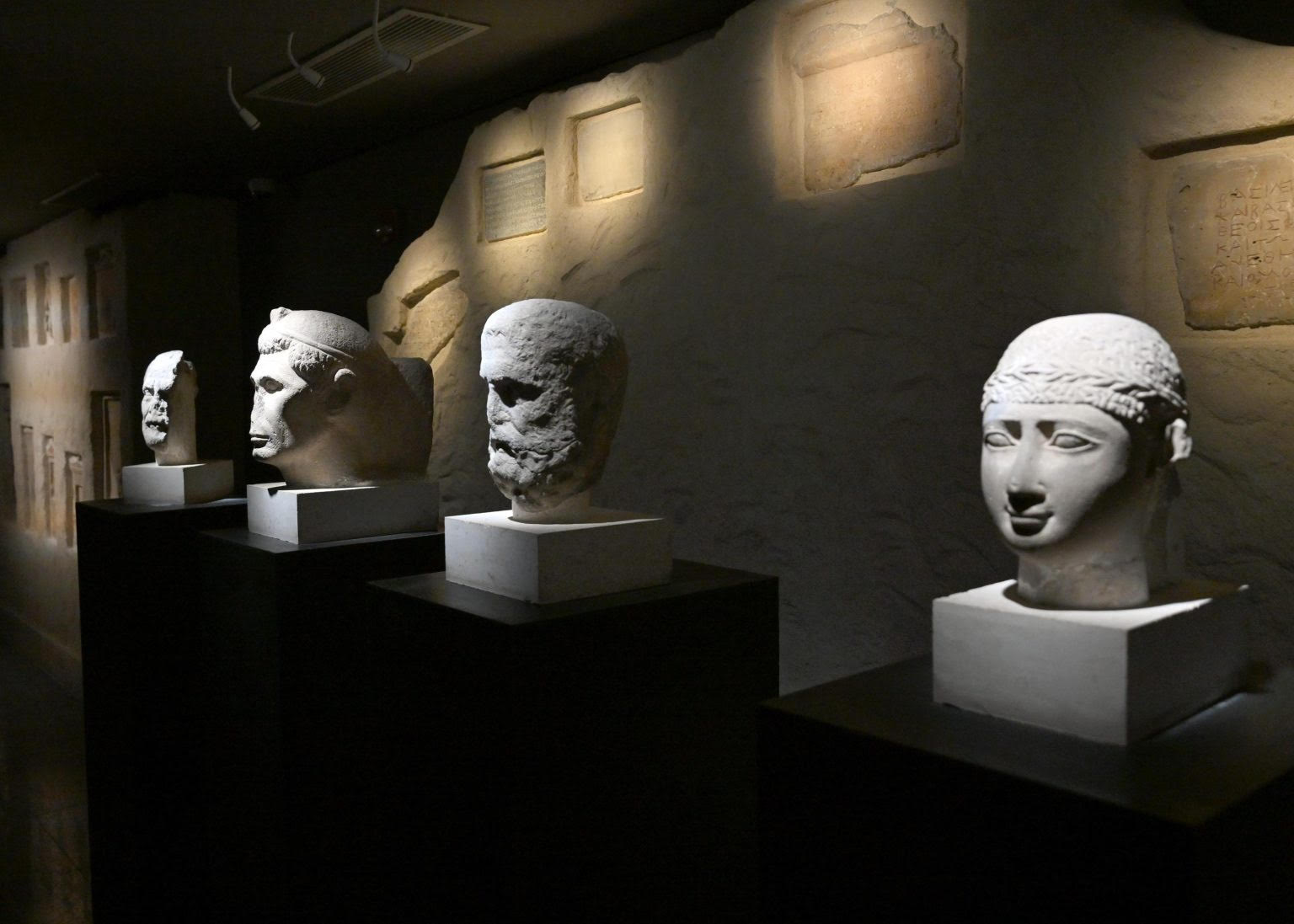
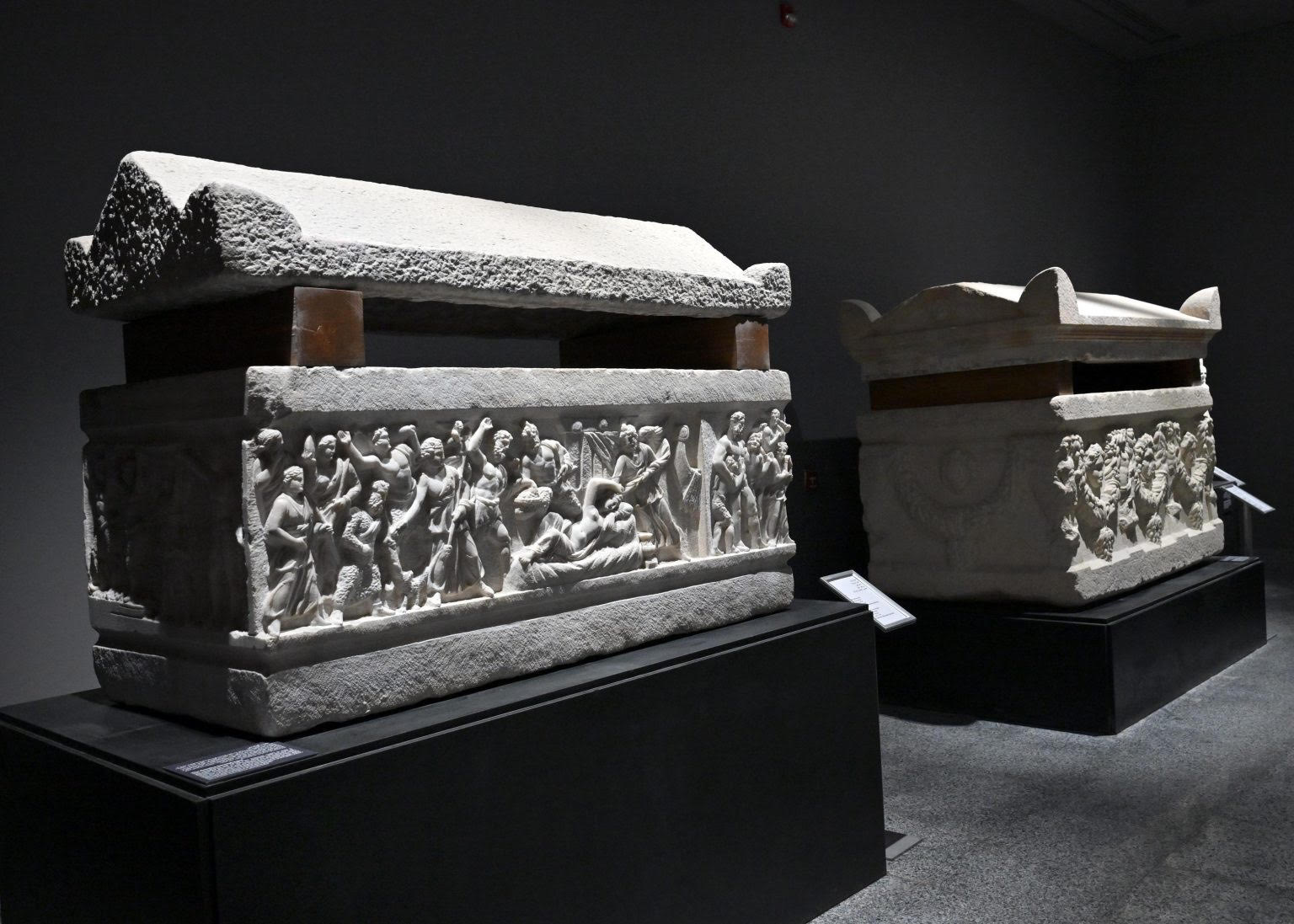
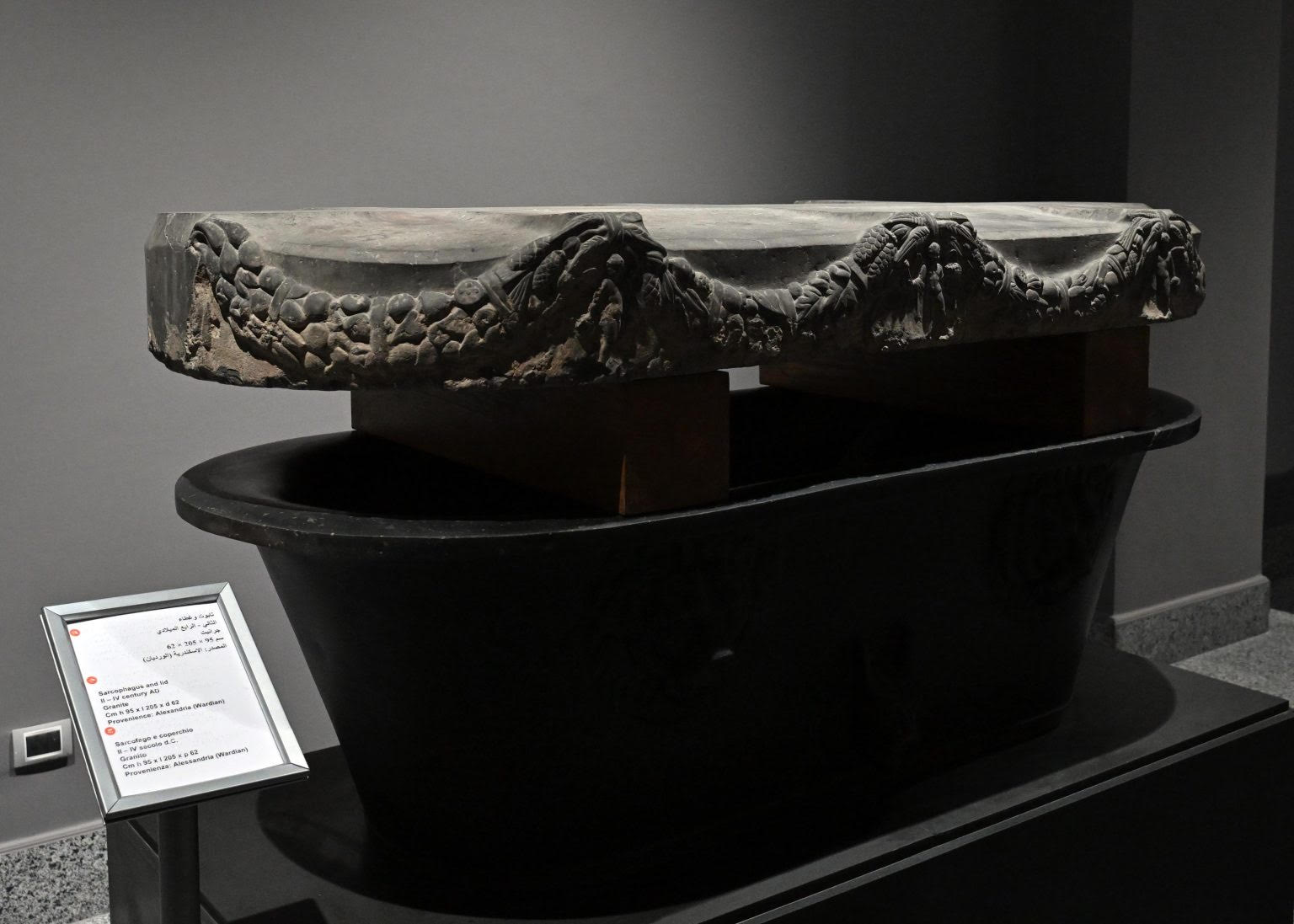
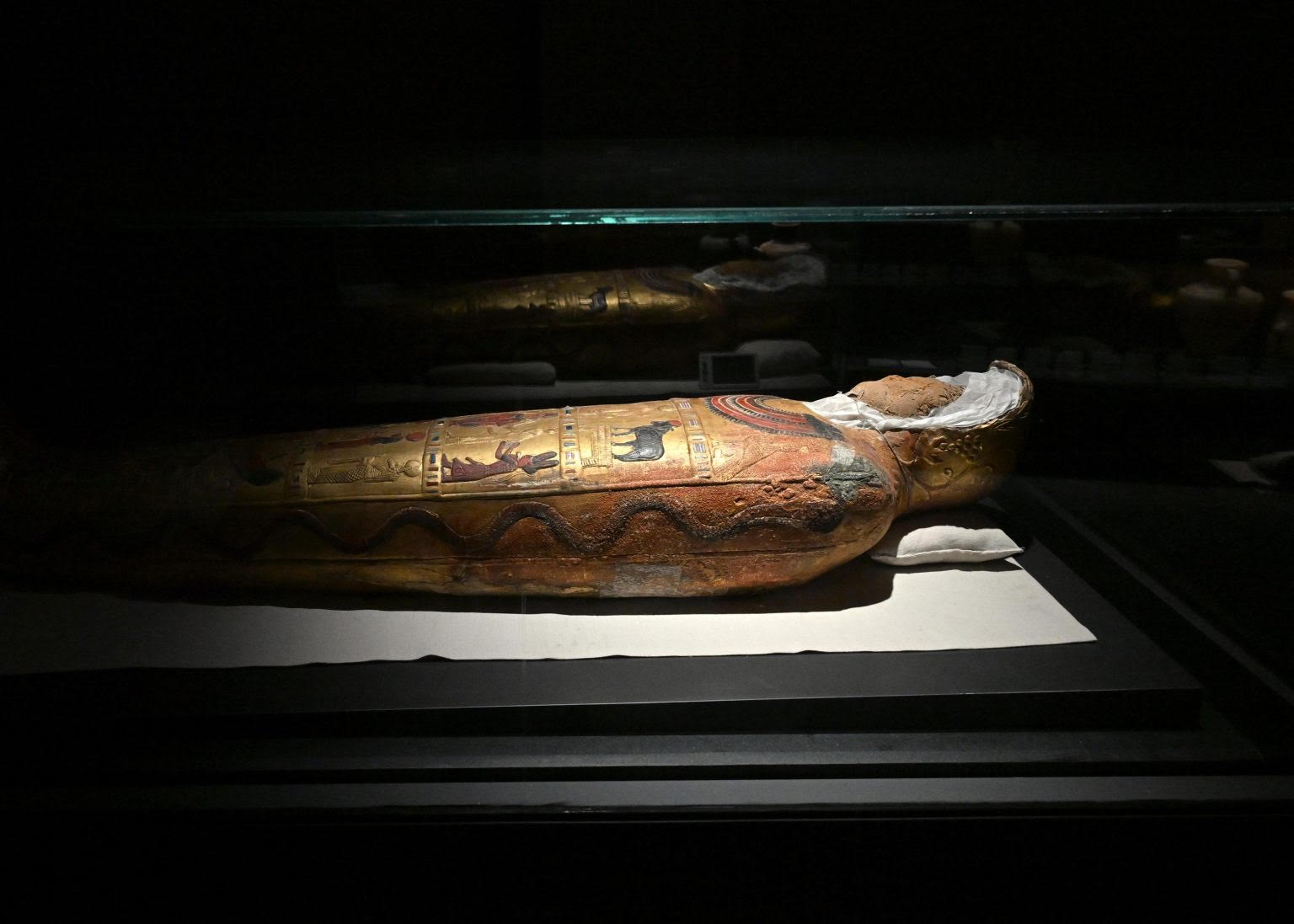
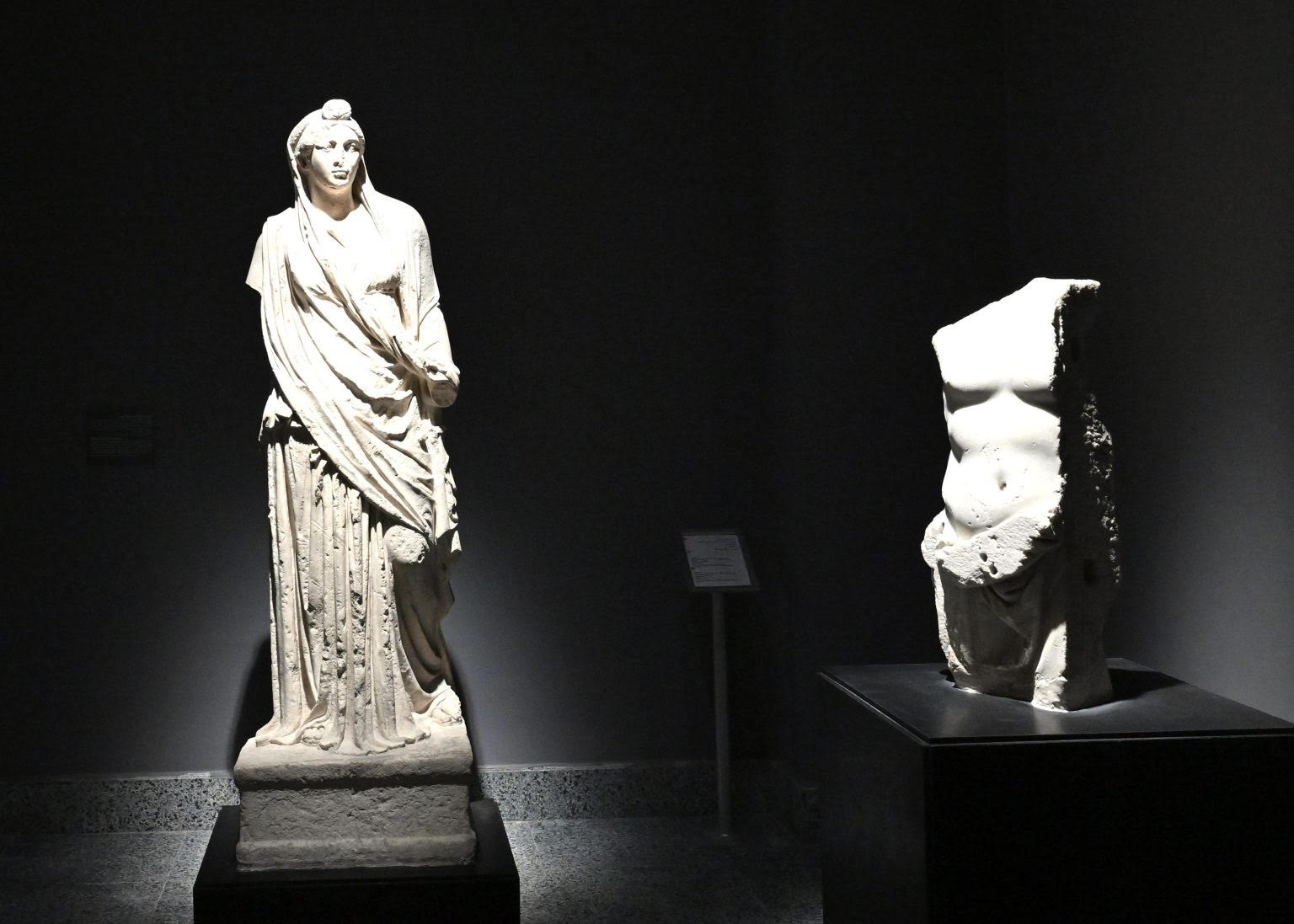
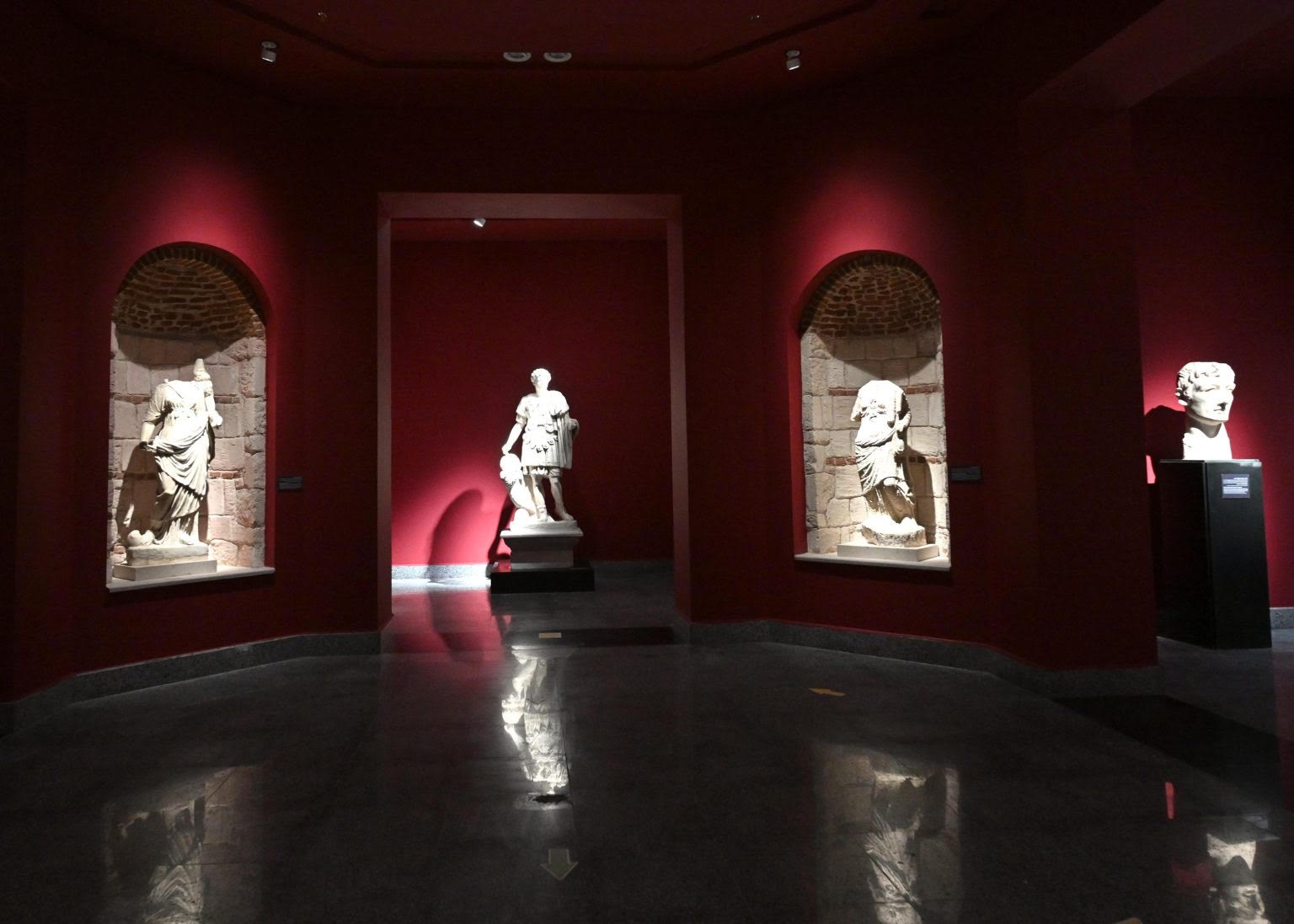
The ground floor houses the bigger monuments that could not be accommodated inside showcases. Prominent among them is the spectacular colossal white marble statue of Marcus Aurelius. There are also white marble busts of Alexander the Great and of Julius Caesar, a fascinating statue of Aphrodite and the winged Eros, and Roman-era sarcophaguses bearing coloured cartonnage images of those buried inside them, famously known as the Fayoum portraits.
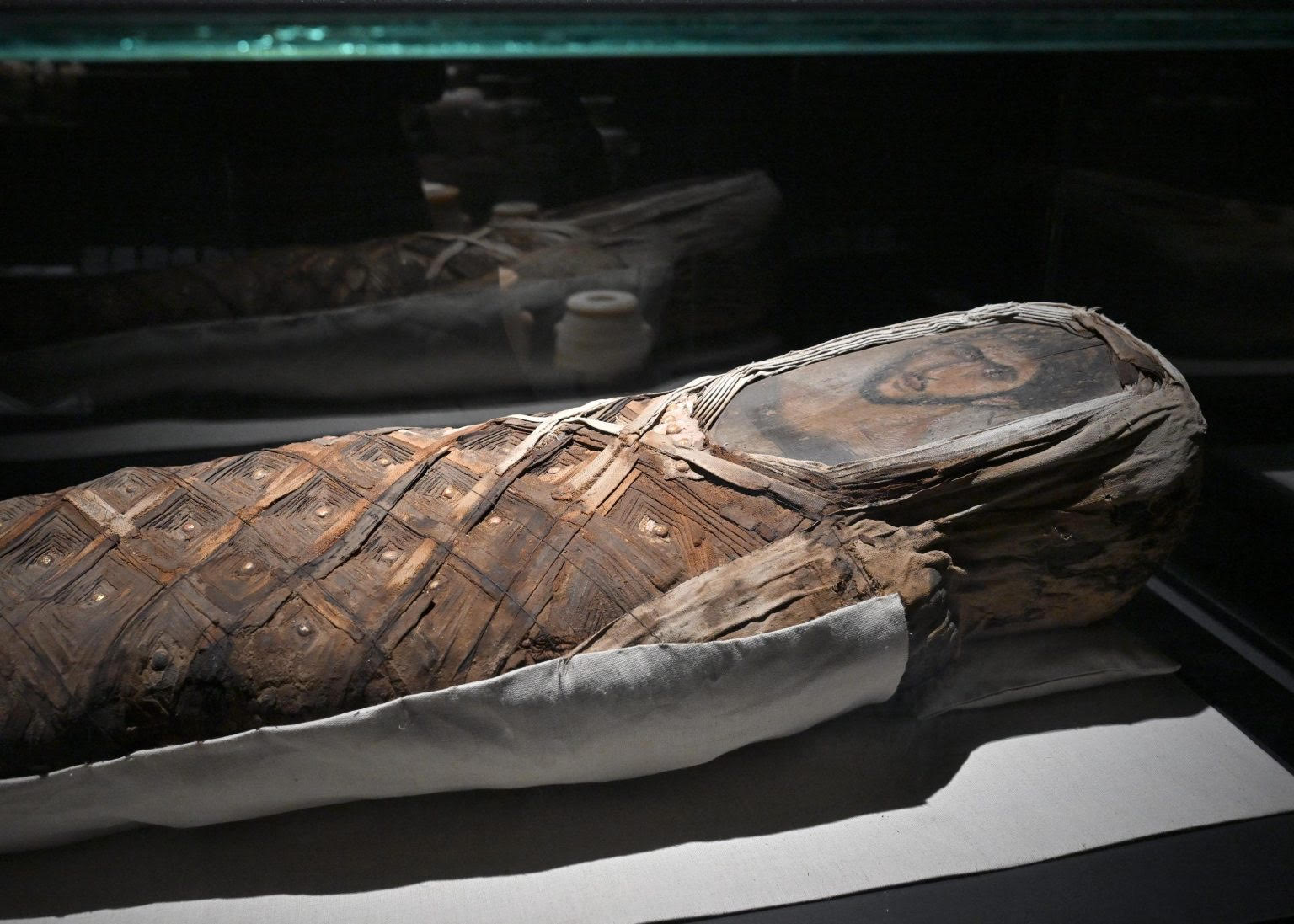
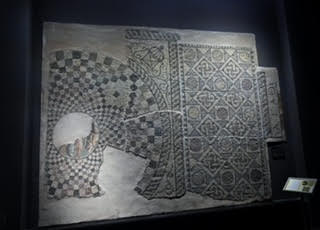
The focus of the Museum’s ground floor display is chronological, starting with the Greek era and moving on to the Roman and Coptic. In addition to pieces depicting the rulers and gods, special light is cast on the daily life of Egyptians during these times. Greek era displays highlight fishing, sailing, and marine trade with the outside world; whereas Roman-era displays include a house, kitchen, dining table, Roman bath, mosaics, and library.
Among the statues of gods displayed is the Serapis Bull that had been found west of Pompey’s Pillar in Alexandria; it was set up during the reign of Hadrian (AD 117-138). The bull represents the imposition of Greek gods upon Egyptian ones, Apis and Osiris.
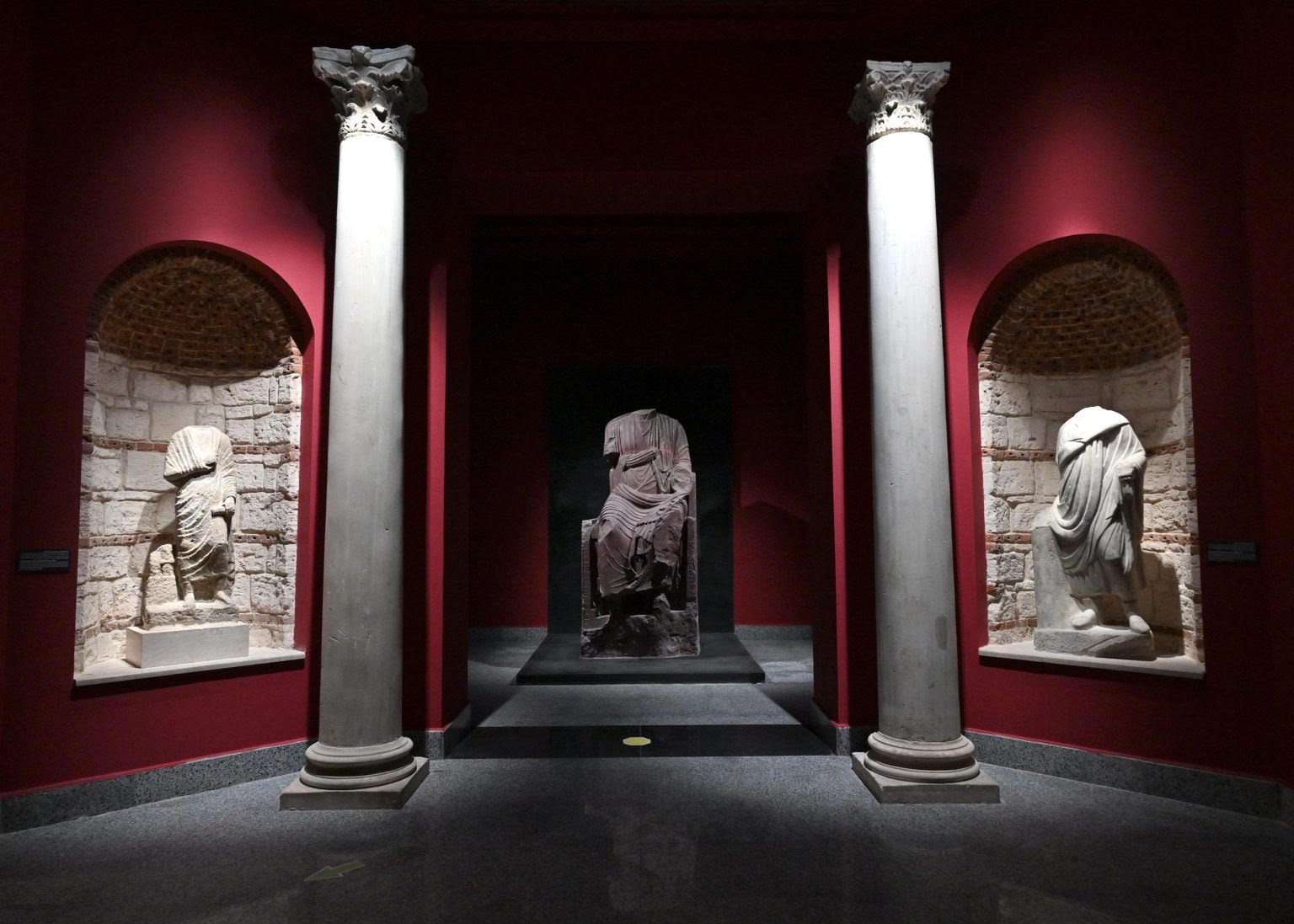
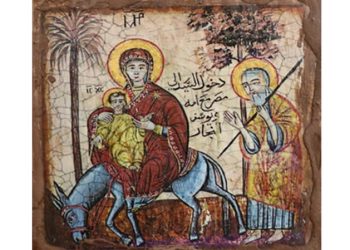
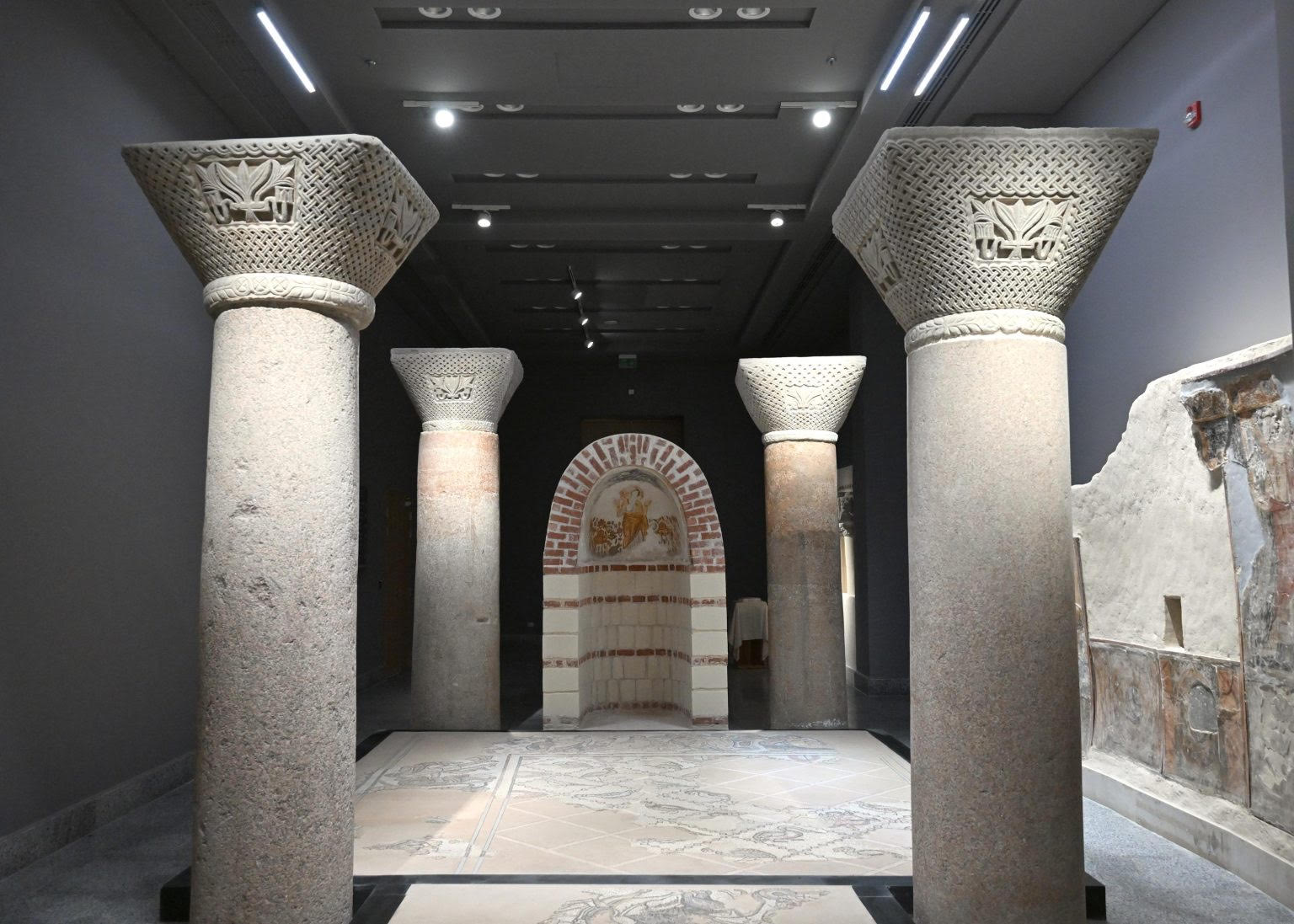
From the Coptic era is a beautiful alabaster Good Shepherd; amphoras from the Monastery of Mar-Mina, west of Alexandria; architectural elements from early Christian buildings including parts of an ancient church; and stunningly beautiful Coptic textiles.
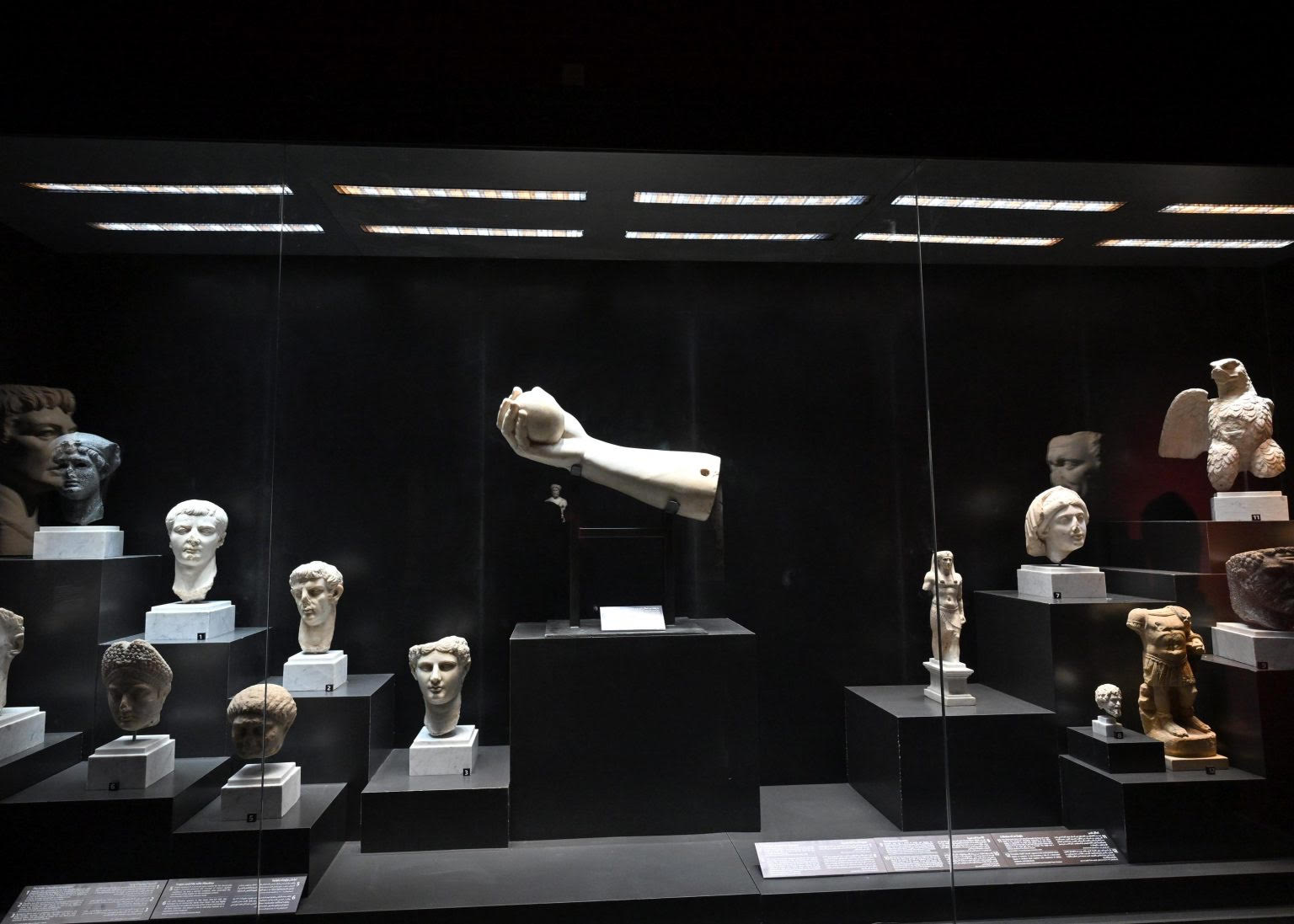
The museum showcases marvellous coin collections that date back from 630BC to the Ottoman period in the 19th century; also ancient jewellery with magnificent colours.
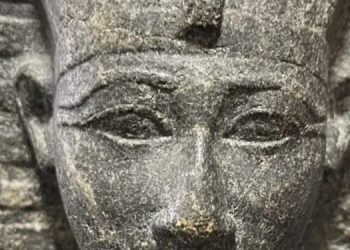
Among the prominent displays is a colossal red granite head of Ptolemy IV wearing the double crown of Egypt, that was found among the submerged antiquities in Abu-Qir Bay west of Alexandria.
Watani International
26 June 2024