
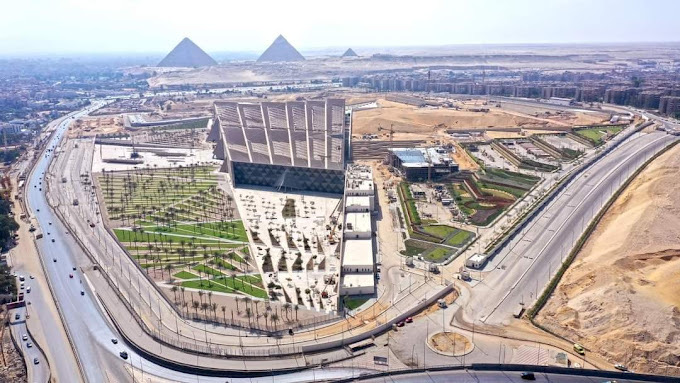
Egypt is getting ready for the highly anticipated event of the official grand opening of its gem of a museum, the Grand Egyptian Museum, aptly acronymed GEM.
GEM had announced on Facebook that the museum’s official opening ceremony on the evening of Saturday 1 November 2025 would be broadcast live exclusively on TikTok, a platform with approximately 1.59 billion users worldwide.
Several cities, towns and venues, including the city of Giza, and the Bibliotheca Alexandrina, will air livestreams of the opening ceremony on giant screens in public squares or spaces.
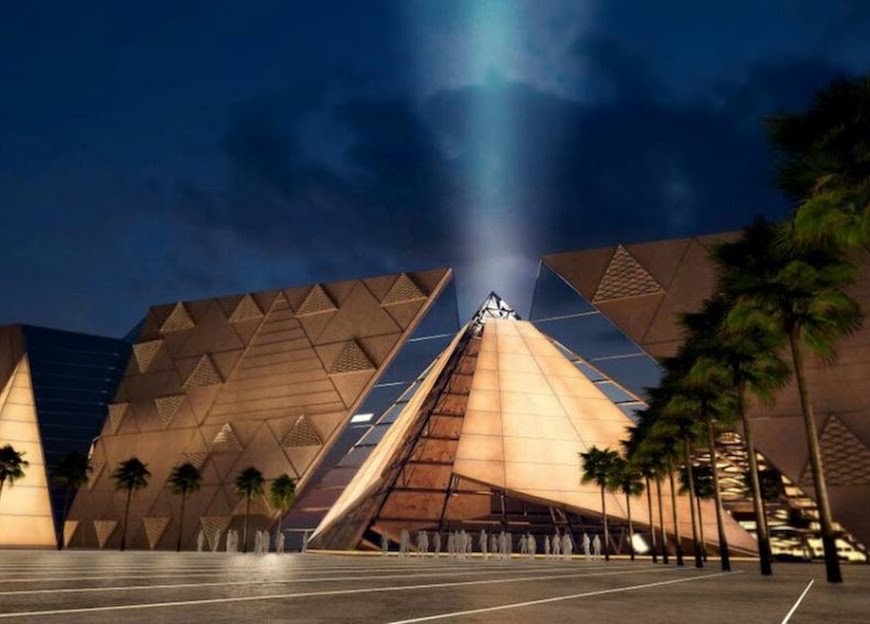
Glorious view
Saturday’s evening ceremony marks the start of a massive three-day global celebration which will be attended by President Abdel-Fattah al-Sisi, heads of State, ambassadors, and prominent international and Egyptian public figures. Tuesday 4 November will mark the official opening for the public. The opening date of November was picked to coincide with that month in 1922 when the intact tomb of Tutankhamun was discovered in the Valley of the Kings on Luxor’s west Nile bank.
Yet the museum has been in a soft opening phase since 16 October 2024.
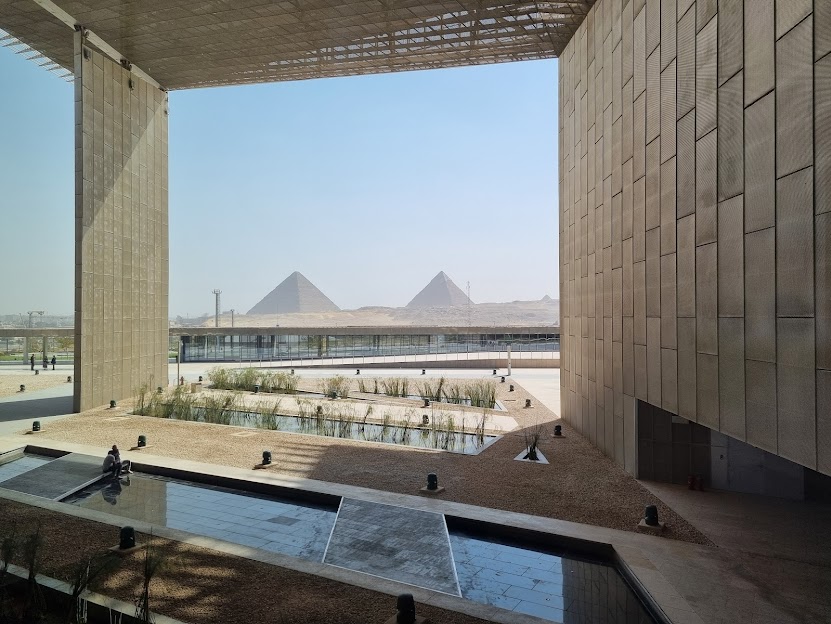
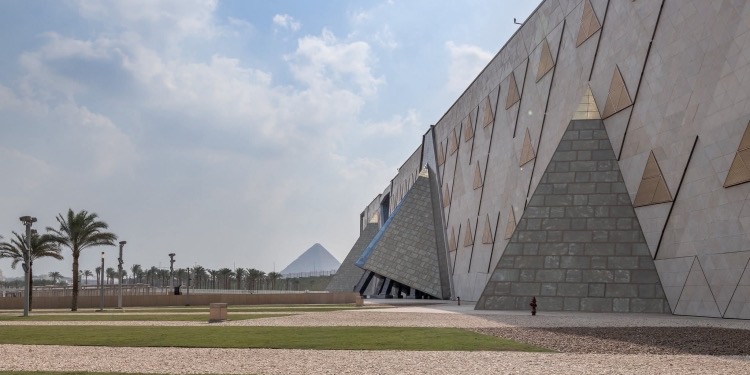
Located on the Giza Pyramids Plateau two kilometres from the pyramids, to have them in glorious full sight, GEM sprawls on a total area of 500,000 sq.m, with a built-up area of 167,000sq.m and a floor area of 81,000 sq.m.
It houses permanent exhibition galleries, temporary exhibitions, special exhibitions, a children’s museum, and virtual and large-format screens on a floor area of 32,000sq.m.
It also includes conference and education facilities, and a state-of-the-art restoration and conservation laboratory.
Stunning pieces
Proclaimed as the largest archaeologist museum in the world dedicated to a single civilisation, the museum was conceived as a modern repository for Egypt’s ancient treasures. GEM is home to some 100,000 Egyptian antiquity pieces that cover Egypt’s long, rich civilisation from the Predynastic period preceding 3100 BC by some four millennia, to the late Roman (Coptic) era until 394 AD.
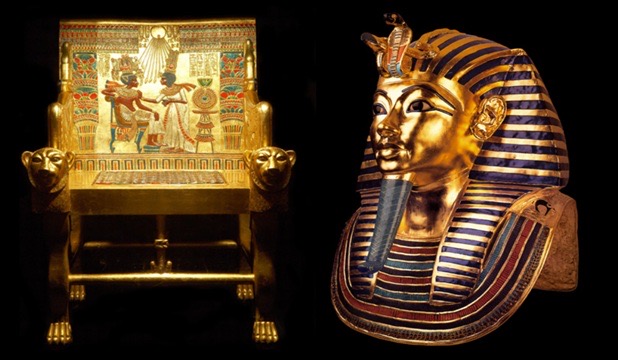
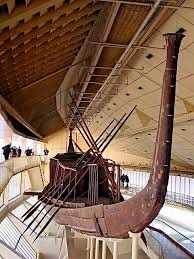
Some 20,000 artefacts are displayed for the first time ever; among them the complete Tutankhamun’s collection comprising 5,398 pieces, and the second solar boat of King Khufu who built the Great Pyramid around 2580–2560 BC. The solar boat was the barge believed to carry the soul of the deceased into the realm of eternity. Khufu’s two solar boats were found in 1950s. The ropes binding the wooden pieces that formed the boat had disintegrated, but the wooden components were found intact, lying close to one another.
One boat was restored and reconstructed, and was placed in a museum built by the Japanese in 1985 a few metres away from where the boat was found on the southern side of the pyramid. It was relocated to GEM in August 2021, the second boat was reassembled and also moved to GEM.
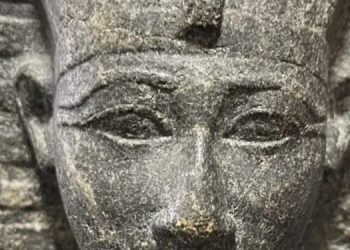
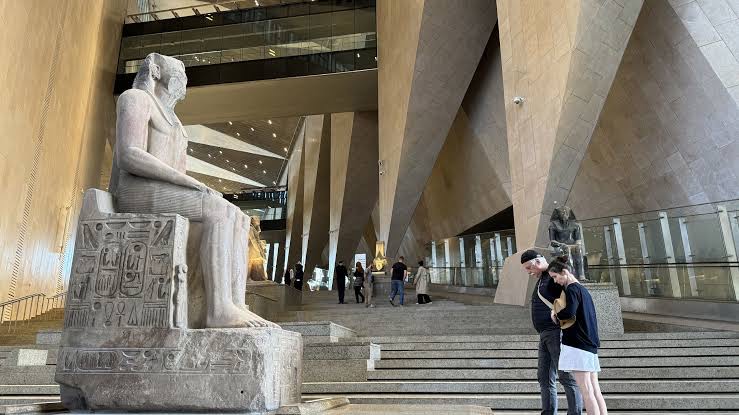
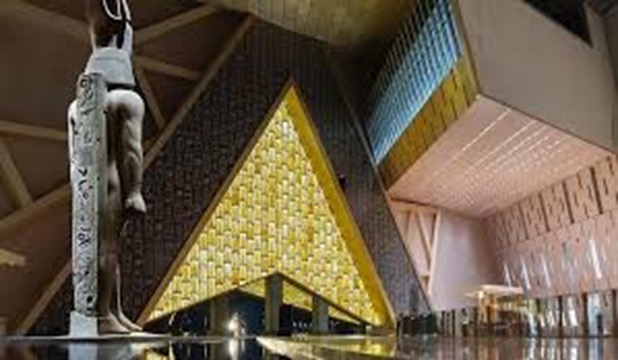
The museum also houses massive antiquity pieces, including the colossal statue of Ramses the Great, Pharaoh in 1279 – 1213BC, which stands majestically in the Foyer, the Great Hall, greeting visitors. the story of moving it from before the Cairo central square of its main railway station to GEM makes for a modern epic. The statue was so aligned for the rising sun rays to fall on its face every 22 February, replicating the famous phenomenon that occurs at Abu Simbel temple in Egypt’s southernmost region of Aswan.

Green museum
In 2022, GEM won the Green Building Award from the “Environment and Development Forum: The Road to Sharm El-Sheikh Climate Change Conference 27”. The museum was rated according to the Green Pyramid Rating System, a national environmental rating system for buildings, that provides definitive criteria by which the environmental credentials of buildings can be evaluated, and the buildings themselves accordingly rated. It is the first green museum in Africa and the Middle East.
Long story
The Grand Egyptian Museum has behind it a long story that goes back to 1992 when the idea of building it was spearheaded by the then Culture Minister Farouk Hosny.
The building design was decided by an architectural competition announced in January 2002, and won in June 2003 by architects Röisin Heneghan and Shi-Fu Peng, and their company Heneghan Peng Architects in Ireland. The building is shaped as a chamfered triangle. Its north and south walls line up directly with the Great Pyramid. The front of the museum includes a large plaza filled with date palms and a facade of translucent alabaster stone. The main entrance leads into the spacious foyer where the large statues are exhibited.
The museum is a model now studied in architectural schools around the world for its integration of identity, location, sustainability, and modern museum experiences.
GEM’s foundation stone was laid by President Hosni Mubarak (1928 – 2020) in 2002. Construction began in 2005 by a joint venture of the Belgian Besix Group and the Egyptian Orascom Construction, but was fully completed only in 2023. It was built at a cost of roughly a billion dollars, partly funded through a USD300 million-grant from Japan; the Egyptian government with USD147 million, and the remainder through donations and international organisations.
Celebratory coins
On a fitting celebratory note, the Egyptian Cabinet has approved the issuance of non-circulating commemorative coins in gold and silver to mark the opening of the GEM. They will come in denominations of 5, 10, 25, 50 and 100 pounds.
Watani International
30 October 2025