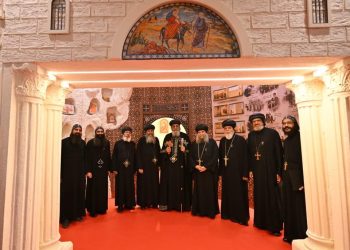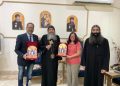

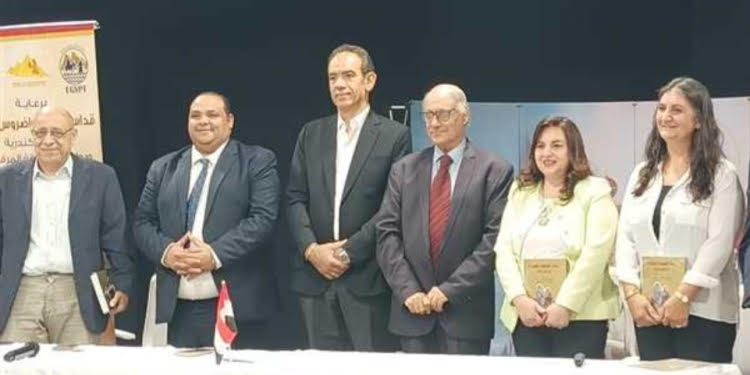
In a move that reflects the growing significance of religious tourism in Egypt, a training course—it was in fact more like an intensive awareness course—was held by the Chamber of Travel and Tourism Companies and Agencies (CTTCA) in cooperation with the Coptic Orthodox Church at al-Manara (literally the Lighthouse) Centre in St Mark’s Cathedral grounds in Abbasiya, Cairo. The one-day event was held under the patronage of Pope Tawadros II.
The event was organised as part of a comprehensive initiative aimed at promoting the “Trail of the Holy Family in Egypt” as a unique spiritual tourism product of priceless historical, religious and humanitarian value. As such, the initiative targeted tourism companies and agencies, the major channels for attracting tourists, aiming to raise their awareness of the Trail. The aim was to qualify tourist cadres, especially from small and medium-sized tourist businesses, by providing them with accurate knowledge about the Trail, as well as proposing professional tourism promotion techniques to market it attractively. The event saw wide participation; close to 35 tourist companies’ representatives attended.
Three references
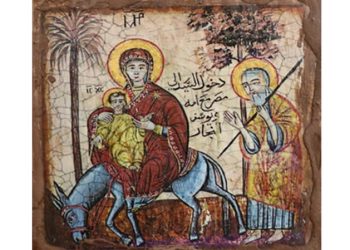
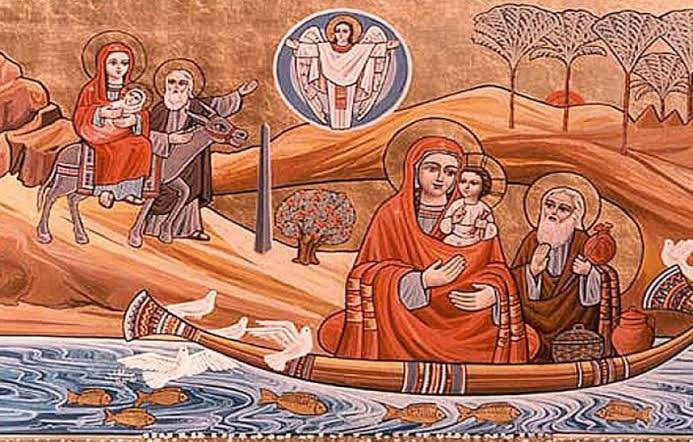
The “Trail” is the path followed by Baby Jesus, St Mary, and St Joseph on their biblical flight into Egypt from the face of Herod the King who sought to kill the Christ Child (Matthew 2: 13-15). The Holy Family entered Egypt through its eastern border with Israel, and travelled southwest to the spot that is present-day Cairo, where it boarded a boat and sailed down the Nile to what is today Assiut, some 350km south of Cairo. Throughout their journey which spanned some three-and-a-half years, the Holy Family roamed the land of Egypt, rested or resided for various periods in numerous places along the way, till it went back to Israel upon the word of the Angel of God (Matt 2: 19-21).
The CTTCA event opened with a lecture intended to give a solid historical background to the Holy Family Trail in Egypt. Titled “The Journey of the Holy Family: A Historical Study… Civilisational Influences… Human Values”, it was delivered by Ishaq Ibrahim Agban, Professor of Coptic History and Dean of the Institute of Coptic Studies.
Dr Agban said that at the beginning of the 1st century AD, Egypt received the greatest visitor in its history, Jesus Christ who came as a baby carried by his mother and father. The land received a unique blessing as confirmed by the Bible verse: “Blessed be Egypt my people.” (Isaiah 19: 25). This visit, he said, endowed Egypt with a rich, profound spiritual, cultural and humanitarian heritage that left its imprint on Egyptian thought, culture, art, history and antiquities.
According to Dr Agban, the journey of the Holy Family in Egypt is referenced in three sources. First: the Bible’s Old Testament prophecies and the Gospel of Matthew; second: Coptic Church manuscripts that document it, such as the writings of 4th-century Pope Theophilus; and third: the tangible heritage of numerous caverns, springs and suchlike on their path, in addition to the intangible heritage of oral tradition, folk tales, celebrations, customs, melodies, and arts associated with sites on the Trail.
Government effort
Under the title: “Contribution of the Holy Family’s Journey to revitalising tourism”, Nader Girgis, head of the Egyptian Tourism and Heritage Committee in the Rotary Club, gave a word in which he focused on the Holy Family Trail being a national Egyptian project of spiritual, cultural and humanitarian dimensions.
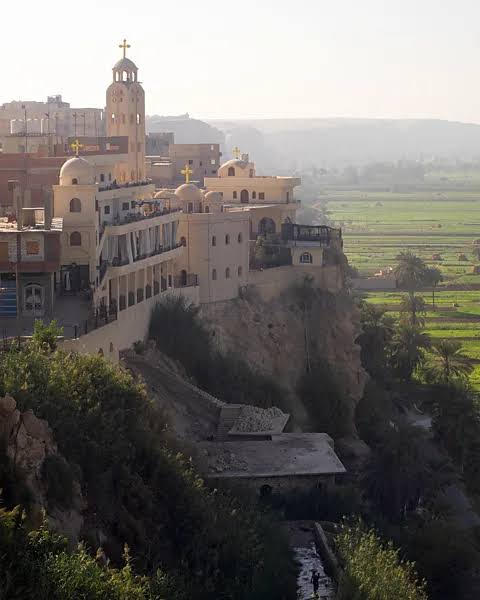
During their three-and-a-half years in Egypt the Holy Family covered some 3,500km, sojourning in 25 sites in eight of today’s governorates. They resided for various periods in caverns such as one under Abu-Serga church in Old Cairo, and another in Assiut; the Child Jesus sprung wells from which they drank as the one in Tell Basta, Zagazig, east of the Nile Delta; the Family rested in the shade of trees including the one now named Mariam’s Tree in Matariya, Cairo; the Holy Virgin kneaded dough and baked in the granite trough in Sammanoud in the western Delta; and she bathed Baby Jesus in Mostorod, North of Cairo.
Mr Girgis explained that the Egyptian government cooperates with the Coptic Church in extensive efforts to develop the sites of the Trail, including restoration of churches and historical monasteries, upgrading roads and infrastructure, ensuring security, providing guidance for tourists, and cooperating with the Vatican to officially adopt the Trail as an international pilgrimage site.
Five basic elements
Sameh Gamal Saad, Professor of Hotel Management and Vice Dean of the Faculty of Tourism and Hotels, for Community Service and Environmental Development, at Helwan University, presented: “A Future Vision for the Development of Services in Some Locations on the Trail of the Holy Family’s Journey in Egypt”, pointing out that Helwan University offers the Holy Family Trail as a topic for master’s and doctoral theses.
Dr Saad explained that the success of any tourist product requires the fulfilment of five basic elements: good accommodation, food and beverage, transport, recreational services, and shops. Therefore, any plan for spots on the Trail must take into account these elements, whether through the establishment of new facilities or the development of existing ones. The real challenge, he said, is the dearth of hotel facilities in several spots on the Trail. This requires investment which in turn requires that the sites be provided with infrastructure. Dr Saad stressed that the hotels required need not be luxurious, but may be motels or residential service units for rent at affordable prices. Services do not have to be luxurious, he said, but they must be clean, and provided in a welcoming spirit. Regarding food, simple stalls may be set up to offer excellent local meals if health and hygiene standards are adhered to, which sometimes eliminates the need for fine restaurants.
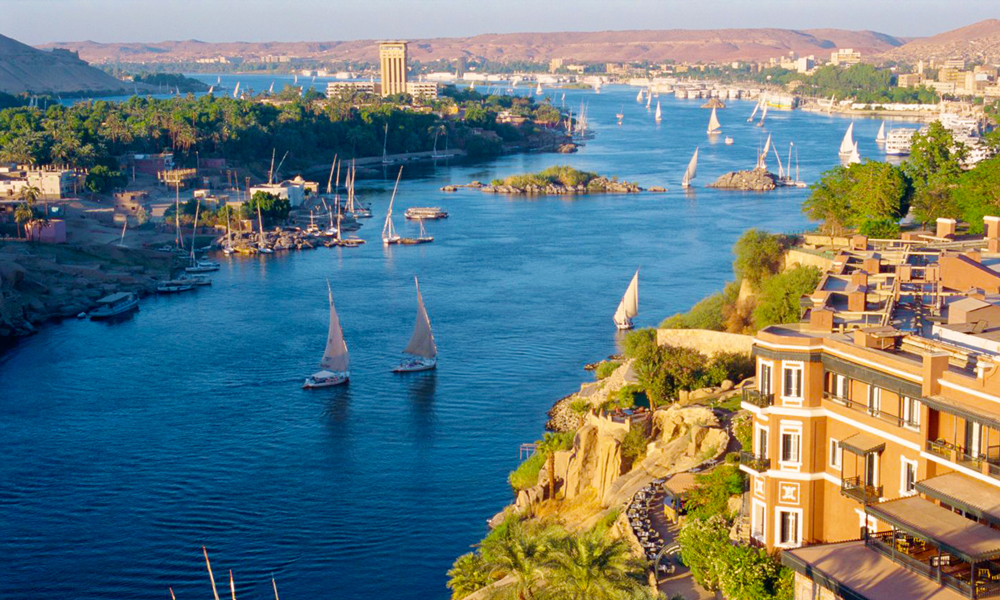
The Holy Family, Dr Saad said, sailed the Nile. This, he said, may be used as an idea to offer trips to sites on the Trail through Nile boats.
Out-of-the-box tourism
“Proposals of tourist itineraries for spots on the Holy Family journey in Egypt,” were presented by Mary Misak, Professor at the Faculty of Tourism and Hotels at Helwan University.
Dr Misak started by showing a map of the Holy Family Trail in Egypt, noting that innovative itineraries could be set up by integrating them into visits of other tourist sites. She gave many examples of such integrated itineraries.
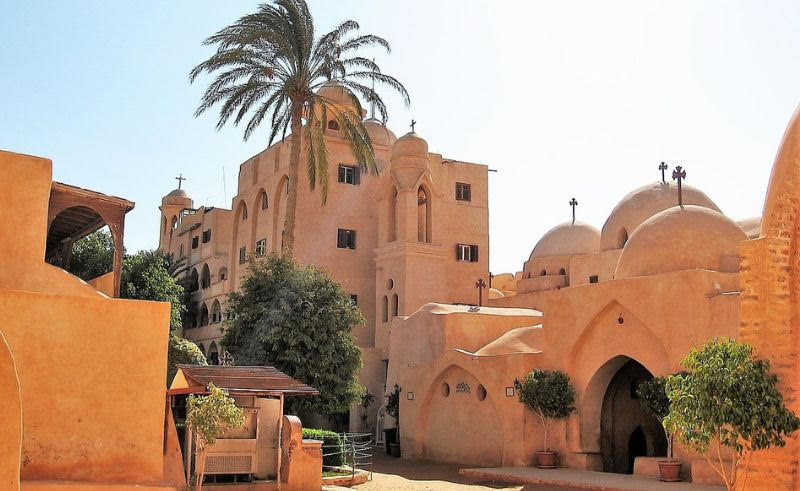
A one-day trip to al-Muharraq Monastery in Assiut, where the Holy Family lived for more than six months, Dr Misak said, could be combined with a visit to the ancient Egyptian tombs at Meir; the many Trail points in Minya may be integrated with modern monasteries to highlight continuing monastic heritage and Coptic art. The same idea can be applied in Wadi al-Natrun and Alamein, by linking the ancient monasteries to the modern one. A beach trip to Hurghada on the Red Sea may include a visit to the monasteries of St Antony and St Paul in the nearby mountains. That way, she said, a tourist may enjoy a cultural and spiritual experience in addition to the beach.
Dr Misak drew attention to the importance of investing modern technology, such as virtual reality (VR), to view the entire Trail, especially in hard-to-reach areas. The NGO Misr al-Mubaraka, Blessed Egypt, she said, has done pioneering work in this field, offering VR trips in eight languages.
She talked of using the River Nile as a means of tourist transport, giving an example of travelling by boat instead of coach to visit sites in Cairo. A Nile trip may start at Muhammad Ali Museum in al-Qanater, and move on to the Egyptian Museum in Tahrir, al-Roda Museum, Umm Kulthum Museum, Manesterli Palace, and the Nilometre, then on to the Holy Virgin’s Church in Maadi. Tourists may them disembark to board a bus to Old Cairo, then go back to the boat to visit the Farouk Corner Museum in Helwan.
Local community
For her part, Soha Abdel-Wahab, Professor of Tourism Studies and Dean of the Faculty of Tourism and Hotels at Helwan University, talked of “Proposing a plan for sustainable tourism development for the Trail of the Holy Family in Egypt”.
Dr Abdel-Wahab stressed the importance of studying the type of tourists targeted and their needs, so that programmes and services are designed for them to suit their age group, interests, and cultural background.
The types of tourists who may visit the Holy Family Trail, she said, included the religious tourist who comes seeking the blessings, the spiritual tourist who looks for contemplation and inner peace, the educational tourist who visits for study, and the cultural tourist who seeks to acquire knowledge. She focused in particular on the cultural tourist who more often than not comes from a high-income sector, spends well, and appreciates heritage. Such a tourist, she said, has three basic requirements: high-quality service, a unique experience, and direct interaction with the local community, all of which are potentially there on the Holy Family Trail. High quality hotels are needed, also trained labour, and services in harmony with the local community such as local guides who speak of first-hand, personal experience. VR technology, she said, may help to whet the appetite of tourists to visit the physical sites after having experienced them digitally.
Non-traditional activities, Dr Abdel-Wahab pointed, enhance the tourist experience. This includes joining in folk celebrations of events related to the sites, or story telling for children. Tourists may be treated to local cuisine or visit workshops for handicrafts.
Dr Abdel-Wahab addressed the concept of sustainable tourist development, noting that it includes the social and economic dimensions, with the need to preserve the rights of future generations and involving the local community.
Message of love and peace
Haitham Arafa, Member of the Board of Directors of the Chamber of Travel and Tourism Companies and Agencies, explained that religious tourism represents a golden opportunity to promote tourism returns in Egypt. Mr Arafa stressed that religious tourism in Egypt has an estimated potential return of at least three billion dollars annually.
According to the World Tourism Organisation, he said, some 27 per cent of the total number of tourists globally, approximately 1.4 billion, are religious tourists.
Yet the Holy Family Trail in Egypt, he said, is no mere tourist project, but is a message of love and peace that begins in the land of Egypt and spreads to the whole world.
Watani International
6 August 2025