
Editor in Chief
Youssef Sidhom
Watani
عربى English French
  • News
    • Accidents
    • Crime
    • Diplomatic briefcase
    • NewsLine
    • Outside Cairo
    • Special Occasions
  • Opinion
    • Editorial
    • International media
    • Reader`s Corner
    • Opinion
  • Politics
    • Elections
    • International Politics
    • Islamisation Politics
    • National Affairs
    • Parliament
    • Politics
    • Protests
    • Rights
    • Terrorism
  • Culture
    • Antiquity
    • Art
    • Books
    • Culture
    • Drama
    • Egyptology
    • Festivals
    • Films
    • Heritage
    • Islamisation Culture
    • Media
    • Museums
    • Music
    • TV
  • Coptic
    • Church Affairs
    • Coptic Affairs
    • Coptic Culture
    • Copts in the Media
    • Coptology
    • Copts Abroad
    • Religious
      • P. Shenouda: Bible Study
    • Sectarian
    • Inter-religious
    • Holy Family
  • Features
    • Counselling Corner
    • features
    • Economy
      • Business
    • Education
    • Social Issues
      • Behaviour
      • Mothers Day
    • Health
    • Environment
    • Humour
    • In memorial
    • Interviews
    • Nile
    • Profile
    • Special needs
    • Sports
    • Technology
    • Tourism
    • Wars
    • Women
    • Youth
  • Watani Special Features
    • Egypt – Arab Spring
      • 25 January Revolution
      • 25 Jan revolution, one year on
      • Egypt post-30 June
    • Watani Milestones
      • 20 years Watani International
      • 10 years Watani International
      • Watani Jubilee
    • Pope Shenouda
    • Pope Tawadros
    • Watani Forum
No Result
View All Result
  • News
    • Accidents
    • Crime
    • Diplomatic briefcase
    • NewsLine
    • Outside Cairo
    • Special Occasions
  • Opinion
    • Editorial
    • International media
    • Reader`s Corner
    • Opinion
  • Politics
    • Elections
    • International Politics
    • Islamisation Politics
    • National Affairs
    • Parliament
    • Politics
    • Protests
    • Rights
    • Terrorism
  • Culture
    • Antiquity
    • Art
    • Books
    • Culture
    • Drama
    • Egyptology
    • Festivals
    • Films
    • Heritage
    • Islamisation Culture
    • Media
    • Museums
    • Music
    • TV
  • Coptic
    • Church Affairs
    • Coptic Affairs
    • Coptic Culture
    • Copts in the Media
    • Coptology
    • Copts Abroad
    • Religious
      • P. Shenouda: Bible Study
    • Sectarian
    • Inter-religious
    • Holy Family
  • Features
    • Counselling Corner
    • features
    • Economy
      • Business
    • Education
    • Social Issues
      • Behaviour
      • Mothers Day
    • Health
    • Environment
    • Humour
    • In memorial
    • Interviews
    • Nile
    • Profile
    • Special needs
    • Sports
    • Technology
    • Tourism
    • Wars
    • Women
    • Youth
  • Watani Special Features
    • Egypt – Arab Spring
      • 25 January Revolution
      • 25 Jan revolution, one year on
      • Egypt post-30 June
    • Watani Milestones
      • 20 years Watani International
      • 10 years Watani International
      • Watani Jubilee
    • Pope Shenouda
    • Pope Tawadros
    • Watani Forum
No Result
View All Result
No Result
View All Result
Watani
ع Fr
ADVERTISEMENT

Living with hope

15 December, 2011 - (9:06 AM)
0 0

Erin Moussa

Living with hope
72
VIEWS
Share on FacebookShare on Twitter

WATANI International
19 September 2010


Watani visits the leper colony, northeast of Cairo
Most of us will never have encountered anyone afflicted with leprosy, but it is engrained in our minds that it is a terrifying and highly contagious disease. The mere mention of the leper colony or the hospital in Abu-Zaabal, 18km northeast of Cairo, sends a shudder down many people’s spines.


No longer a scourge
Yet the disease is not the scourge it once was. Not only is it now more contained, but it is also better understood by science. Leprosy is a chronic disease caused by the bacillus Mycobacterium leprae. According to the World Health Organisation more than 213,000 people are infected worldwide, mainly in Asia and Africa. The incubation period is about five years and symptoms can take as long as 20 years to appear; yet it is not highly infectious. It is transmitted via droplets from the nose and mouth during close and frequent contact with untreated cases. Untreated, leprosy can cause progressive and permanent damage to the skin, nerves, limbs and eyes.
With time, however, sufferers have benefited from medical advances. New treatments have been discovered, and preventive steps are available for those at risk such as family members and health workers. Early diagnosis and treatment with multidrug therapy (MDT) remain the key elements in eliminating the disease as a public health concern.
Committed non-governmental organisations (NGOs) have helped many sufferers lead a normal life and play an active part in the community.


Different outlook
Watani visited the leper colony of Ezbet al-Safeeh (literally, the Tin Hamlet) in Abu-Zaabal, where we were greeted by healthy people enjoying a normal, active life. We were surprised to see modern buildings in the village, as well as electricity and water networks. Caritas – Egypt has been working with the colony and the hospital since 1979, complying with a contract that it signed with the German Association for Helping Lepers and their Families; the Belgian Aid; and the Egyptian Ministry of Health. The work done has changed the face of the colony and lent a big hand in its evolution.
Magdi Garas, deputy head of Caritas – Egypt, who escorted us on our tour, told Watani that the colony had sprung up over the years as a result of spontaneous effort by the lepers themselves, their families and friends. In the past, leprosy necessitated lengthy treatment, so a leper normally chose to leave his home with his family and live in a small hut outside the residential area, in order for them to be able to live with him and support him. “About 450 families, comprising some 4,000 residents, live in the colony today,” Garas said. “They include former lepers who have been fully treated but preferred to stay on in the colony and work at jobs with the nearby businesses or industries; and lepers in the recuperation stage who work at production projects set up at the colony. Also working at these projects are lepers who have been treated but who, owing to late diagnosis of the disease, were left with a disability. All of these, together with their families and the social workers, form the population of the village.
“Leprosy is now being treated and lepers can work productively and provide an income for their families. The wider community must change its outlook towards lepers and the disdain it holds for them.”


Lending a hand
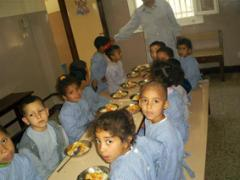
The centre’s kindergarten accepts children from the village aged from three to six. Currently 150 children are learning elementary reading and writing skills there, and all are provided with a daily glass of milk to supplement their nutrition. “We have a ‘fun club’ for children and young people,” Sister Fatima Maria of the Caritas centre in Ezbet Safeeh told Watani.
Only last year, a preparatory school was established in the village. But because of transport problems and poverty, workers at the centre accompany the students back and forth to their different schools in neighbouring villages in vehicles owned by the centre. The centre also provides students with extra-curricular classes such as courses on medical awareness. A dispensary is on hand where adults and children receive medical examinations and treatment for a small fee.
Women and girls in the colony learn needlework, embroidery and knitting in a needlecraft workshop. There are also literacy classes. Enaam Mansour, whose late husband was a leprosy sufferer, has been working in the workshop for 16 years and the money she earns there helps support her.
Caritas has established a citrus and a fig farm which spread over 125 feddans, with all the necessary equipment. The farm is worked by the lepers themselves for a regular wage. Mr Garas told Watani that Caritas had overhauled the main water station serving the hospital, the farm and some of the houses. It has also bought some necessary equipment for both the farm and the hospital.


…And more
The hospital grounds house a range of small projects manned by lepers. The hospital premises are modern and well kept; and again it is Caritas that guarantees the upkeep of the hospital and the medical equipment provided for all of the departments. Besides this one, Caritas runs 18 clinics to treat leprosy all over Egypt.
Inside the hospital we met nurse Sister Maria Pia, a member of the Caritas team. She explained that each morning the work is divided among the nursing team on duty; this varies from changing the leprosy patients’ wound dressings to preparing the departments for outpatient visits.
One of Caritas’s projects is a shoemaking workshop, which occupies patients’ time and provides a small remuneration. Ibrahim Hassan and Osama al-Sawi, both sufferers themselves, work full-time in the workshop making shoes and sandals for other patients. Caritas buys and supplies the raw materials free of charge.
The hospital bakery is another of Caritas’ projects. Patients make up the workforce and sell their produce to the colony’s residents.
The work of Caritas and the sisters who manage it—they belong to the Combonian and the Elizabethan orders—is an inspiration to others. Is it only a vain hope that their work might be copied in other parts of the country? They have shown that leprosy can be accommodated. So let us hope that the taboo associated with the disease will soon be a thing of the past.
Comments

comments

Tags: hopelivingwith

Related Posts

Pope visits Breast Cancer hospital
Coptic Affairs

Pope visits Breast Cancer hospital

June 11, 2026
Egyptian medical aid to DRC and Uganda for Ebola response
Health

Egyptian medical aid to DRC and Uganda for Ebola response

May 28, 2026
Egyptian Heba Elsewedy wins Award for Global Health
features

Egyptian Heba Elsewedy wins Award for Global Health

May 19, 2026
Egypt’s early liver cancer detection initiative saves the day
Health

Egypt’s early liver cancer detection initiative saves the day

May 11, 2026
NCCM warns against non-scientific claims for discarding child treatments
E Choise

NCCM warns against non-scientific claims for discarding child treatments

May 4, 2026
Japanese assistance to Magdi Yacoub Heart Foundation in Aswan
Diplomatic briefcase

Japanese assistance to Magdi Yacoub Heart Foundation in Aswan

March 16, 2026

Editorial

China and Russia vis-à-vis Trump’s Iran War

More

MOST READ

Egypt attempts to contain Myna bird invasion
Environment

Egypt attempts to contain Myna bird invasion

June 15, 2026
0

The Nature Protection Sector of Egypt’s Ministry of Local Development and Environment has been monitoring and tracking the spread of...

Read more
Watani talks to Anba Bigol, Bishop and Abbot of al-Muharraq Monastery of the Holy Virgin Mary

Watani talks to Anba Bigol, Bishop and Abbot of al-Muharraq Monastery of the Holy Virgin Mary

June 17, 2026
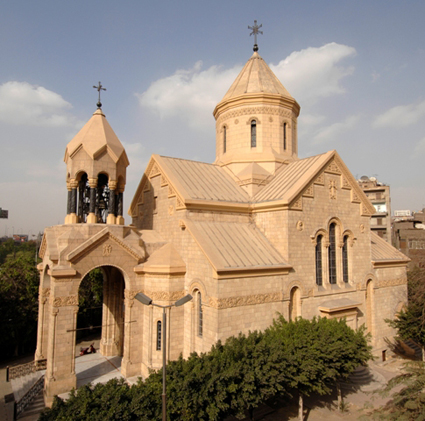
Egypt’s Armenians

Egypt’s Armenians

April 22, 2015
‘Train of Hope’ to carry home 1,200 Sudanese

‘Train of Hope’ to carry home 1,200 Sudanese

June 16, 2026
Jobs for persons with disabilities

Jobs for persons with disabilities

June 15, 2026

Features

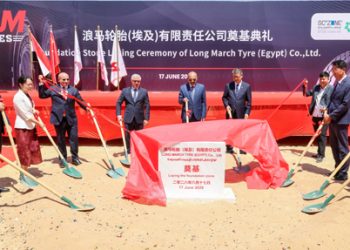
China’s Long March launches USD190M tyre manufacturing project in Egypt
Economy

China’s Long March launches USD190M tyre manufacturing project in Egypt

June 17, 2026
0

China’s Chaoyang Long March Tyre Co., Ltd. has launched a USD190 million tyre manufacturing project in Egypt’s Suez Canal Economic...

Read more
Watani started as an Egyptian weekly Sunday newspaper published in Cairo. The word Watani is Arabic for “My Homeland”. The paper was founded in 1958 by the prominent Copt Antoun Sidhom (1915 – 1995), who strove for the establishment of a civil, democratic society in Egypt, where all Egyptians would enjoy full citizenship rights regardless of their religious denomination. To this day when Watani is published as a weekly paper and an online news site, the objective remains the same. Those in charge of Watani view this role as a patriotic all-Egyptian vocation. Special attention is given to shedding light on Coptic culture and tradition as authentically Egyptian, this being a topic largely disregarded or little-understood by Egypt’s media. Watani is deeply dedicated to offer its readers high quality, extensive, objective, credible and well-researched media coverage, with special focus on Coptic issues, culture, heritage, and contribution to Egyptian society.
-----------------------------------------------------------

27 Abdel Khalek Tharwat st, Downtown, Abdeen,Cairo

00202-23927201

00202-23935946

 [email protected]


categories

  • News
  • Opinion
  • Politics
  • Culture
  • Egypt – Arab Spring
  • Coptic Affairs
  • Features
  • Watani Special Features

Recent Posts

  • China and Russia vis-à-vis Trump’s Iran War
  • China’s Long March launches USD190M tyre manufacturing project in Egypt
  • Watani talks to Anba Bigol, Bishop and Abbot of al-Muharraq Monastery of the Holy Virgin Mary
  • ‘Train of Hope’ to carry home 1,200 Sudanese
  • Egypt launches ROX Motor partnership to manufacture new-energy vehicles
  • News
  • Opinion
  • Politics
  • Culture
  • Egypt – Arab Spring
  • Coptic Affairs
  • Features
  • Watani Special Features

Powered BY 3A Digital.

No Result
View All Result
  • News
    • Accidents
    • Crime
    • Diplomatic briefcase
    • NewsLine
    • Outside Cairo
    • Special Occasions
  • Opinion
    • Editorial
    • International media
    • Reader`s Corner
    • Opinion
  • Politics
    • Elections
    • International Politics
    • Islamisation Politics
    • National Affairs
    • Parliament
    • Politics
    • Protests
    • Rights
    • Terrorism
  • Culture
    • Antiquity
    • Art
    • Books
    • Culture
    • Drama
    • Egyptology
    • Festivals
    • Films
    • Heritage
    • Islamisation Culture
    • Media
    • Museums
    • Music
    • TV
  • Coptic
    • Church Affairs
    • Coptic Affairs
    • Coptic Culture
    • Copts in the Media
    • Coptology
    • Copts Abroad
    • Religious
      • P. Shenouda: Bible Study
    • Sectarian
    • Inter-religious
    • Holy Family
  • Features
    • Counselling Corner
    • features
    • Economy
      • Business
    • Education
    • Social Issues
      • Behaviour
      • Mothers Day
    • Health
    • Environment
    • Humour
    • In memorial
    • Interviews
    • Nile
    • Profile
    • Special needs
    • Sports
    • Technology
    • Tourism
    • Wars
    • Women
    • Youth
  • Watani Special Features
    • Egypt – Arab Spring
      • 25 January Revolution
      • 25 Jan revolution, one year on
      • Egypt post-30 June
    • Watani Milestones
      • 20 years Watani International
      • 10 years Watani International
      • Watani Jubilee
    • Pope Shenouda
    • Pope Tawadros
    • Watani Forum

Powered BY 3A Digital.

Login to your account below

Forgotten Password?

Fill the forms bellow to register

All fields are required. Log In

Retrieve your password

Please enter your username or email address to reset your password.

Log In