
Editor in Chief
Youssef Sidhom
Watani
عربى English French
  • News
    • Accidents
    • Crime
    • Diplomatic briefcase
    • NewsLine
    • Outside Cairo
    • Special Occasions
  • Opinion
    • Editorial
    • International media
    • Reader`s Corner
    • Opinion
  • Politics
    • Elections
    • International Politics
    • Islamisation Politics
    • National Affairs
    • Parliament
    • Politics
    • Protests
    • Rights
    • Terrorism
  • Culture
    • Antiquity
    • Art
    • Books
    • Culture
    • Drama
    • Egyptology
    • Festivals
    • Films
    • Heritage
    • Islamisation Culture
    • Media
    • Museums
    • Music
    • TV
  • Coptic
    • Church Affairs
    • Coptic Affairs
    • Coptic Culture
    • Copts in the Media
    • Coptology
    • Copts Abroad
    • Religious
      • P. Shenouda: Bible Study
    • Sectarian
    • Inter-religious
    • Holy Family
  • Features
    • Counselling Corner
    • features
    • Economy
      • Business
    • Education
    • Social Issues
      • Behaviour
      • Mothers Day
    • Health
    • Environment
    • Humour
    • In memorial
    • Interviews
    • Nile
    • Profile
    • Special needs
    • Sports
    • Technology
    • Tourism
    • Wars
    • Women
    • Youth
  • Watani Special Features
    • Egypt – Arab Spring
      • 25 January Revolution
      • 25 Jan revolution, one year on
      • Egypt post-30 June
    • Watani Milestones
      • 20 years Watani International
      • 10 years Watani International
      • Watani Jubilee
    • Pope Shenouda
    • Pope Tawadros
    • Watani Forum
No Result
View All Result
  • News
    • Accidents
    • Crime
    • Diplomatic briefcase
    • NewsLine
    • Outside Cairo
    • Special Occasions
  • Opinion
    • Editorial
    • International media
    • Reader`s Corner
    • Opinion
  • Politics
    • Elections
    • International Politics
    • Islamisation Politics
    • National Affairs
    • Parliament
    • Politics
    • Protests
    • Rights
    • Terrorism
  • Culture
    • Antiquity
    • Art
    • Books
    • Culture
    • Drama
    • Egyptology
    • Festivals
    • Films
    • Heritage
    • Islamisation Culture
    • Media
    • Museums
    • Music
    • TV
  • Coptic
    • Church Affairs
    • Coptic Affairs
    • Coptic Culture
    • Copts in the Media
    • Coptology
    • Copts Abroad
    • Religious
      • P. Shenouda: Bible Study
    • Sectarian
    • Inter-religious
    • Holy Family
  • Features
    • Counselling Corner
    • features
    • Economy
      • Business
    • Education
    • Social Issues
      • Behaviour
      • Mothers Day
    • Health
    • Environment
    • Humour
    • In memorial
    • Interviews
    • Nile
    • Profile
    • Special needs
    • Sports
    • Technology
    • Tourism
    • Wars
    • Women
    • Youth
  • Watani Special Features
    • Egypt – Arab Spring
      • 25 January Revolution
      • 25 Jan revolution, one year on
      • Egypt post-30 June
    • Watani Milestones
      • 20 years Watani International
      • 10 years Watani International
      • Watani Jubilee
    • Pope Shenouda
    • Pope Tawadros
    • Watani Forum
No Result
View All Result
No Result
View All Result
Watani
ع Fr
ADVERTISEMENT

Astasiya still in mourning

15 December, 2011 - (9:07 AM)
0 0

Mervat Ayoub

Astasiya still in mourning
242
VIEWS
Share on FacebookShare on Twitter

WATANI International

30 October 2011


Could Khairy Shalaby (1938 – 2011) have foretold the Maspero massacre of the Copts?

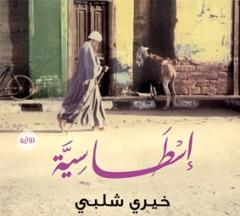
Among the last interviews the late author Khairy Shalaby gave when he was hosted on al-Hayat satellite channel in the wake of the horrendous bombing of the church of the Saints in Alexandria on 2011 New Year Eve. Twenty Copts who were leaving after Midnight Mass were blown to pieces and some 150 badly injured. In the interview, Shalaby talked about his latest novel Astasiya which, incidentally, hit the bookstores directly after the Alexandria New Year Eve bombing. In deep sorrow, he explained that Astasiya—the name, a Coptic one, is a local adulteration of ‘Anastasia’—the heroine of his novel, symbolises the Egyptian Church. Her murdered son, he proceeded, represents every martyred son of the Church who stands to mourn the robbed souls of her children.


In perpetual mourning

Shalaby died on 9 September. Exactly one month later, on 9 October, a peaceful demonstration of Copts in Maspero, Cairo, protesting against the burning of a church in Merinab, Aswan, was brutally attacked by the military. Some 27 Copts and one Muslim passer-by lost their lives, and some 300 were injured. I could not help the thought of whether Shalaby’s prophetic eye could have foreseen the military vehicles squashing to death Astasiya’s children? Was it Astasiya’s destiny to be in perpetual mourning for her children? And will her children’s killers live to suffer and regret their criminal deeds, as the killers in Shalaby’s Astasiya did?

Shalaby earned a reputation for being an exceptionally gifted writer and narrator. His heroes capture the reader’s soul and senses, heart and mind; the reader is inadvertently immersed in the novel, becoming part and parcel of the characters and events. Especially for me, who had been raised in the village in Upper Egypt, Shalaby’s novels had the uncanny feel of being back home, with all the familiar settings, characters, and events.

In Astasiya, Shalaby carries his readers to the Delta village of Minyet al-Kurdi, where the tragic figure of the black-clad Astasiya, the widow of Miqaddis Girgis Ghattas (Miqaddis is a reverent denotation given to someone who made a pilgrimage to Jerusalem), sits at her doorstep every morning and laments the loss of her only son Mahfouz. She vehemently asks God to avenge his death at the hands of unknown killers, and work His divine justice against them. 


She took her case to God

The story is narrated by Hamza al-Berrawi, the son of the influential Berrawi clan who impose their tyrannical dominion over the village; robbing, looting and killing; with no-one daring to oppose them. Hamza had been sent to Cairo for an education; he returns a refined lawyer, only to find Astasiya daily raising poignant prayers to God to execute vengeance against those who killed her son. She never ceases to raise her claim before the heavenly court, believing God not only punishes killers, but also those who collaborate with them. 

Astasiya had accused the butcher Abdel-Azim Etman, of killing her son whom he used to publicly threaten and insult because Mahfouz had gone into partnership with Etman’s rival. “You filthy Christian,” Etman would say, “I swear by the Prophet [Mohamed] I’ll get back at you until you’re so beat up you’ll see the stars while it’s still noontime.” Etman, however, as well as other suspects, were all proved innocent of the charge of killing Mahfouz, at which point Astasiya realises she has lost the case; there is no hope of any earthly justice. She takes her case to God.


Divine justice

And so it happens that Astasiya’s searing pain and distraught heartache compels Hamza, now a prosecutor, to investigate the murder of her son. The legal case had been closed, and had taken on the ominous proportions of a sectarian-based hate crime; as such it was better swept under the rug.

Hamza sees all the indicators pointing at his own family, the Berrawis whose black history is related by Shalaby throughout the pages of his novel. Hamza’s father, Sheikh Hamed al-Berrawi—the only ‘clean’ Berrawi—was the family elder and had been for 50 years the village imam. He was a pious sheikh, and had always known of the long criminal history of his two younger brothers—Abed and Awaad’s—ill deeds, but had been unable to do anything about them. Sheikh Hamed died while his son Hamza was studying law. 

The villagers knew the Berrawis were responsible for Mahfouz’s murder, if not by actually committing the crime then by collaborating with the culprits. They had killed his father before in order to usurp his land then, when Mahfouz came up with all the documents that prove the land belonged to his family, he was also killed.

Hamza’s mother tries hard to dissuade her son, but he insists he should do his best to bring about justice, to relieve his conscience. 

Yet as the novel progresses, the reader can see Divine Justice at work. Abed al-Berrawi loses his sons one after the other, and bitterly finds out that all the crimes he had committed to bestow on them money and fame were useless. His partner in the crime, the village Mayor who is also a Berrawi, sees his sons arrested for a charge other than killing Mahfouz. 

Even though it looks like a typical Egyptian sense of poetic justice, one cannot deny the fact that Shalaby’s ending is realistic in that similar things do frequently take place on the grounds.


Khairy Shalaby (1938 – 2011)


Khairy Shalaby died in Cairo last September at the age of 73 after a fatal heart attack. Born in the North Delta town of Kafr al-Sheikh, Shalaby is among Egypt’s most prominent fiction writers. He published his first novel in the late 1950s, and to date has authored over 70 works, including 12 novels, collections of short stories, historical tales, and literary critiques.

Many of his books were translated into several languages including English, French, Italian, Russian, Chinese, Urdu and Hebrew, and several were adapted for film and television.

His novel Wikalet Attiya was awarded the American University in Cairo’s Naguib Mahfouz Medal for Literature in 2003, and was translated into English under the title The Lodging House. 

He was awarded the Egyptian National Prize for Literature 1980-1981, and is presently editor-in-chief of both Poetry Magazine and Library of Popular Studies books series published by the Egyptian Ministry of Culture.

Unlike many of his generation, Shalaby never belonged to any political groups in the 1950s and 1960s, explaining this by his passion for writing and speaking, which kept some groups away, fearing he could not keep a secret. 

Comments

comments

Tags: Astasiyamourningstill

Related Posts

Anba Pachomius (1936 – 2025): Chosen servant of God
Coptic Affairs

Anba Pachomius (1936 – 2025): Chosen servant of God

April 8, 2026
Basma Moussa (1958 - 2026): To fight with an unfading smile 
In memorial

Basma Moussa (1958 – 2026): To fight with an unfading smile 

February 4, 2026
Coptic Church mourns its young servant Linda Mansour
Coptic Affairs

Coptic Church mourns its young servant Linda Mansour

February 2, 2026
Murad Wahba on civilisation, religious terrorism
In memorial

Murad Wahba on civilisation, religious terrorism

January 14, 2026
Metropolitan Antonius Morqos (1939 – 2025) of South Africa passes away
Coptic Affairs

Metropolitan Antonius Morqos (1939 – 2025) of South Africa passes away

October 26, 2025
Boutrossiya child martyr commemorated in her class graduation
Features

Boutrossiya child martyr commemorated in her class graduation

September 25, 2025

Editorial

China and Russia vis-à-vis Trump’s Iran War

More

MOST READ

Egypt attempts to contain Myna bird invasion
Environment

Egypt attempts to contain Myna bird invasion

June 15, 2026
0

The Nature Protection Sector of Egypt’s Ministry of Local Development and Environment has been monitoring and tracking the spread of...

Read more
Watani talks to Anba Bigol, Bishop and Abbot of al-Muharraq Monastery of the Holy Virgin Mary

Watani talks to Anba Bigol, Bishop and Abbot of al-Muharraq Monastery of the Holy Virgin Mary

June 17, 2026
Egypt’s Armenians

Egypt’s Armenians

April 22, 2015
‘Train of Hope’ to carry home 1,200 Sudanese

‘Train of Hope’ to carry home 1,200 Sudanese

June 16, 2026
Jobs for persons with disabilities

Jobs for persons with disabilities

June 15, 2026

Features

China’s Long March launches USD190M tyre manufacturing project in Egypt
Economy

China’s Long March launches USD190M tyre manufacturing project in Egypt

June 17, 2026
0

China’s Chaoyang Long March Tyre Co., Ltd. has launched a USD190 million tyre manufacturing project in Egypt’s Suez Canal Economic...

Read more
Watani started as an Egyptian weekly Sunday newspaper published in Cairo. The word Watani is Arabic for “My Homeland”. The paper was founded in 1958 by the prominent Copt Antoun Sidhom (1915 – 1995), who strove for the establishment of a civil, democratic society in Egypt, where all Egyptians would enjoy full citizenship rights regardless of their religious denomination. To this day when Watani is published as a weekly paper and an online news site, the objective remains the same. Those in charge of Watani view this role as a patriotic all-Egyptian vocation. Special attention is given to shedding light on Coptic culture and tradition as authentically Egyptian, this being a topic largely disregarded or little-understood by Egypt’s media. Watani is deeply dedicated to offer its readers high quality, extensive, objective, credible and well-researched media coverage, with special focus on Coptic issues, culture, heritage, and contribution to Egyptian society.
-----------------------------------------------------------

27 Abdel Khalek Tharwat st, Downtown, Abdeen,Cairo

00202-23927201

00202-23935946

 [email protected]


categories

  • News
  • Opinion
  • Politics
  • Culture
  • Egypt – Arab Spring
  • Coptic Affairs
  • Features
  • Watani Special Features

Recent Posts

  • China and Russia vis-à-vis Trump’s Iran War
  • China’s Long March launches USD190M tyre manufacturing project in Egypt
  • Watani talks to Anba Bigol, Bishop and Abbot of al-Muharraq Monastery of the Holy Virgin Mary
  • ‘Train of Hope’ to carry home 1,200 Sudanese
  • Egypt launches ROX Motor partnership to manufacture new-energy vehicles
  • News
  • Opinion
  • Politics
  • Culture
  • Egypt – Arab Spring
  • Coptic Affairs
  • Features
  • Watani Special Features

Powered BY 3A Digital.

No Result
View All Result
  • News
    • Accidents
    • Crime
    • Diplomatic briefcase
    • NewsLine
    • Outside Cairo
    • Special Occasions
  • Opinion
    • Editorial
    • International media
    • Reader`s Corner
    • Opinion
  • Politics
    • Elections
    • International Politics
    • Islamisation Politics
    • National Affairs
    • Parliament
    • Politics
    • Protests
    • Rights
    • Terrorism
  • Culture
    • Antiquity
    • Art
    • Books
    • Culture
    • Drama
    • Egyptology
    • Festivals
    • Films
    • Heritage
    • Islamisation Culture
    • Media
    • Museums
    • Music
    • TV
  • Coptic
    • Church Affairs
    • Coptic Affairs
    • Coptic Culture
    • Copts in the Media
    • Coptology
    • Copts Abroad
    • Religious
      • P. Shenouda: Bible Study
    • Sectarian
    • Inter-religious
    • Holy Family
  • Features
    • Counselling Corner
    • features
    • Economy
      • Business
    • Education
    • Social Issues
      • Behaviour
      • Mothers Day
    • Health
    • Environment
    • Humour
    • In memorial
    • Interviews
    • Nile
    • Profile
    • Special needs
    • Sports
    • Technology
    • Tourism
    • Wars
    • Women
    • Youth
  • Watani Special Features
    • Egypt – Arab Spring
      • 25 January Revolution
      • 25 Jan revolution, one year on
      • Egypt post-30 June
    • Watani Milestones
      • 20 years Watani International
      • 10 years Watani International
      • Watani Jubilee
    • Pope Shenouda
    • Pope Tawadros
    • Watani Forum

Powered BY 3A Digital.

Login to your account below

Forgotten Password?

Fill the forms bellow to register

All fields are required. Log In

Retrieve your password

Please enter your username or email address to reset your password.

Log In