
Editor in Chief
Youssef Sidhom
Watani
عربى English French
  • News
    • Accidents
    • Crime
    • Diplomatic briefcase
    • NewsLine
    • Outside Cairo
    • Special Occasions
  • Opinion
    • Editorial
    • International media
    • Reader`s Corner
    • Opinion
  • Politics
    • Elections
    • International Politics
    • Islamisation Politics
    • National Affairs
    • Parliament
    • Politics
    • Protests
    • Rights
    • Terrorism
  • Culture
    • Antiquity
    • Art
    • Books
    • Culture
    • Drama
    • Egyptology
    • Festivals
    • Films
    • Heritage
    • Islamisation Culture
    • Media
    • Museums
    • Music
    • TV
  • Coptic
    • Church Affairs
    • Coptic Affairs
    • Coptic Culture
    • Copts in the Media
    • Coptology
    • Copts Abroad
    • Religious
      • P. Shenouda: Bible Study
    • Sectarian
    • Inter-religious
    • Holy Family
  • Features
    • Counselling Corner
    • features
    • Economy
      • Business
    • Education
    • Social Issues
      • Behaviour
      • Mothers Day
    • Health
    • Environment
    • Humour
    • In memorial
    • Interviews
    • Nile
    • Profile
    • Special needs
    • Sports
    • Technology
    • Tourism
    • Wars
    • Women
    • Youth
  • Watani Special Features
    • Egypt – Arab Spring
      • 25 January Revolution
      • 25 Jan revolution, one year on
      • Egypt post-30 June
    • Watani Milestones
      • 20 years Watani International
      • 10 years Watani International
      • Watani Jubilee
    • Pope Shenouda
    • Pope Tawadros
    • Watani Forum
No Result
View All Result
  • News
    • Accidents
    • Crime
    • Diplomatic briefcase
    • NewsLine
    • Outside Cairo
    • Special Occasions
  • Opinion
    • Editorial
    • International media
    • Reader`s Corner
    • Opinion
  • Politics
    • Elections
    • International Politics
    • Islamisation Politics
    • National Affairs
    • Parliament
    • Politics
    • Protests
    • Rights
    • Terrorism
  • Culture
    • Antiquity
    • Art
    • Books
    • Culture
    • Drama
    • Egyptology
    • Festivals
    • Films
    • Heritage
    • Islamisation Culture
    • Media
    • Museums
    • Music
    • TV
  • Coptic
    • Church Affairs
    • Coptic Affairs
    • Coptic Culture
    • Copts in the Media
    • Coptology
    • Copts Abroad
    • Religious
      • P. Shenouda: Bible Study
    • Sectarian
    • Inter-religious
    • Holy Family
  • Features
    • Counselling Corner
    • features
    • Economy
      • Business
    • Education
    • Social Issues
      • Behaviour
      • Mothers Day
    • Health
    • Environment
    • Humour
    • In memorial
    • Interviews
    • Nile
    • Profile
    • Special needs
    • Sports
    • Technology
    • Tourism
    • Wars
    • Women
    • Youth
  • Watani Special Features
    • Egypt – Arab Spring
      • 25 January Revolution
      • 25 Jan revolution, one year on
      • Egypt post-30 June
    • Watani Milestones
      • 20 years Watani International
      • 10 years Watani International
      • Watani Jubilee
    • Pope Shenouda
    • Pope Tawadros
    • Watani Forum
No Result
View All Result
No Result
View All Result
Watani
ع Fr
ADVERTISEMENT

Getting close and personal

15 December, 2011 - (9:07 AM)
0 0

Ikhlass Atallah

Getting close and personal
21
VIEWS
Share on FacebookShare on Twitter
WATANI International
14 August 2011
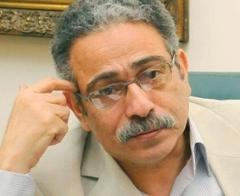
Watani talks to Culture Minister Emad Eddin Abu-Ghazi
In 1938, the prominent Egyptian enlightenment figure and pioneer of modern Arabic literature and modern education, Taha Hussein, said in his renowned book The Future of Culture in Egypt that culture and science were the basis of civilisation and national independence. Unfortunately for Egypt, independence and liberation did not lead to progress. Hussein attributed this sorrowful reality to the backwardness of culture and science in the country.
Hussein’s perception of culture went beyond the knowledge taught in schools and universities, to include science, art, literature, philosophy and behaviour. It is a double-edged sword, since a refined culture which promotes noble values can produce a healthy and coherent society, while the degradation of culture can wreak havoc on the community by generating a climate that banishes creative thought. 
With Egypt today at a crucial crossroads of speedy, dramatic changes; and with diametrically opposed cultures—including Islamism and secularism—competing for the support of the public, Watani decided to talk to the Minister of Culture, Emad Eddin Abu-Ghazi.
Following the 25 January Revolution, what does the Egyptian street require from the culture ministry? 
The street needs a massive effort in the realm of culture. The ministry with its various institutions should take the initiative and move towards the people instead of waiting for them to come. We visited the governorate of Assiut and met the residents of the village of Mosha as well as many young Upper Egyptians. This approach is different from that adopted by the cultural palaces which organise activities and expect people to come to them. We should go out to people in villages, coffee shops, workers’ gatherings and the like. The Ministry of Culture has so far been confined in its headquarters but, following the 25 January Revolution, we must seize the opportunity to work freely and interact with the people. 
The complementary relationship between culture and education is important if society is to move forward. The economy, education and culture represent the pillars of Egyptian renaissance. Cultural and educational institutions should cooperate with executive and popular institutions, NGOs and civil society to restructure the Egyptian mentality to make it able to cope with the changes of the modern world.
Who bears responsibility for the intellectuals’ isolation from society?
The former regime was primarily responsible for this isolation. Independent intellectuals were even more isolated than ourselves because at least State cultural institutions have offered us channels to interact with people. Independent culture institutions have suffered a lot, particularly over the past two years. Society needed a revolution to bring intellectuals closer to the people. The experience of al-fann midan, through which artists create their works among the people in public squares, is really inspiring for independent cultural groups because it shows the way to get attached to the people. 
Some people argue that Egypt cannot afford the luxury of lavishing spending on culture given the huge needs of the people, and the country’s limited resources.
The budget allocation for culture is modest. The individual share is EGP2.2 to 3 annually. This is nonsense. Societies with refined cultures have lower crime rates and reduced sectarian tension. Seen in this light, spending on culture is a worthwhile investment.
Are there any plans to improve the Supreme Council of Culture (SCC)?
Over the past months there have been discussions on ways to improve the council. I started these discussions with intellectuals. Then Dr Ezz Eddin Shukry, secretary general of the SCC, took the initiative of drawing plans for this purpose. These are now underway.
Why did you suggest electronic voting on State awards? 
Electronic voting is easier and leaves no room for null votes. The system will be instated next year.
How do you see the recently-released document of al-Azhar that stipulates it is un-Islamic to build a religious based society, and calls for a civil State?
I find it a really positive and remarkable development. I do not agree with those who see in it an attempt by religious institution to play a dominant role in society. This dialogue between society and the formal religious institution is significant and constructive.
What are your priorities for the current phase?
Decentralising culture is a top priority. Cultural services should be fairly distributed in the different regions. I believe that enhancing and spreading cultural activities would have a major contribution in promoting the aspired democratic transition.
Why did sectarian tensions reappear so harshly after the Revolution? 
The 18-day Revolution was unique where unity between Muslims and Copts were concerned. The same could be said about the 1919 nationalist Revolution against the British occupiers. We were united in confronting a despotic regime. In Tahrir Square, there was no place for gender or religious divisions. But afterwards sectarian divisions resurfaced. Culture has a big role to play in confronting sectarian tendencies. The question of citizenship rights should be central to the work of the Ministry of Culture.
What are your dreams for Egyptian Culture? 
I wish I could see the day when cultural services are fairly distributed among Egyptians. And I wish Egyptian culture would play a leading role in the Arab World, help Egypt get closer to the African continent and give Egypt a new image around the world.
Comments

comments

Tags: closeGettingpersonal

Related Posts

Watani talks to Anba Bigol, Bishop and Abbot of al-Muharraq Monastery of the Holy Virgin Mary
Coptic Affairs

Watani talks to Anba Bigol, Bishop and Abbot of al-Muharraq Monastery of the Holy Virgin Mary

June 17, 2026
13 years talking to the Pope
Books

13 years talking to the Pope

December 10, 2025
Pope Tawadros: Challenges: enormous… Hope: far greater
Interviews

Pope Tawadros: Challenges: enormous… Hope: far greater

August 19, 2025
2025: Year of blessings 
Interviews

2025: Year of blessings 

August 13, 2025
Wagdy Habashy (1940 - 2024): A life “painted by the hand of the Lord”
Art

Wagdy Habashy (1940 – 2024): A life “painted by the hand of the Lord”

July 15, 2024
In parallel to COP27: Coptic Church’s BLESS effort
Environment

In parallel to COP27: Coptic Church’s BLESS effort

November 9, 2022

Editorial

China and Russia vis-à-vis Trump’s Iran War

More

MOST READ

Egypt attempts to contain Myna bird invasion
Environment

Egypt attempts to contain Myna bird invasion

June 15, 2026
0

The Nature Protection Sector of Egypt’s Ministry of Local Development and Environment has been monitoring and tracking the spread of...

Read more
Watani talks to Anba Bigol, Bishop and Abbot of al-Muharraq Monastery of the Holy Virgin Mary

Watani talks to Anba Bigol, Bishop and Abbot of al-Muharraq Monastery of the Holy Virgin Mary

June 17, 2026
Egypt’s Armenians

Egypt’s Armenians

April 22, 2015
‘Train of Hope’ to carry home 1,200 Sudanese

‘Train of Hope’ to carry home 1,200 Sudanese

June 16, 2026
Jobs for persons with disabilities

Jobs for persons with disabilities

June 15, 2026

Features

China’s Long March launches USD190M tyre manufacturing project in Egypt
Economy

China’s Long March launches USD190M tyre manufacturing project in Egypt

June 17, 2026
0

China’s Chaoyang Long March Tyre Co., Ltd. has launched a USD190 million tyre manufacturing project in Egypt’s Suez Canal Economic...

Read more
Watani started as an Egyptian weekly Sunday newspaper published in Cairo. The word Watani is Arabic for “My Homeland”. The paper was founded in 1958 by the prominent Copt Antoun Sidhom (1915 – 1995), who strove for the establishment of a civil, democratic society in Egypt, where all Egyptians would enjoy full citizenship rights regardless of their religious denomination. To this day when Watani is published as a weekly paper and an online news site, the objective remains the same. Those in charge of Watani view this role as a patriotic all-Egyptian vocation. Special attention is given to shedding light on Coptic culture and tradition as authentically Egyptian, this being a topic largely disregarded or little-understood by Egypt’s media. Watani is deeply dedicated to offer its readers high quality, extensive, objective, credible and well-researched media coverage, with special focus on Coptic issues, culture, heritage, and contribution to Egyptian society.
-----------------------------------------------------------

27 Abdel Khalek Tharwat st, Downtown, Abdeen,Cairo

00202-23927201

00202-23935946

 [email protected]


categories

  • News
  • Opinion
  • Politics
  • Culture
  • Egypt – Arab Spring
  • Coptic Affairs
  • Features
  • Watani Special Features

Recent Posts

  • China and Russia vis-à-vis Trump’s Iran War
  • China’s Long March launches USD190M tyre manufacturing project in Egypt
  • Watani talks to Anba Bigol, Bishop and Abbot of al-Muharraq Monastery of the Holy Virgin Mary
  • ‘Train of Hope’ to carry home 1,200 Sudanese
  • Egypt launches ROX Motor partnership to manufacture new-energy vehicles
  • News
  • Opinion
  • Politics
  • Culture
  • Egypt – Arab Spring
  • Coptic Affairs
  • Features
  • Watani Special Features

Powered BY 3A Digital.

No Result
View All Result
  • News
    • Accidents
    • Crime
    • Diplomatic briefcase
    • NewsLine
    • Outside Cairo
    • Special Occasions
  • Opinion
    • Editorial
    • International media
    • Reader`s Corner
    • Opinion
  • Politics
    • Elections
    • International Politics
    • Islamisation Politics
    • National Affairs
    • Parliament
    • Politics
    • Protests
    • Rights
    • Terrorism
  • Culture
    • Antiquity
    • Art
    • Books
    • Culture
    • Drama
    • Egyptology
    • Festivals
    • Films
    • Heritage
    • Islamisation Culture
    • Media
    • Museums
    • Music
    • TV
  • Coptic
    • Church Affairs
    • Coptic Affairs
    • Coptic Culture
    • Copts in the Media
    • Coptology
    • Copts Abroad
    • Religious
      • P. Shenouda: Bible Study
    • Sectarian
    • Inter-religious
    • Holy Family
  • Features
    • Counselling Corner
    • features
    • Economy
      • Business
    • Education
    • Social Issues
      • Behaviour
      • Mothers Day
    • Health
    • Environment
    • Humour
    • In memorial
    • Interviews
    • Nile
    • Profile
    • Special needs
    • Sports
    • Technology
    • Tourism
    • Wars
    • Women
    • Youth
  • Watani Special Features
    • Egypt – Arab Spring
      • 25 January Revolution
      • 25 Jan revolution, one year on
      • Egypt post-30 June
    • Watani Milestones
      • 20 years Watani International
      • 10 years Watani International
      • Watani Jubilee
    • Pope Shenouda
    • Pope Tawadros
    • Watani Forum

Powered BY 3A Digital.

Login to your account below

Forgotten Password?

Fill the forms bellow to register

All fields are required. Log In

Retrieve your password

Please enter your username or email address to reset your password.

Log In