
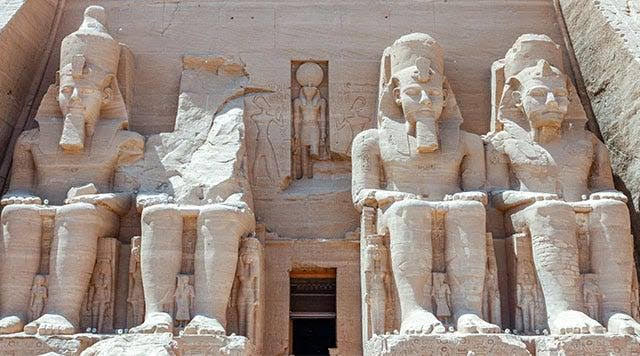
A British tourist attempted to scatter the ashes of his deceased mother inside the ancient Egyptian Abu Simbel Temple, south of Aswan, some 900km south of Cairo. Security at Abu Simbel Temple thwarted the attempt.
The British tourist was among others entering Abu Simbel Temple on 6 October. He was carrying a small box which, when put on the security X-ray machine, gave the temple security staff suspicions of the contents of the box. Upon opening it, they discovered it included an urn containing human ashes. The tourist said it was the remains of his mother who had died in England a year ago and had asked for her ashes to be scattered in Egypt. The son thus travelled to Egypt to scatter his mother’s ashes in Abu Simbel Temple.
Since burying remains or scattering ashes of deceased inside archaeological sites is banned by Egyptian law, the Aswan and Nubia Antiquities department was notified and the necessary legal measures were taken regarding the incident. The tourist signed a pledge not to repeat such an attempt in any Egyptian archaeological site.
Abu Simbel site features two massive rock hewn temples that were carved out of the mountainside in the 13th century BC during the reign of the Pharaoh Ramses II, known as Ramses the Great, who ruled Egypt in 1279–1213 BC. The huge external rock relief figures depict Ramses II and his is wife Nefertari.
Watani International
8 October 2024