
Editor in Chief
Youssef Sidhom
Watani
عربى English French
  • News
    • Accidents
    • Crime
    • Diplomatic briefcase
    • NewsLine
    • Outside Cairo
    • Special Occasions
  • Opinion
    • Editorial
    • International media
    • Reader`s Corner
    • Opinion
  • Politics
    • Elections
    • International Politics
    • Islamisation Politics
    • National Affairs
    • Parliament
    • Politics
    • Protests
    • Rights
    • Terrorism
  • Culture
    • Antiquity
    • Art
    • Books
    • Culture
    • Drama
    • Egyptology
    • Festivals
    • Films
    • Heritage
    • Islamisation Culture
    • Media
    • Museums
    • Music
    • TV
  • Coptic
    • Church Affairs
    • Coptic Affairs
    • Coptic Culture
    • Copts in the Media
    • Coptology
    • Copts Abroad
    • Religious
      • P. Shenouda: Bible Study
    • Sectarian
    • Inter-religious
    • Holy Family
  • Features
    • Counselling Corner
    • features
    • Economy
      • Business
    • Education
    • Social Issues
      • Behaviour
      • Mothers Day
    • Health
    • Environment
    • Humour
    • In memorial
    • Interviews
    • Nile
    • Profile
    • Special needs
    • Sports
    • Technology
    • Tourism
    • Wars
    • Women
    • Youth
  • Watani Special Features
    • Egypt – Arab Spring
      • 25 January Revolution
      • 25 Jan revolution, one year on
      • Egypt post-30 June
    • Watani Milestones
      • 20 years Watani International
      • 10 years Watani International
      • Watani Jubilee
    • Pope Shenouda
    • Pope Tawadros
    • Watani Forum
No Result
View All Result
  • News
    • Accidents
    • Crime
    • Diplomatic briefcase
    • NewsLine
    • Outside Cairo
    • Special Occasions
  • Opinion
    • Editorial
    • International media
    • Reader`s Corner
    • Opinion
  • Politics
    • Elections
    • International Politics
    • Islamisation Politics
    • National Affairs
    • Parliament
    • Politics
    • Protests
    • Rights
    • Terrorism
  • Culture
    • Antiquity
    • Art
    • Books
    • Culture
    • Drama
    • Egyptology
    • Festivals
    • Films
    • Heritage
    • Islamisation Culture
    • Media
    • Museums
    • Music
    • TV
  • Coptic
    • Church Affairs
    • Coptic Affairs
    • Coptic Culture
    • Copts in the Media
    • Coptology
    • Copts Abroad
    • Religious
      • P. Shenouda: Bible Study
    • Sectarian
    • Inter-religious
    • Holy Family
  • Features
    • Counselling Corner
    • features
    • Economy
      • Business
    • Education
    • Social Issues
      • Behaviour
      • Mothers Day
    • Health
    • Environment
    • Humour
    • In memorial
    • Interviews
    • Nile
    • Profile
    • Special needs
    • Sports
    • Technology
    • Tourism
    • Wars
    • Women
    • Youth
  • Watani Special Features
    • Egypt – Arab Spring
      • 25 January Revolution
      • 25 Jan revolution, one year on
      • Egypt post-30 June
    • Watani Milestones
      • 20 years Watani International
      • 10 years Watani International
      • Watani Jubilee
    • Pope Shenouda
    • Pope Tawadros
    • Watani Forum
No Result
View All Result
No Result
View All Result
Watani
ع Fr
ADVERTISEMENT

Al-Azhar: moderation vs extremism

27 December, 2014 - (1:01 AM)
0 0

Youssef Sidhom

Contemplation on the elections

Youssef Sidhom

61
VIEWS
Share on FacebookShare on Twitter

Problems on hold

As a year folds in and another hails, it is time for candid self-searching and balancing accounts. In this context, I feel compelled to tackle an issue that has long been swept under the rug and which, owing to its sensitive nature, I was reluctant to broach. By this I mean the educational, enlightenment, and religious leadership role of the venerable 10th-century Islamic institution al-Azhar which is today the leading authority on Sunni Islam in the world. Al-Azhar has a reputation of endorsing moderate Islam which it propagates through its university, institutes, schools, library, publications and books, curriculum and ++fatwas++ (Islamic legal opinion). As such, al-Azhar affects the lives of Muslims and their fellow Christians and, consequently, the entire Egyptian nation.
It is now impossible to ignore the al-Azhar issue since it is all over the media, first tackled by media person Ibrahim Eissa on his show ++25/30++ on the independent satellite channel OnTV. I fully realise that material broadcast by the media is in no way non-contestable fact, but I admit that this time the source is serious and credible, carefully weighs what he says, and provides evidence to back his words. Mr Eissa has not volunteered unsupported allegations, nor did he dish out flimsy rhetoric behind which might have lurked hidden intentions to defame or settle accounts with someone or other at al-Azhar. He rather exposed pages of books taught at al-Azhar, and voice recordings of scholarly opinion by al-Azhar scholars. He did not hide his shock at the fact that this prestigious institution might conceal—behind the glimmering façade of enlightenment presented by its Grand Imam Sheikh Dr Ahmed al-Tayyib—a fundamentalist, fanatic, scientifically retarded body that transmits destructive thought.
The facts Mr Eissa exposed alarmed me greatly and brought on the question of whether or not Sheikh Tayyib is aware of what goes on in the institution he heads. Does he know the intellectual and philosophical concepts the scholars of this institution harbour and spread? Is it acceptable that a venerable, enlightened sheikh sit at the head of al-Azhar and quietly allow its scholars to spread fanatic thought? Could we expect a face-off between the presumably reformist Imam and the fanatic scholars, or is the Grand Imam not up to reform or confrontation?
I am stunned at the flagrant contradiction between the national stances and documents of enlightened thought issued by al-Azhar, and the fundamentalist fanatic concepts that lurk in the hearts and minds of its scholars and are propagated through its books and curriculum.
In the wake of the Arab Spring uprising in January 2011, al-Azhar played a remarkably enlightened role when it issued its historic document on 19 June 2011 to confront calls to found an Islamic State in Egypt. The document held the name: “The statement of al-Azhar and intellectuals around the future of Egypt”, and was commonly labelled “Al-Azhar document”. It detailed an unprecedented vision by al-Azhar of the modern State that Egyptians aspired to found. “Moderate Islamic thought and the renaissance and reform propagated by the progressive al-Azhar scholars, as well as the contribution of great Egyptian intellectuals to the evolution of science and the humanities, have all contributed to the perpetually progressing modern Egyptian mind. They should be the inspiration for founding the modern Egyptian State.” The statement stressed diversity, respect of heavenly religions, and citizenship principles as the main tenets of society. It confirmed the pivotal importance of respecting differences, ethics of dialogue, and the non-branding of people as infidels or traitors.
In January 2012, al-Azhar issued the “Al-Azhar document for public freedoms and human rights” which was back then seen as the ultimate response to an ongoing attack on Egyptian identity and moderation. The document reassured Egyptians that attempts to trifle with the basics of their national identity or with freedoms and human rights have nothing to do with Islam. This document endorsed freedom of belief, opinion, expression, scientific research, and literary and artistic creativity in a thoroughly enlightened perspective, to the point that I wrote then that the document was “a beacon of enlightenment in the face of a dark, terrorist stream”.
With all this in mind, I regard with utmost worry and apprehension the facts—supported by conclusive evidence—exposed by Mr Eissa about the teachings, books and thought endorsed by al-Azhar and infused in the minds of its students. Were the enlightened documents issued by al-Azhar nothing but ornamental rhetoric? Were they used to conceal the rigid, fanatic, extremist thought that al-Azhar leaders do not wish to expose?
We are now before an issue that can no longer be shelved. If Mr Eissa’s account of al-Azhar is incorrect he should be taken to account, but if Sheikh Dr Tayyib is turning a blind eye to the conflict between enlightened and fanatic streams in al-Azhar, he should then be answerable for it.

Watani International
28 December 2014
Comments

comments

Tags: al-AzharDr Ahmed al-TayyibEDITORIALEgyptIbrahim EissaProblems on holdYoussef Sidhom

Related Posts

Youssef Sidhom
Editorial

China and Russia vis-à-vis Trump’s Iran War

June 19, 2026
Youssef Sidhom
Editorial

Six months on approval of legality of 29th batch of churches: 30th batch approved

June 14, 2026
Youssef Sidhom
Editorial

US / Israel intransigence in Iran war: What do they gain?

June 5, 2026
Editorial

Iran war: Looming economic crisis

May 29, 2026
Youssef Sidhom
Editorial

Trump in Beijing: No cards to bargain

May 22, 2026
Youssef Sidhom
Editorial

Russia, Iran, China: Emerging triangle of power 

May 15, 2026

Editorial

China and Russia vis-à-vis Trump’s Iran War

More

MOST READ

Egypt attempts to contain Myna bird invasion
Environment

Egypt attempts to contain Myna bird invasion

June 15, 2026
0

The Nature Protection Sector of Egypt’s Ministry of Local Development and Environment has been monitoring and tracking the spread of...

Read more
Watani talks to Anba Bigol, Bishop and Abbot of al-Muharraq Monastery of the Holy Virgin Mary

Watani talks to Anba Bigol, Bishop and Abbot of al-Muharraq Monastery of the Holy Virgin Mary

June 17, 2026
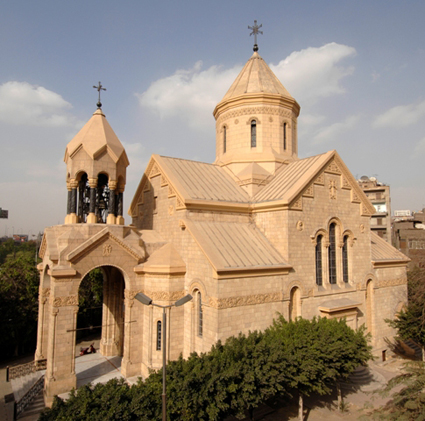
Egypt’s Armenians

Egypt’s Armenians

April 22, 2015
‘Train of Hope’ to carry home 1,200 Sudanese

‘Train of Hope’ to carry home 1,200 Sudanese

June 16, 2026
Jobs for persons with disabilities

Jobs for persons with disabilities

June 15, 2026

Features

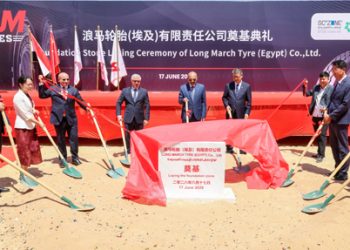
China’s Long March launches USD190M tyre manufacturing project in Egypt
Economy

China’s Long March launches USD190M tyre manufacturing project in Egypt

June 17, 2026
0

China’s Chaoyang Long March Tyre Co., Ltd. has launched a USD190 million tyre manufacturing project in Egypt’s Suez Canal Economic...

Read more
Watani started as an Egyptian weekly Sunday newspaper published in Cairo. The word Watani is Arabic for “My Homeland”. The paper was founded in 1958 by the prominent Copt Antoun Sidhom (1915 – 1995), who strove for the establishment of a civil, democratic society in Egypt, where all Egyptians would enjoy full citizenship rights regardless of their religious denomination. To this day when Watani is published as a weekly paper and an online news site, the objective remains the same. Those in charge of Watani view this role as a patriotic all-Egyptian vocation. Special attention is given to shedding light on Coptic culture and tradition as authentically Egyptian, this being a topic largely disregarded or little-understood by Egypt’s media. Watani is deeply dedicated to offer its readers high quality, extensive, objective, credible and well-researched media coverage, with special focus on Coptic issues, culture, heritage, and contribution to Egyptian society.
-----------------------------------------------------------

27 Abdel Khalek Tharwat st, Downtown, Abdeen,Cairo

00202-23927201

00202-23935946

 [email protected]


categories

  • News
  • Opinion
  • Politics
  • Culture
  • Egypt – Arab Spring
  • Coptic Affairs
  • Features
  • Watani Special Features

Recent Posts

  • China and Russia vis-à-vis Trump’s Iran War
  • China’s Long March launches USD190M tyre manufacturing project in Egypt
  • Watani talks to Anba Bigol, Bishop and Abbot of al-Muharraq Monastery of the Holy Virgin Mary
  • ‘Train of Hope’ to carry home 1,200 Sudanese
  • Egypt launches ROX Motor partnership to manufacture new-energy vehicles
  • News
  • Opinion
  • Politics
  • Culture
  • Egypt – Arab Spring
  • Coptic Affairs
  • Features
  • Watani Special Features

Powered BY 3A Digital.

No Result
View All Result
  • News
    • Accidents
    • Crime
    • Diplomatic briefcase
    • NewsLine
    • Outside Cairo
    • Special Occasions
  • Opinion
    • Editorial
    • International media
    • Reader`s Corner
    • Opinion
  • Politics
    • Elections
    • International Politics
    • Islamisation Politics
    • National Affairs
    • Parliament
    • Politics
    • Protests
    • Rights
    • Terrorism
  • Culture
    • Antiquity
    • Art
    • Books
    • Culture
    • Drama
    • Egyptology
    • Festivals
    • Films
    • Heritage
    • Islamisation Culture
    • Media
    • Museums
    • Music
    • TV
  • Coptic
    • Church Affairs
    • Coptic Affairs
    • Coptic Culture
    • Copts in the Media
    • Coptology
    • Copts Abroad
    • Religious
      • P. Shenouda: Bible Study
    • Sectarian
    • Inter-religious
    • Holy Family
  • Features
    • Counselling Corner
    • features
    • Economy
      • Business
    • Education
    • Social Issues
      • Behaviour
      • Mothers Day
    • Health
    • Environment
    • Humour
    • In memorial
    • Interviews
    • Nile
    • Profile
    • Special needs
    • Sports
    • Technology
    • Tourism
    • Wars
    • Women
    • Youth
  • Watani Special Features
    • Egypt – Arab Spring
      • 25 January Revolution
      • 25 Jan revolution, one year on
      • Egypt post-30 June
    • Watani Milestones
      • 20 years Watani International
      • 10 years Watani International
      • Watani Jubilee
    • Pope Shenouda
    • Pope Tawadros
    • Watani Forum

Powered BY 3A Digital.

Login to your account below

Forgotten Password?

Fill the forms bellow to register

All fields are required. Log In

Retrieve your password

Please enter your username or email address to reset your password.

Log In