

Editor in Chief
Youssef Sidhom
Watani
عربى English French
  • News
    • Accidents
    • Crime
    • Diplomatic briefcase
    • NewsLine
    • Outside Cairo
    • Special Occasions
  • Opinion
    • Editorial
    • International media
    • Reader`s Corner
    • Opinion
  • Politics
    • Elections
    • International Politics
    • Islamisation Politics
    • National Affairs
    • Parliament
    • Politics
    • Protests
    • Rights
    • Terrorism
  • Culture
    • Antiquity
    • Art
    • Books
    • Culture
    • Drama
    • Egyptology
    • Festivals
    • Films
    • Heritage
    • Islamisation Culture
    • Media
    • Museums
    • Music
    • TV
  • Coptic
    • Church Affairs
    • Coptic Affairs
    • Coptic Culture
    • Copts in the Media
    • Coptology
    • Copts Abroad
    • Religious
      • P. Shenouda: Bible Study
    • Sectarian
    • Inter-religious
    • Holy Family
  • Features
    • Counselling Corner
    • features
    • Economy
      • Business
    • Education
    • Social Issues
      • Behaviour
      • Mothers Day
    • Health
    • Environment
    • Humour
    • In memorial
    • Interviews
    • Nile
    • Profile
    • Special needs
    • Sports
    • Technology
    • Tourism
    • Wars
    • Women
    • Youth
  • Watani Special Features
    • Egypt – Arab Spring
      • 25 January Revolution
      • 25 Jan revolution, one year on
      • Egypt post-30 June
    • Watani Milestones
      • 20 years Watani International
      • 10 years Watani International
      • Watani Jubilee
    • Pope Shenouda
    • Pope Tawadros
    • Watani Forum
No Result
View All Result
  • News
    • Accidents
    • Crime
    • Diplomatic briefcase
    • NewsLine
    • Outside Cairo
    • Special Occasions
  • Opinion
    • Editorial
    • International media
    • Reader`s Corner
    • Opinion
  • Politics
    • Elections
    • International Politics
    • Islamisation Politics
    • National Affairs
    • Parliament
    • Politics
    • Protests
    • Rights
    • Terrorism
  • Culture
    • Antiquity
    • Art
    • Books
    • Culture
    • Drama
    • Egyptology
    • Festivals
    • Films
    • Heritage
    • Islamisation Culture
    • Media
    • Museums
    • Music
    • TV
  • Coptic
    • Church Affairs
    • Coptic Affairs
    • Coptic Culture
    • Copts in the Media
    • Coptology
    • Copts Abroad
    • Religious
      • P. Shenouda: Bible Study
    • Sectarian
    • Inter-religious
    • Holy Family
  • Features
    • Counselling Corner
    • features
    • Economy
      • Business
    • Education
    • Social Issues
      • Behaviour
      • Mothers Day
    • Health
    • Environment
    • Humour
    • In memorial
    • Interviews
    • Nile
    • Profile
    • Special needs
    • Sports
    • Technology
    • Tourism
    • Wars
    • Women
    • Youth
  • Watani Special Features
    • Egypt – Arab Spring
      • 25 January Revolution
      • 25 Jan revolution, one year on
      • Egypt post-30 June
    • Watani Milestones
      • 20 years Watani International
      • 10 years Watani International
      • Watani Jubilee
    • Pope Shenouda
    • Pope Tawadros
    • Watani Forum
No Result
View All Result
No Result
View All Result
Watani
ع Fr
ADVERTISEMENT

Kudos for Tunisia

3 July, 2016 - (1:01 AM)
0 0

Youssef Sidhom
32
VIEWS
Share on FacebookShare on Twitter

Problems on hold

The issue of equality between men and women has been one that always preoccupied me and which I tackled several times in editorials I wrote over the years.
Egypt’s 2014 Constitution stipulates full equality among Egyptians and bans all discrimination including that based on gender. That same Constitution also specifies the right of Christians to a family law that conforms to the Christian doctrine. It thus pained me that the recent draft family bylaws for Christians included no provisions on inheritance. This implied that the current Egyptian law for inheritance, which is based on the Islamic sharia principle that a man inherits double the share of a woman, would continue to apply to all—Christians as well as Muslims. The principle of unequal inheritance shares for men and women does not exist in the teachings of the Bible, and I had thought that those who drafted the family bylaws for Christians would have seized the opportunity to right the current legal inequality. But this was not to be.
Last March I wrote a series of four articles on the issue of the lack of inheritance provisions in the draft family bylaws for Christians; the draft is currently getting its final touches before being placed before parliament.

[https://en.wataninet.com/opinion/editorial/nothing-about-inheritance/15989/ https://en.wataninet.com/opinion/editorial/inheritance-rules-revisited/16027/
https://en.wataninet.com/opinion/editorial/can-our-family-law-offend-muslims/16062/
https://en.wataninet.com/opinion/editorial/inheritance-as-seen-in-the-bible/16108/]

I wrote of the precept that went as far back as when Egyptians endorsed Christianity in the early AD centuries and that honoured the right of Christians to apply their own doctrines to their family affairs including inheritance. Even when this time-honoured rule was changed in the 1940s and a new law stipulated that Islamic sharia would be generally applied to govern matters of inheritance, it left the door ajar for non-Muslims to apply their own doctrines provided the inheritors agree to do so. In the 1970s, the Constitution was amended to include an article that stipulated sharia as the main source of legislation, and inheritance laws in Egypt changed to include all Egyptians—Muslim, Christian, or otherwise—under the full provisions of Islamic sharia. This meant that a man inherited double the share of a woman.
Now that Christians are entitled to their own family law, their bylaws ought to have included provisions for equal inheritance shares between men and women, in order to relieve Christian women from the injustice unduly inflicted upon them on the inheritance front. By doing so, the Church would also have offered an exemplary model of real gender equality to the nation in its entirety; one that could in time be copied by Muslim men and women. As though in confirmation that women did deserve better than their current lot, the Grand Imam of al-Azhar, Sheikh Ahmed al-Tayyib recently remarked: “I am certain that the legitimate rights of oriental women have been confiscated in the name of customs and traditions.”
I was lately pleasantly surprised by a recent legislative initiative launched in the Tunisian parliament to change the current inheritance law in Tunisia so that it stipulates equal inheritance shares for men and women, honouring thus the Tunisian Constitution which declares full gender equality. But I was left with a lump in my throat that the civilizational lead in gender equality had come from Tunisia alone and not from Egypt too. Yet this should have been no surprise; as far back as 1956 Tunisia put in place a family law that granted women rights such as banning multiple wives and restraining men’s absolute, unilateral right to divorce; recently, women were allotted half the seats in parliament. Tunisia’s pioneering position on gender equality in the Arab World was again confirmed.
The recent Tunisian legislative initiative stipulates equal inheritance shares between men and women unless there is a clear written agreement between the inheritors stating otherwise. Kindly note that equality is the rule, inequality the exception. Egypt has yet to reach this. Even during her liberal phase, Egypt in 1944 legislated inequality first when it allowed a man to inherit double a woman’s share, and equality second by granting non-Muslims the right to special agreements that went against that principle. Yet even this was in later years retracted when Islamic sharia was applied to non-Muslims; men indulged in grabbing double a woman’s inheritance share, in some deplorable instances even grabbing all the shares of the women in the family.
A historic opportunity presented itself in the 2014 Constitution, when Article 3 gave non-Muslims the right to apply their own doctrines to their family matters. But those in charge of drafting the new family bylaws for Christians rushed to write articles concerned with the details of engagement, marriage and divorce, but overlooked the issue of inheritance. They saw inheritance as a non-urgent issue governed by no specific rules in the Christian doctrine.
Amid this failure and frustration, the Tunisian legislative initiative comes as a candle in the dark. Let us follow up on it in hope that—like all Tunisian initiatives in modernisation—it leads out of the deep tunnel of gender inequality.

Watani International
3 July 2016
Comments

comments

Tags: draft family bylaws for Christians in EgyptEDITORIALinheritance shares for men and womenKudos for TunisiaProblems on holdTunisian legislative initiative for equal inheritance rights for men and womenYoussef Sidhom

Related Posts

Youssef Sidhom
Editorial

China and Russia vis-à-vis Trump’s Iran War

June 19, 2026
Youssef Sidhom
Editorial

Six months on approval of legality of 29th batch of churches: 30th batch approved

June 14, 2026
Youssef Sidhom
Editorial

US / Israel intransigence in Iran war: What do they gain?

June 5, 2026
Editorial

Iran war: Looming economic crisis

May 29, 2026
Youssef Sidhom
Editorial

Trump in Beijing: No cards to bargain

May 22, 2026
Youssef Sidhom
Editorial

Russia, Iran, China: Emerging triangle of power 

May 15, 2026

Editorial

China and Russia vis-à-vis Trump’s Iran War

More

MOST READ

Egypt attempts to contain Myna bird invasion
Environment

Egypt attempts to contain Myna bird invasion

June 15, 2026
0

The Nature Protection Sector of Egypt’s Ministry of Local Development and Environment has been monitoring and tracking the spread of...

Read more
Watani talks to Anba Bigol, Bishop and Abbot of al-Muharraq Monastery of the Holy Virgin Mary

Watani talks to Anba Bigol, Bishop and Abbot of al-Muharraq Monastery of the Holy Virgin Mary

June 17, 2026
Egypt’s Armenians

Egypt’s Armenians

April 22, 2015
‘Train of Hope’ to carry home 1,200 Sudanese

‘Train of Hope’ to carry home 1,200 Sudanese

June 16, 2026
Jobs for persons with disabilities

Jobs for persons with disabilities

June 15, 2026

Features

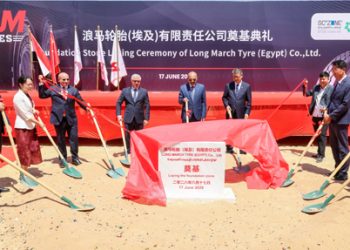
China’s Long March launches USD190M tyre manufacturing project in Egypt
Economy

China’s Long March launches USD190M tyre manufacturing project in Egypt

June 17, 2026
0

China’s Chaoyang Long March Tyre Co., Ltd. has launched a USD190 million tyre manufacturing project in Egypt’s Suez Canal Economic...

Read more
Watani started as an Egyptian weekly Sunday newspaper published in Cairo. The word Watani is Arabic for “My Homeland”. The paper was founded in 1958 by the prominent Copt Antoun Sidhom (1915 – 1995), who strove for the establishment of a civil, democratic society in Egypt, where all Egyptians would enjoy full citizenship rights regardless of their religious denomination. To this day when Watani is published as a weekly paper and an online news site, the objective remains the same. Those in charge of Watani view this role as a patriotic all-Egyptian vocation. Special attention is given to shedding light on Coptic culture and tradition as authentically Egyptian, this being a topic largely disregarded or little-understood by Egypt’s media. Watani is deeply dedicated to offer its readers high quality, extensive, objective, credible and well-researched media coverage, with special focus on Coptic issues, culture, heritage, and contribution to Egyptian society.
-----------------------------------------------------------

27 Abdel Khalek Tharwat st, Downtown, Abdeen,Cairo

00202-23927201

00202-23935946

 [email protected]


categories

  • News
  • Opinion
  • Politics
  • Culture
  • Egypt – Arab Spring
  • Coptic Affairs
  • Features
  • Watani Special Features

Recent Posts

  • China and Russia vis-à-vis Trump’s Iran War
  • China’s Long March launches USD190M tyre manufacturing project in Egypt
  • Watani talks to Anba Bigol, Bishop and Abbot of al-Muharraq Monastery of the Holy Virgin Mary
  • ‘Train of Hope’ to carry home 1,200 Sudanese
  • Egypt launches ROX Motor partnership to manufacture new-energy vehicles
  • News
  • Opinion
  • Politics
  • Culture
  • Egypt – Arab Spring
  • Coptic Affairs
  • Features
  • Watani Special Features

Powered BY 3A Digital.

No Result
View All Result
  • News
    • Accidents
    • Crime
    • Diplomatic briefcase
    • NewsLine
    • Outside Cairo
    • Special Occasions
  • Opinion
    • Editorial
    • International media
    • Reader`s Corner
    • Opinion
  • Politics
    • Elections
    • International Politics
    • Islamisation Politics
    • National Affairs
    • Parliament
    • Politics
    • Protests
    • Rights
    • Terrorism
  • Culture
    • Antiquity
    • Art
    • Books
    • Culture
    • Drama
    • Egyptology
    • Festivals
    • Films
    • Heritage
    • Islamisation Culture
    • Media
    • Museums
    • Music
    • TV
  • Coptic
    • Church Affairs
    • Coptic Affairs
    • Coptic Culture
    • Copts in the Media
    • Coptology
    • Copts Abroad
    • Religious
      • P. Shenouda: Bible Study
    • Sectarian
    • Inter-religious
    • Holy Family
  • Features
    • Counselling Corner
    • features
    • Economy
      • Business
    • Education
    • Social Issues
      • Behaviour
      • Mothers Day
    • Health
    • Environment
    • Humour
    • In memorial
    • Interviews
    • Nile
    • Profile
    • Special needs
    • Sports
    • Technology
    • Tourism
    • Wars
    • Women
    • Youth
  • Watani Special Features
    • Egypt – Arab Spring
      • 25 January Revolution
      • 25 Jan revolution, one year on
      • Egypt post-30 June
    • Watani Milestones
      • 20 years Watani International
      • 10 years Watani International
      • Watani Jubilee
    • Pope Shenouda
    • Pope Tawadros
    • Watani Forum

Powered BY 3A Digital.

Login to your account below

Forgotten Password?

Fill the forms bellow to register

All fields are required. Log In

Retrieve your password

Please enter your username or email address to reset your password.

Log In