

The world we live in today is one that is rife with conflict and wars. Yet, instead of building bridges through dialogue between adversaries to forge peace, cooperation, and coexistence; we encounter a raging appetite for discord that fuels violence and gives the upper hand to arms. This despite the fact that our world has suffered so severely of the scourge of wars that, following WWII, it was believed that going back to war was a near impossibility.
The transfer of global leadership post-WWII from the British and French to the US, however, exposed the world to an overwhelming arrogant American appetite for hegemony, control and power. Our world was transformed into one with a sole unipolar superpower: the US. During the last quarter of the 20th century, there were occasional signs of some potential shift toward global cooperation on economic, political, and industrial fronts, yet the dominance of US hegemony largely prevailed. The diabolical hegemonic moves were more often than not driven by powerful, opaque interests that undermined peace efforts and eroded international arms control treaties. Over the last four decades, the bitter fact has been that the world was controlled by a tyrannical American power. While the US was established basing on the Founding Fathers’ principles of freedom, human rights, and democracy, these were blown away by new standards created by the “political donor lobby”, the “Zionist lobby”, and the “Arms Industrial Council”. These daunting forces now openly control and manipulate American politics to serve racist goals, fuel conflicts, promote weapon sales, and egg wars on around the world.
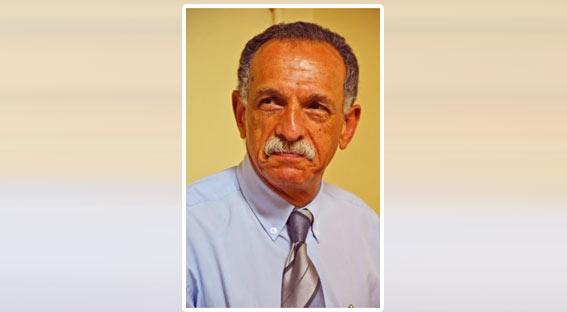
This miserable reality was the topic of a discussion by Judge Andrew Napolitano and his guest John Mearsheimer whom he hosted on his podcast Judging Freedom on 15 July 2025. Professor Mearsheimer, 77, is an American political scientist and international relations scholar; he is the R. Wendell Harrison Distinguished Service Professor at University of Chicago. Professor Mearsheimer and Judge Napolitano’s discussion was titled “US Escalates the Ukraine War”, which inspired the title for this editorial: “US escalates raging wars”. I will print here excerpts of the discussion:
Judge Napolitano: Do you think Iran will just sit back and watch and wait for Netanyahu to plot his next attack?
Professor Mearsheimer: “I think that they understand that there’s a very good chance that Netanyahu will attack again, either with direct military force or indirectly. And they are planning on how to defend themselves, and also how to attack Israel if necessary. I mean the Iranians have no illusions about what they’re dealing with here, not only with regard to Israel but with regard to the United States as well. And I think they’re spending endless hours plotting to figure out the best way to deal with those two adversaries.”
One wonders why they went along with the ceasefire when they seem to have had the upper hand that did far more damage to Israel than Israel did to them.
“I think the Israelis were really hurting… I think actually, as I’ve said before, that the Iranians have real cards to play here. First of all, they’ve made it clear that they can do an enormous amount of damage to Israel. They can play better than the Israelis can the game of attrition warfare. Furthermore, they have the option of shutting down the straits of Hormuz, and that is a really formidable threat.”
Did Trump’s bombing of Iran make the Middle East more stable or more volatile?
“I think it made it more volatile; it has dragged us into a war with Iran, which is a very dangerous situation. The Biden administration, much to its credit, avoided fighting a war against Iran.”
Switching gears to Ukraine, Judge Napolitano played two clips which show contradictory declarations made by Donald Trump regarding his knowledge of the pause on the delivery of weapons to Ukraine. Judge Napolitano then asked his guest: How does the Kremlin view this gibberish and self-justification?
“I would imagine that they view it the same way you and I view it as gibberish and contradictory, and the kind of behaviour that you would not expect from the President of the United States. I mean, Trump thinks that he can fly by the seat of his pants. He can just get out into public and deal with very important issues off the top of his head. Thinks he doesn’t have to think through an issue before he talks about it. He thinks he can just sort of make arguments as he sees fit. And if he wants to change his arguments from day to day or hour to hour, he thinks he can do that as well. This is not an effective way to execute foreign policy. None of his predecessors have ever come close to behaving this way. This is unprecedented.
One wonders what Vladimir Putin thinks when he has conversations with Trump, knowledgeable of Trump’s erratic inconsistent, I’m actually going to call it “intellectually dishonest” ways.
“Putin really has no choice but to talk to Trump… I think Putin understands that you don’t want to place much stock in anything that Trump says… What he really wants to know is what kind of weapons is Trump likely to be able to send to the Europeans to send to the Ukrainians. I think that Putin, as you would expect, is just looking at the basic facts and logic that underpin the situation, and he’s really not paying much attention to what Trump has to say.”
Regarding Trump’s policies vis-à-vis wars around the world, Prof. Mearsheimer said: “Trump is flailing because he’s failing. Trump is failing in Gaza. He’s failing vis-à-vis Iran. And he’s failing vis-à-vis the Russians in the Ukraine war. He has not been successful. For all his talk about shutting down these wars shortly after he got into the White House, none of that’s happened. And indeed, what’s happened is we’ve gotten deeper and deeper into the mud.”
There are public voices in the Kremlin that are advising President Putin to attack German munitions plants. That really raises this to another level, and I don’t think Putin would do it.
“There are people in Russia, strategists who are reasonable people, who are saying that it’s really time for the Russians to think about using nuclear weapons, if not now, somewhere down the road. I think the Russian attitude towards nuclear use, and I think this view is mirrored to some extent in the west as well, is very different than it was for most of the cold war. By the late part of the cold war, I think almost everybody who studied security issues understood that it was impossible to imagine a situation where using nuclear weapons made any sense at all… This was certainly true after the Cuban missile crisis; we did not want to repeat that. But if you look at the situation that we’re in today in Ukraine, just going back to our conversation a few minutes ago about whether the United States and Russia are at war in Ukraine, you see we’re in a whole different world here.
And we’re in a much more dangerous world in terms of relations between Moscow and Washington.”
Watani International
8 August 2025