
Editor in Chief
Youssef Sidhom
Watani
عربى English French
  • News
    • Accidents
    • Crime
    • Diplomatic briefcase
    • NewsLine
    • Outside Cairo
    • Special Occasions
  • Opinion
    • Editorial
    • International media
    • Reader`s Corner
    • Opinion
  • Politics
    • Elections
    • International Politics
    • Islamisation Politics
    • National Affairs
    • Parliament
    • Politics
    • Protests
    • Rights
    • Terrorism
  • Culture
    • Antiquity
    • Art
    • Books
    • Culture
    • Drama
    • Egyptology
    • Festivals
    • Films
    • Heritage
    • Islamisation Culture
    • Media
    • Museums
    • Music
    • TV
  • Coptic
    • Church Affairs
    • Coptic Affairs
    • Coptic Culture
    • Copts in the Media
    • Coptology
    • Copts Abroad
    • Religious
      • P. Shenouda: Bible Study
    • Sectarian
    • Inter-religious
    • Holy Family
  • Features
    • Counselling Corner
    • features
    • Economy
      • Business
    • Education
    • Social Issues
      • Behaviour
      • Mothers Day
    • Health
    • Environment
    • Humour
    • In memorial
    • Interviews
    • Nile
    • Profile
    • Special needs
    • Sports
    • Technology
    • Tourism
    • Wars
    • Women
    • Youth
  • Watani Special Features
    • Egypt – Arab Spring
      • 25 January Revolution
      • 25 Jan revolution, one year on
      • Egypt post-30 June
    • Watani Milestones
      • 20 years Watani International
      • 10 years Watani International
      • Watani Jubilee
    • Pope Shenouda
    • Pope Tawadros
    • Watani Forum
No Result
View All Result
  • News
    • Accidents
    • Crime
    • Diplomatic briefcase
    • NewsLine
    • Outside Cairo
    • Special Occasions
  • Opinion
    • Editorial
    • International media
    • Reader`s Corner
    • Opinion
  • Politics
    • Elections
    • International Politics
    • Islamisation Politics
    • National Affairs
    • Parliament
    • Politics
    • Protests
    • Rights
    • Terrorism
  • Culture
    • Antiquity
    • Art
    • Books
    • Culture
    • Drama
    • Egyptology
    • Festivals
    • Films
    • Heritage
    • Islamisation Culture
    • Media
    • Museums
    • Music
    • TV
  • Coptic
    • Church Affairs
    • Coptic Affairs
    • Coptic Culture
    • Copts in the Media
    • Coptology
    • Copts Abroad
    • Religious
      • P. Shenouda: Bible Study
    • Sectarian
    • Inter-religious
    • Holy Family
  • Features
    • Counselling Corner
    • features
    • Economy
      • Business
    • Education
    • Social Issues
      • Behaviour
      • Mothers Day
    • Health
    • Environment
    • Humour
    • In memorial
    • Interviews
    • Nile
    • Profile
    • Special needs
    • Sports
    • Technology
    • Tourism
    • Wars
    • Women
    • Youth
  • Watani Special Features
    • Egypt – Arab Spring
      • 25 January Revolution
      • 25 Jan revolution, one year on
      • Egypt post-30 June
    • Watani Milestones
      • 20 years Watani International
      • 10 years Watani International
      • Watani Jubilee
    • Pope Shenouda
    • Pope Tawadros
    • Watani Forum
No Result
View All Result
No Result
View All Result
Watani
ع Fr
ADVERTISEMENT

Will peace come to Ukraine?

Problems on hold

12 December, 2025 - (10:30 AM)
0 0

Youssef Sidhom 

Youssef Sidhom
11
VIEWS
Share on FacebookShare on Twitter

Armed conflict continues to rage around the world, escalating rather than abating. Just when hopes were pinned on extinguishing conflict fires one by one, they have blazed even more harshly. Apart from the ongoing wars in Ukraine and Gaza, the escalating conflicts around Iran and the South China Sea, and the fighting in Sudan and Libya, a new front has erupted in the Caribbean with Venezuela at its core. The development warns of a potentially disastrous confrontation between the world’s military superpower, the United States of America, and newcomers to the global leadership race: Russia and China.

Amidst it all, hearts yearn for any glimmer of hope for peace. One such opening recently emerged regarding the Russia-Ukraine war. Many around the world hope that the recent peace plan initiated by US President Donald Trump might finally bring an end to the fighting. The 28-point plan placed on the negotiating table looks to end the conflict, but is being engineered to serve the interests of the global power balance. Still intent on reinforcing its global hegemony and reasserting its world superpower status, the US is eager to dictate the terms of peace in Ukraine. Political observers and strategic analysts have always believed the US must focus on closing the raging conflict fronts around the world, because only then would it be able to focus its attention and efforts on the crucial challenge of containing China’s rise on the global stage. Meanwhile, Russia is adamant on preserving its battlefield gains in Ukraine as a means of reinforcing its security red lines and undermining the US, European, and NATO ambitions of expanding eastwards towards Russia’s borders, an existential threat for Russia.

Today I present the opinion of Professor John Mearsheimer who attempts to answer the question of whether the world will reach peace in Ukraine or lose yet another opportunity at bringing peace. Professor Mearsheimer, 78, is the R. Wendell Harrison Distinguished Service Professor at University of Chicago. On his Youtube channel, Professor Mearsheimer offered an analytical view on all aspects of negotiations to end the Russia Ukraine War. Following are the main highlights of what he said.

“Right now,” the professor said, “negotiators are finalising a peace proposal for Ukraine that most analysts are calling just another attempt at diplomacy. They’re catastrophically wrong; this isn’t about ending one war, it’s about choosing between two completely incompatible visions of European security… There’s no middle ground. One side has to lose… In mid-November, reports emerged about a 28-point peace proposal that had been drafted with input from Russian officials. The initial version sent shockwaves through European capitals and Kyiv. It called for Ukraine to surrender significant territory in Donetsk that it still controls, cap its military at 600,000 troops, constitutionally renounce NATO membership, and accept Russian control over Crimea and the Donbass. In exchange, the plan offered economic reconstruction funds, a return to pre-war trade relationships, and vague security guarantees from the United States. To many observers, it looked like a Russian wishlist dressed up as American diplomacy.

“After intensive negotiations in Geneva and Abu Dhabi, that plan has been whittled down to 19 points… The fundamental problem with this plan isn’t in the specific points, it’s in the entire framework of how we’ve been thinking about this conflict from the beginning. I’ve been arguing since 2014 that the West, particularly the United States, bears primary responsibility for this crisis. We marched NATO eastwards despite explicit warnings from Russian leaders that they would view this as an existential threat. We ignored the basic principles of great power politics and assumed we could remake Europe’s security architecture without accounting for Russian interests.

“When NATO announced at its 2008 Bucharest summit that Ukraine would eventually join the alliance, Russia heard an existential threat. Not a potential threat, not a future concern, an immediate existential threat to their security… The idea of a hostile military alliance placing troops, missiles, and military infrastructure on its border with Ukraine, which has a 1,200m frontier with Russia, was never going to be acceptable to Moscow. Never… From Russia’s perspective, NATO and Ukraine would be like Russia forming a military alliance with Mexico and placing troops and missiles along the Rio Grande. The United States would not tolerate that for one second.

“This is why Putin launched his preventive war in February 2022. He wasn’t trying to rebuild the Soviet Empire or fulfill some grand imperial vision. He was trying to prevent Ukraine from becoming a de facto member of NATO, which is exactly what was happening under the Biden administration. The strategic logic was brutally simple; better to fight now when the situation might still be manageable than to wait until Ukraine is fully armed and backed by NATO.

“This brings me to the single most dangerous element of the current peace plan. The idea that we can give Ukraine security guarantees as a substitute for NATO membership… The security guarantees for Ukraine, particularly American security guarantees, are nothing more than NATO membership by another name, and Russia will never accept them. Think about what a security guarantee actually means; it means that if Russia attacks Ukraine again, the United States and possibly other countries would come to Ukraine’s defence. It means we’d be committing to a military response to protect Ukraine’s sovereignty and territorial integrity. That’s exactly what NATO article 5 does; we’d just be calling it something else… The answer is to create a security architecture that accounts for Russian interests while also protecting Ukraine’s sovereignty within its remaining territory. That means Ukraine needs to be neutral. Not neutral in some vague diplomatic sense, but genuinely neutral like Austria during the Cold War, or Switzerland today.

“Is this fair to Ukraine? No, but it’s realistic… This means Ukraine would be giving up approximately 20 per cent of its territory, land that millions of Ukrainians call home.

“I need to explain why I believe territorial concessions are unavoidable at this point. Let’s look at the military reality. Russia currently controls this territory and has the military advantage… Russia has been slowly but steadily advancing… We need to be clear-eyed about the situation: Ukraine cannot retake this territory by force.

“Second, there’s the question of what these territories mean to each side. For Russia, holding Crimea and parts of Donbass is a core security interest… [For Ukraine] these territories are important, but not existential; Ukraine can survive and potentially thrive as a State even without them. It will be a smaller Ukraine, but it will be a sovereign Ukraine that controls most of its territory and can rebuild.

“If this peace settlement goes through in something like its current form, Europe will face a resurgent Russia that has proven it can change borders by force while lacking the military means to prevent it from doing so again… But here’s the other side of that coin. The alternative might be even worse if we continue the current path. Arming Ukraine enough to keep fighting but not enough to win. Imposing sanctions that haven’t changed Russian behaviour and hoping that somehow Russia will collapse or give up. We’re just prolonging the agony. More Ukrainians will die. More cities will be destroyed.

“Let me shift now to what this means for the United States because that’s ultimately what will determine whether this peace plan succeeds or fails… Trump’s team sees it as a drain on American resources that distracts from more important challenges, primarily China.”

The fundamental question now is whether the US administration is still capable of dictating the course of events to preserve its leadership of the global order. Or have new contenders emerged to challenge, compete with, or even share influence with the traditional great powers that have long dominated global fates?

Watani International

12 December 2025

Comments

comments

Tags: John MearsheimerPeace Plan UkraineProblems on holdRussia Ukraine warWataniYoussef Sidhom

Related Posts

Youssef Sidhom
Editorial

China and Russia vis-à-vis Trump’s Iran War

June 19, 2026
Youssef Sidhom
Editorial

Six months on approval of legality of 29th batch of churches: 30th batch approved

June 14, 2026
Youssef Sidhom
Editorial

US / Israel intransigence in Iran war: What do they gain?

June 5, 2026
Editorial

Iran war: Looming economic crisis

May 29, 2026
Youssef Sidhom
Editorial

Trump in Beijing: No cards to bargain

May 22, 2026
Youssef Sidhom
Editorial

Russia, Iran, China: Emerging triangle of power 

May 15, 2026
Please login to join discussion

Editorial

China and Russia vis-à-vis Trump’s Iran War

More

MOST READ

Egypt attempts to contain Myna bird invasion
Environment

Egypt attempts to contain Myna bird invasion

June 15, 2026
0

The Nature Protection Sector of Egypt’s Ministry of Local Development and Environment has been monitoring and tracking the spread of...

Read more
Watani talks to Anba Bigol, Bishop and Abbot of al-Muharraq Monastery of the Holy Virgin Mary

Watani talks to Anba Bigol, Bishop and Abbot of al-Muharraq Monastery of the Holy Virgin Mary

June 17, 2026
Egypt’s Armenians

Egypt’s Armenians

April 22, 2015
‘Train of Hope’ to carry home 1,200 Sudanese

‘Train of Hope’ to carry home 1,200 Sudanese

June 16, 2026
Jobs for persons with disabilities

Jobs for persons with disabilities

June 15, 2026

Features

China’s Long March launches USD190M tyre manufacturing project in Egypt
Economy

China’s Long March launches USD190M tyre manufacturing project in Egypt

June 17, 2026
0

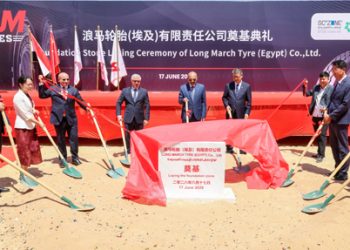
China’s Chaoyang Long March Tyre Co., Ltd. has launched a USD190 million tyre manufacturing project in Egypt’s Suez Canal Economic...

Read more
Watani started as an Egyptian weekly Sunday newspaper published in Cairo. The word Watani is Arabic for “My Homeland”. The paper was founded in 1958 by the prominent Copt Antoun Sidhom (1915 – 1995), who strove for the establishment of a civil, democratic society in Egypt, where all Egyptians would enjoy full citizenship rights regardless of their religious denomination. To this day when Watani is published as a weekly paper and an online news site, the objective remains the same. Those in charge of Watani view this role as a patriotic all-Egyptian vocation. Special attention is given to shedding light on Coptic culture and tradition as authentically Egyptian, this being a topic largely disregarded or little-understood by Egypt’s media. Watani is deeply dedicated to offer its readers high quality, extensive, objective, credible and well-researched media coverage, with special focus on Coptic issues, culture, heritage, and contribution to Egyptian society.
-----------------------------------------------------------

27 Abdel Khalek Tharwat st, Downtown, Abdeen,Cairo

00202-23927201

00202-23935946

 [email protected]


categories

  • News
  • Opinion
  • Politics
  • Culture
  • Egypt – Arab Spring
  • Coptic Affairs
  • Features
  • Watani Special Features

Recent Posts

  • China and Russia vis-à-vis Trump’s Iran War
  • China’s Long March launches USD190M tyre manufacturing project in Egypt
  • Watani talks to Anba Bigol, Bishop and Abbot of al-Muharraq Monastery of the Holy Virgin Mary
  • ‘Train of Hope’ to carry home 1,200 Sudanese
  • Egypt launches ROX Motor partnership to manufacture new-energy vehicles
  • News
  • Opinion
  • Politics
  • Culture
  • Egypt – Arab Spring
  • Coptic Affairs
  • Features
  • Watani Special Features

Powered BY 3A Digital.

No Result
View All Result
  • News
    • Accidents
    • Crime
    • Diplomatic briefcase
    • NewsLine
    • Outside Cairo
    • Special Occasions
  • Opinion
    • Editorial
    • International media
    • Reader`s Corner
    • Opinion
  • Politics
    • Elections
    • International Politics
    • Islamisation Politics
    • National Affairs
    • Parliament
    • Politics
    • Protests
    • Rights
    • Terrorism
  • Culture
    • Antiquity
    • Art
    • Books
    • Culture
    • Drama
    • Egyptology
    • Festivals
    • Films
    • Heritage
    • Islamisation Culture
    • Media
    • Museums
    • Music
    • TV
  • Coptic
    • Church Affairs
    • Coptic Affairs
    • Coptic Culture
    • Copts in the Media
    • Coptology
    • Copts Abroad
    • Religious
      • P. Shenouda: Bible Study
    • Sectarian
    • Inter-religious
    • Holy Family
  • Features
    • Counselling Corner
    • features
    • Economy
      • Business
    • Education
    • Social Issues
      • Behaviour
      • Mothers Day
    • Health
    • Environment
    • Humour
    • In memorial
    • Interviews
    • Nile
    • Profile
    • Special needs
    • Sports
    • Technology
    • Tourism
    • Wars
    • Women
    • Youth
  • Watani Special Features
    • Egypt – Arab Spring
      • 25 January Revolution
      • 25 Jan revolution, one year on
      • Egypt post-30 June
    • Watani Milestones
      • 20 years Watani International
      • 10 years Watani International
      • Watani Jubilee
    • Pope Shenouda
    • Pope Tawadros
    • Watani Forum

Powered BY 3A Digital.

Login to your account below

Forgotten Password?

Fill the forms bellow to register

All fields are required. Log In

Retrieve your password

Please enter your username or email address to reset your password.

Log In