On 17 May, President Abdel-Fattah al-Sisi inaugurated the New Delta project along the Sheikh Zayed Axis in Giza Governorate, formerly known as the Dabaa Axis.
The New Delta project is one of Egypt’s largest agricultural and infrastructure projects, aimed at reclaiming and cultivating a massive 2.2 million feddans (1 feddan = 4,200 sq.m) of desert land to boost Egypt’s food security, reduce crop imports and create sustainable employment through large-scale water recycling and desert development.
Upon his arrival, the President was received by Prime Minister Mostafa Madbouly, and senior government officials including Deputy Prime Minister for Economic Affairs; Commander-in-Chief of the Armed Forces and Minister of Defence and Military Production; Chief of Staff of the Armed Forces; Central Bank Governor; Ministers of Transport, Water Resources and Irrigation, Supply and Internal Trade, and Agriculture and Land Reclamation.
The President inaugurated Water Pumping Station No. 3, Nabaa, via video conference.
True to himself, President Sisi said the achievements made under the New Delta project would not have been possible without “the grace of God and the efforts of the Egyptian people,” calling on Egyptians to take pride in what has been accomplished despite major challenges.
The President noted that the project was achieved through coordination among all State institutions, alongside strong private sector participation. He pointed out that 150 companies are involved in agricultural production alone, in addition to hundreds of firms operating in related sectors. He said the total cost of the mega project had touched upon EGP800 billion, with investments ranging between EGP350,000 and 400,000 per feddan, in addition to the construction of approximately 12,000 kilometres of roads.
Addressing the project’s water requirements, the President explained that agricultural drainage water from Delta governorates is being collected and treated through tertiary treatment before being channelled through two lined routes, the northern and eastern corridors, each extending 150 kilometres. He highlighted that the water transfer process runs against the natural slope of the land, requiring the construction of 19 main pumping stations to irrigate 2.2 million feddans. He also noted that electricity generation stations with a combined capacity of around 2,000 megawatts had been established.
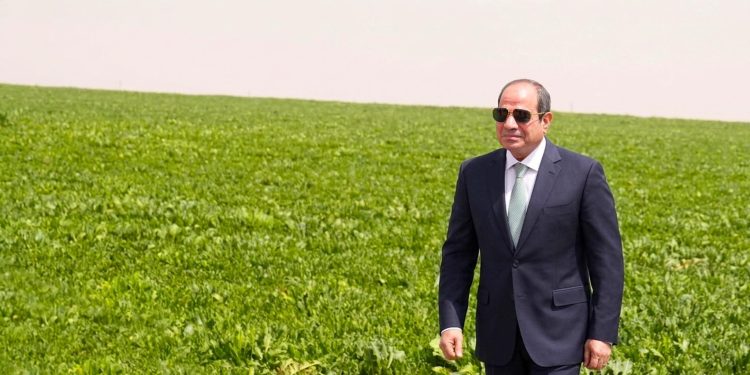
President Sisi stressed that the strategic vision behind the project, and Egypt’s broader agricultural development plans, is based on integration between old and newly reclaimed agricultural lands. Traditional crops including wheat and maize, he explained, would continue to be cultivated in the fertile Nile Valley and Nile Delta lands due to their higher productivity, while desert lands would focus on crops better suited to such conditions, including sugar beet.
According to the President, the project is expected to create some 2 million sustainable job opportunities, noting that private companies are responsible for cultivation in coordination with the State regarding targeted crops and crop rotation systems.
Sisi also underlined the difficulty of achieving full self-sufficiency in all crops, both in Egypt and globally, due to climatic, water and environmental challenges. He noted that Egypt imports between 14 and 17 million tonnes of animal feed annually, to say nothing of its wheat imports.
He further stressed that development is a continuous process, citing ongoing agricultural projects in Minya, Beni Suef, Kom Ombo, Toshka, East Oweinat and Sinai.
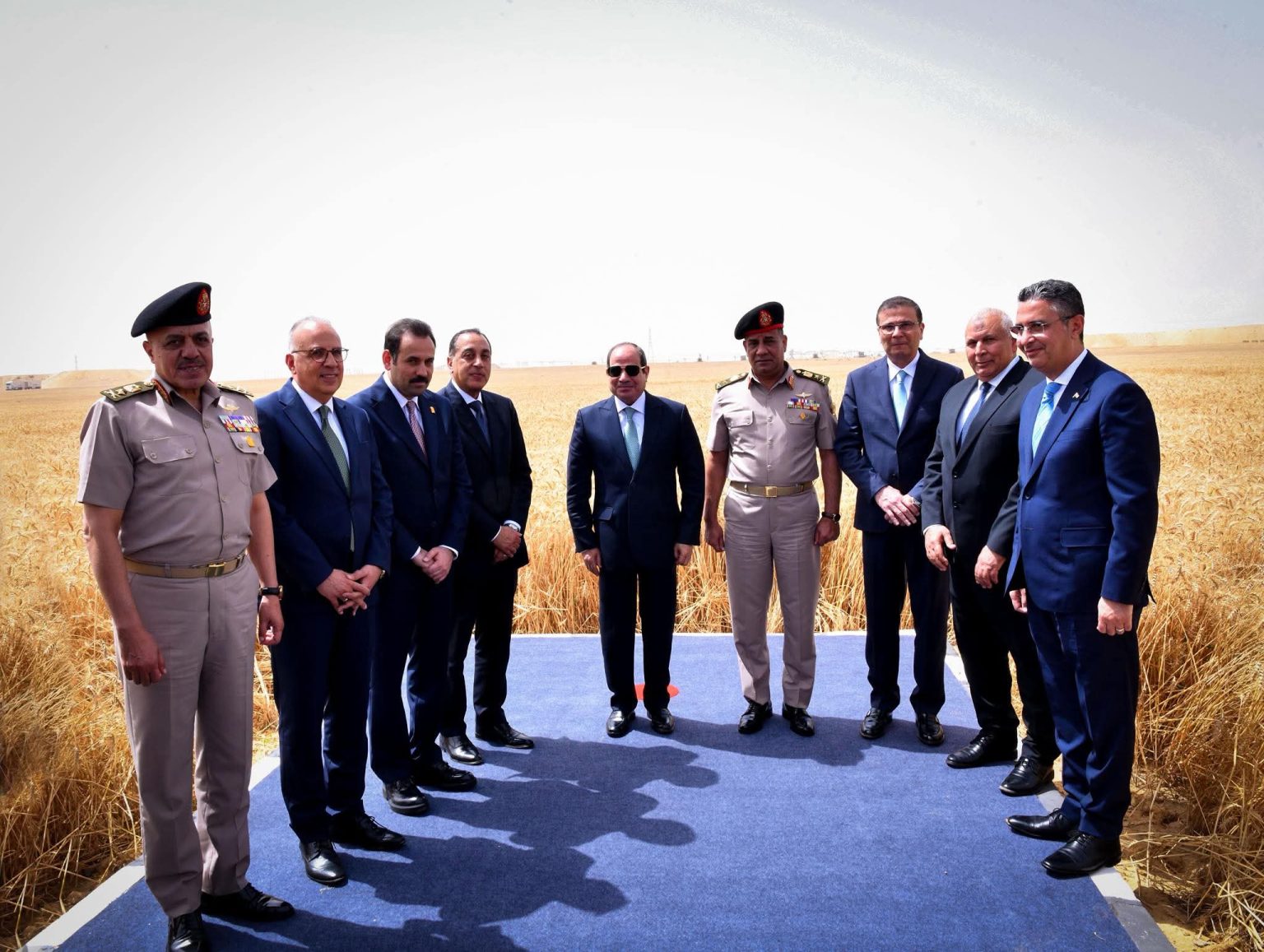
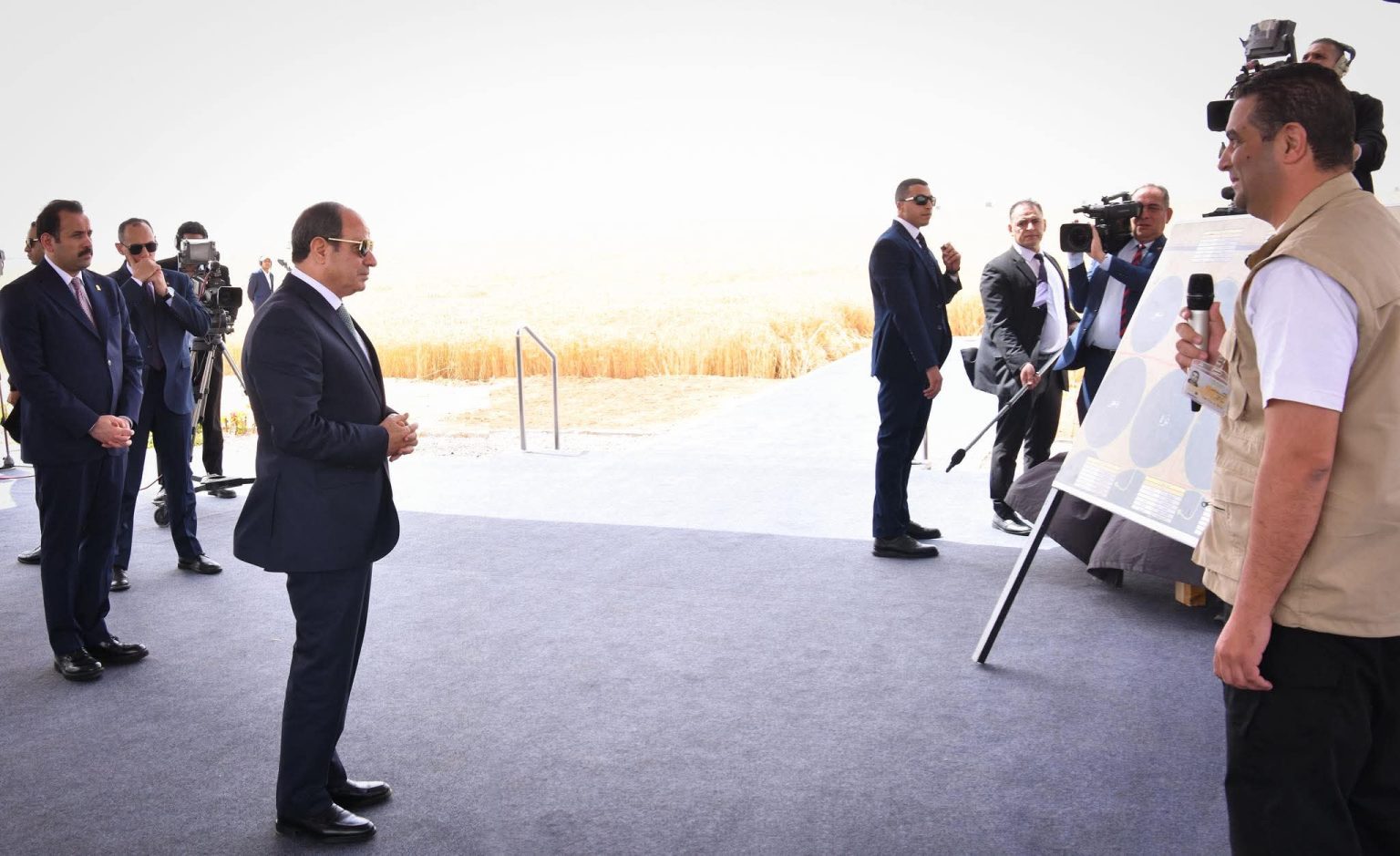
Following the ceremony, the president toured Water Pumping Station No. 3 Nabaa and inspected elements of the project’s operational and control systems before visiting a wheat harvesting site, where he received a detailed briefing on wheat productivity and crop quality.
President Sisi later posed for a commemorative photograph with project workers and attendees before concluding the tour by reviewing sugar beet production.
Worth noting is that the name of the project, New Delta, is telling. The Nile Delta in Egypt’s northern territories constitutes the most fertile and productive agricultural land in the country.