
Editor in Chief
Youssef Sidhom
Watani
عربى English French
  • News
    • Accidents
    • Crime
    • Diplomatic briefcase
    • NewsLine
    • Outside Cairo
    • Special Occasions
  • Opinion
    • Editorial
    • International media
    • Reader`s Corner
    • Opinion
  • Politics
    • Elections
    • International Politics
    • Islamisation Politics
    • National Affairs
    • Parliament
    • Politics
    • Protests
    • Rights
    • Terrorism
  • Culture
    • Antiquity
    • Art
    • Books
    • Culture
    • Drama
    • Egyptology
    • Festivals
    • Films
    • Heritage
    • Islamisation Culture
    • Media
    • Museums
    • Music
    • TV
  • Coptic
    • Church Affairs
    • Coptic Affairs
    • Coptic Culture
    • Copts in the Media
    • Coptology
    • Copts Abroad
    • Religious
      • P. Shenouda: Bible Study
    • Sectarian
    • Inter-religious
    • Holy Family
  • Features
    • Counselling Corner
    • features
    • Economy
      • Business
    • Education
    • Social Issues
      • Behaviour
      • Mothers Day
    • Health
    • Environment
    • Humour
    • In memorial
    • Interviews
    • Nile
    • Profile
    • Special needs
    • Sports
    • Technology
    • Tourism
    • Wars
    • Women
    • Youth
  • Watani Special Features
    • Egypt – Arab Spring
      • 25 January Revolution
      • 25 Jan revolution, one year on
      • Egypt post-30 June
    • Watani Milestones
      • 20 years Watani International
      • 10 years Watani International
      • Watani Jubilee
    • Pope Shenouda
    • Pope Tawadros
    • Watani Forum
No Result
View All Result
  • News
    • Accidents
    • Crime
    • Diplomatic briefcase
    • NewsLine
    • Outside Cairo
    • Special Occasions
  • Opinion
    • Editorial
    • International media
    • Reader`s Corner
    • Opinion
  • Politics
    • Elections
    • International Politics
    • Islamisation Politics
    • National Affairs
    • Parliament
    • Politics
    • Protests
    • Rights
    • Terrorism
  • Culture
    • Antiquity
    • Art
    • Books
    • Culture
    • Drama
    • Egyptology
    • Festivals
    • Films
    • Heritage
    • Islamisation Culture
    • Media
    • Museums
    • Music
    • TV
  • Coptic
    • Church Affairs
    • Coptic Affairs
    • Coptic Culture
    • Copts in the Media
    • Coptology
    • Copts Abroad
    • Religious
      • P. Shenouda: Bible Study
    • Sectarian
    • Inter-religious
    • Holy Family
  • Features
    • Counselling Corner
    • features
    • Economy
      • Business
    • Education
    • Social Issues
      • Behaviour
      • Mothers Day
    • Health
    • Environment
    • Humour
    • In memorial
    • Interviews
    • Nile
    • Profile
    • Special needs
    • Sports
    • Technology
    • Tourism
    • Wars
    • Women
    • Youth
  • Watani Special Features
    • Egypt – Arab Spring
      • 25 January Revolution
      • 25 Jan revolution, one year on
      • Egypt post-30 June
    • Watani Milestones
      • 20 years Watani International
      • 10 years Watani International
      • Watani Jubilee
    • Pope Shenouda
    • Pope Tawadros
    • Watani Forum
No Result
View All Result
No Result
View All Result
Watani
ع Fr
ADVERTISEMENT

Education in Egypt

15 December, 2011 - (9:06 AM)
0 0

Mervat Ayoub

Education in Egypt
16
VIEWS
Share on FacebookShare on Twitter

WATANI International
25 July 2010


Egyptian education is a complicated process for which many parties hold responsibility: the family, school and the State. Indeed, it would be no exaggeration to say that education amounts to a national security issue. If the current wretched educational situation persists, the future of the entire nation will be in jeopardy.


Spending on education
Economist and strategic expert Abdel-Khaleq Farouq says the government spends an annual EGP63 to 80 billion on education, which accounts to 15 per cent of the GDP. “Despite this huge budget Egyptian education is now in shambles,” he said. “The quality of education is questionable and graduates are inept for the requirements of the changing labour market. The outcome is an utter failure and widespread chaos in the field.”
Mr Farouq rings some alarm bells about the fate of national values and the constants of our identity order. “In light of the absence of strategic goals and comprehensive political outlooks, the educational system has ceased to be a factor of affirming national unity and encouraging people’s contribution to the welfare of the nation. People now strive to put their children in private schools for the sake of elevating their social status,” he said.
A growing number of private and foreign schools and universities including British, American, French, German, Canadian, Japanese and Russian, Mr Farouq says, have managed to change the national educational structure.


Four phases
Mr Farouq divides the history of Egyptian modern education into four phases. The first extended from the era of Mohamed Ali in the early 19th century till 1952. This period experienced serious efforts to promote and enhance education, although colonial intervention and the lack of political will acted as a countering force against these efforts. Yet the right to education was enshrined in none of the three constitutions drafted in this period: (1923, 1930 and 1935).
The second phase spanned the period from the 23 July 1952 Revolution, which ended the monarchy, until the 1967 Six Day War. The Constitutions of 1956 and 1964 stipulated education as a basic right—among a wider group of social and economic rights—and a law stipulating free education was passed. The period from 1967 to 1973 was characterised by a decrease in public spending on education and deterioration of educational infrastructure. Private lessons emerged as an informal system void of legitimacy, standing side by side with public and private education.
The fourth phase extended from 1973 to the present and witnessed positive developments, including a slight retreat in illiteracy rates, and a huge growth in government spending and private investments on education. In 1992 a law was passed to allow for the establishment of foreign and private universities. Further deepening the duality of Egyptian education system was the introduction of new departments teaching classes in foreign languages in public universities.


Overcrowded classrooms
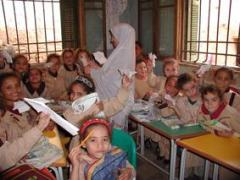
Although the numbers of school and university graduates have risen to unprecedented levels, Mr Farouq says, two phenomena now pose a serious threat to the future of Egyptian education: overcrowded classrooms (from 60 – 80 students) and the extremely low teacher wages. 
Former Minister of Education Yusri al-Gamal attributes the problem of overcrowded classes to the shortage of teachers and schools. Gamal says that Egypt has some 40,000 schools, which is inadequate given the growing student numbers. According to the former minister, the building of new schools is a must if the quality of education is to improve. The minimum number of schools we should be building this year to alleviate the problem of overcrowded classrooms, he says, is.some 3,000 schools.
 
Private lessons bugaboo
Despite official statements vowing to introduce alternatives to private lessons and take tough measures against teachers involved in the practice, it has proved extremely difficult to confront this phenomenon.
Ironically, not only did private lessons manage to hold despite otherwise official pledges, but they developed to take new forms: private lesson centres. These centres have proliferated across the country and now attract huge numbers of students. A source in the Ministry of Education told Watani that most of these centres were licensed to offer computer and language courses rather than private lessons. These licences, he said, should be revoked and the irregularities come to an end.
Recent statistics reveal that household spending on private lessons amounts to EGP12 – 15 billion annually. More often than not, parents fall into debt to pay for private teachers. It is estimated that 60 per cent of families with children at pre-university stages bore the burden of private lessons, while 35 per cent of families with children taking private lessons spent from EGP100 – 250 a month on these lessons.
As for students, they confirm that private lessons are indispensable if they are to achieve high grades. Michel Atef, in Thanawiya Amma, said that he had to contact a private teacher four months before the start of the school year. Another student in the same grade, Mustafa Hussein, said he could not dispense with private lessons since they proved crucial for even the most talented students.


Matter of life or death
“The main reason pushing students to take private lessons is the teachers’ incompetence,” Dr Mohamed Amin al-Mufti, former dean of the faculty of education, told Watani. Teachers, he says, graduate from the faculty of education and take a one-year-diploma to qualify as teachers. This Dr Mufti claims, is insufficient to make a competent teacher. The fact that competition for the relatively limited space in prestigious university is fierce, requiring extremely high scores, makes private lessons a matter of life and death.
The government for its part, has been trying to raise the salaries of teachers in an attempt to combat private lessons. But the gap between what the government can pay and what a teacher can earn from private lessons is far too wide. A member of the Teachers’ Syndicate board says that, after the latest salary increases, a teacher who spends 22 hours a week at work would gain a few hundred Egyptian Pounds a month, against a few thousands he could make out of giving private lessons. The system is entirely inadequate to satisfy teachers’ needs, he says.




Comments

comments

Tags: educationEgypt

Related Posts

Archive Articles


SAINTE CATHERINE LABOURÉ, Servante des pauvres


December 15, 2011
Archive Articles

Agenda

December 15, 2011
DJ Zebra au Caire
Archive Articles

DJ Zebra au Caire

December 15, 2011
Archive Articles

Au caire le président américain visite la mosquée du Sultan Hassan

December 15, 2011
Archive Articles

“Nouveau départ entre les musulmans et les États-Unis”

December 15, 2011
Archive Articles

Principales œuvres

December 15, 2011

Editorial

China and Russia vis-à-vis Trump’s Iran War

More

MOST READ

Egypt attempts to contain Myna bird invasion
Environment

Egypt attempts to contain Myna bird invasion

June 15, 2026
0

The Nature Protection Sector of Egypt’s Ministry of Local Development and Environment has been monitoring and tracking the spread of...

Read more
Watani talks to Anba Bigol, Bishop and Abbot of al-Muharraq Monastery of the Holy Virgin Mary

Watani talks to Anba Bigol, Bishop and Abbot of al-Muharraq Monastery of the Holy Virgin Mary

June 17, 2026
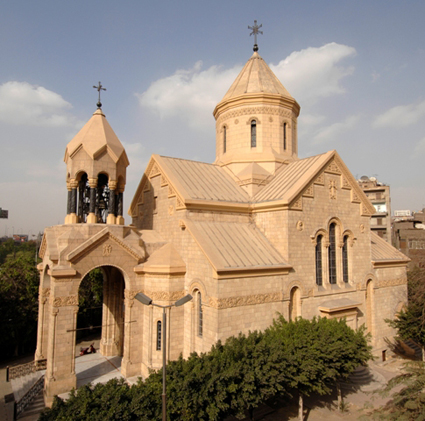
Egypt’s Armenians

Egypt’s Armenians

April 22, 2015
‘Train of Hope’ to carry home 1,200 Sudanese

‘Train of Hope’ to carry home 1,200 Sudanese

June 16, 2026
Jobs for persons with disabilities

Jobs for persons with disabilities

June 15, 2026

Features

China’s Long March launches USD190M tyre manufacturing project in Egypt
Economy

China’s Long March launches USD190M tyre manufacturing project in Egypt

June 17, 2026
0

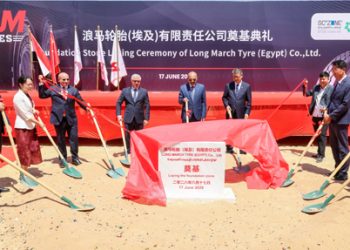
China’s Chaoyang Long March Tyre Co., Ltd. has launched a USD190 million tyre manufacturing project in Egypt’s Suez Canal Economic...

Read more
Watani started as an Egyptian weekly Sunday newspaper published in Cairo. The word Watani is Arabic for “My Homeland”. The paper was founded in 1958 by the prominent Copt Antoun Sidhom (1915 – 1995), who strove for the establishment of a civil, democratic society in Egypt, where all Egyptians would enjoy full citizenship rights regardless of their religious denomination. To this day when Watani is published as a weekly paper and an online news site, the objective remains the same. Those in charge of Watani view this role as a patriotic all-Egyptian vocation. Special attention is given to shedding light on Coptic culture and tradition as authentically Egyptian, this being a topic largely disregarded or little-understood by Egypt’s media. Watani is deeply dedicated to offer its readers high quality, extensive, objective, credible and well-researched media coverage, with special focus on Coptic issues, culture, heritage, and contribution to Egyptian society.
-----------------------------------------------------------

27 Abdel Khalek Tharwat st, Downtown, Abdeen,Cairo

00202-23927201

00202-23935946

 [email protected]


categories

  • News
  • Opinion
  • Politics
  • Culture
  • Egypt – Arab Spring
  • Coptic Affairs
  • Features
  • Watani Special Features

Recent Posts

  • China and Russia vis-à-vis Trump’s Iran War
  • China’s Long March launches USD190M tyre manufacturing project in Egypt
  • Watani talks to Anba Bigol, Bishop and Abbot of al-Muharraq Monastery of the Holy Virgin Mary
  • ‘Train of Hope’ to carry home 1,200 Sudanese
  • Egypt launches ROX Motor partnership to manufacture new-energy vehicles
  • News
  • Opinion
  • Politics
  • Culture
  • Egypt – Arab Spring
  • Coptic Affairs
  • Features
  • Watani Special Features

Powered BY 3A Digital.

No Result
View All Result
  • News
    • Accidents
    • Crime
    • Diplomatic briefcase
    • NewsLine
    • Outside Cairo
    • Special Occasions
  • Opinion
    • Editorial
    • International media
    • Reader`s Corner
    • Opinion
  • Politics
    • Elections
    • International Politics
    • Islamisation Politics
    • National Affairs
    • Parliament
    • Politics
    • Protests
    • Rights
    • Terrorism
  • Culture
    • Antiquity
    • Art
    • Books
    • Culture
    • Drama
    • Egyptology
    • Festivals
    • Films
    • Heritage
    • Islamisation Culture
    • Media
    • Museums
    • Music
    • TV
  • Coptic
    • Church Affairs
    • Coptic Affairs
    • Coptic Culture
    • Copts in the Media
    • Coptology
    • Copts Abroad
    • Religious
      • P. Shenouda: Bible Study
    • Sectarian
    • Inter-religious
    • Holy Family
  • Features
    • Counselling Corner
    • features
    • Economy
      • Business
    • Education
    • Social Issues
      • Behaviour
      • Mothers Day
    • Health
    • Environment
    • Humour
    • In memorial
    • Interviews
    • Nile
    • Profile
    • Special needs
    • Sports
    • Technology
    • Tourism
    • Wars
    • Women
    • Youth
  • Watani Special Features
    • Egypt – Arab Spring
      • 25 January Revolution
      • 25 Jan revolution, one year on
      • Egypt post-30 June
    • Watani Milestones
      • 20 years Watani International
      • 10 years Watani International
      • Watani Jubilee
    • Pope Shenouda
    • Pope Tawadros
    • Watani Forum

Powered BY 3A Digital.

Login to your account below

Forgotten Password?

Fill the forms bellow to register

All fields are required. Log In

Retrieve your password

Please enter your username or email address to reset your password.

Log In