
Editor in Chief
Youssef Sidhom
Watani
عربى English French
  • News
    • Accidents
    • Crime
    • Diplomatic briefcase
    • NewsLine
    • Outside Cairo
    • Special Occasions
  • Opinion
    • Editorial
    • International media
    • Reader`s Corner
    • Opinion
  • Politics
    • Elections
    • International Politics
    • Islamisation Politics
    • National Affairs
    • Parliament
    • Politics
    • Protests
    • Rights
    • Terrorism
  • Culture
    • Antiquity
    • Art
    • Books
    • Culture
    • Drama
    • Egyptology
    • Festivals
    • Films
    • Heritage
    • Islamisation Culture
    • Media
    • Museums
    • Music
    • TV
  • Coptic
    • Church Affairs
    • Coptic Affairs
    • Coptic Culture
    • Copts in the Media
    • Coptology
    • Copts Abroad
    • Religious
      • P. Shenouda: Bible Study
    • Sectarian
    • Inter-religious
    • Holy Family
  • Features
    • Counselling Corner
    • features
    • Economy
      • Business
    • Education
    • Social Issues
      • Behaviour
      • Mothers Day
    • Health
    • Environment
    • Humour
    • In memorial
    • Interviews
    • Nile
    • Profile
    • Special needs
    • Sports
    • Technology
    • Tourism
    • Wars
    • Women
    • Youth
  • Watani Special Features
    • Egypt – Arab Spring
      • 25 January Revolution
      • 25 Jan revolution, one year on
      • Egypt post-30 June
    • Watani Milestones
      • 20 years Watani International
      • 10 years Watani International
      • Watani Jubilee
    • Pope Shenouda
    • Pope Tawadros
    • Watani Forum
No Result
View All Result
  • News
    • Accidents
    • Crime
    • Diplomatic briefcase
    • NewsLine
    • Outside Cairo
    • Special Occasions
  • Opinion
    • Editorial
    • International media
    • Reader`s Corner
    • Opinion
  • Politics
    • Elections
    • International Politics
    • Islamisation Politics
    • National Affairs
    • Parliament
    • Politics
    • Protests
    • Rights
    • Terrorism
  • Culture
    • Antiquity
    • Art
    • Books
    • Culture
    • Drama
    • Egyptology
    • Festivals
    • Films
    • Heritage
    • Islamisation Culture
    • Media
    • Museums
    • Music
    • TV
  • Coptic
    • Church Affairs
    • Coptic Affairs
    • Coptic Culture
    • Copts in the Media
    • Coptology
    • Copts Abroad
    • Religious
      • P. Shenouda: Bible Study
    • Sectarian
    • Inter-religious
    • Holy Family
  • Features
    • Counselling Corner
    • features
    • Economy
      • Business
    • Education
    • Social Issues
      • Behaviour
      • Mothers Day
    • Health
    • Environment
    • Humour
    • In memorial
    • Interviews
    • Nile
    • Profile
    • Special needs
    • Sports
    • Technology
    • Tourism
    • Wars
    • Women
    • Youth
  • Watani Special Features
    • Egypt – Arab Spring
      • 25 January Revolution
      • 25 Jan revolution, one year on
      • Egypt post-30 June
    • Watani Milestones
      • 20 years Watani International
      • 10 years Watani International
      • Watani Jubilee
    • Pope Shenouda
    • Pope Tawadros
    • Watani Forum
No Result
View All Result
No Result
View All Result
Watani
ع Fr
ADVERTISEMENT

Egyptians against discrimination

15 December, 2011 - (9:04 AM)
0 0

Ishaq Ibrahim

50
VIEWS
Share on FacebookShare on Twitter

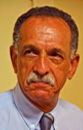
Egyptians Against Religious Discrimination (EARD) is a group of concerned people who, despite holding different and sometimes divergent viewpoints, have agreed to work together to achieve one collective goal, that of fighting religious discrimination, upholding human values and individual rights. EARD was recently denied the status of NGO but has not given up its quest and is still trying to gain this status. Watani talked to Mounir Megahed who heads the group.

How did the EARD start, and with what perspective?
In April 2006, a knife-wielding man who was said to be mentally unstable attacked the congregations of three churches in Alexandria. Many Muslims were angered because this and other crimes were committed in the name of Islam. They believed such attacks should be condemned, and that Muslims should unite in opposing fanaticism and terrorism. We hastened to issue a statement signed by 200 Muslims to support non-Muslims, defending freedom of belief, no compulsion in religion, full citizenship rights for all Egyptians regardless of their sex, colour or religious affiliation. We believe that religious discrimination should be legally banned, and anyone who discriminates against another should be penalised.
After the first statement the signatories felt the matter should not be dropped at that. In August 2006 we announced the foundation of EARD as a democratic body that condemned religious discrimination and was open to all Egyptians. This was signed by 305 Egyptians of different religious, social, and political background. Through the Internet membership rose to 700.

Is EARD any different from other civil organisations?
We are not a political party; we are not against anyone; and we are only against religious discrimination. Membership of EARD is individual; the member can belong to any political party, civil organisation, research centre, or syndicate. EARD is not aided by association or money, since new people join every day and can make a positive contribution.

What has EARD achieved so far?
We have issued a series of statements in support of people who were subjected to discrimination because of their religion. One was the peasant woman Shadya al-Sissi who was imprisoned on charges of forgery because she had remained Christian even though her father had, when she was a three-year-old child, converted to Islam and she should have then been accordingly Muslim. Another was Ghada Atef who was deprived from being appointed a lecturer in university because of her belief. The group organised a seminar on the second article of the Constitution, which stipulates Islam as the State religion and Islamic sharia as the principle source of legislation. EARD sent delegates to attend the conference held by immigrant Copts, and studied the recommendations of their Zurich and Washington conferences in 2004 and 2005 respectively. It also approved the statement issued by six Coptic intellectuals under the title ‘Citizens in one homeland’.

In one of the seminars you held you referred to the “high investment in religion”. How is this?
A study by Sameh Said Abboud entitled “Religion’s hidden investments” stresses that there are wide social categories benefiting both materially and indirectly through unseen investment in religion. Mr Abboud gave as example the millions of people who gain from the phenomenon of religious extremism, such as beggars who sell prayers and street vendors selling religious books and CDs. The craze has spread in schools, publishing houses and religious associations, and topping the list are men of religion and the owners of Satellite channels and religious papers. There are many others, thousands of bureaucrats and capitalists involved in this mega-economic activity.

Is there a correlation between discrimination and the rise in religious movements?
I don’t like this expression. There is a rise in ‘religiosity’, which is different from true piety. Egypt is going through hard times, but the tolerant and mild Egyptian character has not vanished. In Egypt there has been mosque, church; the pious, moderate, and non-pious. I think we can gather Egyptians to battle religious discrimination.

At what point can we start?
Knowing the ailment is half the remedy. Enlightened, religious people should lead a movement of religious reform, and at the same time people must hold to a secular, civil society to confront fanatic thought.
We have to move in villages and towns and, in cooperation with civil society institutions which defend human rights and values regardless of religion or belief, we can conduct campaigns aiming at changing curricula and promoting media programmes to endorse non-discriminatory attitudes towards non-Muslims. We also aim to register instances of religious discrimination and help victims through a network of lawyers—all members of EARD—and develop ways to spread religious tolerance and ‘accepting the other’ through producing enlightening material—books, films, plays, songs, TV programmes, art exhibitions and suchlike. We plan to set up a website on the Internet to promote and act as a forum for our ideas, and intend to organise summer camps for children and young people from all religions and walks of life.

How do you get the finance necessary for all these activities?
The group decided not to receive any funds or donations from any foreign country or from any association that may distort the image of the group. We accept donations, at a maximum of LE2000 so as not to give anyone the opportunity to dominate the group. We publicly announce the names of the donors and sums of donations.

How do you see the government’s role in ending discrimination? And the Copts’?
The government has to be neutral in religious affairs, since it represents all Egyptians and defends their rights and interests, and at the same time the government has to guarantee freedom of belief and religious calling.
As for the Copts, I see they do not represent one homogenous mass; they include both conservative and progressive trends. They should take part in all political activities, even though the political climate in Egypt appears to encourage neither Muslims nor Christians to participate.

I notice that, upon reviewing the situation you have asked the Copts to wait until societal problems are over, and you seem pessimistic. Is this correct?
I did not mean that the Copts or non-Muslims should wait until the problems are solved or that they must look to live in an ideal society; merely to be patient. To realise such a perfect society it is required to struggle over certain issues, such as women rights, religious discrimination and the economy. No question that in the last few years Egyptian society has seen mass movements from workers, peasants, students, women and non-Muslims, who have won some battles because they defended joint interests. The last few years have also seen increasing numbers of enlightened Muslims who reject all aspects of discrimination against non-Muslims, considering such discrimination to be acts against the nation and religion.

Comments

comments

Tags: againstDiscriminationEgyptians

Related Posts

Archive Articles


SAINTE CATHERINE LABOURÉ, Servante des pauvres


December 15, 2011
Archive Articles

Agenda

December 15, 2011
DJ Zebra au Caire
Archive Articles

DJ Zebra au Caire

December 15, 2011
Archive Articles

Au caire le président américain visite la mosquée du Sultan Hassan

December 15, 2011
Archive Articles

“Nouveau départ entre les musulmans et les États-Unis”

December 15, 2011
Archive Articles

Principales œuvres

December 15, 2011

Editorial

China and Russia vis-à-vis Trump’s Iran War

More

MOST READ

Egypt attempts to contain Myna bird invasion
Environment

Egypt attempts to contain Myna bird invasion

June 15, 2026
0

The Nature Protection Sector of Egypt’s Ministry of Local Development and Environment has been monitoring and tracking the spread of...

Read more
Watani talks to Anba Bigol, Bishop and Abbot of al-Muharraq Monastery of the Holy Virgin Mary

Watani talks to Anba Bigol, Bishop and Abbot of al-Muharraq Monastery of the Holy Virgin Mary

June 17, 2026
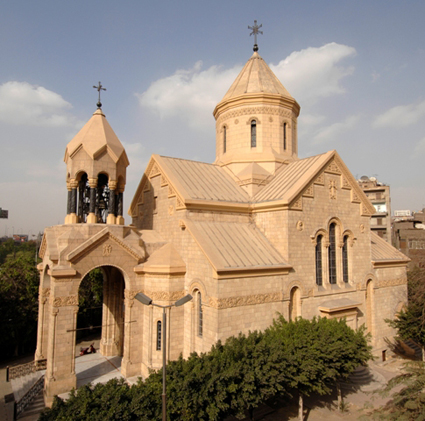
Egypt’s Armenians

Egypt’s Armenians

April 22, 2015
‘Train of Hope’ to carry home 1,200 Sudanese

‘Train of Hope’ to carry home 1,200 Sudanese

June 16, 2026
Jobs for persons with disabilities

Jobs for persons with disabilities

June 15, 2026

Features

China’s Long March launches USD190M tyre manufacturing project in Egypt
Economy

China’s Long March launches USD190M tyre manufacturing project in Egypt

June 17, 2026
0

China’s Chaoyang Long March Tyre Co., Ltd. has launched a USD190 million tyre manufacturing project in Egypt’s Suez Canal Economic...

Read more
Watani started as an Egyptian weekly Sunday newspaper published in Cairo. The word Watani is Arabic for “My Homeland”. The paper was founded in 1958 by the prominent Copt Antoun Sidhom (1915 – 1995), who strove for the establishment of a civil, democratic society in Egypt, where all Egyptians would enjoy full citizenship rights regardless of their religious denomination. To this day when Watani is published as a weekly paper and an online news site, the objective remains the same. Those in charge of Watani view this role as a patriotic all-Egyptian vocation. Special attention is given to shedding light on Coptic culture and tradition as authentically Egyptian, this being a topic largely disregarded or little-understood by Egypt’s media. Watani is deeply dedicated to offer its readers high quality, extensive, objective, credible and well-researched media coverage, with special focus on Coptic issues, culture, heritage, and contribution to Egyptian society.
-----------------------------------------------------------

27 Abdel Khalek Tharwat st, Downtown, Abdeen,Cairo

00202-23927201

00202-23935946

 [email protected]


categories

  • News
  • Opinion
  • Politics
  • Culture
  • Egypt – Arab Spring
  • Coptic Affairs
  • Features
  • Watani Special Features

Recent Posts

  • China and Russia vis-à-vis Trump’s Iran War
  • China’s Long March launches USD190M tyre manufacturing project in Egypt
  • Watani talks to Anba Bigol, Bishop and Abbot of al-Muharraq Monastery of the Holy Virgin Mary
  • ‘Train of Hope’ to carry home 1,200 Sudanese
  • Egypt launches ROX Motor partnership to manufacture new-energy vehicles
  • News
  • Opinion
  • Politics
  • Culture
  • Egypt – Arab Spring
  • Coptic Affairs
  • Features
  • Watani Special Features

Powered BY 3A Digital.

No Result
View All Result
  • News
    • Accidents
    • Crime
    • Diplomatic briefcase
    • NewsLine
    • Outside Cairo
    • Special Occasions
  • Opinion
    • Editorial
    • International media
    • Reader`s Corner
    • Opinion
  • Politics
    • Elections
    • International Politics
    • Islamisation Politics
    • National Affairs
    • Parliament
    • Politics
    • Protests
    • Rights
    • Terrorism
  • Culture
    • Antiquity
    • Art
    • Books
    • Culture
    • Drama
    • Egyptology
    • Festivals
    • Films
    • Heritage
    • Islamisation Culture
    • Media
    • Museums
    • Music
    • TV
  • Coptic
    • Church Affairs
    • Coptic Affairs
    • Coptic Culture
    • Copts in the Media
    • Coptology
    • Copts Abroad
    • Religious
      • P. Shenouda: Bible Study
    • Sectarian
    • Inter-religious
    • Holy Family
  • Features
    • Counselling Corner
    • features
    • Economy
      • Business
    • Education
    • Social Issues
      • Behaviour
      • Mothers Day
    • Health
    • Environment
    • Humour
    • In memorial
    • Interviews
    • Nile
    • Profile
    • Special needs
    • Sports
    • Technology
    • Tourism
    • Wars
    • Women
    • Youth
  • Watani Special Features
    • Egypt – Arab Spring
      • 25 January Revolution
      • 25 Jan revolution, one year on
      • Egypt post-30 June
    • Watani Milestones
      • 20 years Watani International
      • 10 years Watani International
      • Watani Jubilee
    • Pope Shenouda
    • Pope Tawadros
    • Watani Forum

Powered BY 3A Digital.

Login to your account below

Forgotten Password?

Fill the forms bellow to register

All fields are required. Log In

Retrieve your password

Please enter your username or email address to reset your password.

Log In