
Editor in Chief
Youssef Sidhom
Watani
عربى English French
  • News
    • Accidents
    • Crime
    • Diplomatic briefcase
    • NewsLine
    • Outside Cairo
    • Special Occasions
  • Opinion
    • Editorial
    • International media
    • Reader`s Corner
    • Opinion
  • Politics
    • Elections
    • International Politics
    • Islamisation Politics
    • National Affairs
    • Parliament
    • Politics
    • Protests
    • Rights
    • Terrorism
  • Culture
    • Antiquity
    • Art
    • Books
    • Culture
    • Drama
    • Egyptology
    • Festivals
    • Films
    • Heritage
    • Islamisation Culture
    • Media
    • Museums
    • Music
    • TV
  • Coptic
    • Church Affairs
    • Coptic Affairs
    • Coptic Culture
    • Copts in the Media
    • Coptology
    • Copts Abroad
    • Religious
      • P. Shenouda: Bible Study
    • Sectarian
    • Inter-religious
    • Holy Family
  • Features
    • Counselling Corner
    • features
    • Economy
      • Business
    • Education
    • Social Issues
      • Behaviour
      • Mothers Day
    • Health
    • Environment
    • Humour
    • In memorial
    • Interviews
    • Nile
    • Profile
    • Special needs
    • Sports
    • Technology
    • Tourism
    • Wars
    • Women
    • Youth
  • Watani Special Features
    • Egypt – Arab Spring
      • 25 January Revolution
      • 25 Jan revolution, one year on
      • Egypt post-30 June
    • Watani Milestones
      • 20 years Watani International
      • 10 years Watani International
      • Watani Jubilee
    • Pope Shenouda
    • Pope Tawadros
    • Watani Forum
No Result
View All Result
  • News
    • Accidents
    • Crime
    • Diplomatic briefcase
    • NewsLine
    • Outside Cairo
    • Special Occasions
  • Opinion
    • Editorial
    • International media
    • Reader`s Corner
    • Opinion
  • Politics
    • Elections
    • International Politics
    • Islamisation Politics
    • National Affairs
    • Parliament
    • Politics
    • Protests
    • Rights
    • Terrorism
  • Culture
    • Antiquity
    • Art
    • Books
    • Culture
    • Drama
    • Egyptology
    • Festivals
    • Films
    • Heritage
    • Islamisation Culture
    • Media
    • Museums
    • Music
    • TV
  • Coptic
    • Church Affairs
    • Coptic Affairs
    • Coptic Culture
    • Copts in the Media
    • Coptology
    • Copts Abroad
    • Religious
      • P. Shenouda: Bible Study
    • Sectarian
    • Inter-religious
    • Holy Family
  • Features
    • Counselling Corner
    • features
    • Economy
      • Business
    • Education
    • Social Issues
      • Behaviour
      • Mothers Day
    • Health
    • Environment
    • Humour
    • In memorial
    • Interviews
    • Nile
    • Profile
    • Special needs
    • Sports
    • Technology
    • Tourism
    • Wars
    • Women
    • Youth
  • Watani Special Features
    • Egypt – Arab Spring
      • 25 January Revolution
      • 25 Jan revolution, one year on
      • Egypt post-30 June
    • Watani Milestones
      • 20 years Watani International
      • 10 years Watani International
      • Watani Jubilee
    • Pope Shenouda
    • Pope Tawadros
    • Watani Forum
No Result
View All Result
No Result
View All Result
Watani
ع Fr
ADVERTISEMENT

Facing the Oil Cartel

15 December, 2011 - (9:04 AM)
0 0

Henry A. Kissinger and Martin Feldstein

12
VIEWS
Share on FacebookShare on Twitter


The tripling in the price of oil from $30 a barrel in 2001 to around $100 today represents the largest transfer of wealth in human history. The 13 OPEC members alone are expected to earn more than $1 trillion this year from oil sales. Inevitably, this will bring with it major political consequences. Not the least significant aspect of this political and economic earthquake is that it is being exacted upon the world##s most powerful nations by some of the world##s weakest. Yet the victims stand by impotently as if the price of oil were some natural event determined by a competitive economic market that is not and cannot be influenced by political forces.


But the price of oil is not determined by a traditional competitive market. Major producers such as the members of OPEC can and do raise or lower the price of oil by reducing or increasing their rate of production. And since today##s oil price also reflects expectations of future supply and demand, these monopolistic suppliers are able to compound the volatility of the market through statements about their future intentions.


The monopoly suppliers will continue to have strong market power until the consuming nations sharply reduce their dependence on imported oil and develop a political strategy to counter political manipulation of the oil market or the use of the vast OPEC surpluses to blackmail their economies or individual industries.


The oil-consuming nations are in a position, however, to shape both the global economic and political balance, provided they coordinate and, to some extent, pool their efforts. America should play a major role in this effort. Rather than wait passively for the next blow to fall, the major consuming nations — the Group of Seven, together with India, China and Brazil — should establish a coordinating group to shift the long-term trends of supply and demand in their favor and to end the blackmail of the strong by the weak.


Coordinated actions could bring down the price of oil by reducing and, in the long term, eliminating the speculative pressures behind recent price rises as well as by establishing a coherent supply policy. Many of the measures recommended to achieve this — such as conservation and the development of domestic oil supplies and alternative sources of renewable energy — will take years to become effective. However, even before the balance of market power has been transformed, the expectation of change would reduce the price of oil. This would especially become the case if the political impetus behind oil pricing could be reduced or eliminated.


A cooperative policy should also include emergency sharing arrangements to counter selective boycotts or supply interruptions. In the 1970s, the creation of the International Energy Agency, with its plans for emergency assistance and financial cooperation, did much to mitigate the rise of oil prices. A broader effort is needed now.


This year##s price rise was driven by changes in the expected long-term demand for oil while supplies remained largely static. New projections of rapidly increasing demand in China and India and of declines in production in Russia and Mexico drove up oil prices because of the expectation of a collapse in the balance between supply and demand. By the same token, actions that would slow the growth of demand and speed the rise in supply would translate relatively quickly into a lower current price.


A change in U.S. national energy policies is essential. But those policies would be much more effective as part of a coordinated international effort to increase supply and reduce demand in the global energy market. Such a policy must take into account the needs of differing regions and achieve compatibility in policies on conservation and global warming. In the United States, oil is used primarily to make gasoline for automobiles. Only about one-third of oil consumption is for non-transportation uses, primarily in petroleum-based chemical firms. Outside the United States, oil is primarily used for heating and electricity generation. Coordinated policies should therefore focus on reducing U.S. gasoline use, while other countries could contribute by shifting from oil to hydropower, clean coal technology or nuclear power to generate electricity.


Increasing the supply of oil deserves to be a high priority. American policies to increase supply by expanding drilling and by developing oil shale need to be matched by policies to increase supply abroad. That requires more investment by state-owned oil providers, the primary sources of oil today.


The oil consumers are in a position to use diplomatic measures to establish a new balance between producers and consumers. Efforts to induce producers to increase supply should be complemented by policies to stabilize the political situation in oil-producing countries such as Nigeria and to increase protection of oil shipping routes such as the Strait of Hormuz.


Some of the policies to reduce the price of oil would also reduce U.S. dependence on imported oil without eliminating it. The United States will remain an oil importer until gasoline for automobiles is replaced by batteries, hydrogen or compressed natural gas. At the same time, for an interim period, efforts to increase the supply of oil and other carbon fuels may make it more difficult to reduce carbon emissions. But because of the profound political consequences of high oil prices, reducing those prices must be the immediate paramount objective.


__________________


The Washington Post

Comments

comments

Tags: CartelFacing

Related Posts

Archive Articles


SAINTE CATHERINE LABOURÉ, Servante des pauvres


December 15, 2011
Archive Articles

Agenda

December 15, 2011
DJ Zebra au Caire
Archive Articles

DJ Zebra au Caire

December 15, 2011
Archive Articles

Au caire le président américain visite la mosquée du Sultan Hassan

December 15, 2011
Archive Articles

“Nouveau départ entre les musulmans et les États-Unis”

December 15, 2011
Archive Articles

Principales œuvres

December 15, 2011

Editorial

China and Russia vis-à-vis Trump’s Iran War

More

MOST READ

Egypt attempts to contain Myna bird invasion
Environment

Egypt attempts to contain Myna bird invasion

June 15, 2026
0

The Nature Protection Sector of Egypt’s Ministry of Local Development and Environment has been monitoring and tracking the spread of...

Read more
Watani talks to Anba Bigol, Bishop and Abbot of al-Muharraq Monastery of the Holy Virgin Mary

Watani talks to Anba Bigol, Bishop and Abbot of al-Muharraq Monastery of the Holy Virgin Mary

June 17, 2026
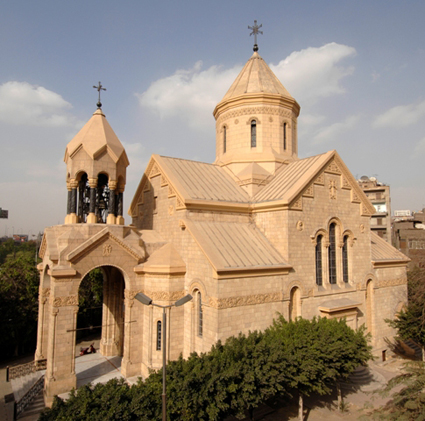
Egypt’s Armenians

Egypt’s Armenians

April 22, 2015
‘Train of Hope’ to carry home 1,200 Sudanese

‘Train of Hope’ to carry home 1,200 Sudanese

June 16, 2026
Jobs for persons with disabilities

Jobs for persons with disabilities

June 15, 2026

Features

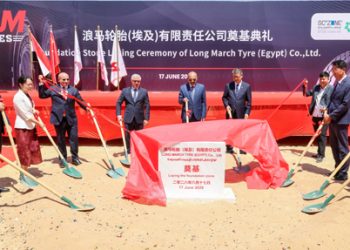
China’s Long March launches USD190M tyre manufacturing project in Egypt
Economy

China’s Long March launches USD190M tyre manufacturing project in Egypt

June 17, 2026
0

China’s Chaoyang Long March Tyre Co., Ltd. has launched a USD190 million tyre manufacturing project in Egypt’s Suez Canal Economic...

Read more
Watani started as an Egyptian weekly Sunday newspaper published in Cairo. The word Watani is Arabic for “My Homeland”. The paper was founded in 1958 by the prominent Copt Antoun Sidhom (1915 – 1995), who strove for the establishment of a civil, democratic society in Egypt, where all Egyptians would enjoy full citizenship rights regardless of their religious denomination. To this day when Watani is published as a weekly paper and an online news site, the objective remains the same. Those in charge of Watani view this role as a patriotic all-Egyptian vocation. Special attention is given to shedding light on Coptic culture and tradition as authentically Egyptian, this being a topic largely disregarded or little-understood by Egypt’s media. Watani is deeply dedicated to offer its readers high quality, extensive, objective, credible and well-researched media coverage, with special focus on Coptic issues, culture, heritage, and contribution to Egyptian society.
-----------------------------------------------------------

27 Abdel Khalek Tharwat st, Downtown, Abdeen,Cairo

00202-23927201

00202-23935946

 [email protected]


categories

  • News
  • Opinion
  • Politics
  • Culture
  • Egypt – Arab Spring
  • Coptic Affairs
  • Features
  • Watani Special Features

Recent Posts

  • China and Russia vis-à-vis Trump’s Iran War
  • China’s Long March launches USD190M tyre manufacturing project in Egypt
  • Watani talks to Anba Bigol, Bishop and Abbot of al-Muharraq Monastery of the Holy Virgin Mary
  • ‘Train of Hope’ to carry home 1,200 Sudanese
  • Egypt launches ROX Motor partnership to manufacture new-energy vehicles
  • News
  • Opinion
  • Politics
  • Culture
  • Egypt – Arab Spring
  • Coptic Affairs
  • Features
  • Watani Special Features

Powered BY 3A Digital.

No Result
View All Result
  • News
    • Accidents
    • Crime
    • Diplomatic briefcase
    • NewsLine
    • Outside Cairo
    • Special Occasions
  • Opinion
    • Editorial
    • International media
    • Reader`s Corner
    • Opinion
  • Politics
    • Elections
    • International Politics
    • Islamisation Politics
    • National Affairs
    • Parliament
    • Politics
    • Protests
    • Rights
    • Terrorism
  • Culture
    • Antiquity
    • Art
    • Books
    • Culture
    • Drama
    • Egyptology
    • Festivals
    • Films
    • Heritage
    • Islamisation Culture
    • Media
    • Museums
    • Music
    • TV
  • Coptic
    • Church Affairs
    • Coptic Affairs
    • Coptic Culture
    • Copts in the Media
    • Coptology
    • Copts Abroad
    • Religious
      • P. Shenouda: Bible Study
    • Sectarian
    • Inter-religious
    • Holy Family
  • Features
    • Counselling Corner
    • features
    • Economy
      • Business
    • Education
    • Social Issues
      • Behaviour
      • Mothers Day
    • Health
    • Environment
    • Humour
    • In memorial
    • Interviews
    • Nile
    • Profile
    • Special needs
    • Sports
    • Technology
    • Tourism
    • Wars
    • Women
    • Youth
  • Watani Special Features
    • Egypt – Arab Spring
      • 25 January Revolution
      • 25 Jan revolution, one year on
      • Egypt post-30 June
    • Watani Milestones
      • 20 years Watani International
      • 10 years Watani International
      • Watani Jubilee
    • Pope Shenouda
    • Pope Tawadros
    • Watani Forum

Powered BY 3A Digital.

Login to your account below

Forgotten Password?

Fill the forms bellow to register

All fields are required. Log In

Retrieve your password

Please enter your username or email address to reset your password.

Log In