
Editor in Chief
Youssef Sidhom
Watani
عربى English French
  • News
    • Accidents
    • Crime
    • Diplomatic briefcase
    • NewsLine
    • Outside Cairo
    • Special Occasions
  • Opinion
    • Editorial
    • International media
    • Reader`s Corner
    • Opinion
  • Politics
    • Elections
    • International Politics
    • Islamisation Politics
    • National Affairs
    • Parliament
    • Politics
    • Protests
    • Rights
    • Terrorism
  • Culture
    • Antiquity
    • Art
    • Books
    • Culture
    • Drama
    • Egyptology
    • Festivals
    • Films
    • Heritage
    • Islamisation Culture
    • Media
    • Museums
    • Music
    • TV
  • Coptic
    • Church Affairs
    • Coptic Affairs
    • Coptic Culture
    • Copts in the Media
    • Coptology
    • Copts Abroad
    • Religious
      • P. Shenouda: Bible Study
    • Sectarian
    • Inter-religious
    • Holy Family
  • Features
    • Counselling Corner
    • features
    • Economy
      • Business
    • Education
    • Social Issues
      • Behaviour
      • Mothers Day
    • Health
    • Environment
    • Humour
    • In memorial
    • Interviews
    • Nile
    • Profile
    • Special needs
    • Sports
    • Technology
    • Tourism
    • Wars
    • Women
    • Youth
  • Watani Special Features
    • Egypt – Arab Spring
      • 25 January Revolution
      • 25 Jan revolution, one year on
      • Egypt post-30 June
    • Watani Milestones
      • 20 years Watani International
      • 10 years Watani International
      • Watani Jubilee
    • Pope Shenouda
    • Pope Tawadros
    • Watani Forum
No Result
View All Result
  • News
    • Accidents
    • Crime
    • Diplomatic briefcase
    • NewsLine
    • Outside Cairo
    • Special Occasions
  • Opinion
    • Editorial
    • International media
    • Reader`s Corner
    • Opinion
  • Politics
    • Elections
    • International Politics
    • Islamisation Politics
    • National Affairs
    • Parliament
    • Politics
    • Protests
    • Rights
    • Terrorism
  • Culture
    • Antiquity
    • Art
    • Books
    • Culture
    • Drama
    • Egyptology
    • Festivals
    • Films
    • Heritage
    • Islamisation Culture
    • Media
    • Museums
    • Music
    • TV
  • Coptic
    • Church Affairs
    • Coptic Affairs
    • Coptic Culture
    • Copts in the Media
    • Coptology
    • Copts Abroad
    • Religious
      • P. Shenouda: Bible Study
    • Sectarian
    • Inter-religious
    • Holy Family
  • Features
    • Counselling Corner
    • features
    • Economy
      • Business
    • Education
    • Social Issues
      • Behaviour
      • Mothers Day
    • Health
    • Environment
    • Humour
    • In memorial
    • Interviews
    • Nile
    • Profile
    • Special needs
    • Sports
    • Technology
    • Tourism
    • Wars
    • Women
    • Youth
  • Watani Special Features
    • Egypt – Arab Spring
      • 25 January Revolution
      • 25 Jan revolution, one year on
      • Egypt post-30 June
    • Watani Milestones
      • 20 years Watani International
      • 10 years Watani International
      • Watani Jubilee
    • Pope Shenouda
    • Pope Tawadros
    • Watani Forum
No Result
View All Result
No Result
View All Result
Watani
ع Fr
ADVERTISEMENT

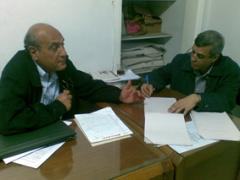
Watani talks to Dr Gawdat Gabra

15 December, 2011 - (9:05 AM)
0 0

Nabil Adly

Watani talks to Dr Gawdat Gabra
137
VIEWS
Share on FacebookShare on Twitter

WATANI International


7 March 2010    


Gawdat Gabra, former director of the Coptic Museum and visiting lecturer at Claremont University, has been contributing to Watani since the 1980s. He was in Egypt to attend a recent conference on Christianity and Monasticism in Aswan and Nubia. Watani seized the opportunity to talk to him and hear his opinion on the current situation in Egypt, especially regarding Copts. It was easy to see that Dr Gabra was deeply moved as he spoke of the Nag Hammadi Christmas Eve crime against Copts, the climate heavy with fanaticism, and escalating violence against Copts.


Watani: What upsets you most about the climate currently dominant in Egypt?
Dr Gabra: Over the last 15 days I have travelled to several areas. I was dismayed to see a ‘micro police station’ in front of every church. As a specialist in Coptic history and civilisation, and as an individual who has witnessed a host of sectarian events in Egypt since the days of late President Anwar Sadat, I might say that the problem is basically cultural. It has much to do with the school curriculum.


Can you elaborate on this?
All of us know that the current negative situation has its roots in the Sadat era. In the confrontation with his political opponents, he encouraged Islamic jamaat in the universities until they became the major threat to the State—and they killed him. The problem is that those who were students in the 1970s, and saw a student forcing a professor to halt a lecture at prayer time, now hold leading posts in State apparatuses.


Some people argue that combating terrorism begins with the Ministry of Education and ends with the Ministry of Interior.
That’s right. The school teaches students that Copts were persecuted under the Roman Empire, before the Muslims came and ‘liberated’ them. It is as if there was no single bright point in the era prior to the advent of Islam. This is very dangerous, since it gives Coptic students the feeling that they have made no achievements in history. Yet history proves that, like the Romans, the Arabs came to Egypt to extract tribute and jizya (the head tax to be paid by non-Muslim subjects in Muslim-dominated areas).


What about the absence of the Coptic era from the history curriculum?
Many Copts cry foul at the absence of the six-century-long Coptic era from the school curricula. In fact, there is nothing called a Coptic or Islamic era, and history and religion are two separate areas. Or else why do we say pharaonic era rather than the pagan era? Thus we should rather say Omayyad, Ayyubid, Fatimid, Mamluk…etc. Each of these epochs has symbols of Coptic as well as Islamic civilisations. Up to the Mamluk era, the Coptic civilisation was dominant. Over the Mamluk and Ottoman eras, the Islamic symbols of civilisation took the lead.


How can an Egyptian Coptic student learn about the culture of his or her Coptic forefathers?
An Egyptian student may not learn anything about Pope Athanasius, to whom the Creed is ascribed. But he or she has to learn a great deal about the Arab leader Amr Ibn al-Ass. A student might not know that the mehrab of the mosque is taken from the niche traditionally constructed in the eastern part of the sanctuary in Coptic churches, or that Christian carpenters built the Dome of the Rock in Jerusalem and contributed in restoring the Kaaba.
Egyptian universities should have departments for Coptic studies. In the Faculty of Antiquities in Cairo University, students can earn a diploma in different civilisations, the only exception being the Coptic one. It’s a shame that at the end of each conference on Coptic civilisation, foreign participants send messages to the Minister of Education and the President calling on them to set up departments to teach Coptic civilisation, but to no avail.


Who has to shoulder this responsibility?
Since officials are reluctant to found departments for Coptic studies in Egyptian universities, Copts should do it for themselves.
The problem, however, is that the number of professors specialising in Coptic studies is shrinking alarmingly. However, I call upon the Church and the business sector to find ways to achieve this goal. I think sending groups of young people to learn about Coptic language, art, architecture, history and so on in Coptic Studies departments in institutes and universities outside Egypt would be a good start. They could become the specialists of the future. I would like to seize the occasion to thank those businessmen who contributed to the foundation of a chair of Coptic studies at the American University in Cairo.


Has Watani contributed to raising awareness of Coptic culture?
Watani tackled several of these issues, especially since the early 1980s. A group of writers including William Suliman Qelana, Suliman Nassim, Maged Atiya and myself founded the page ‘From the nation’s chronicles’ to address issues that could help alleviate sectarian tension by highlighting the Coptic component of the Egyptian identity.


There appears to be a lot of misunderstanding about the jizya. As a history scholar, could you explain it to our readers?
Under Arab rule, all Egyptians—Muslim and Coptic—were required to pay taxes (al-khurag) which were a heavy burden on all. But Copts were subjected to the added burden of paying the jizya under the pretext that they did not contribute in military service. But in reality, neither Copts nor Egyptian Muslims were allowed to serve in the army; soldiers and officers usually came from the country of the ruler. But the Copts alone were made to pay for that.



Comments

comments

Tags: GabraGawdattalksWatani

Related Posts

Archive Articles


SAINTE CATHERINE LABOURÉ, Servante des pauvres


December 15, 2011
Archive Articles

Agenda

December 15, 2011
DJ Zebra au Caire
Archive Articles

DJ Zebra au Caire

December 15, 2011
Archive Articles

Au caire le président américain visite la mosquée du Sultan Hassan

December 15, 2011
Archive Articles

“Nouveau départ entre les musulmans et les États-Unis”

December 15, 2011
Archive Articles

Principales œuvres

December 15, 2011

Editorial

China and Russia vis-à-vis Trump’s Iran War

More

MOST READ

Egypt attempts to contain Myna bird invasion
Environment

Egypt attempts to contain Myna bird invasion

June 15, 2026
0

The Nature Protection Sector of Egypt’s Ministry of Local Development and Environment has been monitoring and tracking the spread of...

Read more
Watani talks to Anba Bigol, Bishop and Abbot of al-Muharraq Monastery of the Holy Virgin Mary

Watani talks to Anba Bigol, Bishop and Abbot of al-Muharraq Monastery of the Holy Virgin Mary

June 17, 2026
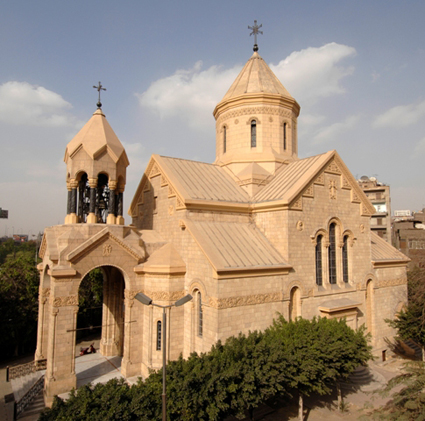
Egypt’s Armenians

Egypt’s Armenians

April 22, 2015
‘Train of Hope’ to carry home 1,200 Sudanese

‘Train of Hope’ to carry home 1,200 Sudanese

June 16, 2026
Jobs for persons with disabilities

Jobs for persons with disabilities

June 15, 2026

Features

China’s Long March launches USD190M tyre manufacturing project in Egypt
Economy

China’s Long March launches USD190M tyre manufacturing project in Egypt

June 17, 2026
0

China’s Chaoyang Long March Tyre Co., Ltd. has launched a USD190 million tyre manufacturing project in Egypt’s Suez Canal Economic...

Read more
Watani started as an Egyptian weekly Sunday newspaper published in Cairo. The word Watani is Arabic for “My Homeland”. The paper was founded in 1958 by the prominent Copt Antoun Sidhom (1915 – 1995), who strove for the establishment of a civil, democratic society in Egypt, where all Egyptians would enjoy full citizenship rights regardless of their religious denomination. To this day when Watani is published as a weekly paper and an online news site, the objective remains the same. Those in charge of Watani view this role as a patriotic all-Egyptian vocation. Special attention is given to shedding light on Coptic culture and tradition as authentically Egyptian, this being a topic largely disregarded or little-understood by Egypt’s media. Watani is deeply dedicated to offer its readers high quality, extensive, objective, credible and well-researched media coverage, with special focus on Coptic issues, culture, heritage, and contribution to Egyptian society.
-----------------------------------------------------------

27 Abdel Khalek Tharwat st, Downtown, Abdeen,Cairo

00202-23927201

00202-23935946

 [email protected]


categories

  • News
  • Opinion
  • Politics
  • Culture
  • Egypt – Arab Spring
  • Coptic Affairs
  • Features
  • Watani Special Features

Recent Posts

  • China and Russia vis-à-vis Trump’s Iran War
  • China’s Long March launches USD190M tyre manufacturing project in Egypt
  • Watani talks to Anba Bigol, Bishop and Abbot of al-Muharraq Monastery of the Holy Virgin Mary
  • ‘Train of Hope’ to carry home 1,200 Sudanese
  • Egypt launches ROX Motor partnership to manufacture new-energy vehicles
  • News
  • Opinion
  • Politics
  • Culture
  • Egypt – Arab Spring
  • Coptic Affairs
  • Features
  • Watani Special Features

Powered BY 3A Digital.

No Result
View All Result
  • News
    • Accidents
    • Crime
    • Diplomatic briefcase
    • NewsLine
    • Outside Cairo
    • Special Occasions
  • Opinion
    • Editorial
    • International media
    • Reader`s Corner
    • Opinion
  • Politics
    • Elections
    • International Politics
    • Islamisation Politics
    • National Affairs
    • Parliament
    • Politics
    • Protests
    • Rights
    • Terrorism
  • Culture
    • Antiquity
    • Art
    • Books
    • Culture
    • Drama
    • Egyptology
    • Festivals
    • Films
    • Heritage
    • Islamisation Culture
    • Media
    • Museums
    • Music
    • TV
  • Coptic
    • Church Affairs
    • Coptic Affairs
    • Coptic Culture
    • Copts in the Media
    • Coptology
    • Copts Abroad
    • Religious
      • P. Shenouda: Bible Study
    • Sectarian
    • Inter-religious
    • Holy Family
  • Features
    • Counselling Corner
    • features
    • Economy
      • Business
    • Education
    • Social Issues
      • Behaviour
      • Mothers Day
    • Health
    • Environment
    • Humour
    • In memorial
    • Interviews
    • Nile
    • Profile
    • Special needs
    • Sports
    • Technology
    • Tourism
    • Wars
    • Women
    • Youth
  • Watani Special Features
    • Egypt – Arab Spring
      • 25 January Revolution
      • 25 Jan revolution, one year on
      • Egypt post-30 June
    • Watani Milestones
      • 20 years Watani International
      • 10 years Watani International
      • Watani Jubilee
    • Pope Shenouda
    • Pope Tawadros
    • Watani Forum

Powered BY 3A Digital.

Login to your account below

Forgotten Password?

Fill the forms bellow to register

All fields are required. Log In

Retrieve your password

Please enter your username or email address to reset your password.

Log In