
Editor in Chief
Youssef Sidhom
Watani
عربى English French
  • News
    • Accidents
    • Crime
    • Diplomatic briefcase
    • NewsLine
    • Outside Cairo
    • Special Occasions
  • Opinion
    • Editorial
    • International media
    • Reader`s Corner
    • Opinion
  • Politics
    • Elections
    • International Politics
    • Islamisation Politics
    • National Affairs
    • Parliament
    • Politics
    • Protests
    • Rights
    • Terrorism
  • Culture
    • Antiquity
    • Art
    • Books
    • Culture
    • Drama
    • Egyptology
    • Festivals
    • Films
    • Heritage
    • Islamisation Culture
    • Media
    • Museums
    • Music
    • TV
  • Coptic
    • Church Affairs
    • Coptic Affairs
    • Coptic Culture
    • Copts in the Media
    • Coptology
    • Copts Abroad
    • Religious
      • P. Shenouda: Bible Study
    • Sectarian
    • Inter-religious
    • Holy Family
  • Features
    • Counselling Corner
    • features
    • Economy
      • Business
    • Education
    • Social Issues
      • Behaviour
      • Mothers Day
    • Health
    • Environment
    • Humour
    • In memorial
    • Interviews
    • Nile
    • Profile
    • Special needs
    • Sports
    • Technology
    • Tourism
    • Wars
    • Women
    • Youth
  • Watani Special Features
    • Egypt – Arab Spring
      • 25 January Revolution
      • 25 Jan revolution, one year on
      • Egypt post-30 June
    • Watani Milestones
      • 20 years Watani International
      • 10 years Watani International
      • Watani Jubilee
    • Pope Shenouda
    • Pope Tawadros
    • Watani Forum
No Result
View All Result
  • News
    • Accidents
    • Crime
    • Diplomatic briefcase
    • NewsLine
    • Outside Cairo
    • Special Occasions
  • Opinion
    • Editorial
    • International media
    • Reader`s Corner
    • Opinion
  • Politics
    • Elections
    • International Politics
    • Islamisation Politics
    • National Affairs
    • Parliament
    • Politics
    • Protests
    • Rights
    • Terrorism
  • Culture
    • Antiquity
    • Art
    • Books
    • Culture
    • Drama
    • Egyptology
    • Festivals
    • Films
    • Heritage
    • Islamisation Culture
    • Media
    • Museums
    • Music
    • TV
  • Coptic
    • Church Affairs
    • Coptic Affairs
    • Coptic Culture
    • Copts in the Media
    • Coptology
    • Copts Abroad
    • Religious
      • P. Shenouda: Bible Study
    • Sectarian
    • Inter-religious
    • Holy Family
  • Features
    • Counselling Corner
    • features
    • Economy
      • Business
    • Education
    • Social Issues
      • Behaviour
      • Mothers Day
    • Health
    • Environment
    • Humour
    • In memorial
    • Interviews
    • Nile
    • Profile
    • Special needs
    • Sports
    • Technology
    • Tourism
    • Wars
    • Women
    • Youth
  • Watani Special Features
    • Egypt – Arab Spring
      • 25 January Revolution
      • 25 Jan revolution, one year on
      • Egypt post-30 June
    • Watani Milestones
      • 20 years Watani International
      • 10 years Watani International
      • Watani Jubilee
    • Pope Shenouda
    • Pope Tawadros
    • Watani Forum
No Result
View All Result
No Result
View All Result
Watani
ع Fr
ADVERTISEMENT

Revaluing the Egyptian pound

13 April, 2016 - (11:08 AM)
0 0

Mervat Ayoub

Revaluing the Egyptian pound
83
VIEWS
Share on FacebookShare on Twitter


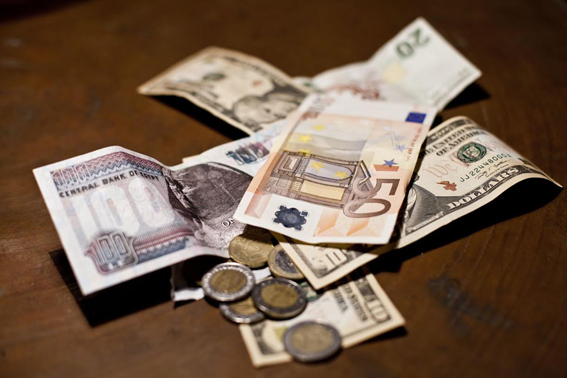
The decision by the Central Bank of Egypt (CBE) in mid-March to decrease the value of the Egyptian pound against the US dollar has caused much controversy, with Egyptians fearing a new wave of price rises. Before the decision was made, a US dollar was exchanged for EGP7.73 on the official market, but after the devaluation this value jumped overnight to EGP8.85. Despite the crisis, the CBE keeps confirming its capacity to provide the foreign currency needed for imports.

This crushing economic crisis is the inevitable consequence of the turmoil that engulfed Egypt in the years following the Arab Spring in January 2011. Even when Egyptians rid themselves of the post-Arab Spring Islamist Muslim Brotherhood rule in July 2013, regained stability and established a civil State, Islamist terrorism continued to plague Egyptians in revenge. Tourism, which had earned Egypt some USD13 billion per year before 2011, plummeted. Production dropped, and hence exports of Egyptian products, another foreign currency earner. Remittances from Egyptians working abroad declined as a result of MB moves to buy US dollars from them at high exchange rates in order to prevent foreign currency from entering Egypt. It was a blow to the Egyptian economy. Foreign currency reserves dropped from USD36 billion before 25 January 2011 to USD16.5 billion by the end of last February.

 2 - Devaluing EGP.jpgOpen

The right time

Mukhtar al-Sharif, economic expert and Dean of Mansoura University’s Faculty of Commerce, believes the decision to devalue the Egyptian pound came at the right time and is helping to curb the black market.

“The devaluation favours exporters since it gives Egyptian exports a competitive edge in foreign markets,” he told Watani. Other positive results are represented by the higher foreign currency liquidity in the banking system, attraction of foreign investment, reviving money markets and introducing new investors to the Egyptian stock market.

“However, it is only a short term solution to our economic woes. The State must adopt measures to increase production and create a positive trade balance where Egyptian exports would surpass imports. Only then can we get out of the current economic impasse.”

Yet Dr Sharif admits that the devaluation decision was the only possible way to alleviate the economic crisis, and that it was a step in the direction of floating the Egyptian pound. The Arab States who used to grant us considerable aid in foreign currency are themselves facing hard economic times. The Egyptian government faces many social and economic problems in addition to a massive shortage in foreign currency reserves.


Curbing the black market

As for the prospective benefits of floating the Egyptian pound, a move expected to be adopted by CBE in the near future, Dr Sharif says that this will practically put an end to the foreign currency black market given that the price of the US dollar is now almost the same in both the formal and informal market. This will encourage those who need to exchange foreign currency to resort to banks rather than the black market. It will also allow for a more flexible exchange rate policy in Egypt, reduce the pressure on foreign currency reserves and curb the manipulation of the currency exchange companies and black market dealers. In parallel, banks must issue Certificates of Deposit (CD) in foreign currencies such as the US dollar and Euro and offer high interest rates to attract foreign currency bank deposits. The National Bank of Egypt and Banque Misr have already issued such certificates at a 15 per cent interest rate; the money is deposited in the foreign currency and interest rates are paid in Egyptian pounds. These CDs help reduce inflation rate and encourage savings, Dr Sharif says.


Improving balance of trade

The CBE aims to increase foreign currency reserves to USD25 billion by the end of 2016. “But again I say,” Dr Sharif says, “that devaluing the pound and attracting dollars into the Egyptian banking sector can only help ease economic conditions in the short term; more long-term solutions need to be implemented to improve Egypt’s balance of trade by increasing exports and decreasing imports.” The value of any country’s currency against foreign currencies is determined by the volume of imports and exports. Whenever exports—which bring in foreign currency—surpass imports—which eat up foreign currency—the value of the currency increases and vice versa. “Unfortunately, Dr Sharif explains, we are suffering a massive trade deficit; last year, the value of Egypt’s imports reached USD60 billion while exports amounted to USD30 billion. This year is even worse and the value of imports is expected to reach USD90 billion whereas exports have decreased to an estimated USD20 billion.

Economic expert Omar al-Shenety points out that the CBE is using several tools that vary in effect and reliability to protect the Egyptian pound.

The first of these tools, Dr Shenety says, is obtaining loans from international financial institutions to provide needed foreign currency; the World Bank has recently accepted to grant Egypt a USD3 billion loan which is said to have been on condition that Egypt adopts the Value Added Tax (VAT). The African Development Bank and several European development banks grant loans for development projects. However, he says, loans are not the ideal way to secure the needed foreign currency because these institutions set conditions that are hard to meet by the government projects. Yet they are considered a certificate of confidence in the Egyptian economy, and can thus help attract investment.


3 - Devaluing EGP.jpgOpen


Effects of drop in oil price

The CBE also gets economic support from Gulf States, Dr Shenety explains, but this has decreased substantially owing to the fact that these normally generous donors are themselves encountering economic woes owing to the global drop in oil prices.

Interest rates have also been raised by the CBE to attract personal deposits. This tool has been adopted many times before in Egypt, but it requires that banks work on issuing new creative saving schemes.

Since a number of foreign exchange companies are known to have manipulated the currency market, the CBE has closed down some and confiscated the licences of others. “But this is a harsh measure,” Dr Shenety says, “even though it aims at preventing excessive speculation and the creation of an active black market. The downside is that it conveys a message to the market that the CBE is unable to keep up with the black market.”

The fifth measure to protect the local currency has been the imposition of higher customs duties on imported goods, and limiting the foreign currency made available by the CBE for import. Although this approach results in shortages of goods on the market, it is the fastest and most effective tool to restrain imports, a major drain of foreign currency.

Finally, State banks have issued high-interest CDs in US dollars for Egyptian expatriates at very profitable rates to attract foreign currency into Egypt. Such CDs were first issued in 2012 and were a resounding success.


Watani International

13 April 2016
 

Comments

comments

Tags: Central Bank of Egyptdevaluing Egyptian poundEgypt's economyEgyptian Pound

Related Posts

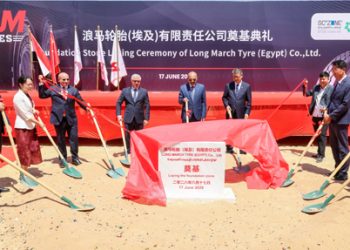
China’s Long March launches USD190M tyre manufacturing project in Egypt
Economy

China’s Long March launches USD190M tyre manufacturing project in Egypt

June 17, 2026
‘Train of Hope’ to carry home 1,200 Sudanese
E Choise

‘Train of Hope’ to carry home 1,200 Sudanese

June 16, 2026
Egypt launches ROX Motor partnership to manufacture new-energy vehicles
E Choise

Egypt launches ROX Motor partnership to manufacture new-energy vehicles

June 16, 2026
Developing skilled workforce for SCZone
Economy

Developing skilled workforce for SCZone

June 15, 2026
Yada Egypt mega project to export entire production to IKEA markets in EU and US
E Choise

Yada Egypt mega project to export entire production to IKEA markets in EU and US

May 19, 2026
Sisi Inaugurates Egypt’s New Delta Mega Project
Economy

Sisi Inaugurates Egypt’s New Delta Mega Project

May 19, 2026

Editorial

China and Russia vis-à-vis Trump’s Iran War

More

MOST READ

Egypt attempts to contain Myna bird invasion
Environment

Egypt attempts to contain Myna bird invasion

June 15, 2026
0

The Nature Protection Sector of Egypt’s Ministry of Local Development and Environment has been monitoring and tracking the spread of...

Read more
Watani talks to Anba Bigol, Bishop and Abbot of al-Muharraq Monastery of the Holy Virgin Mary

Watani talks to Anba Bigol, Bishop and Abbot of al-Muharraq Monastery of the Holy Virgin Mary

June 17, 2026
Egypt’s Armenians

Egypt’s Armenians

April 22, 2015
‘Train of Hope’ to carry home 1,200 Sudanese

‘Train of Hope’ to carry home 1,200 Sudanese

June 16, 2026
Jobs for persons with disabilities

Jobs for persons with disabilities

June 15, 2026

Features

China’s Long March launches USD190M tyre manufacturing project in Egypt
Economy

China’s Long March launches USD190M tyre manufacturing project in Egypt

June 17, 2026
0

China’s Chaoyang Long March Tyre Co., Ltd. has launched a USD190 million tyre manufacturing project in Egypt’s Suez Canal Economic...

Read more
Watani started as an Egyptian weekly Sunday newspaper published in Cairo. The word Watani is Arabic for “My Homeland”. The paper was founded in 1958 by the prominent Copt Antoun Sidhom (1915 – 1995), who strove for the establishment of a civil, democratic society in Egypt, where all Egyptians would enjoy full citizenship rights regardless of their religious denomination. To this day when Watani is published as a weekly paper and an online news site, the objective remains the same. Those in charge of Watani view this role as a patriotic all-Egyptian vocation. Special attention is given to shedding light on Coptic culture and tradition as authentically Egyptian, this being a topic largely disregarded or little-understood by Egypt’s media. Watani is deeply dedicated to offer its readers high quality, extensive, objective, credible and well-researched media coverage, with special focus on Coptic issues, culture, heritage, and contribution to Egyptian society.
-----------------------------------------------------------

27 Abdel Khalek Tharwat st, Downtown, Abdeen,Cairo

00202-23927201

00202-23935946

 [email protected]


categories

  • News
  • Opinion
  • Politics
  • Culture
  • Egypt – Arab Spring
  • Coptic Affairs
  • Features
  • Watani Special Features

Recent Posts

  • China and Russia vis-à-vis Trump’s Iran War
  • China’s Long March launches USD190M tyre manufacturing project in Egypt
  • Watani talks to Anba Bigol, Bishop and Abbot of al-Muharraq Monastery of the Holy Virgin Mary
  • ‘Train of Hope’ to carry home 1,200 Sudanese
  • Egypt launches ROX Motor partnership to manufacture new-energy vehicles
  • News
  • Opinion
  • Politics
  • Culture
  • Egypt – Arab Spring
  • Coptic Affairs
  • Features
  • Watani Special Features

Powered BY 3A Digital.

No Result
View All Result
  • News
    • Accidents
    • Crime
    • Diplomatic briefcase
    • NewsLine
    • Outside Cairo
    • Special Occasions
  • Opinion
    • Editorial
    • International media
    • Reader`s Corner
    • Opinion
  • Politics
    • Elections
    • International Politics
    • Islamisation Politics
    • National Affairs
    • Parliament
    • Politics
    • Protests
    • Rights
    • Terrorism
  • Culture
    • Antiquity
    • Art
    • Books
    • Culture
    • Drama
    • Egyptology
    • Festivals
    • Films
    • Heritage
    • Islamisation Culture
    • Media
    • Museums
    • Music
    • TV
  • Coptic
    • Church Affairs
    • Coptic Affairs
    • Coptic Culture
    • Copts in the Media
    • Coptology
    • Copts Abroad
    • Religious
      • P. Shenouda: Bible Study
    • Sectarian
    • Inter-religious
    • Holy Family
  • Features
    • Counselling Corner
    • features
    • Economy
      • Business
    • Education
    • Social Issues
      • Behaviour
      • Mothers Day
    • Health
    • Environment
    • Humour
    • In memorial
    • Interviews
    • Nile
    • Profile
    • Special needs
    • Sports
    • Technology
    • Tourism
    • Wars
    • Women
    • Youth
  • Watani Special Features
    • Egypt – Arab Spring
      • 25 January Revolution
      • 25 Jan revolution, one year on
      • Egypt post-30 June
    • Watani Milestones
      • 20 years Watani International
      • 10 years Watani International
      • Watani Jubilee
    • Pope Shenouda
    • Pope Tawadros
    • Watani Forum

Powered BY 3A Digital.

Login to your account below

Forgotten Password?

Fill the forms bellow to register

All fields are required. Log In

Retrieve your password

Please enter your username or email address to reset your password.

Log In