
Two years on the January 2011 Revolution has Egypt on the brink of anarchy, if not civil war. The majority of Egyptian towns are scenes of angry protest which inevitably turns excessively violent, and which has escalated into civil disobedience in Port Said and threatens to spread rapidly to other places.
Perhaps most serious among the nation’s woes is the breakdown in security, which has Egyptians rushing to take the law in their own hands since they can no longer depend on the State to play that role. In the region of Sharqiya, east of the Delta, an outlaw was caught by the people and brutally killed; the reason they cited was that he had repeatedly terrorised the community while the police looked on, unable to do anything. This was the fifth such incident in the past few months.
The dire outcome of the breakdown in security is not confined to the rise in crime rate and the lost sense of security and justice among Egyptians. It negatively impacts tourism, investment, the environment, and about every aspect of life in Egypt.
864 protests in February alone
The economy is in tatters. With rising unemployment, spiralling prices, and severe fuel shortages, Egyptians are feeling the pinch.
And amid the grinding economic hardship, Egyptians were incensed to learn that their government has imported gas bombs for more than EGP17 million, a sum that could have provided 155 public hospitals with severely short emergency medications, or might have bought insulin for some 8000 diabetics badly in need of subsidised insulin.
Violent labour unrest which reached the point of threatening CEOs with weapons and physical violence in their offices, led more than three factory owners to close their plants in the last week of February. Among them was Farag Amer of Fargallah food industries, which reportedly pays a monthly EGP14 million in salaries. Faragallah later reopened, but the situation is still precarious.
The rights NGO Watha’iq issued a recent report which revealed that protests by labourers and professionals last February alone amounted to some 864, double the protests held in the previous month and the highest ever in Egypt throughout the last decades. Violent demonstrations were also rampant against fuel shortages—which, in turn, led to higher prices and unemployment and, in case of agricultural workers, the inability to water the land and hence the threat of ruined crops and low yields.
Demonstrations, according to the Watha’iq report, also protested the widely spreading Islamisation or Ikhwanisation (Ikhwan is Arabic for Brothers, meaning the Muslim Brotherhood) of the State, as well as the escalating violation of human rights by the [Islamist] regime, and demanded democracy, freedom, and justice.
Egypt has also been seeing demonstrations by Islamist policemen demanding the right to grow their beards. 
Revolution of the hungry
Terribly alarming, according to Watha’iq, is that protests are turning increasingly violent and damaging; blocking roads and railway tracks, physically attacking those in authority, and closing services and businesses.
Watha’iq warns that the State must heed the fact that such wrathful, nationwide protest threatens to spell the end of the regime. So far, however, the State’s response has been utterly disappointing if not outright frustrating; it went no further than oppressing dissidents, detaining and torturing them, and subjecting them to smear campaigns. This does not bode well, according to Watha’iq.
Economic expert Mukhtar al-Sahrif told Watani that the number of factories which closed for a variety of reasons—labour unrest, shortage in inputs, or problems with distribution, among others—during the last two months lies anywhere between a staggering 2500 and 4200. We may expect that some of these would reopen once the reasons for closure are no longer there, but many others will remain closed.
Unemployment, Mr Sharif says, has risen to a fearful 13 per cent, and this does not include those who resorted to casual, precarious self-employment once they lost their jobs.
The fact that Egypt is in the throes of turmoil, he says, sends a perilous message to the world that its climate is investor-unfriendly. This leads to capital flight, which further exacerbates the economic problems and may very well lead to a revolution of the hungry, perhaps sooner rather than later.
Detrimental decisions
“The ruling regime should read the scene well,” Mr Sharif says, “and should work to bring about stability and social peace in order for the wheels of the economy to get rolling once again. We don’t have the luxury to prevaricate; if we don’t take serious steps towards progress, we run the risk of haemorrhaging to death.”
Mr Sharif could not have spoken sooner. Last Sunday saw the Egyptian authorities bar the chief executive of Orascom Construction Industries (OCIC.CA), Nassef Sawiris and his father Onsi Sawiris from leaving the country pending an investigation into tax evasion. OCIC.CA is one of the country##s biggest companies, The Sawirises were accused of evading some EGP14 billion ($2.1 billion) of taxes during the sale of Orascom Building, an OCI subsidiary, to the French firm Lafarge (LAFP.PA). OCI said that beyond a previous request by the Egyptian Tax Authority for the company to pay EGP4.7 billion on the Lafarge deal, which OCI had appealed, it had not received any additional claims from the government.
Egypt’s bourse reacted to the Sawiris news strongly. On Monday, it suffered its biggest one-day loss in three months; the index retreatied 2.3 per cent.
The Sawiris news fuelled concern about poor relations between Egypt##s post-revolution government and senior members of the pre-revolution business community, which could fuel capital flight from the country.
Even when the government offered to ‘conciliate’ with businessmen or officials related to the Mubarak regime, some of whom are in prison pending corruption cases, the terms were so harsh that the defendants backed out, and opted for remaining in prison and waiting out the word of justice. They apparently felt they were being ‘blackmailed’ in exchange for their freedom.
Calls for secession
On the political front, Watani’s Soliman Shafiq worries that the State is disintegrating. But worse and much more serious, he says, the nation is being pushed into disintegration.
“The last five years of the Mubarak rule,” Mr Shafiq says, “saw the elements of national integration begin to expire. Feelings of rebellion abounded among the Sinai Bedouin, the Nubians, and the Coptic community.
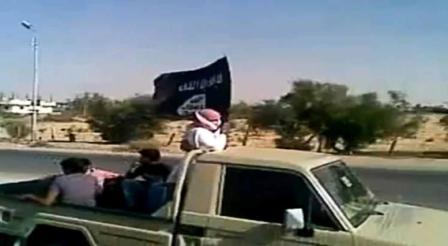
Sinai, which had seen 14 rebellions during the 147 years of the `Mohamed Ali Dynasty which ended in 1953—on the average once every 10 years, rebelled 60 times during the last five years of the Mubarak rule—once every month. In the wake of the 2011 Revolution, however, the Jihadi movements in Sinai declared the Peninsula an Islamic Emirate. They conducted 95 operations against the Egyptian military and security forces stationed there, killing and injuring 221 soldiers and 75 tourists. They blew up the gas pipes 16 times, and  blocked roads 74 times. The Jihadi dissidents controlled Sinai so perfectly that President Mursi was unable to visit the Sinai border town of Rafah, and Brigadier General Abdel-Fattah al-Sissi had to meet the Sinai tribal sheikhs in Cairo not in Sinai.
In the South too, problems abound. Nubians have so despaired of meeting their demands that several of their movements have announced Nubia would secede from Egypt; one of these movements declared armed resistance to achieve this goal.
Coptic despair
Since April 2011, when the Salafis in Qena declared civil disobedience and blocked the railway tracks to protest the appointment of a Coptic governor to Qena—the governor never took office—the railway tracks were blocked 611 times, and not a culprit was ever caught.
During the same period, 14 small battles erupted between tribal clans in the southern region of Suhag, with no official action taken to control matters. The situation reached the point where the village of Etssa in Minya was divided into two villages in the wake of vicious battles between the villagers; this was done with the blessings of the governor and the local politicians from the ruling Islamist parties, who could do nothing to bring about peace.
The Copts too have had more than their fair share of the violence. Since March 2011, the attacks against Copts, their homes, churches, and property has left some 50 Copts dead and 511 injured. In several cases, they were forced to leave their homes and relocate elsewhere, and in many other incidents their churches were ruined or closed down. The result is that, after despairing of justice at home, not a few Coptic voices now call for taking their case to international courts and the global community.
From State to national
All the above clearly shows that Egypt has gone beyond a disintegrated State and is heading towards a disintegrated nation. History tells us that the modern  Arabic word for ‘Egyptian nation’, al-Umma al-Misriya, was coined during the 1919 nationalist revolution, when all Egyptians put aside their differences and joined hands to expel the foreign occupier. The exact opposite appears to be attempting to dismember the country now, threatening the essence of the Egyptian identity. In whose favour does this work? Which leads to the question of who induces it?
Egypt has always been famous for her diversity and plurality. She has always been home to Egyptian Muslims, Copts, Nubians, Bedouin … to say nothing of the many from among the international community who lived peacefully and prosperously in her land. Disputes did arise, violently at times, but in the end that thoroughly Egyptian tolerance and acceptance reigned supreme and brought peace to the community.
The dismemberment of Egypt plays into the hands of those who wish to see her just another impotent member of a larger Middle Eastern, Pan-Arab, or perhaps even larger conglomerate. Egyptians need to look into their history and into their hearts for inspiration, in order to preserve their precious Egypt. If anything, the dark picture we are now seeing has one spot of light: many Egyptians are all the more seeing this.
WATANI International
10 March 2013