
Editor in Chief
Youssef Sidhom
Watani
عربى English French
  • News
    • Accidents
    • Crime
    • Diplomatic briefcase
    • NewsLine
    • Outside Cairo
    • Special Occasions
  • Opinion
    • Editorial
    • International media
    • Reader`s Corner
    • Opinion
  • Politics
    • Elections
    • International Politics
    • Islamisation Politics
    • National Affairs
    • Parliament
    • Politics
    • Protests
    • Rights
    • Terrorism
  • Culture
    • Antiquity
    • Art
    • Books
    • Culture
    • Drama
    • Egyptology
    • Festivals
    • Films
    • Heritage
    • Islamisation Culture
    • Media
    • Museums
    • Music
    • TV
  • Coptic
    • Church Affairs
    • Coptic Affairs
    • Coptic Culture
    • Copts in the Media
    • Coptology
    • Copts Abroad
    • Religious
      • P. Shenouda: Bible Study
    • Sectarian
    • Inter-religious
    • Holy Family
  • Features
    • Counselling Corner
    • features
    • Economy
      • Business
    • Education
    • Social Issues
      • Behaviour
      • Mothers Day
    • Health
    • Environment
    • Humour
    • In memorial
    • Interviews
    • Nile
    • Profile
    • Special needs
    • Sports
    • Technology
    • Tourism
    • Wars
    • Women
    • Youth
  • Watani Special Features
    • Egypt – Arab Spring
      • 25 January Revolution
      • 25 Jan revolution, one year on
      • Egypt post-30 June
    • Watani Milestones
      • 20 years Watani International
      • 10 years Watani International
      • Watani Jubilee
    • Pope Shenouda
    • Pope Tawadros
    • Watani Forum
No Result
View All Result
  • News
    • Accidents
    • Crime
    • Diplomatic briefcase
    • NewsLine
    • Outside Cairo
    • Special Occasions
  • Opinion
    • Editorial
    • International media
    • Reader`s Corner
    • Opinion
  • Politics
    • Elections
    • International Politics
    • Islamisation Politics
    • National Affairs
    • Parliament
    • Politics
    • Protests
    • Rights
    • Terrorism
  • Culture
    • Antiquity
    • Art
    • Books
    • Culture
    • Drama
    • Egyptology
    • Festivals
    • Films
    • Heritage
    • Islamisation Culture
    • Media
    • Museums
    • Music
    • TV
  • Coptic
    • Church Affairs
    • Coptic Affairs
    • Coptic Culture
    • Copts in the Media
    • Coptology
    • Copts Abroad
    • Religious
      • P. Shenouda: Bible Study
    • Sectarian
    • Inter-religious
    • Holy Family
  • Features
    • Counselling Corner
    • features
    • Economy
      • Business
    • Education
    • Social Issues
      • Behaviour
      • Mothers Day
    • Health
    • Environment
    • Humour
    • In memorial
    • Interviews
    • Nile
    • Profile
    • Special needs
    • Sports
    • Technology
    • Tourism
    • Wars
    • Women
    • Youth
  • Watani Special Features
    • Egypt – Arab Spring
      • 25 January Revolution
      • 25 Jan revolution, one year on
      • Egypt post-30 June
    • Watani Milestones
      • 20 years Watani International
      • 10 years Watani International
      • Watani Jubilee
    • Pope Shenouda
    • Pope Tawadros
    • Watani Forum
No Result
View All Result
No Result
View All Result
Watani
ع Fr
ADVERTISEMENT

“I was there,” Nader Shukry

14 December, 2012 - (4:11 PM)
0 0

“I was there,” Nader Shukry
23
VIEWS
Share on FacebookShare on Twitter

“Egypt belongs to Egyptians!” “Go away, Mursi!” “The people desire the fall of the regime!”
Such and similar roars moved from central Cairo’s Tahrir Square to the presidential palace

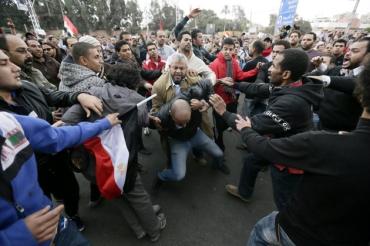
east of Cairo as thousands upon thousands of Egyptians who desire to see Egypt a civic, secular State marched on the palace. Men and women, young and old, protested against President Mursi and his regime, as well as the Islamist draft constitution that the President had insisted on putting to referendum on 15 December. 
Islamist tear gas bombs
The protestors—many of whom were first-time demonstrators—were peaceful.  They continued their chants late into the night then many decided to leave while a few hundreds decided to hold a sit-in in front of the palace.
Earlier in the evening, President Mursi had left the palace through a back door, to some unknown destination. The protestors were infuriated at the President’s ‘no-response’; “he rushes to the rescue of Gazans but has no word to say to his own countrymen,” was acomment sounded by many.
Those protestors who decided to camp outside the palace set up a number of tents for the night.
Wednesday had barely dawned when President Mursi’s Islamist supporters attacked.  They assaulted the unarmed demonstrators who were in the tents with sword, knives, and clubs, and drove them out. They beat the women and men mercilessly and chased them away. 
Word of the attack quickly got round, which worked to bring in huge numbers of secular demonstrators back to the site. It was surprising that no security forces could be found anywhere near or around the palace grounds. Their absence from the scene was conspicuous, and sent a threatening message.
At around 5 o’clock in the afternoon the army of Islamist demonstrators converged on the place, complete with their knives, daggers, swords, guns, and—you wouldn’t believe it unless you saw it—tear gas bombs, a tool only the Interior Ministry security forces have access to. They had already wrought destruction on their way; they had attacked the neighbourhood residents and smashed a number of cars that had been parked alongside the sidewalks.
Guns and Bibles
The fierce clashes began. The Islamists started by throwing stones and firing gunshot and Molotov bombs at the secular demonstrators, shouting slogans of “Allah is the Greatest!” “Islam is coming, coming” and “The people support the President’s decrees”. They carried high above their heads posters of President Mursi. But the stunning surprise was their use of tear gas.
The seculars retaliated with stones and Molotov cocktails. Victims began to fall. Many of them were women who fought as bravely as the men. The battle ground had spread to cover a vast expanse of ground in front of and in the vicinity of the presidential palace, so we rushed the victims to the side streets where field hospitals were quickly set up. All the churches in the neighbourhood set up hospitals or first aid centres.   
The fighting raged on from 5pm to 10pm when the security forces were first spotted. Yet they neither worked to halt the bloodshed nor to defend the demonstrators, they outright took the side of the Islamists and practically facilitated their attack against the seculars.
Victims kept falling. Seven lost their lives, and some 700 were injured. Those who fell into the hands of the Islamists were brutally beaten and tortured; it made no difference that they were men or women. The Islamists tried to get them to ‘confess’ that they were paid to demonstrate by the National Salvation Front or even by fuloul, remnants of the Mubarak regime. Among those captured by the Islamists was Yehia Negm, who is Egypt’s former ambassador to New Zealand, and who went on Hayat 2 satellite channel with his testimony. Mr Negm related how he was beaten, abused, and tortured, and how the Islamists tried to fabricate evidence against the secular protestors by gathering into a basket a number of guns and—yes—Bibles.  
Beaten up
Ramy Sabry, 28, a Coptic pharmacist, activist, and member of al-Tahaluf al-Shaabi (the People’s Coalition) party, was with the protestors on Khalifa al-Ma’moun Street, some 200 metres away from Mirghani Street where the presidential palace lies, when the Islamists started attacking the secular protestors. “Together with other volunteers, I was administering first aid to the injured,” Mr Sabry said. “Around 1:00am, the Islamists advanced to Khalifa al-Ma’moun so we tried to flee. There was with me a young woman, Ula al-Shahba, who is a friend and colleague. Ula was able to run away but I was caught; she turned back to help me but was attacked and caught. 

234.jpg

“Five men beat me up with canes and an iron rod as they dragged me on the ground all the way to the gate of the presidential palace, where they had set up a makeshift detention camp for the protestors they caught. I was injured in the head and chest and suffered bruises all through. Ula too was dragged along the street and beaten, but then they let her go. 
“They tied me up with a rope and shoved me on the floor beside other young men who had had their fair share of beating. It shocked me that all this was taking place under the eyes and noses of the security men who merely looked on. 
What confessions?
“We were left for 16 hours lying there, bruised and injured, at the palace gate, from 1.00am till 5.00pm the following day. The Islamists kept pressuring us to own up to what they wanted us to admit. Alaa Hamza, the prominent Freedom and Justice Party leader as well as one Dardiri, another Muslim Brotherhood (MB) leader, were both involved in overseeing what the militias were doing. Dardiri was constantly on the phone, and more than once I heard him tell Hamza that he was talking to MB leader Mohamed al- Beltagui. Apparently he was giving them orders to get us to ‘confess’ to false accusations, that Hamdeen Sabahi was the instigator of these demonstrations against Mursi, and that we were paid to demonstrate by the Mubarak regime National Democratic Party. 
“My captors found my ID, and one of them exclaimed: “He’s Christian!” That directly brought on more vicious beatings. 
“At 5.00pm on Thursday three prosecutors arrived and we were handed to them. Curiously, even though we were never questioned by the public prosecutor till Friday afternoon, President Mursi said in his speech on Thursday evening that we, the detained secular protestors, had ‘confessed’ the names of the instigators of the protests, and that we had been paid to protest. In fact, however, all of us 136 detainees were released since no evidence was found to convict us.
“After I was released I went to the forensic doctor for a medical report. I will surely pursue my struggle against the regime, because as I see it Mursi has lost his legitimacy as President once he sanctioned the killing of Egyptians in front of his palace, and at the hands of his armed groups.”
Watani International
16 December 2012
Comments

comments

Tags: NaderShukrythere”

Related Posts

Egyptian medical aid to DRC and Uganda for Ebola response
Health

Egyptian medical aid to DRC and Uganda for Ebola response

May 28, 2026
Foreign Minister meets Coptic Bishop of London
Coptic Affairs

Foreign Minister meets Coptic Bishop of London

May 20, 2026
Sisi Inaugurates Egypt’s New Delta Mega Project
Economy

Sisi Inaugurates Egypt’s New Delta Mega Project

May 19, 2026
Egyptian Red Crescent dispatches 195th relief convoy to Gaza
NewsLine

Egyptian Red Crescent dispatches 195th relief convoy to Gaza

May 13, 2026
Egypt closely monitoring hijacked tanker carrying eight Egyptian sailors off Somali coast
main

Egypt closely monitoring hijacked tanker carrying eight Egyptian sailors off Somali coast

May 11, 2026
Egypt helps Lebanon with new gas pipeline
E Choise

Egypt helps Lebanon with new gas pipeline

May 7, 2026

Editorial

China and Russia vis-à-vis Trump’s Iran War

More

MOST READ

Egypt attempts to contain Myna bird invasion
Environment

Egypt attempts to contain Myna bird invasion

June 15, 2026
0

The Nature Protection Sector of Egypt’s Ministry of Local Development and Environment has been monitoring and tracking the spread of...

Read more
Watani talks to Anba Bigol, Bishop and Abbot of al-Muharraq Monastery of the Holy Virgin Mary

Watani talks to Anba Bigol, Bishop and Abbot of al-Muharraq Monastery of the Holy Virgin Mary

June 17, 2026
Egypt’s Armenians

Egypt’s Armenians

April 22, 2015
‘Train of Hope’ to carry home 1,200 Sudanese

‘Train of Hope’ to carry home 1,200 Sudanese

June 16, 2026
Jobs for persons with disabilities

Jobs for persons with disabilities

June 15, 2026

Features

China’s Long March launches USD190M tyre manufacturing project in Egypt
Economy

China’s Long March launches USD190M tyre manufacturing project in Egypt

June 17, 2026
0

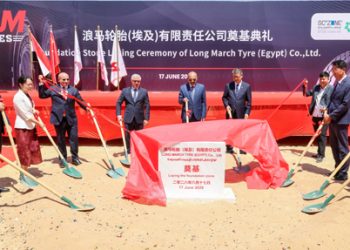
China’s Chaoyang Long March Tyre Co., Ltd. has launched a USD190 million tyre manufacturing project in Egypt’s Suez Canal Economic...

Read more
Watani started as an Egyptian weekly Sunday newspaper published in Cairo. The word Watani is Arabic for “My Homeland”. The paper was founded in 1958 by the prominent Copt Antoun Sidhom (1915 – 1995), who strove for the establishment of a civil, democratic society in Egypt, where all Egyptians would enjoy full citizenship rights regardless of their religious denomination. To this day when Watani is published as a weekly paper and an online news site, the objective remains the same. Those in charge of Watani view this role as a patriotic all-Egyptian vocation. Special attention is given to shedding light on Coptic culture and tradition as authentically Egyptian, this being a topic largely disregarded or little-understood by Egypt’s media. Watani is deeply dedicated to offer its readers high quality, extensive, objective, credible and well-researched media coverage, with special focus on Coptic issues, culture, heritage, and contribution to Egyptian society.
-----------------------------------------------------------

27 Abdel Khalek Tharwat st, Downtown, Abdeen,Cairo

00202-23927201

00202-23935946

 [email protected]


categories

  • News
  • Opinion
  • Politics
  • Culture
  • Egypt – Arab Spring
  • Coptic Affairs
  • Features
  • Watani Special Features

Recent Posts

  • China and Russia vis-à-vis Trump’s Iran War
  • China’s Long March launches USD190M tyre manufacturing project in Egypt
  • Watani talks to Anba Bigol, Bishop and Abbot of al-Muharraq Monastery of the Holy Virgin Mary
  • ‘Train of Hope’ to carry home 1,200 Sudanese
  • Egypt launches ROX Motor partnership to manufacture new-energy vehicles
  • News
  • Opinion
  • Politics
  • Culture
  • Egypt – Arab Spring
  • Coptic Affairs
  • Features
  • Watani Special Features

Powered BY 3A Digital.

No Result
View All Result
  • News
    • Accidents
    • Crime
    • Diplomatic briefcase
    • NewsLine
    • Outside Cairo
    • Special Occasions
  • Opinion
    • Editorial
    • International media
    • Reader`s Corner
    • Opinion
  • Politics
    • Elections
    • International Politics
    • Islamisation Politics
    • National Affairs
    • Parliament
    • Politics
    • Protests
    • Rights
    • Terrorism
  • Culture
    • Antiquity
    • Art
    • Books
    • Culture
    • Drama
    • Egyptology
    • Festivals
    • Films
    • Heritage
    • Islamisation Culture
    • Media
    • Museums
    • Music
    • TV
  • Coptic
    • Church Affairs
    • Coptic Affairs
    • Coptic Culture
    • Copts in the Media
    • Coptology
    • Copts Abroad
    • Religious
      • P. Shenouda: Bible Study
    • Sectarian
    • Inter-religious
    • Holy Family
  • Features
    • Counselling Corner
    • features
    • Economy
      • Business
    • Education
    • Social Issues
      • Behaviour
      • Mothers Day
    • Health
    • Environment
    • Humour
    • In memorial
    • Interviews
    • Nile
    • Profile
    • Special needs
    • Sports
    • Technology
    • Tourism
    • Wars
    • Women
    • Youth
  • Watani Special Features
    • Egypt – Arab Spring
      • 25 January Revolution
      • 25 Jan revolution, one year on
      • Egypt post-30 June
    • Watani Milestones
      • 20 years Watani International
      • 10 years Watani International
      • Watani Jubilee
    • Pope Shenouda
    • Pope Tawadros
    • Watani Forum

Powered BY 3A Digital.

Login to your account below

Forgotten Password?

Fill the forms bellow to register

All fields are required. Log In

Retrieve your password

Please enter your username or email address to reset your password.

Log In