
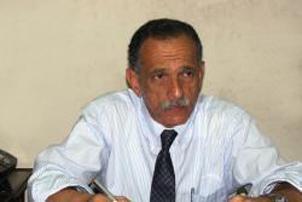
Editor in Chief
Youssef Sidhom
Watani
عربى English French
  • News
    • Accidents
    • Crime
    • Diplomatic briefcase
    • NewsLine
    • Outside Cairo
    • Special Occasions
  • Opinion
    • Editorial
    • International media
    • Reader`s Corner
    • Opinion
  • Politics
    • Elections
    • International Politics
    • Islamisation Politics
    • National Affairs
    • Parliament
    • Politics
    • Protests
    • Rights
    • Terrorism
  • Culture
    • Antiquity
    • Art
    • Books
    • Culture
    • Drama
    • Egyptology
    • Festivals
    • Films
    • Heritage
    • Islamisation Culture
    • Media
    • Museums
    • Music
    • TV
  • Coptic
    • Church Affairs
    • Coptic Affairs
    • Coptic Culture
    • Copts in the Media
    • Coptology
    • Copts Abroad
    • Religious
      • P. Shenouda: Bible Study
    • Sectarian
    • Inter-religious
    • Holy Family
  • Features
    • Counselling Corner
    • features
    • Economy
      • Business
    • Education
    • Social Issues
      • Behaviour
      • Mothers Day
    • Health
    • Environment
    • Humour
    • In memorial
    • Interviews
    • Nile
    • Profile
    • Special needs
    • Sports
    • Technology
    • Tourism
    • Wars
    • Women
    • Youth
  • Watani Special Features
    • Egypt – Arab Spring
      • 25 January Revolution
      • 25 Jan revolution, one year on
      • Egypt post-30 June
    • Watani Milestones
      • 20 years Watani International
      • 10 years Watani International
      • Watani Jubilee
    • Pope Shenouda
    • Pope Tawadros
    • Watani Forum
No Result
View All Result
  • News
    • Accidents
    • Crime
    • Diplomatic briefcase
    • NewsLine
    • Outside Cairo
    • Special Occasions
  • Opinion
    • Editorial
    • International media
    • Reader`s Corner
    • Opinion
  • Politics
    • Elections
    • International Politics
    • Islamisation Politics
    • National Affairs
    • Parliament
    • Politics
    • Protests
    • Rights
    • Terrorism
  • Culture
    • Antiquity
    • Art
    • Books
    • Culture
    • Drama
    • Egyptology
    • Festivals
    • Films
    • Heritage
    • Islamisation Culture
    • Media
    • Museums
    • Music
    • TV
  • Coptic
    • Church Affairs
    • Coptic Affairs
    • Coptic Culture
    • Copts in the Media
    • Coptology
    • Copts Abroad
    • Religious
      • P. Shenouda: Bible Study
    • Sectarian
    • Inter-religious
    • Holy Family
  • Features
    • Counselling Corner
    • features
    • Economy
      • Business
    • Education
    • Social Issues
      • Behaviour
      • Mothers Day
    • Health
    • Environment
    • Humour
    • In memorial
    • Interviews
    • Nile
    • Profile
    • Special needs
    • Sports
    • Technology
    • Tourism
    • Wars
    • Women
    • Youth
  • Watani Special Features
    • Egypt – Arab Spring
      • 25 January Revolution
      • 25 Jan revolution, one year on
      • Egypt post-30 June
    • Watani Milestones
      • 20 years Watani International
      • 10 years Watani International
      • Watani Jubilee
    • Pope Shenouda
    • Pope Tawadros
    • Watani Forum
No Result
View All Result
No Result
View All Result
Watani
ع Fr
ADVERTISEMENT

Political terrorism

20 April, 2012 - (1:36 PM)
0 0

Youssef Sidhom

Political terrorism
13
VIEWS
Share on FacebookShare on Twitter

It looks as though it is the destiny of Egypt to endure the state of flux generated by incessant conflict and divisions since the 25 January 2011 Revolution. The youthful revolution succeeded

It looks as though it is the destiny of Egypt to endure the state of flux generated by incessant conflict and divisions since the 25 January 2011 Revolution. The youthful revolution succeeded in ousting Mubarak, but the absence of leadership and vision landed it easy prey in the hands of the Muslim Brotherhood (MB) and the Salafis. 
The constitution change in March 2011 was handed, despite opposition from the liberal forces, to a commission dominated by Islamists. Time has proved the opposition in the right; the constituent assembly formed according to the March 2011 Constitutional Declaration was declared by the court illegitimate. The March 2011 referendum on the constitution changes was disconcerted and non-democratic; the Islamists persuaded voters that voting for the changes was a vote for Islam. 
Egypt proceeded along a bumpy road, out of a pitfall and into a quagmire, with no way out. In the absence of any attempt by the State to defend its dignity, State authority was spurned by criminals and thugs, and crime rates escalated to terrifying levels.
When it was time for parliamentary elections last November, I had hopes the election of a new parliament would work to bring Egyptians and their revolution back on track. But it quickly transpired that the Islamisation of the March 2011 referendum had whet the appetite of the Islamists to exploit the same tools to win the parliamentary elections. And why not? Did not the Parties Committee allow them to form political parties despite the law that outlaws religious parties? And once they flagrantly declared themselves as purely Islamist platforms, the Parties Committee never stepped in to stop this trifling with political tools. The Parliamentary Elections Committee mildly turned a blind eye to the fierce Islamisation of electoral campaigns, with the predictable effect of relaying the message that the State stands in fear of the Islamists who by now dominated the political scene; they had a free hand to do as they pleased. 
It thus came as no surprise that the sweeping parliamentary majority achieved by the MB’s Freedom and Justice Party and the Salafi al-Nur Party encouraged them to renege on previous pledges not to monopolise power. They flagrantly controlled the legislative authority, strongly reminding of the overbearing dominion of the defunct pre-revolution National Democratic Party.
In an arrogant show of force, the Islamist parliamentary majority challenged all other political and national forces by usurping the formation of the constituent assembly which was to draft Egypt’s new constitution. It took a ruling last month by the Supreme Administrative Court that the assembly was illegitimate, for Parliament to go back to Square One and re-form the assembly.
Amidst all this turmoil and political chaos, Egypt today embarks on presidential elections, yet another crucial stage in the process of restructuring State institutions following the revolution. We are about to take the final step in the democratic transition, that of transferring power from the military to a civic president, even before putting our house in order. 
No sooner had the presidential race begun, than it became obvious that confusion and irrationality reigned supreme. Under the pretext of equal opportunity, many who applied for applications for candidacy were so ill-qualified, they brought tears of bitter laughter to our eyes. 
The process of vetting the candidates is now proceeding in a heated climate of political opportunism. Some candidates lack the experience, political vision, and agendas required for the post, whereas others have failed to adequately present themselves to the electorate. The political address they deliver appears to overlook the fact that they are running for president of Egypt; meaning president of all Egyptians. They act as though they are running for party elections, as though they would represent only one faction of the community rather than all. 
The fiercest political opportunism, however, exposes itself in the political terrorism which now dominates the scene. The Salafi candidate Hazem Salah Abu-Ismail displayed despicable scorn of State authority when he threatened that “matters will not pass easily” if he is disqualified from running which, incidentally, he has been. Abu-Ismail was disqualified under a provision banning candidates any of whose parents hold foreign citizenship from running for Egypt’s presidency. His supporters are promising a violent response.
The final blow was when Parliament decided to pass a law banning anyone who worked under the previous regime from running for public office. The law, which has been contested as non-constitutional, was tailored to ban Ahmed Shafiq and Omar Suleiman from running. On the surface, it appears as though Parliament were trying to defend the Revolution, whereas the truth is that it is working to exclude specific candidates. Why cannot the entire matter be determined through the will of the people, through the ballot box without such political terrorism?
WATANI International
22 April 2012

Comments

comments

Tags: politicalTerrorism

Related Posts

Youssef Sidhom
Editorial

China and Russia vis-à-vis Trump’s Iran War

June 19, 2026
Youssef Sidhom
Editorial

Six months on approval of legality of 29th batch of churches: 30th batch approved

June 14, 2026
Youssef Sidhom
Editorial

US / Israel intransigence in Iran war: What do they gain?

June 5, 2026
Editorial

Iran war: Looming economic crisis

May 29, 2026
Youssef Sidhom
Editorial

Trump in Beijing: No cards to bargain

May 22, 2026
Youssef Sidhom
Editorial

Russia, Iran, China: Emerging triangle of power 

May 15, 2026

Editorial

China and Russia vis-à-vis Trump’s Iran War

More

MOST READ

Egypt attempts to contain Myna bird invasion
Environment

Egypt attempts to contain Myna bird invasion

June 15, 2026
0

The Nature Protection Sector of Egypt’s Ministry of Local Development and Environment has been monitoring and tracking the spread of...

Read more
Watani talks to Anba Bigol, Bishop and Abbot of al-Muharraq Monastery of the Holy Virgin Mary

Watani talks to Anba Bigol, Bishop and Abbot of al-Muharraq Monastery of the Holy Virgin Mary

June 17, 2026
Egypt’s Armenians

Egypt’s Armenians

April 22, 2015
‘Train of Hope’ to carry home 1,200 Sudanese

‘Train of Hope’ to carry home 1,200 Sudanese

June 16, 2026
Jobs for persons with disabilities

Jobs for persons with disabilities

June 15, 2026

Features

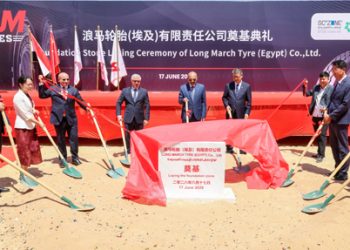
China’s Long March launches USD190M tyre manufacturing project in Egypt
Economy

China’s Long March launches USD190M tyre manufacturing project in Egypt

June 17, 2026
0

China’s Chaoyang Long March Tyre Co., Ltd. has launched a USD190 million tyre manufacturing project in Egypt’s Suez Canal Economic...

Read more
Watani started as an Egyptian weekly Sunday newspaper published in Cairo. The word Watani is Arabic for “My Homeland”. The paper was founded in 1958 by the prominent Copt Antoun Sidhom (1915 – 1995), who strove for the establishment of a civil, democratic society in Egypt, where all Egyptians would enjoy full citizenship rights regardless of their religious denomination. To this day when Watani is published as a weekly paper and an online news site, the objective remains the same. Those in charge of Watani view this role as a patriotic all-Egyptian vocation. Special attention is given to shedding light on Coptic culture and tradition as authentically Egyptian, this being a topic largely disregarded or little-understood by Egypt’s media. Watani is deeply dedicated to offer its readers high quality, extensive, objective, credible and well-researched media coverage, with special focus on Coptic issues, culture, heritage, and contribution to Egyptian society.
-----------------------------------------------------------

27 Abdel Khalek Tharwat st, Downtown, Abdeen,Cairo

00202-23927201

00202-23935946

 [email protected]


categories

  • News
  • Opinion
  • Politics
  • Culture
  • Egypt – Arab Spring
  • Coptic Affairs
  • Features
  • Watani Special Features

Recent Posts

  • China and Russia vis-à-vis Trump’s Iran War
  • China’s Long March launches USD190M tyre manufacturing project in Egypt
  • Watani talks to Anba Bigol, Bishop and Abbot of al-Muharraq Monastery of the Holy Virgin Mary
  • ‘Train of Hope’ to carry home 1,200 Sudanese
  • Egypt launches ROX Motor partnership to manufacture new-energy vehicles
  • News
  • Opinion
  • Politics
  • Culture
  • Egypt – Arab Spring
  • Coptic Affairs
  • Features
  • Watani Special Features

Powered BY 3A Digital.

No Result
View All Result
  • News
    • Accidents
    • Crime
    • Diplomatic briefcase
    • NewsLine
    • Outside Cairo
    • Special Occasions
  • Opinion
    • Editorial
    • International media
    • Reader`s Corner
    • Opinion
  • Politics
    • Elections
    • International Politics
    • Islamisation Politics
    • National Affairs
    • Parliament
    • Politics
    • Protests
    • Rights
    • Terrorism
  • Culture
    • Antiquity
    • Art
    • Books
    • Culture
    • Drama
    • Egyptology
    • Festivals
    • Films
    • Heritage
    • Islamisation Culture
    • Media
    • Museums
    • Music
    • TV
  • Coptic
    • Church Affairs
    • Coptic Affairs
    • Coptic Culture
    • Copts in the Media
    • Coptology
    • Copts Abroad
    • Religious
      • P. Shenouda: Bible Study
    • Sectarian
    • Inter-religious
    • Holy Family
  • Features
    • Counselling Corner
    • features
    • Economy
      • Business
    • Education
    • Social Issues
      • Behaviour
      • Mothers Day
    • Health
    • Environment
    • Humour
    • In memorial
    • Interviews
    • Nile
    • Profile
    • Special needs
    • Sports
    • Technology
    • Tourism
    • Wars
    • Women
    • Youth
  • Watani Special Features
    • Egypt – Arab Spring
      • 25 January Revolution
      • 25 Jan revolution, one year on
      • Egypt post-30 June
    • Watani Milestones
      • 20 years Watani International
      • 10 years Watani International
      • Watani Jubilee
    • Pope Shenouda
    • Pope Tawadros
    • Watani Forum

Powered BY 3A Digital.

Login to your account below

Forgotten Password?

Fill the forms bellow to register

All fields are required. Log In

Retrieve your password

Please enter your username or email address to reset your password.

Log In