
Editor in Chief
Youssef Sidhom
Watani
عربى English French
  • News
    • Accidents
    • Crime
    • Diplomatic briefcase
    • NewsLine
    • Outside Cairo
    • Special Occasions
  • Opinion
    • Editorial
    • International media
    • Reader`s Corner
    • Opinion
  • Politics
    • Elections
    • International Politics
    • Islamisation Politics
    • National Affairs
    • Parliament
    • Politics
    • Protests
    • Rights
    • Terrorism
  • Culture
    • Antiquity
    • Art
    • Books
    • Culture
    • Drama
    • Egyptology
    • Festivals
    • Films
    • Heritage
    • Islamisation Culture
    • Media
    • Museums
    • Music
    • TV
  • Coptic
    • Church Affairs
    • Coptic Affairs
    • Coptic Culture
    • Copts in the Media
    • Coptology
    • Copts Abroad
    • Religious
      • P. Shenouda: Bible Study
    • Sectarian
    • Inter-religious
    • Holy Family
  • Features
    • Counselling Corner
    • features
    • Economy
      • Business
    • Education
    • Social Issues
      • Behaviour
      • Mothers Day
    • Health
    • Environment
    • Humour
    • In memorial
    • Interviews
    • Nile
    • Profile
    • Special needs
    • Sports
    • Technology
    • Tourism
    • Wars
    • Women
    • Youth
  • Watani Special Features
    • Egypt – Arab Spring
      • 25 January Revolution
      • 25 Jan revolution, one year on
      • Egypt post-30 June
    • Watani Milestones
      • 20 years Watani International
      • 10 years Watani International
      • Watani Jubilee
    • Pope Shenouda
    • Pope Tawadros
    • Watani Forum
No Result
View All Result
  • News
    • Accidents
    • Crime
    • Diplomatic briefcase
    • NewsLine
    • Outside Cairo
    • Special Occasions
  • Opinion
    • Editorial
    • International media
    • Reader`s Corner
    • Opinion
  • Politics
    • Elections
    • International Politics
    • Islamisation Politics
    • National Affairs
    • Parliament
    • Politics
    • Protests
    • Rights
    • Terrorism
  • Culture
    • Antiquity
    • Art
    • Books
    • Culture
    • Drama
    • Egyptology
    • Festivals
    • Films
    • Heritage
    • Islamisation Culture
    • Media
    • Museums
    • Music
    • TV
  • Coptic
    • Church Affairs
    • Coptic Affairs
    • Coptic Culture
    • Copts in the Media
    • Coptology
    • Copts Abroad
    • Religious
      • P. Shenouda: Bible Study
    • Sectarian
    • Inter-religious
    • Holy Family
  • Features
    • Counselling Corner
    • features
    • Economy
      • Business
    • Education
    • Social Issues
      • Behaviour
      • Mothers Day
    • Health
    • Environment
    • Humour
    • In memorial
    • Interviews
    • Nile
    • Profile
    • Special needs
    • Sports
    • Technology
    • Tourism
    • Wars
    • Women
    • Youth
  • Watani Special Features
    • Egypt – Arab Spring
      • 25 January Revolution
      • 25 Jan revolution, one year on
      • Egypt post-30 June
    • Watani Milestones
      • 20 years Watani International
      • 10 years Watani International
      • Watani Jubilee
    • Pope Shenouda
    • Pope Tawadros
    • Watani Forum
No Result
View All Result
No Result
View All Result
Watani
ع Fr
ADVERTISEMENT

Dipping into Ayun Moussa

6 October, 2015 - (12:57 PM)
0 0

Mervat Ayad

Dipping into Ayun Moussa
547
VIEWS
Share on FacebookShare on Twitter


Most people who have an interest in Egyptian travel are certainly familiar with Sharm al-Sheikh on the southern tip of Sinai, and may also know of the resorts which line its southeastern shore such as Dahab, Nuweiba and Taba.

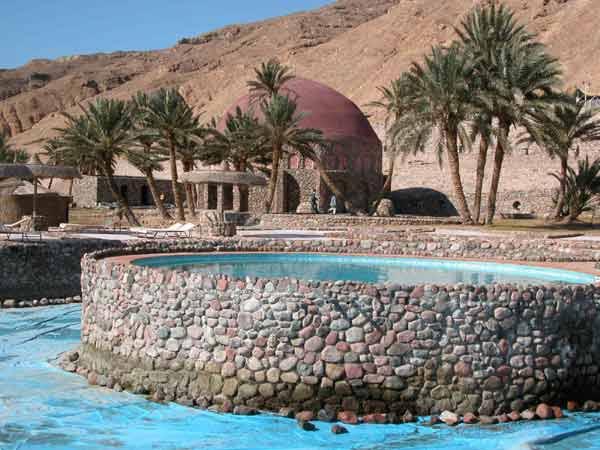
The rest of Sinai’s landscape is always interesting, and the road to Sharm al-Sheikh along the west coast is full of places to see. After entering Sinai and turning south along the coastal highway one soon comes to Ayun Moussa. There are 12 springs in the Ayun (pronounced Oyoun) Moussa Oasis, which lies 35 kilometres south of Suez, 60km from the Ahmed Hamdi Tunnel that links Suez and Sinai, and 165km from Cairo.

The opening of the New Suez Canal on 6 August coincided with the completion of the first phase of a renovation and restoration project of the historical site of Ayun Moussa or Springs of Moses in South Sinai, which is hoping to extend its appeal as a tourist destination.


Bitter into sweet

Ayun Moussa is believed to contain the spring where Moses, after leading the Israelites across the Red Sea, turned a bitter water source into sweet drinking water by throwing a tree branch into it, as instructed by God. Beside each spring is a label with the name of the spring and its depth. The average depth is about 14 metres. Today there is only one spring, called al-Sheikh, that provides sweet drinking water.

Ayun Moussa is one of the most important religious pilgrimage sites in Sinai, and officials at the Tourism Ministry see that the recent renovation project will support both domestic and foreign tourism. The renovation has taken into account the religious and archaeological location.

The first phase of the project included installing canopies over the springs as well as creating parking areas for cars and tour buses. The second phase will include a rest house and a coffeeshop to provide services to tourists travelling between Ras-Sidr and Sharm al-Sheikh, as well as to other places in Sinai.

“Ayun Moussa comprises a number of archaeological sites dating back to the Greek, Roman and Byzantine eras,” Minister of Antiquities Mamdouh al-Damati says. The most prominent area, called al-Ummal (the Labourers), includes a number of kilns used for firing pottery, one of the major industries in ancient Egypt.


Dipping into Ayun Moussa 2


The search for old wells

“A number of sensors were used to search for dry wells, with the aim of tracing the old water sources in the region which was a starting point of pilgrimage for both Muslims who went to Mecca and Christians who went to Jerusalem,” Dr Damati said. “We are exploring for more springs that have been filled in by wind-blown sand. The Egyptian excavation team has found several of the pottery kilns, a large number of pottery pieces, labourers’ houses and nine of the original 12 water wells.”

Modern studies by Philip Mayerson have proved that the region from Suez to Ayun Moussa was dry and very arid, just as described by pilgrims who visited the region in the 18th and 19th centuries. The water streaming through the oasis, however, nurtured abundant date palms and grasses. Roman engineers fortified the wells with brick walls to preserve them from being filled by sand. During the Islamic era, Ayun Moussa was a major station for Red Sea traffic. Offshore in 1538, Venetian ships massed with ships of the fleet of Ottoman Sultan Suliman II against Portuguese warships, and the Venetians constructed a canal extending from the springs to the Red Sea coast to supply their crews with sweet water. Remains of this canal still exist today. 


Capture and recapture

The fortifications near Ayun Moussa were used by the Israeli army when it occupied the Sinai Peninsula in the wake of the Six-Day War in June 1967 and until the October 1973 War through which Egypt finally regained Sinai. The Egyptian army was able to take back this strategic site from the Israelis on 9 October 1973.

One of the most famous springs is Hammamat Pharaoun, known in English as Pharaoh’s Bath, which lies on the southern part of the Ayun Moussa Oasis about 45km from Suez and 125km from Cairo. It consists of two parts: the Kahf Pharaoun, or Pharaoh’s Cave, and the springs themselves. The cave extends about 25 metres into the mountain, while the sulphuric water springs which line the seashore produce significant quantities of water with temperatures as high as 92C.

Despite its reek of rotten eggs, sulphuric water is believed to be effective in the treatment of bone, skin, liver and kidney diseases. Other springs in the south of the oasis include Ayn Abu Morir on the eastern side of the road to al-Tor, which is a fresh water well surrounded by clusters of rare palmsand reeds, and Ayn Taraqi, another sulphuric spring with temperatures ranging between 20C and 30C.

Altogether, these features make Ayun Moussa a fascinating location for ecological tourism.


Dipping into Ayun Moussa 3


Watani International

6 October 2015

 

Comments

comments

Tags: Ayun MoussaEgyptSinaiSprings of Moses

Related Posts

Watani talks to Anba Bigol, Bishop and Abbot of al-Muharraq Monastery of the Holy Virgin Mary
Coptic Affairs

Watani talks to Anba Bigol, Bishop and Abbot of al-Muharraq Monastery of the Holy Virgin Mary

June 17, 2026
New passenger app for Cairo International AirPort
E Choise

New passenger app for Cairo International AirPort

May 19, 2026
Alexandria: Birth of a Cosmopolis
Culture

Alexandria: Birth of a Cosmopolis

April 23, 2026
Egypt marks World Heritage Day with Nile theme
Art

Egypt marks World Heritage Day with Nile theme

April 19, 2026
Bibliotheca Alexandrina highlights early female physician Peseshet
Culture

Bibliotheca Alexandrina highlights early female physician Peseshet

March 2, 2026
Sunrise lights up Pharaoh’s face at Abu Simbel
Antiquity

Sunrise lights up Pharaoh’s face at Abu Simbel

February 23, 2026

Editorial

China and Russia vis-à-vis Trump’s Iran War

More

MOST READ

Egypt attempts to contain Myna bird invasion
Environment

Egypt attempts to contain Myna bird invasion

June 15, 2026
0

The Nature Protection Sector of Egypt’s Ministry of Local Development and Environment has been monitoring and tracking the spread of...

Read more
Watani talks to Anba Bigol, Bishop and Abbot of al-Muharraq Monastery of the Holy Virgin Mary

Watani talks to Anba Bigol, Bishop and Abbot of al-Muharraq Monastery of the Holy Virgin Mary

June 17, 2026
Egypt’s Armenians

Egypt’s Armenians

April 22, 2015
‘Train of Hope’ to carry home 1,200 Sudanese

‘Train of Hope’ to carry home 1,200 Sudanese

June 16, 2026
Jobs for persons with disabilities

Jobs for persons with disabilities

June 15, 2026

Features

China’s Long March launches USD190M tyre manufacturing project in Egypt
Economy

China’s Long March launches USD190M tyre manufacturing project in Egypt

June 17, 2026
0

China’s Chaoyang Long March Tyre Co., Ltd. has launched a USD190 million tyre manufacturing project in Egypt’s Suez Canal Economic...

Read more
Watani started as an Egyptian weekly Sunday newspaper published in Cairo. The word Watani is Arabic for “My Homeland”. The paper was founded in 1958 by the prominent Copt Antoun Sidhom (1915 – 1995), who strove for the establishment of a civil, democratic society in Egypt, where all Egyptians would enjoy full citizenship rights regardless of their religious denomination. To this day when Watani is published as a weekly paper and an online news site, the objective remains the same. Those in charge of Watani view this role as a patriotic all-Egyptian vocation. Special attention is given to shedding light on Coptic culture and tradition as authentically Egyptian, this being a topic largely disregarded or little-understood by Egypt’s media. Watani is deeply dedicated to offer its readers high quality, extensive, objective, credible and well-researched media coverage, with special focus on Coptic issues, culture, heritage, and contribution to Egyptian society.
-----------------------------------------------------------

27 Abdel Khalek Tharwat st, Downtown, Abdeen,Cairo

00202-23927201

00202-23935946

 [email protected]


categories

  • News
  • Opinion
  • Politics
  • Culture
  • Egypt – Arab Spring
  • Coptic Affairs
  • Features
  • Watani Special Features

Recent Posts

  • China and Russia vis-à-vis Trump’s Iran War
  • China’s Long March launches USD190M tyre manufacturing project in Egypt
  • Watani talks to Anba Bigol, Bishop and Abbot of al-Muharraq Monastery of the Holy Virgin Mary
  • ‘Train of Hope’ to carry home 1,200 Sudanese
  • Egypt launches ROX Motor partnership to manufacture new-energy vehicles
  • News
  • Opinion
  • Politics
  • Culture
  • Egypt – Arab Spring
  • Coptic Affairs
  • Features
  • Watani Special Features

Powered BY 3A Digital.

No Result
View All Result
  • News
    • Accidents
    • Crime
    • Diplomatic briefcase
    • NewsLine
    • Outside Cairo
    • Special Occasions
  • Opinion
    • Editorial
    • International media
    • Reader`s Corner
    • Opinion
  • Politics
    • Elections
    • International Politics
    • Islamisation Politics
    • National Affairs
    • Parliament
    • Politics
    • Protests
    • Rights
    • Terrorism
  • Culture
    • Antiquity
    • Art
    • Books
    • Culture
    • Drama
    • Egyptology
    • Festivals
    • Films
    • Heritage
    • Islamisation Culture
    • Media
    • Museums
    • Music
    • TV
  • Coptic
    • Church Affairs
    • Coptic Affairs
    • Coptic Culture
    • Copts in the Media
    • Coptology
    • Copts Abroad
    • Religious
      • P. Shenouda: Bible Study
    • Sectarian
    • Inter-religious
    • Holy Family
  • Features
    • Counselling Corner
    • features
    • Economy
      • Business
    • Education
    • Social Issues
      • Behaviour
      • Mothers Day
    • Health
    • Environment
    • Humour
    • In memorial
    • Interviews
    • Nile
    • Profile
    • Special needs
    • Sports
    • Technology
    • Tourism
    • Wars
    • Women
    • Youth
  • Watani Special Features
    • Egypt – Arab Spring
      • 25 January Revolution
      • 25 Jan revolution, one year on
      • Egypt post-30 June
    • Watani Milestones
      • 20 years Watani International
      • 10 years Watani International
      • Watani Jubilee
    • Pope Shenouda
    • Pope Tawadros
    • Watani Forum

Powered BY 3A Digital.

Login to your account below

Forgotten Password?

Fill the forms bellow to register

All fields are required. Log In

Retrieve your password

Please enter your username or email address to reset your password.

Log In